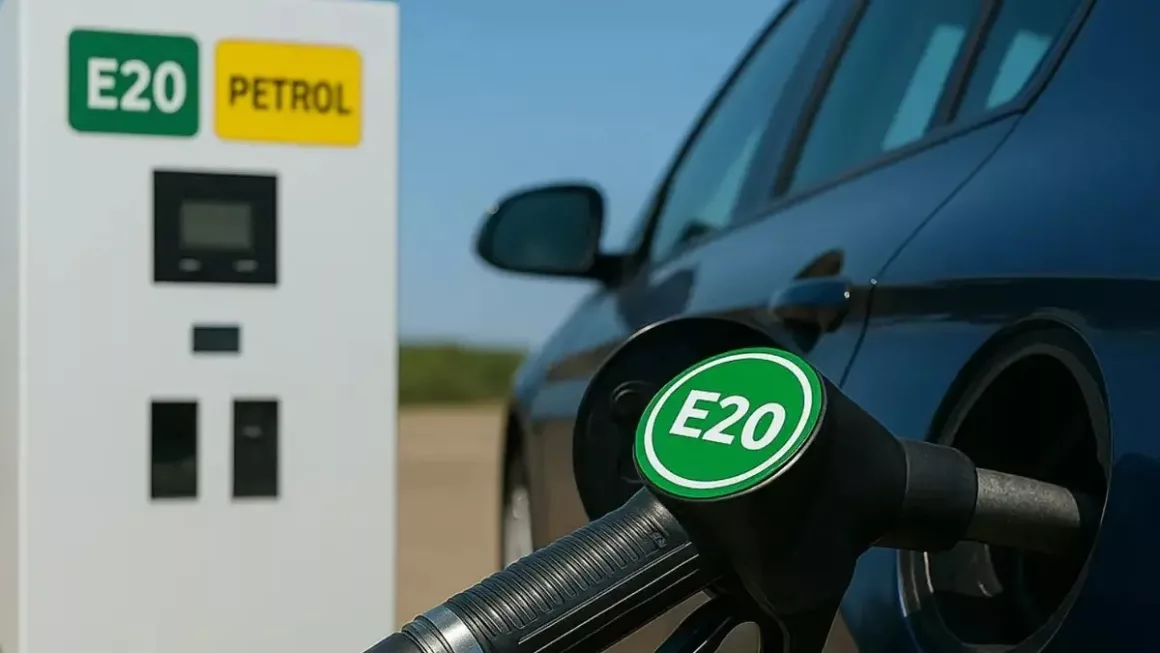
E20 fuel is being supplied through all the petrol pumps in India from 2023. It contains a higher percentage of ethanol than the previously launched E10 petrol. This higher level of ethanol reduces smoke and proves to be more environmentally friendly than the other versions of petrol. The government has also made it mandatory for car manufacturers to make their cars E20-compliant.
In February 2022, Tata Motors announced that all their models will be E20-upgraded henceforth. They also increased the standard warranty from 2 years/75,000 kms to 3 years/1,00,000 kms. Features such as Idle Start/Stop were added to increase the fuel efficiency of the cars. More details on the E20-compatible Tata car models have been provided in the sections below.
What is E20 fuel?
E20 fuel is a combination of petrol and ethanol. Up to 20% of ethanol is added to 80% of petrol to make the blended E20 fuel. As ethanol is a plant-based fuel, it can be easily manufactured in the country itself. This reduces our country’s dependence on crude oil imports. At the same time, it also boosts the revenue of the ethanol-producing companies in India.
Tata Motors Models Compatible with E20 Fuel
Here are the cars from Tata Motors that are compatible with the E20 fuel:
| Model | E20 Introduction Year |
| Tata Tiago | 2023 (BS6 Phase 2) |
| Tata Punch | 2023 (BS6 Phase 2) |
| Tata Tigor | 2023 (BS6 Phase 2) |
| Altroz | 2023 (BS6 Phase 2) |
| Nexon | 2023 (BS6 Phase 2) |
| Harrier | 2023 (BS6 Phase 2) |
| Safari | 2023 (BS6 Phase 2) |
| Curvv | 2023 (BS6 Phase 2) |
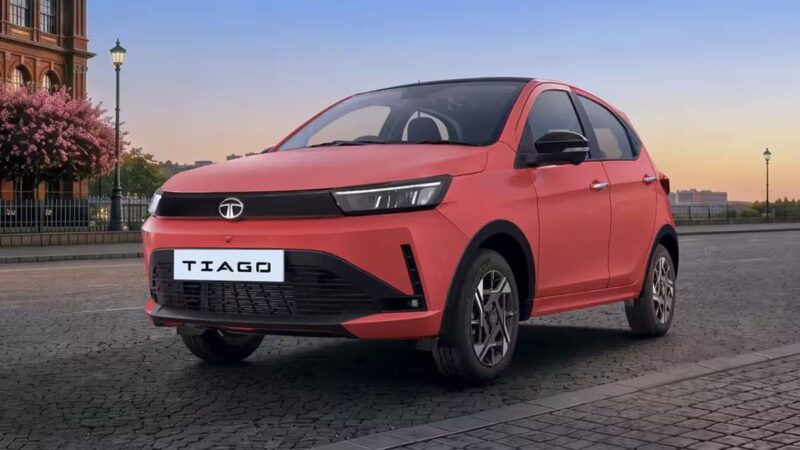
- Tata Tiago
A mini compact car, the Tiago is a reliable and practical car for the Indian roads. With the E20 upgrade, Tiago models will maintain their peppy ride quality and smooth performance.
- Engine: 1.2-litre Revotron Petrol
- Transmission: 5-speed Manual, AMT
- Mileage: Up to 20 kmpl
- Fuel Type: Petrol (E20 compliant)
- Variant Notes: All the variants of Tiago released after February 2023 are E20 compliant. Even the iCNG variants have the petrol engine parts made from ethanol-resistant materials.
Warranty Guidelines for Tata Tiago on E20 Fuel
| Car Model | Warranty Period |
| Tata Tiago | 3 years or 1,00,000 km |
- Tata Punch
The muscular and bold Tata Punch is also known for its high fuel efficiency and compact dimensions. With the E20 upgrade, the Tata Punch is ready to impress buyers with its powerful performance.
- Engine: 1.2-litre Revotron Petrol
- Transmission: 5-speed Manual, AMT
- Mileage: Up to 20 kmpl
- Fuel Type: Petrol (E20 compliant)
- Variant Notes: The models of Tata Punch released post February 2023 are E20 compatible.
Warranty Guidelines for Tata Punch on E20 Fuel
| Car Model | Warranty Period |
| Tata Punch | 3 years or 1,00,000 km |
- Tata Tigor
The Tata Tigor is a spacious sedan that offers a smooth ride quality and looks elegant. It is also one of the most feature-packed sedans in its segment.
- Engine: 1.2-litre Revotron Petrol
- Transmission: 5-speed Manual, AMT
- Mileage: Up to 19.6 kmpl
- Fuel Type: Petrol (E20 compliant)
- Variant Notes: All the iCNG and petrol models of Tigor manufactured post February 2023 are E20-compliant.
Warranty Guidelines for Tata Tigor on E20 Fuel
| Car Model | Warranty Period |
| Tata Tigor | 3 years or 1,00,000 km |
- Altroz
Tata Altroz is a premium hatchback known for its smooth and powerful performance. It is also one of the safest vehicles to drive and has a decent ground clearance, too.
- Engine: 1.2-litre Revotron Petrol, 1.2-litre iTurbo Petrol
- Transmission: 5-speed Manual, 6-Speed DCA
- Mileage: Up to 19.3 kmpl
- Fuel Type: Petrol (E20 compliant)
- Variant Notes: Both the naturally aspirated and iTurbo variants of the Altroz released after February 2023 are E20 compliant.
Warranty Guidelines for Tata Altroz on E20 Fuel
| Car Model | Warranty Period |
| Tata Altroz | 3 years or 1,00,000 km |
- Nexon
Nexon has been among the most popular compact SUVs in the Indian car market. It is built to be muscular and powerful and delivers a smooth and effortless driving experience.
- Engine: 1.2-litre Revotron Petrol
- Transmission: 5-speed Manual, 6-Speed Manual, AMT, and 7-Speed DCA
- Mileage: Up to 17.4 kmpl
- Fuel Type: Petrol (E20 compliant)
- Variant Notes: All the pre-facelift models released after February 2023 and the new generation models are E20-compliant.
Warranty Guidelines for Tata Nexon on E20 Fuel
| Car Model | Warranty Period |
| Tata Nexon | 3 years or 1,00,000 km |
- Harrier
Tata Harrier is built like a tank and has some of the most impressive features in its segment. Its premium interiors and unmistakable road presence make it a popular car in all parts of the country.
- Engine: 1.5-litre Hyperion Turbo GDI Petrol Engine
- Transmission: 6-speed Manual and 7-Speed DCA
- Mileage: Up to 16 kmpl
- Fuel Type: Petrol (E20 compliant)
- Variant Notes: All the variants with the new 1.5-litre petrol engines released in 2025 and 2026 are E20 compliant.
Warranty Guidelines for Tata Harrier on E20 Fuel
| Car Model | Warranty Period |
| Tata Harrier | 3 years or 1,00,000 km |
- Safari
Tata Safari has been the flagship model from Tata Motors for quite some years now. Its commanding road presence and top-of-the-line features make it a truly magnificent car.
- Engine: 1.5-litre Hyperion Turbo GDI Petrol Engine
- Transmission: 6-speed Manual and 7-Speed DCA
- Mileage: Up to 15.5 kmpl
- Fuel Type: Petrol (E20 compliant)
- Variant Notes: All the variants of Safari with the newly launched 1.5-litre petrol engine are E20 compliant.
Warranty Guidelines for Tata Safari on E20 Fuel
| Car Model | Warranty Period |
| Tata Safari | 3 years or 1,00,000 km |
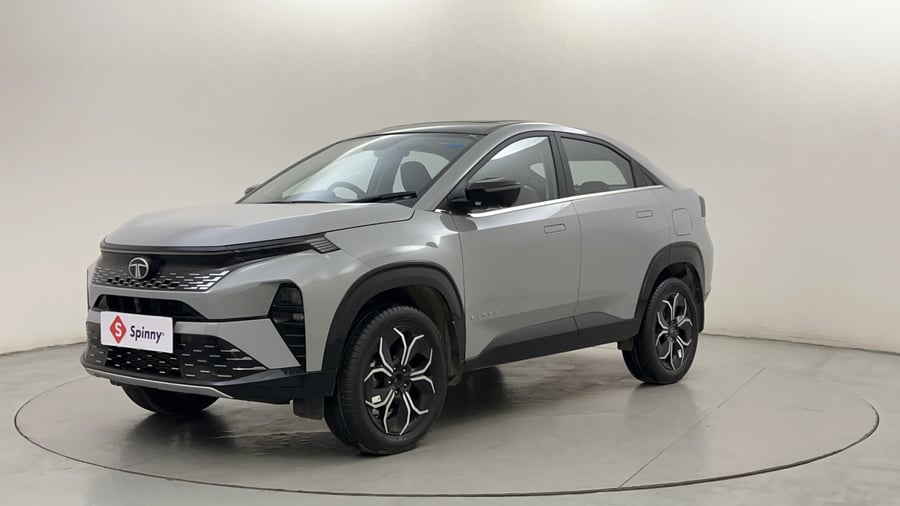
- Curvv
Curvv has been one of the most ambitious releases from Tata Motors that defines modern technology and elegance in the true sense. It has been upgraded with the E20-specific changes right from its launch.
- Engine: 1.2-litre Revotron Petrol and 1.2-litre Hyperion Turbo GDI
- Transmission: 6-speed Manual and 7-Speed DCA
- Mileage: Up to 18 kmpl
- Fuel Type: Petrol (E20 compliant)
- Variant Notes: All the petrol variants of the Curvv are E20-compliant right from their launch.
Warranty Guidelines for Tata Curvv on E20 Fuel
| Car Model | Warranty Period |
| Tata Curvv | 3 years or 1,00,000 km |
How to Check if Your Tata Motors Car is E20 Compatible?
The following things will help you confirm whether your Tata Motors car is E20 compatible or not:
- The fuel flap usually contains the sticker of the fuel the car model is compatible with. So, if your Tata Motors car is compatible with E20 fuel, the E20 sticker will be present on its fuel flap.
- One more method to confirm this is to check the owner’s car manual or guide. You can specifically check the fuel section to confirm your car’s E20 compatibility.
- The official site of Tata Motors has relevant information about the E20 upgrades. Here, you can also find out if your specific Tata Motors model is E20 compatible or not.
- Alternatively, you can also contact the authorised Tata Motors dealer you’ve purchased your car from to confirm this. They will ask for some details, including your Vehicle Identification Number (VIN), to provide all the details regarding your car’s E20 upgrade.
Impact of E20 Fuel on Tata Motors Cars
The impact of E20 fuel on the E20-compliant cars will be minimal. Still, there will be some impact on the car’s performance and mileage. An overview of the possible impact of E20 fuel on E20-compliant and non-compliant cars is given below:
- Fuel-Economy
The fuel economy of your car will definitely take a hit owing to the low energy density of ethanol as compared to pure petrol. For the non-compliant cars, the mileage can drop up to 20 percent. For compliant cars, this drop can range anywhere from 5 to 7 percent.
- Performance
E20 fuel can affect your car’s performance, especially if it is not E20 upgraded. The Electronic Control Unit (ECU) of E20 non-compatible cars generates inconsistent power delivery, as it is not capable of maintaining the right air-fuel ratio in the engine. This can result in sluggish performance and abrupt idling or jerky starts. However, these issues have been addressed in the E20-compatible models from Tata Motors.
- Resale Value
As the E20-compliant Tata Motors cars are likely to sustain longer due to their ethanol-resistant parts, their resale value will also be higher than that of the non-compatible car models.
- Servicing & Maintenance
The non-compliant cars will require regular servicing and replacements. The parts, such as the fuel filters and pipes, will degrade faster, due to which regular cleaning, maintenance, and replacements are a must.
Summary
These were some insights on the E20-compatible cars from Tata Motors. Ensure that your car is E20 compatible through the methods discussed in the above sections. Also, proper servicing and maintenance are a must, irrespective of whether your car is E20-compliant or not.
FAQs
Q. Is the Tata Indigo E20 compliant?
No, the Tata Indigo is not E20-compliant because it was manufactured before February 2023, the time when Tata Motors started manufacturing E20-compliant cars.
Q. Which parts are to be upgraded in a car for E20 compliance?
ECU, fuel filters, gaskets, fuel pipes, and the fuel tank are to be upgraded with ethanol-resistant materials and coatings to maintain E20 compliance.
Q. Are Tata car models that aren’t E20 compatible covered under warranty?
Those vehicles that are not E20 compatible are not covered under warranty if the damage has been caused by the E20 fuel.
Q. What are the issues faced by E20 non-compliant cars in the long run?
Increased deposits in the fuel tank, degraded rubber hoses, corroded gaskets, and a drop in fuel efficiency and performance are some of the common issues faced by cars that aren’t E20 compatible.
Q. After how many kms should I service my E20 non-compliant Tata Motors car?
It is recommended that you service your E20 non-compliant car every 6 months or after 5000 km, whichever comes first.