
The Maruti Suzuki Swift is known to be among the most used hatchbacks in India. As such, it is not difficult to spot examples of this car across various model years, engine configurations, and price brackets. This means that you may come across two used Swift cars asking for the same price, but the condition of the cars may be completely different. A 2016 diesel manual Swift, a 2021 petrol AMT Swift, and a 2025 Z-Series petrol Swift may differ with respect to engine, gearbox, safety features, and the age-related issues that they entail.
Before buying a used Swift, first identify the generation and powertrain, then inspect the car for mechanical wear, accident damage, service history, recall completion and electrical issues. A lower odometer reading does not automatically make one Swift better than another. Condition and maintenance history matter far more.
Table of Contents
Used Maruti Swift Buying Guide at a Glance
| What to Check | Why It Matters |
| Engine, clutch and gearbox | Helps identify worn clutches, rough engines and AMT issues |
| Suspension, steering, brakes and tyres | Reveals wear caused by age, rough roads or hard use |
| Accident and structural damage | Serious repairs can affect safety, alignment and resale |
| Service history, odometer and recall status | Confirms maintenance quality and recall completion |
| AC, electricals and infotainment | Finds age-related electrical or cabin issues |
Which Maruti Swift Generation Are You Buying?
The first step is identifying the generation because the Maruti Swift has changed substantially over the years.
| Swift Generation | India Period | Common Used-Market Powertrains |
| First generation | 2005–2011 | 1.3 petrol, later 1.2 petrol, 1.3 diesel |
| Second generation | 2011–2018 | 1.2 petrol, 1.3 diesel |
| Third generation | 2018–2024 | 1.2 petrol, 1.3 diesel initially, petrol/diesel AMT, later CNG |
| Fourth generation | 2024–present | 1.2 Z-Series petrol MT/AMT, Z-Series CNG MT |
When considering a 2024 Swift that has been registered, you should keep in mind that it could be either an older third-generation model or a new fourth-generation model launched in May 2024. Therefore, you should find out the month of manufacture, VIN/chassis numbers, and engine specifications rather than just relying on the registration date.
1. Check the Engine, Clutch and Gearbox
Start the car when the engine is cold if possible. Listen for unusual knocking, rattling or prolonged cranking, and check whether the idle settles smoothly. During the test drive, the Swift should accelerate cleanly without hesitation, excessive smoke or warning lights. Also check for fluid leaks around the engine bay and underneath the car.
Petrol Swift Checks
Most petrol Swifts are easy to maintain. However, it is important to see whether the car runs smoothly without any disturbing noise or vibrations. You must investigate if the car produces smoke, has any trouble moving or shows any warning signals.
Check the engine oil level and look for leaks, especially on older cars. Do not assume oil loss automatically means one specific problem such as a failed head gasket. Any unexplained oil consumption should be diagnosed professionally.
Manual Clutch and Gearbox Checks
In case you are looking at a manual Swift, you should check if the clutch engages as expected and if the bite point feels too high. Understand that under heavy acceleration, the engine speed must increase with the increase in the vehicle speed. A problem could occur if the engine speed rises but the vehicle speed does not increase correspondingly.
Also watch for judder when moving away and difficulty selecting gears. Clutch life depends heavily on previous driving style and traffic conditions, so there is no reliable kilometre figure at which every Swift needs replacement.
Swift AMT Checks
Both the third-generation and fourth-generation Swifts come with the AGS/AMT transmission. You should engage and disengage the drive and reverse gears and see if the car responds properly without delays or jerks.
During the drive, the car should move away smoothly and shift without warning lights or severe judder. Some head-nod during AMT changes is normal, but excessive clutch shudder or erratic engagement deserves further inspection. Ask whether the clutch or AMT actuator has required previous work.
Diesel Swift Checks
Every diesel Swift that you might come across is already an old car since Maruti Suzuki does not make the 1.3L diesel version anymore after the BS6 transition. Start the vehicle cold and see if you have problems starting, if the car produces too much smoke, and if it is noisy with no power from the turbo. Go through the service history and check if any work has been done on the turbo, injector, or clutch in the past.
If you live in Delhi-NCR, vehicle age matters because diesel vehicles over 10 years old face end-of-life restrictions there. Rules vary by location, so check local registration requirements before buying an older diesel.
Swift CNG Checks
CNG Swifts are now quite common in the used car market. You should make sure whether the Swift is a factory S-CNG model or the aftermarket conversion has complete documentation along with the RC endorsement.
Test the switch between petrol and CNG, check for warning lights and review CNG-system service records. The cylinder, lines and related components should be maintained according to schedule. Poorly documented aftermarket conversions are best approached cautiously.
2. Inspect the Suspension, Steering, Brakes and Tyres
Many Swift models can suffer suspension-related issues stemming from constant use on rough roads. If you get a chance to test-drive one, make sure to hit some bumpy patches to check for any knocking sounds coming from the front or back of the vehicle.
The steering should track straight without pulling noticeably to one side. Uneven tyre wear can indicate alignment problems, worn suspension parts or previous accident damage. After a bump, the car should settle quickly rather than continue bouncing.
It is important to check the braking performance of the car at moderate speed as well. The car must be able to come to a halt naturally without vibrations in the steering wheel as well as grinding sounds. Check the tyres for uneven wear, fractures, sidewall damage, and mismatched sizes. There is no certainty about how many years’ life the Swift suspension has. The quality of roads and present usage plays a bigger role.
Also Read: Why Does India Love the Maruti Swift?
3. Check for Accident Damage, Rust and Structural Repairs
Accident history is more important than many buyers realise. A properly repaired cosmetic panel is not automatically a reason to reject a car, but major structural damage can affect safety, alignment and long-term reliability.
When checking a Swift, ensure you do check it in clear light. Verify for discrepancies such as mismatched paint, uneven panel gaps, overspray around seals, and also whether bolts of the door, bonnet or fenders have been tampered with. Confirm that the headlamps and glass have the same date of manufacture, as it usually indicates it has been changed after an accident.
Inspect the underbody for bent components or poor repairs. Rust is more relevant on older first- and second-generation cars, especially those used near coastal areas. For any car you are seriously considering, a professional inspection is preferable to relying only on a visual walk-around.
4. Verify Service History, Odometer and Recall Status
A certified 70,000 km driven Swift may be a wiser purchase than an unmaintained 40,000 km vehicle. Check that the mileage corroborates with the service history, tyre condition, steering wheel, and pedal condition, and the general feel of the cabin.
Ask for service records and check whether maintenance was carried out at sensible intervals. Missing paperwork does not automatically mean the car is bad, but it increases uncertainty and should affect the price you are willing to pay.
Check the VIN for Recalls and Service Campaigns
Some models of the third generation of Swift were part of official campaigns. As an example, in 2018, there was a campaign to check the models manufactured between December 2017 and March 2018 for possible brake vacuum hose defects. Similarly, some models of the third generation manufactured between May and July 2018 had to be recalled for examination and replacement of the airbag controller.
This does not mean every 2018 Swift is problematic. Use the chassis/VIN from the RC or vehicle identification plate to check Maruti Suzuki’s official recall or service-campaign information and confirm whether any required work was completed.
5. Test the AC, Electricals and Infotainment
Test the AC at various blower speeds; make sure that it is functioning as intended, and the cabin is cooled. Listen for any strange noises, but do not assume that every noise is that of a compressor failure.
Test the power windows, central locking, mirrors, steering controls, horn, wipers, lights and instrument cluster. On higher variants, check the touchscreen, smartphone connectivity and reverse camera where fitted. Some third-generation cars have owner reports of infotainment glitches or cabin rattles, so spend enough time with the car to see whether the touchscreen freezes, restarts or behaves unusually.
The fourth-generation Swift is still young; therefore, electrical issues based on car age should not be common. In terms of warranty coverage, with this generation of Swift, check the specifics of the used price versus that of a new vehicle.
Safety Differences Between Used Swift Generations
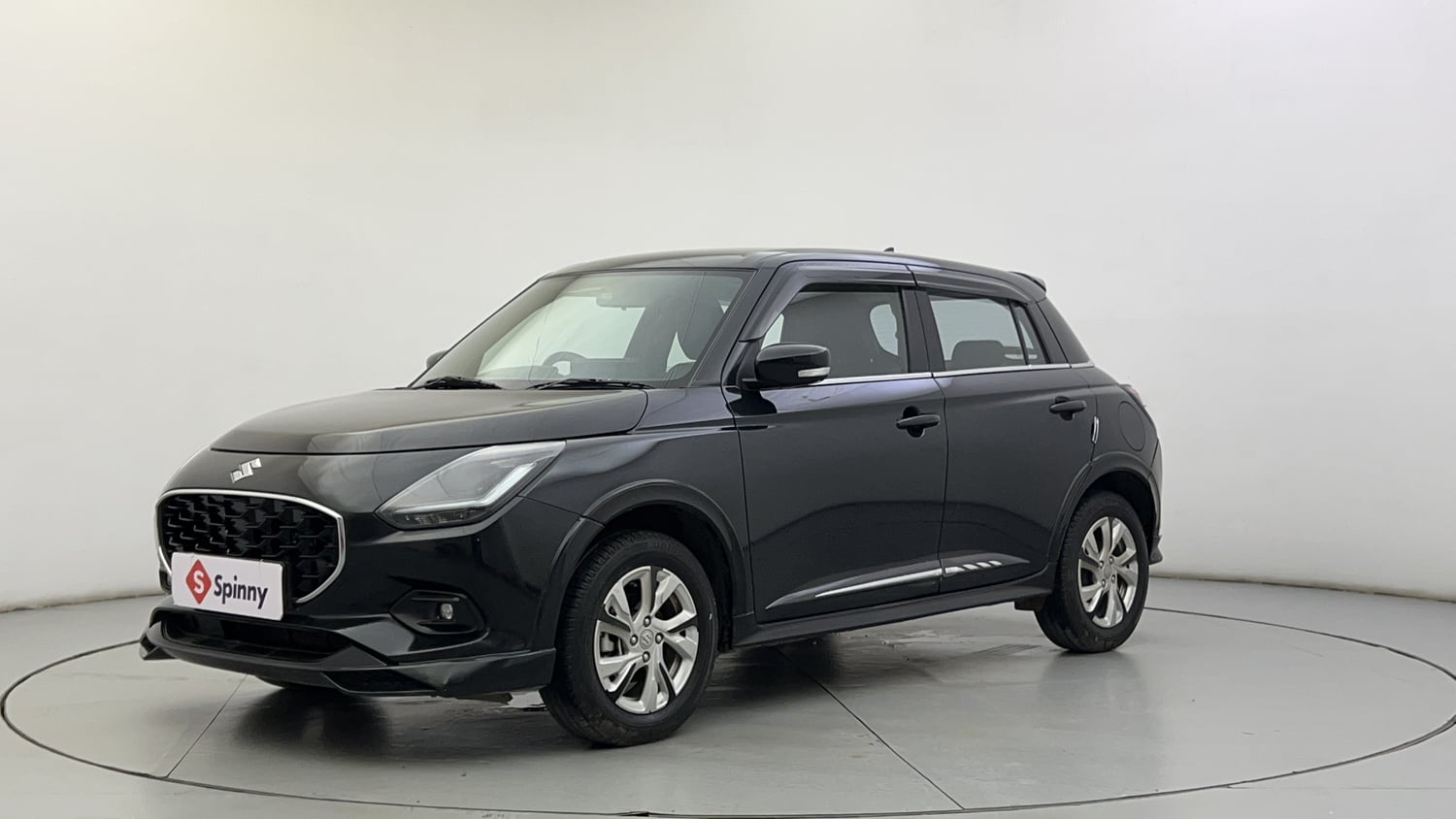
Safety equipment varies significantly by generation and variant. Older Swifts generally have less standard safety equipment than newer ones, and the third-generation India-spec Swift received modest Global NCAP results under the protocols used during its production period.
The fourth-generation Swift, which debuted in 2024, features the inclusion of installed airbags, an anti-lock braking system with emergency braking assistance, hill-hold assist technology on relevant models, three-point safety belts, and stability control as standard features. Starting in 2026 onwards, it should be understood that the India-made version of the fourth-generation Swift will not receive any star ratings from Bharat NCAP unless any formal announcements are made regarding the outcomes.
For family use, the safety-equipment difference can justify paying more for a newer-generation car.
Also Read: How to Buy a Used Maruti Suzuki Swift?
Which Used Swift Generation Is Best to Buy?
Second-generation Swift could still provide excellent performance and value for money as long as it is properly maintained; however, due to its age, condition is important. It is likely that petrol variants will be easier to recommend compared to older diesel, in case the diesel’s background is good and local regulations permit enough remaining usage.
The third generation offers a strong balance of modern features, efficiency and used prices. Petrol manuals are simple, while AMTs suit city users willing to accept their characteristic shift behaviour. Later third-generation petrol and factory-CNG cars are particularly relevant for buyers seeking lower running costs.
Fourth generation is most suitable for those looking for superior safety features, better fuel efficiency and a higher safety level when it comes to the age factor. The difference in price between used and new versions may not be so significant, so the price of the used version has to be compared to the dealer’s price of the new one.
What Is a Good Mileage for a Used Swift?
There is no single odometer figure that makes a used Swift a good purchase. A car with 50,000 km is not automatically better than one with 80,000 km.
A complete service history of a highway-driven vehicle can result in the car being in good condition despite surpassing the normal mileage limit, while the city-driven vehicle that is not so old may have more miles, but it has to be the case that it has gone through a lot of wear and tear, clutch and brake problems and suspension issues. Age, servicing record, accident history and behaviour of the car have to be considered.
Should You Buy an Older Diesel Swift?
A diesel Swift can still make sense for high-mileage buyers outside areas with restrictive age rules, especially if the car has been maintained properly and priced appropriately. The 1.3-litre diesel is known for strong fuel efficiency, but every surviving example is now several years old.
That is how one comes to the conclusion that a complete inspection is necessary. If your annual mileage is small, then it is advisable to go for a used petrol Swift rather than a diesel.
Summary
A used Maruti Suzuki Swift can be an excellent value purchase, but the inspection should depend on the generation and powertrain. The five most important areas are the engine and gearbox, suspension and brakes, accident history, service and recall records, and electrical equipment.
Manual vehicles have to pass the necessary clutch tests, AMT models have to operate smoothly without any issues, diesel models have to comply with operational requirements provided they are not older than the allowed age, and CNG models have to have all documentation intact. Buyers must also make sure that engine recall is carried out where necessary.
Most importantly, do not choose a used Swift simply because it has the lowest odometer reading. A car with complete maintenance records, sound mechanical condition and no serious structural damage is usually the better purchase even if it has covered more kilometres.
Also Read: Should You Buy a Used Maruti Suzuki Swift
FAQs About Buying a Used Maruti Suzuki Swift
Q. Is a used Maruti Swift reliable?
A properly maintained Swift can be a reliable used hatchback. Condition varies considerably with age and ownership, so service history and a professional inspection matter more than the model’s general reputation.
Q. Which Swift generation is best to buy used?
The third generation offers a strong balance of price, efficiency and features, while the fourth generation provides newer safety equipment and lower age-related risk. Older generations can still be good value if the condition is excellent.
Q. What should I check on a used Swift AMT?
Check smooth engagement of Drive and Reverse, excessive clutch judder, unusually harsh shifts, warning lights and delayed response. Some shift sensation is normal for an AMT, but severe shuddering is not.
Q. Should I buy a used Swift diesel in 2026?
It can make sense for high-mileage buyers where local age rules permit it, but every diesel Swift is now an older vehicle. Inspect the engine, turbo, clutch and service history carefully.
Q. Is a used Swift CNG worth buying?
A factory-fitted S-CNG Swift can offer low running costs if the system has been maintained properly. Verify the CNG equipment, service history and registration details before purchase.
Q. How can I check whether a Swift has an open recall?
Use the chassis/VIN to check Maruti Suzuki’s official recall or service-campaign information. Certain 2018 Swift batches were covered by brake-vacuum-hose and airbag-controller campaigns.
Q. Is 50,000 km too much for a used Swift?
No. Odometer mileage alone does not determine condition. A well-maintained higher-mileage Swift can be a better purchase than a lower-mileage car with poor maintenance or accident damage.