
Machines are inevitable, especially in car production. Although they are necessary, these components also cause irreversible damage to the environment by releasing fumes and gases. To keep such problems under control, the government has released permissible emission levels for fuel-powered cars. These new regulations have led to an increased adoption of a catalytic converter in a car. The device acts as an important part of the exhaust system.
This blog discusses everything you need to know about the catalytic converter. We will also explain its benefits, types, and potential damage signs for timely service.
Catalytic Converter: An Overview
A catalytic converter is a device present within the exhaust system of your car. It helps minimise the emissions released by the vehicle by reducing the hazardous elements into less harmful substances. Emissions are turned into carbon dioxide and water vapour before being released into the air.
The process begins during combustion and uses various catalysts to speed up the process.
How Does a Catalytic Converter Work?
The process will help you understand how exactly the catalytic converter changes harmful emissions into minimally affecting substances.
- Emission
The car’s engine converts petrol into a gas to produce energy (that’s how a vehicle functions). This resultant gas has toxic pollutants: carbon monoxide, hydrocarbons, and nitrogen oxides. These chemicals are dangerous to the environment and people.
- Catalysts
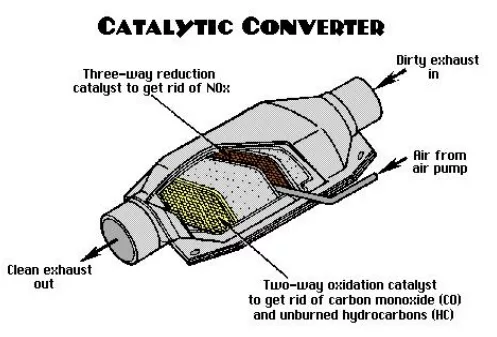
Now, the catalytic converter begins its role. Its catalysts create a honeycomb-like structure and prevent the gas from flowing outside. Instead, the device, coated with varied catalyst materials, begins the conversion process.
- Reduction
This is an essential step in minimising harmful gases. One catalyst breaks down nitrogen oxide into nitrogen and oxygen. Although the former gas is dangerous to the environment, its dissolution is harmless. That’s because both gases already exist separately in the air.
- Oxidation
There’s another catalyst which oxidises toxic gases like carbon monoxide and converts them into carbon dioxide. This happens when the gas comes in contact with oxygen. The same process even dissolves hydrocarbons into carbon dioxide and water. This oxidation process works simultaneously with reduction.
- Final Emission
Once the harmful gases are successfully converted into non-volatile substances, the catalytic converter lets the clean gases exit.
The entire process helps reduce pollution and provides a safer alternative for the environment.
Types of Catalytic Converters in a Car
Three types of catalytic converters for the vehicle are:
- Two-Way
This is the most basic catalytic converter found in most of the older vehicles. There’s a single catalyst that reduces and oxidises initially emitted gases. Such a converter focuses on carbon monoxide and hydrocarbons. It converts toxic components into less toxic gases, such as carbon dioxide.
- Three-Way
The converter is commonly found in modern cars and aims to work for all types of harmful gases. Two different catalysts are present, reducing carbon monoxide, nitrogen oxides, and hydrocarbons. Such catalytic converters are more useful as they limit the exposure of gases to the environment.
- Diesel Oxidisation
The default converters are designed for petrol-operated cars. However, this catalytic model is used for diesel cars that release harmful chemicals into the air. It targets carbon monoxide and hydrocarbons, turning them into water and carbon dioxide separately. However, this type of converter is not useful for nitrogen oxides.
What are the Advantages of a Catalytic Converter?
A catalytic converter is useful for vehicles, the environment, and humans. Here’s how:
- Minimises Pollution: A catalyst reduces harmful gas emissions and maintains air quality standards.
- Meets Legal Standards: Several countries have stringent vehicle emission laws. Adding a catalytic converter in a car helps comply with those environmental regulations.
- Improves Efficiency: A car built with a converter provides better performance and fuel efficiency.
- Reduces Respiratory Risks: Low emission of harmful gases means a significant drop in the chances of respiratory diseases like lung infection and asthma.
- Improves Car’s Life: A well-maintained catalytic converter makes sure the car’s exhaust system and engine work effectively for a longer time.
Signs of a Defective Catalytic Converter
How do you know your car’s catalytic converter isn’t working or has slowed down? Keep a lookout for these possible signs:
- Fuel Inefficiency
A clogged catalytic converter in a car doesn’t work well. It diminishes the airflow passing through the engine. To increase the passage of air, the engine starts to burn more fuel than it usually does.
- Warning Lights
It’s always important to keep an eye on the engine lights. They can tell you a lot about the functioning of your car, including the converter. Every car has a diagnostic system in place that alerts you in case the catalytic converter malfunctions. In such cases, the air-to-fuel ratio sensors trigger the warning light.
- Foul Smell
In a situation where internal damage is done to the catalytic converter, it cannot convert harmful gases effectively. As a result, there’s a sulfuric smell that’s easily detectable. In case of such problems, it is time for a checkup.
- Engine Issues
The emissions have to ultimately get out of the engine. However, a clogged catalytic converter doesn’t let it happen properly. As a result, there’s increased pressure on the exhaust, and your car can stop working.
- Poor Speed
As discussed above, the emission has to be released anyway. If they get trapped for some reason, there’s increased pressure from the converter, and you cannot improve your car’s speed. There might be situations of stalling and jerking, which immediately need attention.
- Emission Test Failure
Several regions test the emissions of vehicles to identify if your car complies with the regulations or not. If you don’t pass the test, there is a chance that there might be issues with the catalytic converter.
Maintenance of Your Catalytic Converter
Regular car servicing is required to ensure that your car keeps operating smoothly and you don’t have to pay the fine. The same is done by a professional technician. However, you can follow some tips to enhance the converter’s performance:
- Regular Inspection: Keeping an eye on your car’s engine light is crucial, as it can tell a lot about your vehicle’s condition. If you ignore the early signs, there can be serious damage to your catalytic converter, resulting in a heavy cost.
- Fix Problems Immediately: Don’t delay, especially when the issue is related to your car’s converter. Take care of problems like poor fuel injectors, engine misfires, and exhaust leaks. They can put an intense load on the catalytic converter, leading to complete failure.
- Drive Regularly: Infrequent driving starts building deposits in the catalytic converter, resulting in a clogged mechanism. If you drive regularly, the system remains clean and performs effectively.
How to Prevent Theft of a Catalytic Converter?
Thieves target a catalytic converter due to its resale value. The chances are high since the device is made from precious metals like palladium, platinum, and rhodium. Also, they are fitted underneath the car, making them easy to steal. Here’s how you can reduce the chances of a theft:
- Park the car close to your building’s entrance or in a gated community.
- Try to keep the converter in a metal cage cover, which is easily available in the automobile aftermarket.
- Install an alert system in your car so that if anyone touches it with strength, you are instantly aware of it.
Final Words for a Catalytic Converter in a Car
Every responsible car owner knows the importance of a catalytic converter. It is like a shield that protects your vehicle from polluting the environment and causing human health issues. Such innovations are vital, especially when we are heading towards a sustainable future. So, remember to maintain and regularly service the catalyst converter. It reflects your contribution towards safeguarding the environment and committing towards a healthier planet.
FAQs for a Catalytic Converter in a Car
Q. Can my car work without a catalytic converter?
Yes, your car can operate without a catalytic converter. However, it is not recommended owing to the potential environmental and human health damage. A missing converter can also attract fines and emission test failures.
Q. How does a poorly maintained catalytic converter affect my car’s performance?
A bad catalytic converter impacts the overall performance of your car by putting immense pressure on the engine. It reduces acceleration and fuel efficiency, resulting in a poor driving experience.
Q. Do all the cars in India have a catalytic converter?
Yes, every car in India is sold with a catalytic converter today. Only the models sold before 1974 do not have the device.
Q. When did a catalytic converter in a car become mandatory in India?
A catalytic converter became mandatory in India in April 1995. It was first observed in new petrol cars in Delhi, Mumbai, Chennai, and Calcutta. The law aimed to minimise the emission of harmful components from vehicles.
Q. What is the life expectancy of a catalytic converter?
A basic catalytic converter comes with up to 10 years of life expectancy (the same as the vehicle itself). However, this depends on the device’s usage and maintenance.