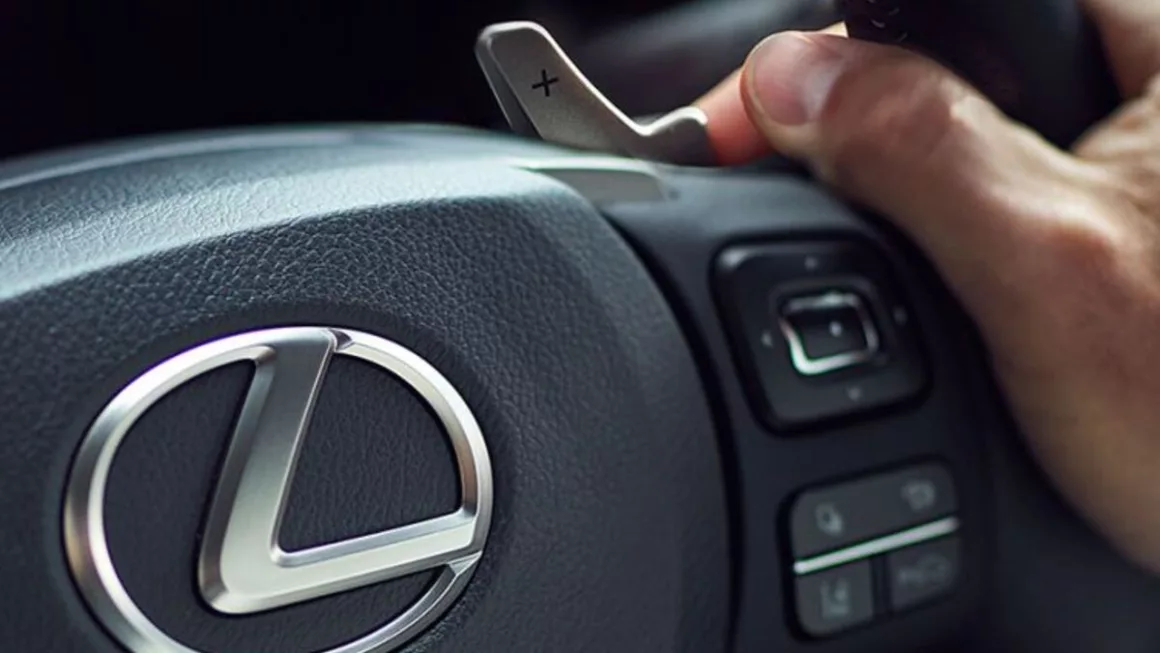
Paddle Shifters are flappy levers integrated behind the steering wheel of a car with an automatic transmission. In some automatic cars, paddle shifters are attached to the steering column and thus remain stationary, unaffected by the steering wheel turning, while in most cases, they are attached to the back of the steering wheel and thus turn with the steering wheel. By pulling the paddle shifters, a driver can manually change gears in a vehicle with an automatic transmission. In this article, we explore several aspects of the paddle shifters, including their functionality and uses.
How do Paddle Shifters work?
Paddle shifters work using an electronic circuit, which connects them to the vehicle’s automatic transmission system. There are two paddles, one has a “+” marked on it and the other has a “-” marked on it. “+” means upshift and “-” means downshift. When the driver pulls the “+” paddle, an electronic signal is sent to the transmission, and it engages the gear right higher than the previous one. For example, if the car is running in the third gear, pulling “+” will move it to the fourth gear. Likewise, pulling the “-” paddle shifter engages the gear just lower than the previous one.
In some cars, the paddle shifters remain active when the car is in drive, while in some cars, the driver needs to shift the car into manual mode to use the paddle shifters. The vehicle’s electronic control unit (ECU) makes sure that the gear engages smoothly and efficiently. It also makes sure to avoid the gear shift that can cause damage to the engine. For example, if a car is driving at 80 km/hr in the sixth gear, and the driver pulls the “-” paddle five times to drop the gear ratio to the first gear, the ECU would detect that it would over-rev the engine and ignore the downshift command.
READ MORE: Automatic Cars with Paddle Shifters
Advantages of Paddle Shifters
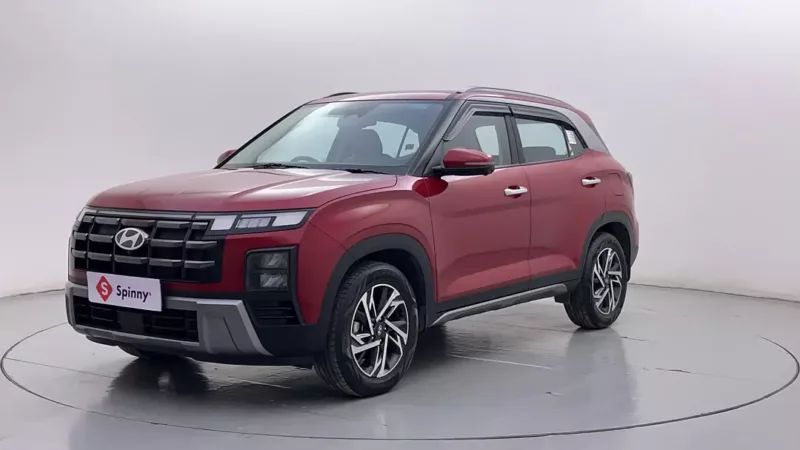
Today, while many cars come with paddle shifters, like the Hyundai Creta, many drivers do not use them as they do not need to. Most modern automatic transmissions are good at engaging the right gear at the right time. However, in many situations, using the paddle shifters to engage a different gear than the one engaged automatically can be advantageous. Here are some of these conditions.
Uphill or downhill driving
When you are driving downhill, you might want a lower gear to be engaged to increase engine braking, in order to save your brakes. Likewise, when you are driving uphill, you might choose to preselect a lower gear to use maximum torque for climbing. While the automatic transmission eventually downshifts on its own, taking manual control and changing gear ahead of time delivers a smoother drive.
The meat of the matter is that you have control over the automatic transmission, as you can see the surface ahead of the car and judge which gear should be engaged, while the ECU can only judge the driving requirement based on current circumstances.
Starting on a slick surface
On slick or slippery surfaces, instead of starting the car in first gear, you might choose to start the car in second gear to reduce the amount of torque and avoid wheel spinning.
Driving fun
Most folks who enjoy driving prefer manual cars to automatic cars. The reason is simple – they want maximum control over the car. Therefore, paddle shifters are something a driving enthusiast generally wants in an automatic car. With paddle shifters onboard, a driver can change the gear as they wish and extract maximum fun from a car’s powertrain.
Overtaking
The ECU cannot detect whether you are overtaking or not, and it chooses the gear based on how it is being driven. While overtaking, you often want to quickly downshift to accelerate faster. In such situations, using paddle shifters can be ideal.
Paddle Shifters in Electric cars and Hybrid cars
The paddle shifters in electric cars and hybrid cars are used to adjust the regenerative braking. As opposed to what it sounds like, regenerative braking is the process related to the electric motor of an electric car, not its brakes. Essentially, regenerative braking is a mechanism in which the electric motor of an electric car or a hybrid car can be turned into a generator to recharge the battery during deceleration and braking. The momentum of the vehicle is used to generate electricity; therefore, the vehicle slows down even without pressing the brake pedal. Some vehicles offer different levels of regenerative braking, and to switch between the levels of regenerative braking, paddle shifters are installed. These paddle shifters look like those on the ICE cars but have completely different functionality.
Summary
Paddle shifters in a car offer the best of both worlds – manual control over the car for maximum engagement as well as the ease and convenience of the automatic transmission. At the same time, paddle shifters in electric cars and hybrid cars are there to adjust the level of regenerative braking. Whether you are a car enthusiast or simply inquisitive as to what those flappy pedals in an automatic car are, understanding the functionality and uses of paddle shifters can help you make a sound decision while buying your next automatic car.
FAQs
Q. What are paddle shifters?
Paddle Shifters are flappy levers integrated behind the steering wheel of a car with an automatic transmission. There are two paddles, one has a “+” marked on it and the other has a “-” marked on it. “+” means upshift and “-” means downshift. When the driver pulls the “+” paddle, an electronic signal is sent to the transmission, and it engages the gear right higher than the previous one. For example, if the car is running in the third gear, pulling “+” will move it to the fourth gear. Likewise, pulling the “-” paddle shifter engages the gear just lower than the previous one.
Q. Which cars in India offer paddle shifters under Rs 20 lakh?
Many cars in India that offer paddle shifters under Rs 20 lakh, for example, Hyundai Creta, Kia Seltos, Kia Sonet, Hyundai Venue, Tata Nexon, Tata Curvv, Hyundai Verna, Honda City, and more.
Q. When should I use paddle shifters?
You use the paddle shifters to manually shift gears in an automatic car. There are some conditions in which most drivers prefer to use the paddle shifters, for example, quick overtakes, keeping the right gear while driving uphill or downhill, starting the car on slick surfaces, and enjoying a car’s driving performance.