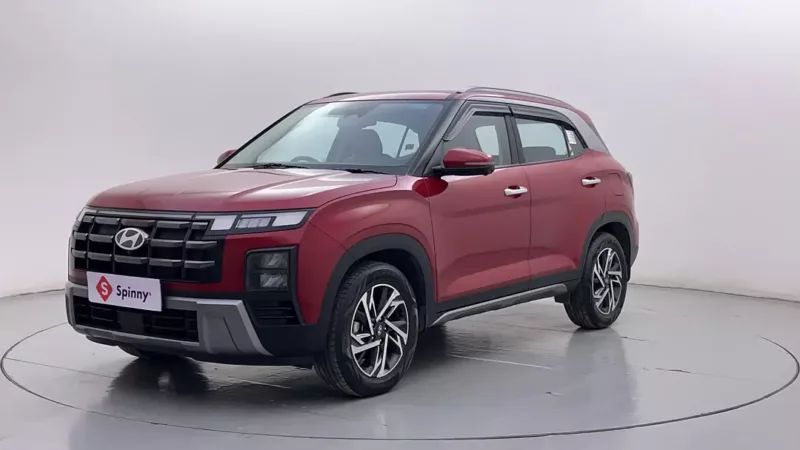

The Volkswagen Virtus is a luxury sedan that combines German engineering with contemporary design and feature-packed comfort. Above the Vento, the Volkswagen Virtus has been discussed for its premium driving experience, spacious cabin, and fuel-efficient turbo-petrol engine options.
However, owning a Virtus isn’t just about its sleek exterior or tech-laden interiors. Long-term operating expenses, such as fuel economy, service fees, and repairs, bulk up its real value. These expenses are likely to increase the cost of ownership significantly within five years.
The good news for buyers is that Volkswagen’s authorised service network in India provides reliable maintenance options, while premium-quality spare parts ensure durability. If you’re considering the Virtus for daily commuting or weekend drives, understanding its running costs can help you plan better.
In this guide, let’s break down the Volkswagen Virtus service cost, fuel expenses, and overall 5-year ownership charges.
Table of Contents
Volkswagen Virtus: Fuel Type and Mileage Overview
The Volkswagen Virtus is available with several turbo-petrol engine variants and offers both manual and automatic transmission options. The following summary comparison is of the ARAI-certified mileage of variants available:
| Fuel Type | Transmission | ARAI Mileage |
| Petrol | Manual | 20.08 kmpl |
| Petrol | Automatic | 18.45 kmpl |
The figures show that the Virtus strikes the perfect balance between performance and fuel economy. The manual variants are suitable for city users, while the automatic variants offer comfort without compromising efficiency too much.
Real World Mileage Used for Calculations
Real-world driving conditions often differ significantly from the standardised ARAI-rated figures provided by manufacturers. It is essential to recognise this difference when projecting the long-term running expenses of a car like the Volkswagen Virtus. In real-life, day-to-day driving conditions, the Virtus returns mileage readings which are more representative of how it would be driven under normal circumstances.
For example, the Volkswagen Virtus 1.0 Turbo Petrol Manual achieves a combined real-world fuel efficiency of approximately 17.0 kmpl, offering motorists optimal performance in both city and highway driving.
On the other hand, the Volkswagen Virtus 1.0 Turbo Petrol Automatic demonstrates a combined real-world mileage of around 10.79 kmpl, with a breakdown of 8.50 kmpl in city traffic and 14.78 kmpl on highways.
These numbers provide prospective owners with a better estimate of the car’s fuel efficiency in real-life driving conditions, allowing them to make more informed judgments about fuel costs and overall running expenses.
Annual and 5-Year Fuel Cost Estimate
For this estimate, an average annual driving distance of 10,000 km has been considered. The table below shows the approximate annual and 5-year fuel expenses based on the mileage figures of different fuel variants.
| Variant | Real-World Mileage | Fuel Required (Annual) | Annual Fuel Cost | 5-Year Fuel Cost | Fuel Cost/km |
| Petrol + Manual | 17.0 kmpl | 588.24 L | ₹58,824 | ₹2,94,120 | ₹5.88/km |
| Petrol + Automatic | 10.79 kmpl | 927.50 L | ₹92,750 | ₹4,63,750 | ₹9.27/km |
Note: Please note that these calculations are based on average fuel prices (₹100/l for petrol) and standardised mileage figures. Actual costs may vary depending on fuel prices, driving habits, traffic conditions, and vehicle maintenance.
Volkswagen Virtus: Service and Maintenance Costs Over 5 years
The Volkswagen Virtus is a luxury mid-size sedan that incorporates German engineering with modern practicality. The Virtus features several petrol engine options (1.0 TSI MT/AT and 1.5 TSI DSG), meaning it is equipped to handle both daily city drives and road trips. Its bold styling, roomy interior, and safety emphasis have made it one of the segment’s strongest sedans.
When it comes to ownership, the Virtus is relatively cost-effective for a Volkswagen. The 5-year servicing cost is around ₹28,901, consisting of scheduled servicing like brake fluid top-up, oil change, replacing filters, and inspection.
Tyre replacement, which usually has to be done in the 3rd or 4th year, will cost around ₹40,000–₹45,000 per set, depending on the brand and specifications. These estimates can vary marginally with variant (1.0 TSI versus 1.5 TSI), transmission type (manual and automatic), usage pattern, and city of registration.
With Volkswagen’s larger Indian service network as well as its increased emphasis on low-cost maintenance packages, the Virtus gets a fair combination of driving dynamics and ownership economy.
Estimated Volkswagen Virtus Service Costs by Year
Volkswagen Virtus service cost estimates are displayed in the table below:
| Year | Routine Service | Additional Cost | Total Cost |
| 1st | ₹0 | ₹3325 | ₹3325 |
| 2nd | ₹2747 | ₹3928 | ₹6675 |
| 3rd | ₹1876 | ₹3626 | ₹5502 |
| 4th | ₹3350 | ₹5447 | ₹8797 |
| 5th | ₹1876 | ₹3176 | ₹5502 |
The total estimated service cost of the Volkswagen Virtus over 5 years is ₹28,901, making it one of the more affordable options in its segment for scheduled maintenance.
Insurance and Other Recurring Expenses for Volkswagen Virtus
Insurance on Virtus is more expensive compared to sub-compact sedans, but not high in the premium sedan category. Yearly insurance will cost around ₹24,000 – ₹35,000, depending on the variant, cover, and add-ons.
Petrol is the most significant operational cost. On actual use, the Virtus 1.0 TSI manual accomplishes about 17.0 kmpl, whereas the 1.0 TSI auto achieves approximately 10.8 – 11.5 kmpl in fraction-of-city driving. For heavy runners, the 1.5 TSI offers improved highway fuel efficiency (15–17 kmpl) while also providing more punch.
With regular running of 12,000 km per year, fuel expenses amount to roughly ₹1.35–₹1.5 lakh per year, depending on the model and fuel cost. Tyre replacement will be in the 3rd or 4th year at ₹40,000–₹45,000 per set.
Volkswagen car resale values have strengthened over the years, and the Virtus continues to enjoy high demand due to its safety features, build quality, and DSG performance options.
Total Ownership Cost of Volkswagen Virtus (5-Year Estimate)
The table below describes the detailed overview of the total ownership cost of the Volkswagen Virtus over five years:
| TCO Calculation | Year 1 | Year 2 | Year 3 | Year 4 | Year 5 | Total |
| Insurance Cost | ₹24,000 – ₹35,000 | ₹24,000 – ₹35,000 | ₹24,000 – ₹35,000 | ₹24,000 -₹35,000 | ₹24,000 – ₹35,000 | ₹1,20,000 – ₹1,75,000 |
| Fuel Cost | ₹58,824 | ₹58,824 | ₹58,824 | ₹58,824 | ₹58,824 | ₹2,29,120 |
| Tyre Change Cost | ₹0 | ₹0 | ₹40,000 – ₹45,000 | ₹0 | ₹40,000 – ₹45,000 | ₹80,000 – ₹90,000 |
| Service Cost | ₹3325 | ₹6675 | ₹5052 | ₹8797 | ₹5052 | ₹28,901 |
| Depreciation | ₹2,90,985 | ₹96,995 | ₹1,93,990 | ₹1,93,990 | ₹1,93,990 | ₹9,69,950 |
| TCO | ₹3,77,134 – ₹3,88,134 | ₹1,86,494 – ₹1,97,494 | ₹3,21,866 – ₹3,37,866 | ₹2,85,611 – ₹2,96,611 | ₹3,21,866 – ₹3,37,866 | ₹14,92,971-₹15,57,971 |
| TCO/KM | ₹377 – ₹388 | ₹186 – ₹197 | ₹321 – ₹337 | ₹285 – ₹296 | ₹321 – ₹337 | ₹1492 – ₹1557 |
How to Reduce Your Volkswagen Virtus’s Running Cost?
The Volkswagen Virtus is a luxury mid-size car boasting German engineering fame, turbo-petrol engines with high performance, and feature-rich interiors. While Virtus offers a smooth driving experience, some good ownership habits can also lower its running costs and increase its long-term worth.
- Implement Timely Maintenance
Regular servicing, including engine oil change, filter replacement, brake check, and coolant level check, keeps the Virtus at optimal levels. Volkswagen services are also reasonable, with a maintenance cost over 5 years estimated at around ₹28,901. Regular servicing not only keeps expensive breakdowns at bay but also adds resale value.
- Drive Smoothly for Efficiency
Turbo petrol engines are balanced by smooth and steady driving. Gentle acceleration and braking help extract better mileage, particularly from the 1.0 TSI manual, which delivers around 17 kmpl in real-world conditions. Avoiding aggressive throttle use also reduces wear on brakes, tyres, and the turbocharger system, lowering running costs over time.
- Check Tyre Health
Virtus tyres must be changed by the 3rd or 4th year and will cost ₹40,000 – ₹45,000 for a set. Regular tyre pressure checks and rotation of tyres at servicing allow owners to prolong tyre life as well as fuel efficiency. Low tyre pressure reduces mileage by 2–3% and leads to premature tread wear.
- Choose the Right Variant
The Volkswagen Virtus is available with 1.0 TSI and 1.5 TSI engines, both of which are offered in both manual and automatic transmission options. The 1.0 TSI manual is best for city use, providing improved fuel efficiency.
For individuals who require additional convenience and power, the 1.0 TSI automatic is available. Selecting the most appropriate variant for your driving style provides the best balance between fuel economy, comfort, and performance.
- Select Comprehensive Insurance
The annual insurance on the Virtus varies from ₹24,000 to ₹35,000. Selecting comprehensive or zero-depreciation coverage results in lower repair costs in the event of an accident, especially for expensive components such as DSG transmissions or body panels. Negotiating with insurance providers and add-ons can also decrease premiums.
- Regular Battery Check-up
Although the Virtus does not include hybrid components, liquids such as engine oil, brake fluid, and coolant must be kept at complete levels. Regular battery checks also prevent unexpected replacement expenses. Keeping up with Volkswagen service alerts guarantees long-term reliability.
- Make Use of Authorised Service Centres
Having the Virtus serviced at Volkswagen-approved workshops guarantees original components, certified mechanics, and warranty cover. Although local garages are less expensive, approved servicing guarantees long-term reliability and retains resale value, avoiding surprise expenses in the future.
Summary
The Volkswagen Virtus strikes a balance between German quality of construction and practicality; however, careful usage and maintenance regulate expenses. With a 5-year servicing cost of only ₹28,901, a tyre cost of ₹80,000 – ₹90,000, and fuel costs depending on the model, the Virtus fits into the premium sedan bracket.
For buyers seeking a sedan that combines driving experience with affordable upkeep, the Virtus offers substantial value, provided owners maintain it well and drive efficiently. Its roomy interiors, cutting-edge safety features, and efficient after-sales maintenance make it an essential family car.
As Volkswagen continues expanding its service reach in India, long-term ownership is becoming easier and more cost-effective, further strengthening Virtus’s appeal.
FAQs about Volkswagen Virtus Running Cost Breakdown
Q. How much does servicing of the Volkswagen Virtus cost over 5 years?
Scheduled servicing costs about ₹28,901 across 5 years, covering essentials like oil changes, filter replacements, and brake checks. This makes the Virtus one of the more economical sedans in its segment in terms of long-term maintenance.
Q. Is the insurance costly for the Volkswagen Virtus?
Insurance will cost ₹24,000 – ₹35,000 per year. Choosing zero-deductible coverage helps reduce out-of-pocket repair expenses, and comparing policies from multiple providers can further lower the yearly premium.
Q. How can I minimise the running cost of the Volkswagen Virtus?
Stick to the factory servicing regime, keep the tyres in good shape, drive gently, and select the appropriate variant for your requirements. These habits not only save cash but also ensure the car remains in good condition, as well as retaining resale value in the long run.
Q. Does the Volkswagen Virtus hold good resale value?
Yes. Due to Volkswagen’s reputation for reliability, safety rating, and increased demand for turbo-petrol engines, the Virtus has substantial resale value. Well-maintained cars, particularly those with a service history, command a better price in the second-hand car market.
Q. Are spare parts for the Volkswagen Virtus costly?
Although Volkswagen parts are more expensive than those of mass-market sedans, they are constructed to last and persist longer. With regular use and some servicing, major parts rarely need to be replaced prematurely.