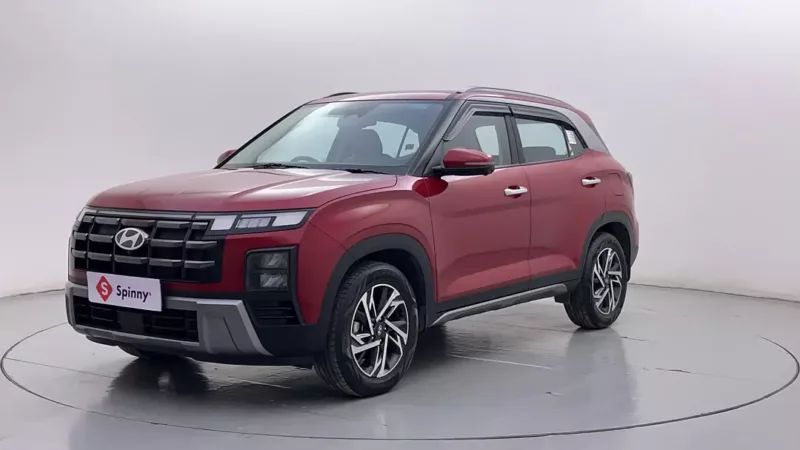
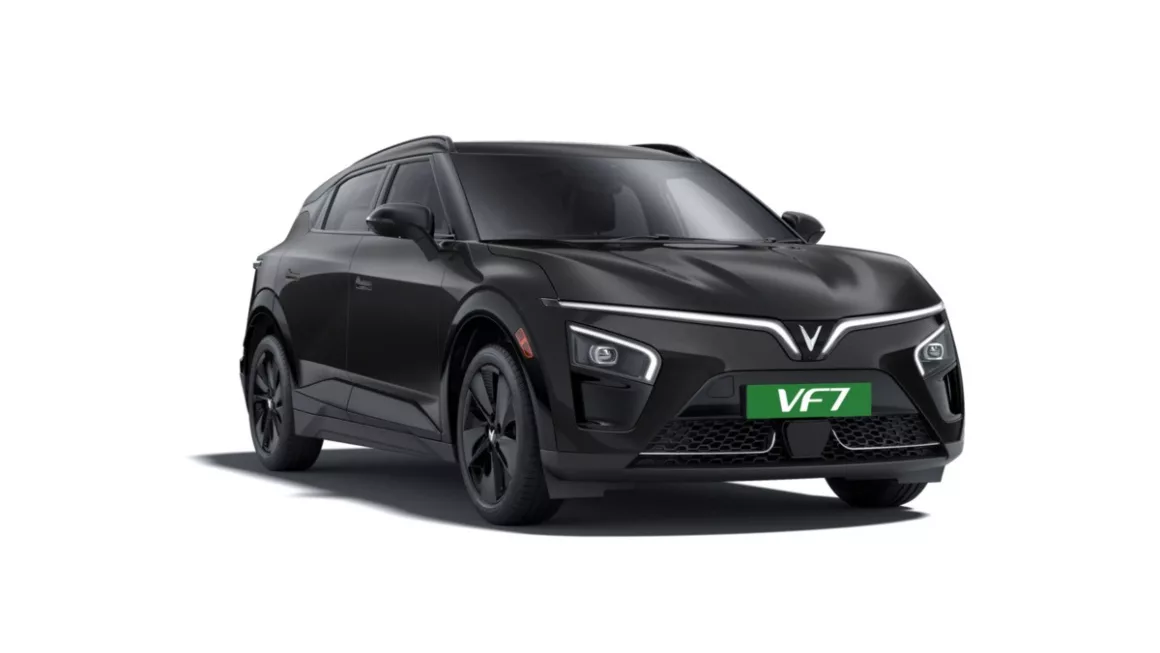
The mid-size electric SUV segment in India is at last starting to become seriously competitive, and two names are establishing rapid traction: the VinFast VF7 and Tata Harrier EV.
The Tata Harrier has already made a sufficient impression in its ICE avatar as a large, practical SUV that demonstrates road presence. Its EV version enhances that with greater range, dual-motor all-wheel drive, and Tata’s proven safety record. The VinFast VF7, meanwhile, enters the market as a style-conscious world citizen, boasting a sporty punch, futuristically styled cabins, and a wheelbase that speaks to enhanced passenger comfort.
On paper, the Tata Harrier EV edges out the VinFast VF7 in terms of range and brute power, but the VF7 retaliates with nimbler acceleration, quicker charging, and loaded-up features. But is either of these electric SUVs the smarter buy for Indian consumers? Let’s take it apart by dimensions, by how it does it, by features, by safety, and by cost.
Table of Contents
VinFast VF7 vs Tata Harrier EV: Dimensions
| Specification | VinFast VF7 | Tata Harrier EV |
| Length | 4,550 mm | 4,607 mm |
| Width | 1,893 mm | 2,132 mm |
| Height | 1,596 mm | 1,740 mm |
| Wheelbase | 2,840 mm | 2,741 mm |
| Boot Space | 537 litres | 502 litres |
| Ground Clearance | ~190 mm (estimated) | ~200 mm (estimated) |
The Tata Harrier EV is the larger of the two cars by all measurements, length and height included, so it has a stronger road presence and more of a traditional-looking SUV appearance. It has a higher approach angle, too, plus up to 200 mm clearance from the ground, putting it comfortably for Indian use, especially over poor roads and large speed humps.
The VinFast VF7 is fractionally smaller in footprint, but it uses its dimensions more sensibly. Its longer 2,840 mm wheelbase is much bigger than the 2,741 mm of the Harrier EV. That usually translates to longer rear-seat legroom and a higher cabin configuration openness, despite being smaller overall. The VF7 is also out in front of boot space with its spacious 537 litres, making it more practical for road trips, all packed up with baggage.
From a usability standpoint, the Harrier EV would be akin to a typical large SUV meant to dominate the road. In contrast, the VF7 would be akin to a sporty, space-effective option for suburban families that also require extended-range capability.
The Tata Harrier EV outclasses it by sheer size and SUV spirit, yet the VinFast VF7 has the upper hand in wheelbase and boot space, so it’s the space-maximising option from the inside.
VinFast VF7 vs Tata Harrier EV: Engine & Transmission
| Specification | VinFast VF7 | Tata Harrier EV |
| Powertrain | Dual-motor AWD | Dual-motor AWD |
| Power Output | 260 kW (≈348 hp) | 289 kW (≈387 hp) |
| Torque | 500 Nm | 504 Nm |
| Battery Capacity | 70 kWh | 75 kWh |
| Range (claimed) | 510 km | 622 km |
| Acceleration (0–100) | 5.8 seconds | 6.3 seconds |
| Transmission | Single-speed automatic | Single-speed automatic |
| DC Fast Charging | 10–70% in ~25–28 minutes (110 kW) | 10–80% in ~28 minutes (100 kW est.) |
| AC Charging | 11 kW onboard | 11 kW onboard |
It is at this point that the two SUVs expose their differences.
The clear victor in terms of muscle and range is the Tata Harrier EV. Though it has the larger 75 kWh battery, it has a stated single-charge mileage of 622 km, way above the VinFast VF7’s 510 km. It also has higher power output at 289 kW, equivalent to about 387 hp, so it has additional top-end grunt. If you are doing road trips, that extra muscle and range will be felt.
The VinFast VF7, though, is no slouch. While it has only a less powerful 70.8 kWh battery, it has superior acceleration, 0 to 100 km/h in just 5.8 seconds, compared to the Harrier EV’s 6.3 seconds. That’ll be the sporty and agile option, and some buyers who prioritise peppy performance and quickness for city highway commutes will favour it. Charging is even somewhat faster in the VF7, to take the 10–70% top-up in about 25–28 minutes, somewhat faster than the Harrier EV’s ~28-minute 10–80% replenishment.
In practical applications, the Harrier EV has longer-range capabilities and higher output power, while the VF7 has quicker acceleration and higher charging turnaround times. It is endurance versus agility all the way.
The Tata Harrier EV is the king of power and range, but the VinFast VF7 is back with surer acceleration and faster charging to be the sportier drive of the two.
VinFast VF7 vs Tata Harrier EV: Features & Comfort
| Feature | VinFast VF7 | Tata Harrier EV |
| Infotainment System | 15.6-inch central touchscreen, Google built-in | 12.3-inch infotainment screen with connected tech |
| Music System | Premium audio system (10 speakers, higher trims) | JBL premium audio with subwoofer (higher trims) |
| Climate Control | Dual-zone automatic | Dual-zone automatic |
| Ventilated Seats | Yes (front) | Yes (front, higher trims) |
| Adjustable Steering | Tilt & telescopic | Tilt & telescopic |
| Drive Modes | Multiple (Eco, Comfort, Sport) | Multiple (Eco, City, Sport, Terrain) |
| Instrument Cluster | Digital display integrated into the central screen | 10.25-inch fully digital cluster |
| Sunroof | Panoramic glass roof (higher trims) | Panoramic sunroof (higher trims) |
| Adjustable Seats | Electric adjustment (driver, higher trims) | Electric adjustment (driver & memory, higher trims) |
| Rear AC Vents | Yes | Yes |
| 60:40 Rear Seat Split | Yes | Yes |
| Cruise Control | Adaptive cruise control (ADAS-equipped) | Adaptive cruise control (ADAS-equipped) |
Both SUVs are loaded with features, but they deliver the features in opposing ways.
VinFast VF7 is going all out. The humongous 15.6-inch touchscreen is the centrepiece of the cabin and is also the infotainment centre with Google app connections and voice assistant functionality. Like in the VF6, it does not feature a standard instrument cluster, instead embedding car data into the main screen, resulting in the cabin appearing minimalist and sleek. Dual-zone climate control, front ventilated seating, and panoramic glass sunroof are standard.
The Tata Harrier EV does, though, merge cutting-edge tech with comfort. A 12.3-inch infotainment screen and a 10.25-inch virtual instrument cluster provide the Goldilocks solution with ample screen real estate, while keeping all-critical driving information directly in front of the driver. The JBL-tuned music system, drive and terrain mode settings, and ventilated front seat optimise comfort, and the sunroof and memory function for the driver’s seat emphasise Tata’s focus on luxury.
In essence, the VF7 is futuristically tech-minded, while the Harrier EV is easily user-friendly, combining technology and practicality.
The Tata Harrier EV offers a more mainstream yet premium cabin experience, while the VinFast VF7 raises the bar with its space-age minimalist aesthetic and larger infotainment display.
VinFast VF7 vs Tata Harrier EV: Safety Features
| Safety Feature | VinFast VF7 | Tata Harrier EV |
| NCAP Safety Rating | Not yet tested | Not yet tested (expected 5-star Global NCAP rating based on ICE version) |
| Airbags | 6 airbags | 6 airbags |
| ABS with EBD | Yes | Yes |
| ESC (Electronic Stability) | Yes | Yes |
| Traction Control | Yes | Yes |
| Automatic Headlamps | Yes | Yes |
| Rain-Sensing Wipers | Yes | Yes |
| Hill Hold Assist | Yes | Yes |
| Hill Descent Control | Yes | Yes (higher trims) |
| Rear Parking Sensors | Yes | Yes |
| Rear Parking Camera | 360° camera (higher trims) | 360° camera (higher trims) |
| ISOFIX Child Seat Anchors | Yes | Yes |
| ADAS Features | Yes (Level 2 ADAS: lane keep, adaptive cruise, emergency braking) | Yes (Level 2 ADAS: lane keep, adaptive cruise, emergency braking) |
Safety is one area wherein both cars appear to be sufficiently ready. The Tata Harrier EV has the added advantage of Tata’s proven and trusted safety reputation. Its ICE variant has already been assigned a 5-star Global NCAP rating, and while the EV has not been officially tested yet, it is likely to retain a similar rating. The Harrier EV is equipped with six airbags, a 360° camera, ISOFIX anchors, and an ADAS suite that comprises adaptive cruise control, lane-keeping assist, and autonomous emergency braking.
The VinFast VF7 ticks all those boxes, too. It comes equipped with six airbags, advanced driver assistance features, and a 360° camera, as well as safety essentials such as ABS, EBD, ESC, and traction control. While it does not yet have a crash-test rating to call its own, the build quality and feature list suggest good protection.
The tipping point here can be trust. Tata is already very credible in India for making safe cars, while VinFast, being relatively newer, has yet to establish that trust among consumers.
The Tata Harrier EV boasts better crash-test credentials, while the VinFast VF7 matches it in ADAS and active safety technology but currently lacks tested ratings.
VinFast VF7 vs Tata Harrier EV: Price Comparison
| Variant Level | VinFast VF7 (Ex-Showroom, Delhi) | Tata Harrier EV (Ex-Showroom, Delhi) |
| Base Variant | ₹20.89 lakh (Earth trim) | ₹21.49 lakh (base trim) |
| Mid Variant | ~₹22.99 lakh (mid trims) | ~₹25.50 lakh (mid trims) |
| Upper Mid Variant | ~₹24.49 lakh (Wind trim) | ~₹27.50–₹28.50 lakh (upper trims) |
| Top Variant | ₹25.49 lakh (top trim) | ₹30.23 lakh (top trim) |
The VinFast VF7 seems to be the value-oriented one of the two. It costs between ₹20.89 lakh and ₹25.49 lakh and is a relatively priced electric SUV that is powerful, featuring a futuristic cabin. That aggressive pricing is pretty much apparent proof of VinFast’s intent to disrupt India’s mid-size electric SUV space.
The Tata Harrier EV starts slightly higher at ₹21.49 lakh and runs up to ₹30.23 lakh for the top trims. That higher price is justified by its higher range, larger battery pack, and Tata’s proven brand equity in India. Additional variants and customisations may increase prices, which is reflected in Tata’s wider price spread.
From a value angle, the VF7 has a respectable list of features and better price-performance, whereas the Harrier EV requires a premium for its range, brand legitimacy, and larger presence.
VinFast VF7 provides a more affordable way into the electric SUV category, and the higher-priced Tata Harrier EV warrants it with higher-range abilities, broader brand recognition, and broader variant availability.
Summary: VinFast VF7 vs Tata Harrier EV
VinFast VF7 vs Tata Harrier EV comparison unveils two equally appealing electric SUVs, even if in rather different ways.
The Tata Harrier EV draws inspiration from its strengths, including the larger 75 kWh battery pack, a stated range of up to 622 ke, and a peak power output of 289 kW. It also benefits from Tata’s proven track record of producing safe cars, with the ICE variant of the Harrier earning a 5-star Global NCAP rating. It has higher ground clearance and an imposing size, which gives it an old-school SUV presence. With adequate variant spacing (₹21.49–₹30.23 lakh), it can accommodate those entering the premium segment from below and those seeking a flagship EV SUV.
The VinFast VF7, on the other hand, is younger and more spirited. It has slightly quicker acceleration 0–100 km/h in 5.8 seconds vs Harrier EV’s 6.3 seconds, and nimbler charging with its 70.8 kWh battery taking 10–70% to 100% in 25–28 minutes, fast charging: 10–70% in ~25–28 minutes at 110 kW. Inside, the state-of-the-art cabin with such a large 15.6-inch infotainment screen and top-shelf fare places it in the tech-savvy buyer’s utopia. More significantly, its price of ₹ 20.89–₹25.49 lakh keeps it super competitive, beating out the Harrier EV by quite a bit at the higher end.
All things considered, if you require more range, more presence, and the assurance of a mature Indian brand, the Tata Harrier EV has a strong argument. However, if you prioritise sportiness, quick charging, and a premium cabin experience at a comparable price, they are of higher importance to you. In that case, the VinFast VF7 has become the better all-around choice for many.
FAQ about VinFast VF7 vs Tata Harrier EV
Q. Which is cheaper, the VinFast VF7 or the Tata Harrier EV?
The VinFast VF7 is cheaper, priced between ₹20.89 lakh and ₹25.49 lakh. The Tata Harrier EV starts at ₹21.49 lakh and goes up to ₹30.23 lakh for the top trims.
Q. Which electric SUV has better range: VinFast VF7 or Tata Harrier EV?
The Tata Harrier EV has a better range, with its 75 kWh battery delivering up to 622 km. The VinFast VF7, with its 70.8 kWh battery, offers a range of up to 510 km.
Q. Which has better performance: VinFast VF7 or Tata Harrier EV?
The VinFast VF7 accelerates quicker, doing 0–100 km/h in 5.8 seconds compared to the Tata Harrier EV, which takes 6.3 seconds. However, the Harrier EV produces more power at 289 kW versus the VF7’s 260 kW.
Q. Which electric SUV charges faster: VinFast VF7 or Tata Harrier EV?
The VinFast VF7 charges slightly quicker, going from 10–70% in around 25–28 minutes with a 110 kW DC charger. The Tata Harrier EV takes around 28 minutes for a 10–80% charge.
Q. Which SUV has better features and comfort: VinFast VF7 or Tata Harrier EV?
The VinFast VF7 offers a futuristic cabin with a 15.6-inch touchscreen, dual-zone climate control, and a minimalist design. The Tata Harrier EV features a more traditional layout, equipped with a 12.3-inch infotainment system, a 10.25-inch digital cluster, JBL audio, and terrain drive modes.
Q. Which is safer: VinFast VF7 or Tata Harrier EV?
The Tata Harrier EV benefits from the ICE Harrier’s 5-star Global NCAP rating, which boosts buyer confidence in its crash safety. The VinFast VF7 also comes with ADAS, six airbags, and a 360° camera, but its crash-test results are not yet available.
Q. Which electric SUV should I buy: VinFast VF7 or Tata Harrier EV?
Buy the VinFast VF7 if you prefer quicker acceleration, a futuristic cabin, and lower pricing. Choose the Tata Harrier EV if you want longer range, more power, and the trust of an established Indian brand.