Maintaining a comfortable cabin environment is essential for an enjoyable driving experience. Modern vehicles now come equipped with advanced climate control systems designed to do far more than simply adjust the temperature. These smart systems integrate multiple components that work seamlessly together to deliver optimal comfort at the touch of a button.
Climate control technology has transformed car interiors into personalised comfort zones. Understanding the different types of climate control systems helps drivers choose the right features to suit their needs and enjoy a safer, more pleasant journey.
What is Climate Control in a Car?
Climate control takes air conditioning to the next level. It goes beyond simply cooling your car or home, offering a smart system that maintains your preferred comfort settings automatically. Picture stepping into your car on a frosty winter morning and being welcomed by a warm, cosy interior, or returning home during a scorching heatwave to find the perfect level of cool.
That is the convenience climate control provides. Using sensors to monitor temperature, humidity, and even air quality, it makes precise adjustments to keep you comfortable at all times.
Some systems even offer separate climate zones, allowing drivers and passengers to enjoy their own customised settings. While traditional air conditioning is like a basic fan, climate control is more like having your own personal weather assistant.
What are the Different Types of Climate Control Systems in a Car?
There are several types of climate control systems, each designed with unique features to enhance comfort and improve air quality within vehicles. Those are as follows:
Manual Air Conditioning (AC)
The most basic form of climate control is the manual AC system. In this setup, the driver manually adjusts the temperature, fan speed, and airflow direction without any automatic regulation.
Although it lacks sophisticated features such as air purification and advanced dehumidification, it remains an affordable option that delivers sufficient cooling, particularly in regions with moderate climates.
Automatic Climate Control
A step up from manual systems is automatic climate control, which eliminates the need for constant temperature adjustments. These systems monitor the cabin’s temperature and automatically adjust the heating, cooling, and fan settings to maintain the chosen level of comfort.
Many automatic systems are multi-zone, allowing both the driver and passengers to customise their preferred temperature settings, making long drives far more comfortable.
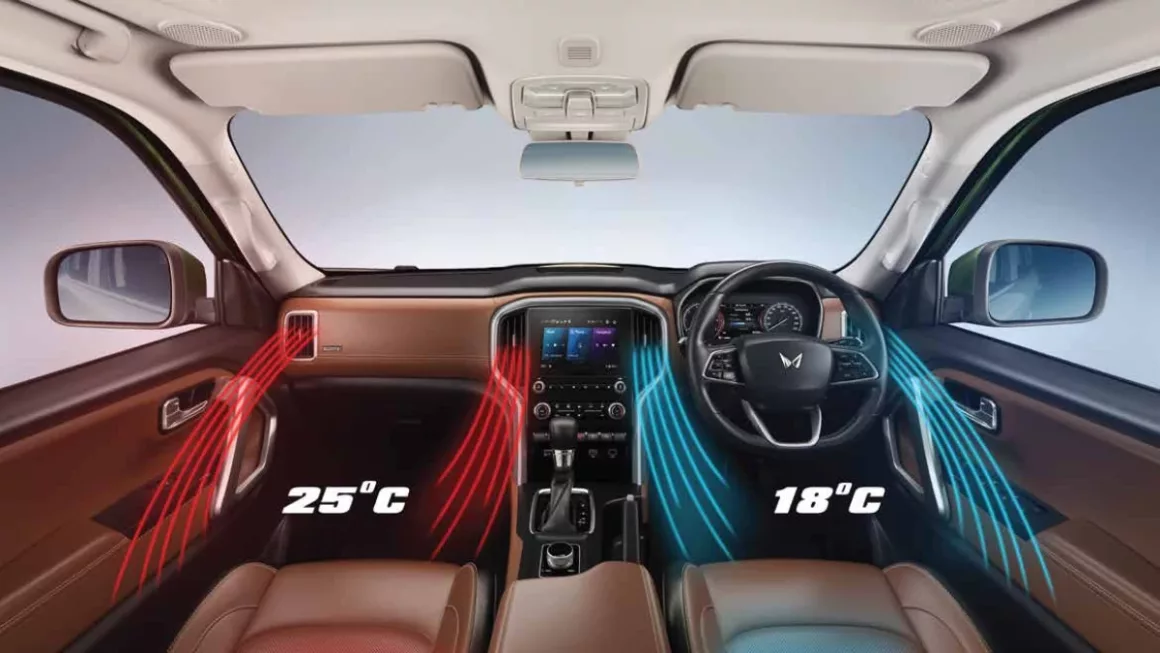
Dual-Zone Climate Control
For greater flexibility, a dual-zone system allows personalised climate control for different areas of the vehicle. The dual zone climate control lets the driver and front passenger set individual temperatures, while multi-zone systems extend this convenience to rear passengers.
This feature is particularly useful for families or groups with varying comfort preferences, reducing disagreements over temperature settings and ensuring a pleasant journey for all.
Tri-Zone Climate Control
Tri-zone climate control gives individual temperature settings to the driver, front passenger, and those seated in the rear. The controls are often positioned at the back of the centre console for easy access by rear passengers.
This feature is commonly found in SUVs, crossovers, and minivans equipped with a third row of seats. Overall, it provides a more personalised and comfortable in-car environment for everyone on board.
Four-Zone Climate Control
Four-zone climate control represents one of the most sophisticated versions of the system. It allows each seat occupant to independently select their preferred temperature, ensuring maximum comfort for all passengers.
In a four-seat vehicle, for example, every passenger can customise their climate settings thanks to strategically placed air vents throughout the cabin.
Advanced Air Filtration Systems
High-end vehicles often include advanced air filtration technology to maintain a clean and healthy cabin environment. These may feature HEPA filters, activated carbon filters, and ionisers.
HEPA (High-Efficiency Particulate Air) filters capture microscopic particles as small as 0.3 microns, effectively removing dust, pollen, and allergens. Activated carbon filters absorb unpleasant odours and harmful gases, including volatile organic compounds (VOCs), helping to ensure fresher, safer air inside the car.
How Does Climate Control Work?
The primary function of a car’s climate control system is to adjust the cabin temperature quickly and efficiently, whether it needs to be cooled or heated. It relies on a vapour-compression system, which operates on the same principles as a household refrigerator to lower the air temperature inside the vehicle.
This process can also be reversed to produce warm air when needed. Climate control systems use multiple temperature sensors to continuously monitor the cabin’s air temperature. Here is a simplified explanation of how it works:
- Step 1: The system draws in air from outside the vehicle.
- Step 2: Warm air passes through the evaporator, where it is cooled by a liquid refrigerant.
- Step 3: When heat is required, the cooled air is directed to the condenser instead of the evaporator. Inside the condenser, the air is heated under pressure before moving to the compressor.
- Step 4: The compressor then distributes the conditioned air, either warm or cool, throughout the cabin as required.
What are the Benefits of a Climate Control System in a Car?
Climate control systems in vehicles offer a wide range of benefits, whether you opt for a simple manual setup or a fully automated one with advanced features.
Temperature Regulation
One of the primary functions of a climate control system in vehicles is to regulate the interior temperature. Cabin temperature plays a significant role in passenger comfort, alertness, and overall driving performance.
Extreme heat or cold can not only be uncomfortable but may also pose safety risks. A well-designed climate control system maintains a stable and comfortable temperature, protecting both passengers and the vehicle’s interior from harsh weather conditions.
For example, on a hot summer’s day, the cooling system ensures the cabin remains pleasantly cool, while during colder months, the heating function keeps passengers warm and comfortable.
Humidity Control
Modern climate control systems are also designed to manage humidity levels inside the car. Without proper regulation, high humidity can create discomfort, while low humidity may cause dry skin, irritation, and breathing difficulties.
Advanced HVAC systems help stabilise humidity using air conditioning units, vents, and other integrated mechanisms. This not only enhances comfort but also reduces window fogging, which is essential for maintaining visibility and ensuring safe driving.
Improved Air Quality
A major advantage of contemporary climate control technology is its ability to improve the quality of air within the vehicle cabin. These systems are equipped with filters to capture dust, pollen, smoke, and other pollutants, creating a cleaner and healthier environment. This is particularly beneficial for passengers with allergies or respiratory conditions.
Premium climate control systems often include HEPA filters or ionisers, which can trap microscopic particles and bacteria, making them especially valuable in urban areas with higher pollution levels or during seasonal changes when allergens are more prevalent.
What is the Difference Between Air Conditioning and Automatic Climate Control Systems?
The following table shows the difference between an air conditioning system and an automatic climate control system:
| Parameters | Air Conditioning | Automatic Climate Control System |
| Description | Works similarly to a car’s refrigerator, cooling the cabin air. | Maintains the cabin at a pre-set temperature automatically. |
| Function | Relies on fans to circulate and adjust air temperature manually. | Uses a ‘set and forget’ mechanism to keep the selected temperature constant. |
| Cost | Generally affordable and available in most vehicles. | It is usually more costly due to its advanced technology. |
| Operation | Requires manual changes to temperature, fan speed, and airflow direction. | Adjusts these settings automatically for convenience. |
| Flexibility | Offers limited control over temperature adjustments. | Provides greater precision and flexibility in temperature regulation. |
| Commonly Found in | Standard in vehicles across all price ranges. | More commonly featured in premium cars, typically B-segment models and above. |
| Key Components | Includes fans, evaporators, condensers, expansion valves, and compressors. | Combines air conditioning components with in-car heaters, sensors, and pre-programmed control units. |
Climate Control vs Air Conditioning: Which Should You Choose?
The right choice depends on your driving preferences, comfort needs, and budget. Climate control is widely regarded as the more advanced option, offering the same manual control as air conditioning but with far greater convenience.
Its automatic mode maintains the chosen temperature without constant adjustments, helping you stay focused while driving. Multi-zone options like dual, tri, and four-zone climate control add another layer of comfort, allowing different passengers to set their preferred temperatures, which is especially useful for families or long trips.
However, cost is an important factor to consider. Climate control typically comes at a higher price, often bundled with higher trim levels or as a premium add-on. On the second-hand market, the price difference between vehicles with climate control and those with standard air conditioning is usually much smaller.
If your priority is simplicity and affordability, traditional air conditioning is still a solid choice. It performs the same essential function of keeping the cabin cool and comfortable, making it ideal for those on a tighter budget.
Summary
Climate control systems have transformed the driving experience by providing comfort, safety, and convenience for passengers in all weather conditions. By regulating temperature, humidity, and air quality, climate control not only enhances comfort but also supports driver focus and well-being during every journey.
As vehicles continue to evolve, manufacturers are introducing smarter, more energy-efficient climate solutions, giving drivers even more control and personalisation. Choosing the right system for your car ensures you stay comfortable, healthy, and in command, no matter where the road takes you.
FAQs about the Types of Climate Control in Cars
Q. How to set the temperature in the car?
Climate control systems allow you to set the exact temperature inside your car, typically in 0.5°C increments. Most systems also feature an ‘Auto’ mode, where you simply select your preferred temperature and the system automatically regulates the heating or cooling, as well as the airflow intensity, to maintain that setting without further adjustments.
Q. What is a two-zone climate control system?
Many vehicles are equipped with climate control systems designed to maintain different temperatures in separate areas of the cabin. This feature is commonly known as two-zone or dual-zone climate control. While this setup offers individual comfort for the driver and front passenger, premium vehicles may include additional zones to extend this personalised climate control to rear-seat passengers as well.
Q. Do climate control systems include air filters?
Yes, many have filters to remove dust, pollen, and pollutants, while high-end systems may feature HEPA or carbon filters for cleaner air.
Q. Does using climate control reduce fuel economy?
Yes, extended use of climate control can influence fuel economy, especially in older cars. That said, most modern climate control systems are built to be highly energy-efficient, meaning their impact on fuel consumption is generally quite small.