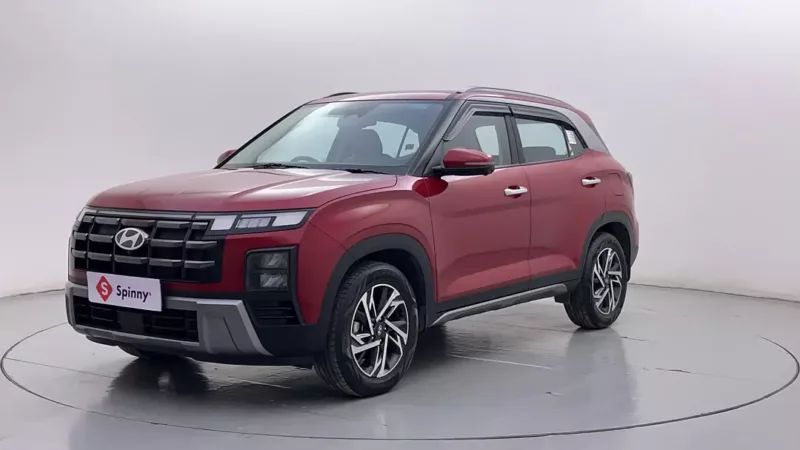

Toyota Glanza has established its name as a feature-rich, premium-looking hatchback that combines Toyota’s reliability with the proven engineering of Maruti Suzuki. It’s a model that attracts first-time buyers and upgrade buyers due to its spacious cabin, smoothness, and extensive safety features list that makes city commuting effortless. But among its biggest attractions—and a factor of preference among buyers—lies its fuel economy.
Whether it is the classiness of the petrol engine or the factory-fit CNG variant, Glanza mileage has a defining effect on running costs, future savings, and overall ownership happiness. Understanding where each variant excels and fails under normal day-to-day scenarios helps make the best decision based on lifestyle.
Why You Should Care About Glanza Mileage
Mileage isn’t some figure you recite at the tea stall—it’s among the weightiest ownership determinants, defining as much your day-to-day expenses as your future happiness with the vehicle. In a country like India, where petrol prices are volatile and traffic often reduces output by half, selecting a vehicle with the right mileage can help conserve thousands of rupees over time.
But convenience is another factor—more mileage translates to fewer trips to the gas pump, less time wasted at the pump, and the assurance that you can take longer trips without constantly fretting about running on an empty gas level. Since the Glanza comes with variants running on petrol and CNG, it’s crucial to consider the difference, especially in light of your usage patterns, annual mileage, and location.
For example, CNG availability in your city could be a deciding factor just as much as the per-kilometre cost. Mileage isn’t the only decision point, but it impacts almost every aspect of ownership.
The Official Numbers (ARAI-Claimed, as of 2025)
In lab conditions, under ideal settings, here’s what the Glanza looks like on paper:
- Petrol Manual: 22.35 km/l
- Petrol AMT: 22.94 km/l
- CNG Manual: 30.61 km/kg
These numbers give a baseline. They tell us what Toyota and ARAI say the car can do. But real life? Different story.
Real-World Fuel Performance: What Drivers See
On paper, ARAI mileage looks impressive, but real life is messier. Here’s what owners and tests reveal:
Petrol Manual
- City: ~17.35 km/l, about 22.4% lower than the ARAI-claimed 22.35 km/l.
- Highway: ~22.35 km/l, matches the official figure; can slightly exceed if driven steadily.
- Average: Around 19.85 km/l over mixed use.
Petrol AMT
- City: ~16.94 km/l in typical traffic, about 26.1% lower than the ARAI-claimed 22.94 km/l.
- Highway: ~22.94 km/l under steady cruising, matching official figures.
- Average: Around 19.94 km/l over balanced city–highway driving.
- Variance: Can drop to ~10–12 km/l if driven aggressively in heavy stop–start traffic.
CNG Manual
- Claimed: 30.61 km/kg (ARAI).
- User reports: Commonly ~30–31 km/kg; in optimal highway conditions, can reach ~33 km/kg.
- Stability: Maintains mileage more consistently than petrol in city traffic, thanks to cleaner combustion and higher thermal efficiency.
These figures matter because they show how your driving style, road conditions, and even AC usage can swing fuel economy by a wide margin.
Breaking Down the Differences: What You Save (or Lose)
Here’s a proper snapshot, with numbers woven into the story:
Money Talk: Cost Per Km and Break-Even
Fuel costs are where CNG starts to shine.
Fuel Prices (mid-2025 Delhi)
- Petrol: ₹94.77 /L
- CNG: ₹76.09 per kg
Cost per km (claimed figures)
- Petrol Manual: ₹4.33/km (approx.)
- CNG Manual: ₹2.49/km (approx.)
- Saving: ₹1.84/km (approx.)
Cost per km (real-world figures)
- Petrol Manual (~19.7 km/l): ₹4.81/km
- CNG Manual (~30 km/kg): ₹2.54/km
- True saving: ~₹2.27 per km.
Break-even point
- Price gap between CNG and petrol: ~₹1,82,000.
- Savings at ~₹2.27/km = ~80,175 km to recover extra cost.
- For drivers with 20,000 km/year, break-even occurs in about four years; every km thereafter results in net savings.
So Which One Should You Get?
Petrol vs CNG Glanza, and not petrol vs diesel—it’s about fine-tuning the Glanza variant according to your way of driving, place, and yearly kilometers. Getting it wrong means incurring higher costs in the future or settling for unexpected compromises.
Urban Commuter (<10,000 km/year)
- Best pick: Petrol Manual.
- Why: At this mileage, you won’t recover the extra ₹1,82,000 CNG cost before you sell or upgrade. Petrol offers solid mileage, eliminating the need to worry about CNG availability or waiting in long queues at filling stations.
- Example: A city driver doing 25 km/day will save only ₹12,000–₹15,000 a year with CNG, too little to justify the initial premium.
Heavy Daily Driver (20,000+ km/year)
- Best pick: CNG Manual.
- Why: You’ll hit the break-even point in about 4 years, and after that, it’s all profit. The savings can easily cross ₹40,000 a year, which could cover insurance or maintenance.
- Example: A cab aggregator driver or corporate commuter doing 80–100 km/day will see fuel bills almost halved.
Highway Traveller
- Best pick: Petrol Manual.
- Why: Petrol’s better power output and lighter weight make overtakes smoother, especially with a full load. CNG works, but pump availability is less reliable on highways, and you’ll need to plan routes around refuelling stops.
- Example: If you frequently do Delhi–Jaipur or Mumbai–Pune trips, petrol keeps you flexible.
Mixed-Use Driver (City + Highway, 15,000–20,000 km/year)
- Best pick: Depends on priorities.
- If cost savings rank highest → CNG Manual.
- If you want convenience and smoother driving in traffic → Petrol AMT.
- Why: At this mileage, both options work financially, so it boils down to whether you value ₹30,000–₹35,000 yearly savings more than comfort and slightly better performance.
Performance-Oriented Driver or Frequent Heavy Loads
- Best pick: Petrol Manual.
- Why: The 13 bhp and ~14.5 Nm torque drop in the CNG is noticeable when you’re fully loaded or driving in hilly regions. Petrol maintains responsiveness and acceleration without compromise.
- Example: If you’re based in a hill station or often travel with a packed boot, petrol’s extra grunt will make a real difference.
In short:
- Drive less? Pick petrol.
- Drive a lot? Pick CNG.
- Need convenience in city traffic? Petrol AMT.
- Love road trips or live in a performance-demanding region? Petrol manual wins.
Conclusion
Choose your Glanza for how you drive, not just what it costs today: the Petrol Manual keeps the upfront price low, feels familiar, and suits mixed city-highway use; the Petrol AMT trades a bit of efficiency and a higher purchase price for effortless traffic driving and is ideal for mostly urban commutes; and the CNG Manual delivers the lowest running costs if you cover high monthly kilometres, giving long-term savings without sacrificing everyday practicality. A quick rule is to estimate your monthly kilometres and fuel spend: high usage usually makes CNG pay back over time, while lighter or irregular driving keeps petrol the simpler choice.
FAQs about Toyota Glanza Mileage
Q. What’s the real mileage difference between petrol and CNG Toyota Glanza?
Petrol manual: ~17–20 km/l (city vs highway). AMT: ~16–20 km/l. CNG: Real-world ~30 km/kg, occasionally 33–36 km/kg.
Q. Is the CNG’s lower power noticeable?
Yes, there’s a drop from 88.50 bhp to 76.43 bhp and from 113 Nm to 98.5 Nm. You feel it at the start or up steep inclines, but normal driving is unaffected.
Q. How soon do I break even with Toyota Glanza CNG’s higher cost?
At a saving of ~₹2.27 per km, you’ll recover the ₹1,82,000 price gap in about 80,000 km. At 20,000 km/year, expect payback in roughly 4 years.
Q. Will a CNG tank impact daily usability of the Toyota Glanza?
It adds weight and reduces boot space slightly. Doesn’t hurt the daily drive, just plan for the trunk trade-off.
Q. Which Toyota Glanza variant fits occasional drivers?
Petrol manual. Lower upfront costs and CNG savings don’t add up until you exceed 20,000 km/year.