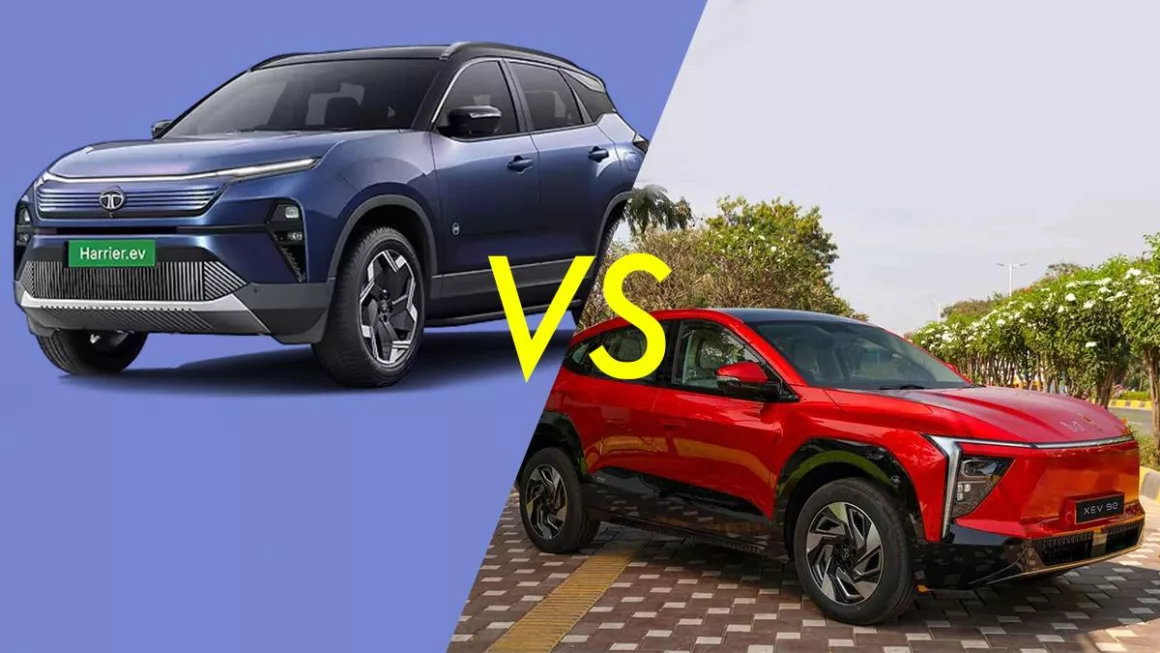
A manufacturer’s warranty is your first line of protection against unexpected repair costs, especially when a part fails early due to a manufacturing defect. In India, where driving conditions vary widely and ownership cycles are getting longer, warranty coverage matters as much as mileage, features, and maintenance costs.
In this car warranty comparison India guide, we compare Tata warranty and Mahindra warranty across the things that influence real ownership: coverage type, duration and starting point, transferability, claim process, and the ease of getting support at authorised service centres.
Do note that exact warranty terms can vary by model, fuel type, and the specific plan you choose, so always confirm the final terms on your vehicle’s warranty booklet and invoice.
Table of Contents
Tata Car Warranty vs Mahindra Car Warranty – Overview
Overview Comparison:
| Parameter | Tata Warranty | Mahindra Warranty |
| Coverage Type | Manufacturer warranty covering defects in material or workmanship; extended warranty plans available on eligible models | Manufacturer warranty covering defects in material or workmanship; extended warranty plans available on eligible models |
| Coverage Duration | Typically expressed as years plus kilometres on many models, whichever comes first | Typically expressed as years plus kilometres on many models, whichever comes first |
| Starting Point | Usually starts from retail delivery, first sale, or registration date as defined in the warranty booklet | Usually starts from retail delivery, first sale, or registration date as defined in the warranty booklet |
| Transferability | Generally transferable to the next owner, subject to process and conditions | Generally transferable to the next owner, subject to process and conditions |
| Claim Process | Through authorised Tata service centres, after inspection and diagnosis | Through authorised Mahindra service centres, after inspection and diagnosis |
| Support | Warranty support depends on policy compliance, service schedule adherence, and service history | Warranty support depends on policy compliance, service schedule adherence, and service history |
On paper, both warranties are designed for the same purpose: cover repairs or replacements if a covered component fails due to a manufacturing defect within the warranty period. The differences that matter usually show up in how the warranty is packaged for your ownership style. If you plan to keep the car beyond the base term, an extended warranty becomes a bigger decision than the standard warranty itself. If you drive high kilometres each year, the kilometre cap and the extended plan’s kilometre limit become critical.
A practical way to compare them is to map your usage first. Typical city plus occasional highway running works well with most standard warranties. Heavy highway running, frequent intercity trips, and long ownership cycles demand a warranty plan that stays valid for both time and kilometres.
Both Tata and Mahindra offer broadly similar warranty fundamentals, but the right choice depends on how well the plan matches your expected kilometres and how long you intend to keep the vehicle.
Tata Car Warranty vs Mahindra Car Warranty: Coverage Scope (What each Warranty includes)
Coverage Scope Comparison:
| Component/Area | Tata Warranty | Mahindra Warranty |
| Engine and Transmission | Generally covered for manufacturing defects in covered parts, subject to terms and exclusions | Generally covered for manufacturing defects in covered parts, subject to terms and exclusions |
| Electrical Components | Covered for defects in covered electrical parts; exclusions may apply for external damage, accessories, or modifications | Covered for defects in covered electrical parts; exclusions may apply for external damage, accessories, or modifications |
| Suspension | Covered if a covered part fails due to a defect; wear-related deterioration is usually excluded | Covered if a covered part fails due to a defect; wear-related deterioration is usually excluded |
| Steering System | Covered for defects in covered parts; alignment and periodic adjustments are typically excluded | Covered for defects in covered parts; alignment and periodic adjustments are typically excluded |
| AC System | Covered for defects in covered parts; gas refill and consumables are typically excluded | Covered for defects in covered parts; gas refill and consumables are typically excluded |
| Fuel System | Covered for defects in covered components; fuel contamination-related issues are typically excluded | Covered for defects in covered components; fuel contamination-related issues are typically excluded |
| Wear and Tear | Generally not covered (brake pads, clutch wear, tyres, wipers, bulbs, filters, fluids, etc.) | Generally not covered (brake pads, clutch wear, tyres, wipers, bulbs, filters, fluids, etc.) |
Both brands also usually provide separate warranty terms for EV high-voltage batteries and related components on their electric models, with model-specific durations and conditions. If you are shopping for an EV, treat the battery warranty as a separate checklist item and confirm its exact terms for your model.
Both warranties cover major systems for defect-related failures, but they exclude wear items and most external-cause damage. Your service discipline and modification choices influence claim success as much as the warranty document.
Tata Car Warranty vs Mahindra Car Warranty: Validity & Flexibility
Validity & Flexibility Comparison:
| Parameter | Tata Warranty | Mahindra Warranty |
| Duration | Typically time plus kilometre limit on many models, whichever comes first | Typically time plus kilometre limit on many models, whichever comes first |
| Extendability | Extended warranty options are available on many eligible models | Extended warranty options available on many eligible models |
| Eligibility | Usually depends on model, vehicle age, mileage, service history, and the purchase window for the plan | Usually depends on model, vehicle age, mileage, service history, and the purchase window for the plan |
| Ownership Transfer | Generally allowed with documentation and conditions | Generally allowed with documentation and conditions |
Validity is where a warranty becomes personal. A low-mileage owner might never come close to the kilometre cap, so time becomes the main boundary. A high-mileage owner can hit kilometre limits quickly, so the kilometre cap becomes the real limiter.
This is why an extended warranty needs more attention than the base term. A plan that adds years but does not meaningfully increase kilometre coverage may not help a high-mileage owner. On the other hand, a plan that extends both time and kilometres can be valuable for people who plan to keep their SUV for 5 to 7 years.
Tata’s extended warranty proposition often appeals to buyers who keep cars longer and want predictable ownership costs in later years, especially as vehicles become more electronics-heavy. Mahindra’s extended warranty plans can be a strong match for SUV owners too, but the exact value depends on the model and how the plan is structured for that vehicle.
Transferability is a shared advantage for both. A transferable warranty improves resale confidence, but it usually requires clean service records, compliance with scheduled maintenance, and following the brand’s transfer process within the required timelines.
Both offer comparable flexibility on paper through extended warranty and transferability. The smarter pick is the one whose extended plan matches your annual kilometres and intended ownership duration.
Tata Car Warranty vs Mahindra Car Warranty: Claim Process & Ease of Service
Claim Process Comparison:
| Parameter | Tata Warranty | Mahindra Warranty |
| Claim Method | Visit the authorised service centre for inspection, diagnosis, and warranty validation | Visit the authorised service centre for inspection, diagnosis, and warranty validation |
| Process Time | Depends on diagnosis complexity, approvals (if needed), and part availability | Depends on diagnosis complexity, approvals (if needed), and part availability |
| Payment Type | Covered repairs are generally processed without separate part payment; the customer pays for non-covered items and consumables | Covered repairs are generally processed without separate part payment; the customer pays for non-covered items and consumables |
| Assistance | The service advisor manages job cards, inspections, and warranty processing | The service advisor manages job cards, inspections, and warranty processing |
| Documentation | Service history and job card notes are typically required; additional documents may be requested | Service history and job card notes are typically required; additional documents may be requested |
Both brands follow a similar claim flow. You report the issue at an authorised service centre, the vehicle is diagnosed, and the workshop determines whether the failed component qualifies under warranty. Most smooth claims have three things in common: the issue is clearly defect-related, the car has been serviced on schedule, and the vehicle has not been modified in ways that can be linked to the failure.
Claims take longer when the cause is unclear. Examples include suspension noises that could be wear or impact-related, electrical faults that could be linked to aftermarket wiring, or issues following water exposure. In such cases, diagnosis time increases, and approvals can take longer depending on parts and policy checks.
Ease of service also depends on your local workshop quality and parts availability. Both Tata and Mahindra have large networks, but real experiences vary by city and service centre workload. For buyers, the best warranty is the one you can actually use easily in your location, so consider the strength of authorised service support in your area.
Summary
Tata warranty and Mahindra warranty are similar in their fundamentals. Both cover manufacturing defects in major mechanical and electrical systems, both exclude wear-and-tear, and both expect you to follow the recommended service schedule. Both also offer extended warranty options on eligible models and usually allow transferability with conditions.
If we have to choose one as the overall better warranty to consider for a broader range of Indian buyers, the Tata warranty has a slight edge. The reason is not that Mahindra’s warranty is weak, but that Tata’s warranty proposition often aligns well with how many Indian buyers now own cars: longer holding periods, higher electronics content in everyday models, and a growing interest in electric vehicles where warranty confidence plays a big role in purchase comfort.
Mahindra warranty remains a strong choice, especially for SUV-focused buyers who select an extended plan that matches their running and plan to keep the vehicle for several years. But as an all-round, widely applicable warranty proposition across varied buyer profiles, the Tata warranty is the safer default pick.
FAQ about Tata Car Warranty vs. Mahindra Car Warranty
Q. Which is better in this car warranty comparison, India, Tata warranty or Mahindra warranty?
Tata warranty is the better overall default for a broader set of buyers, especially when paired with an extended plan. Mahindra warranty is also strong, particularly for SUV owners who choose an extended plan that matches their kilometres and ownership duration.
Q. Does a manufacturer’s warranty cover regular service and maintenance?
No. Warranty usually does not cover routine servicing, periodic maintenance, fluids, or consumables. It focuses on covered part failures caused by manufacturing defects.
Q. Are wear-and-tear parts covered under the Tata warranty or the Mahindra warranty?
Typically no. Items like brake pads, clutch wear, tyres, wiper blades, bulbs, filters, and fluids are generally excluded as normal wear.
Q. Can the warranty be transferred to a second owner?
In most cases, yes, subject to conditions and a transfer process. Maintaining proper service history and following the documented transfer steps is important.
Q. What can lead to a warranty claim being rejected?
Common reasons include missed scheduled services, unauthorised repairs, risky electrical modifications, use of non-genuine parts in sensitive systems, and damage linked to accidents, flooding, or fuel contamination.