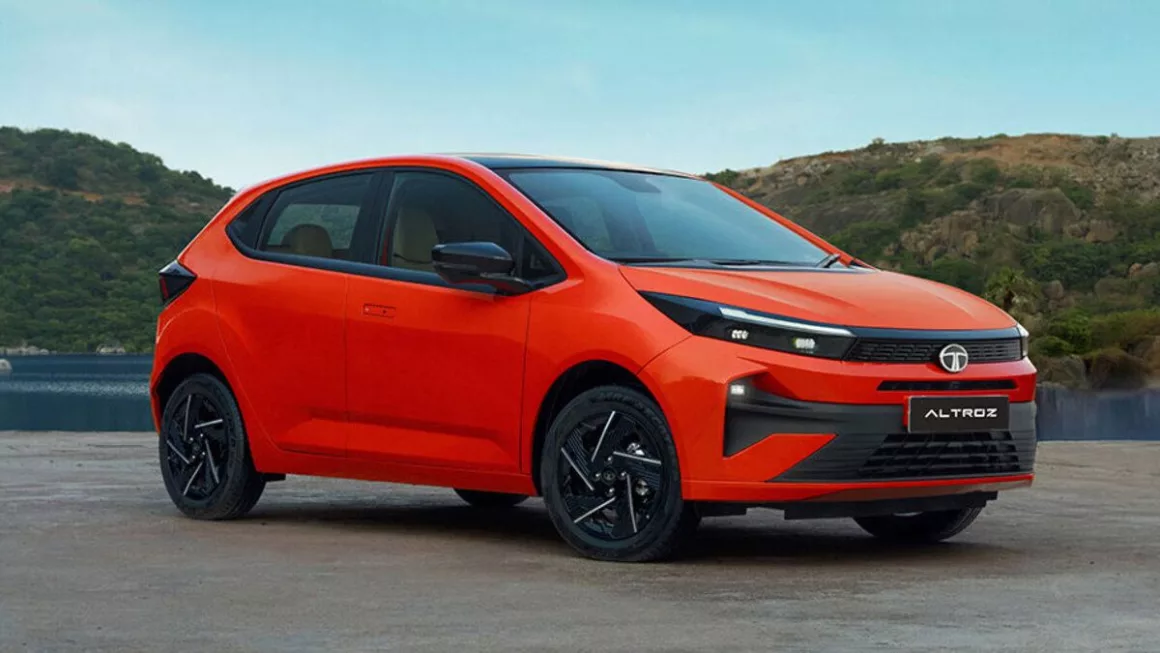
Tata Altroz has become a standard in its class, popular for its five-star Global NCAP rating, aggressive looks, and robust quality. Its broad spectrum of powertrains has contributed significantly to its success, as it appeals to a variety of buyers. Altroz has a traditional petrol engine, an affordable iCNG version, and a punchy, economical diesel engine. Choosing between these variants is not an easy proposition, and any decision usually depends on real-world Altroz mileage and overall ownership expenses.
This ultimate 2025 buyer’s guide aims to assist you in this complex decision. We’ll not only detail the official ARAI ratings meticulously, but also examine what owners get up to on real roads, and compare performance, cost of running, and long-term usability of each version. Whatever your priorities, whether you are city-centric, a frequent highway user, or an ideal seeker of balance, knowledge of each engine’s real nature is key to an enjoyable ownership experience.
Table of Contents
Understanding the Altroz’s Three Powertrains
The Altroz’s strength lies in its ability to offer three distinct technologies, each with its own character and purpose.
1.2-litre Revotron Petrol
This is its most popular and budget-friendly gateway to its Altroz lineup. It’s a 1.2L, three-cylinder, naturally aspirated gasoline engine that provides an excellent balance of performance and fuel economy. It has 86.79 bhp output and 115 Nm torque. Although a 5-speed manual transmission is a standard feature, the Altroz also comes equipped with a 6-speed DCT (Dual-Clutch Transmission), which makes it one of a very select number of cars in its class that provide this future-tech feature.
1.2-litre iCNG
The Altroz iCNG gets its 1.2L gasoline engine, albeit with a factory-installed CNG kit. Thanks to Tata’s “twin-cylinder” innovation, its CNG tanks are located under the boot floor. Brilliantly, this resolves CNG cars’ largest disadvantage, limited trunk space, freeing up much of the trunk. In CNG, its engine generates 72.49 bhp power and 103 Nm torque, and it comes with a 5-speed manual.
1.5-litre Turbo Diesel
The diesel version of Altroz uses a 1.5L turbocharged, four-cylinder Revotorq engine. This is an all-workhorse engine that delivers excellent power and mandatorily good fuel economy. The engine produces 88.76 bhp power and a class-leading 200 Nm torque. Its torque superiority ensures that it can cruise well on highways and tackle uphill stretches effortlessly. A 5-speed manual transmission comes with it.
Official vs. Real-World Mileage (as of 2025)
The ARAI figures provide a standardised benchmark, but real-world performance is what truly matters. The figures below are a compilation of owner feedback and professional tests.
| Variant | ARAI Mileage | Real-World City | Real-World Highway | Combined Average |
| Petrol Manual | 19.33 km/l | ~12-14 km/l | ~16-18 km/l | ~15 km/l |
| Petrol DCT | 19.33 km/l | ~11-13 km/l | ~15-17 km/l | ~14 km/l |
| CNG Manual | 26.2 km/kg | ~20-22 km/kg | ~24-26 km/kg | ~22 km/kg |
| Diesel Manual | 23.64 km/l | ~17-19 km/l | ~21-23 km/l | ~19 km/l |
The diesel version of Altroz uses a 1.5L turbocharged, four-cylinder Revotorq engine. This is an all-workhorse engine that delivers excellent power and mandatorily good fuel economy. The engine produces 88.77 bhp power and a class-leading 200 Nm torque. Its torque superiority ensures that it can cruise well on highways and tackle uphill stretches effortlessly. A 5-speed manual transmission comes with it.
Financial Breakdown: Cost per Km and Break-Even Analysis
The most crucial part of the comparison is the long-term running cost. Let’s use approximate mid-2025 fuel prices in Delhi for our calculations.
- Fuel Prices:
- Petrol: ₹94.77/litre
- CNG: ₹76.09/kg
- Diesel: ₹87.67/litre
- Cost per Km (Based on Real-World Averages):
- Petrol Manual: ₹94.77 / 15 km/l = ₹6.32/km
- CNG Manual: ₹76.09 / 22 km/kg = ₹3.46/km
- Diesel Manual: ₹87.67 / 19 km/l = ₹4.61/km
The running costs for the CNG and diesel variants are significantly lower than those of the petrol, with CNG holding a clear advantage.
Now, let’s consider the initial purchase price, which is a major factor in the break-even analysis.
- Price Premium (Ex-showroom, approximate):
- CNG vs Petrol: Approximately ₹1 lakh higher.
- Diesel vs Petrol: Approximately ₹2.1 lakh higher.
The break-even point is the distance you need to drive to recover the higher upfront cost through fuel savings.
- CNG vs Petrol: Price Gap: ₹1 lakh | Savings per km: ₹2.86 | Kilometers to Break Even: ~34,965 km. This is achievable for a high-mileage driver in under three years.
- Diesel vs Petrol: Price Gap: ₹2.1 lakh | Savings per km: ₹1.71 | Kilometers to Break Even: ~1,22,807 km. The higher initial cost of the diesel engine means a much longer break-even period, making it a viable option only for those who drive very long distances.
Performance, Practicality, and the Driving Experience
Petrol
Petrol 1.2L is a typical city runner. The power of the petrol engine is weak on highways, particularly when fully loaded, and downshifting is commonplace for overtakes. The DCT variant provides easy and comfortable driveability, perfect for city service. It holds an uncompromised 345-litre boot.
CNG
Even its CNG variant carries through the character of the petrol engine, but its power is reduced slightly. It is enough and then some for city duty, but it feels less spirited out on the highway. Its key practical advantage is Tata’s twin-cylinder technology, which has a 210-litre usable boot capacity, far superior to typical CNG installations.
Diesel
Its 1.5L diesel is the highest-powered variant, boasting excellent torque, and it is an easy cruiser on highways. It’s a smooth ride that can maintain high speed and climb hills without effort. A long-haul driver’s favourite, it also has an uncompromised 345-litre boot.
The Verdict: Which Altroz is for You?
For the All-Rounder (Moderate Use):
- Best Pick: Tata Altroz Petrol.
- Why: With an average city commute and a liking for an inexpensive outlay and a car that is a blast to drive, the petrol Altroz is the perfect solution. A DCT version being offered only makes it all the more accommodating for city drivers.
For the High-Mileage, Cost-Conscious City Driver:
- Best Pick: Tata Altroz iCNG.
- Why: If your motoring is predominantly urban and you achieve high yearly mileage, then the CNG’s financial argument is unbeatable. Its low cost of running and accessible boot space create an ideal combination of function and economy.
For the Enthusiast & Frequent Highway Traveler:
- Best Pick: Tata Altroz Diesel.
- Why: The diesel version of Altroz is an ideal highway cruiser. Its strong performance, high torque, and high Altroz mileage make it an affordable and comfortable ride for long hauls. Although the break-even point is high, this premium drive experience is worth paying for, especially for several individuals.
FAQs
Q. Is the performance of the CNG Altroz much different from the petrol?
A. Yes, the CNG variant has a noticeable drop in power and torque, which is most felt during highway overtakes. For city driving, the difference is less significant.
Q. Does the Altroz CNG have boot space?
A. Yes, thanks to Tata’s twin-cylinder technology, the Altroz iCNG retains a usable boot space of around 210 litres, which is a major advantage over older CNG cars.
Q. Why is the diesel Altroz a good choice for long drives?
A. Its strong torque and superior fuel efficiency make it an effortless cruiser on the highway. It can maintain higher speeds with ease, and its cost per kilometer is highly competitive on open roads.
Q. Does the Altroz come with an automatic option for all engines?
A. No. The Altroz offers a DCT for the petrol engine and a manual for the CNG and diesel.
Q. Which variant is the cheapest to run per kilometre?
A. The Tata Altroz iCNG is the cheapest to run per kilometre, with a significant advantage over both the petrol and diesel variants.