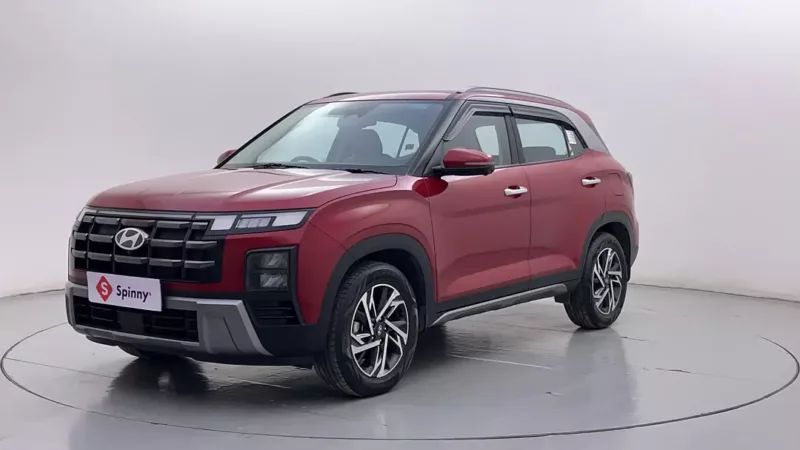

When you’re considering buying a pre-owned car from Spinny, one of your top concerns (after price and condition) is likely how good is their warranty? Spinny’s warranty is designed to provide confidence to used-car buyers as a safety net against hidden issues, but is it really comparable to what you’d get from a Hyundai warranty on a new car? Understanding the trade-offs is critical because warranty coverage influences long-term cost, repair risk, and overall ownership satisfaction.
In this blog, we will deeply compare Spinny Warranty vs. Hyundai Warranty. We’ll look at what each covers, how long the coverage lasts, how easy it is to claim, and the extra advantages Spinny might offer beyond a typical manufacturer’s warranty. Whether you’re buying a Spinny-certified used car or assessing whether to invest in a new Hyundai with extended coverage, this comparison will help you make a more informed choice.
Table of Contents
Spinny Warranty vs Hyundai Warranty – Overview
Understanding how Spinny’s used-car warranty compares with Hyundai’s manufacturer-backed warranty is important for buyers assessing protection, reliability, and long-term costs. Spinny offers short-term, high-value coverage tailored for pre-owned cars with a seamless digital claim process, while Hyundai provides multi-year support designed for new-car ownership through its authorised service network.
Before reviewing coverage scope, claim procedures, and flexibility in detail, the table below presents a clear parameter-wise comparison. It also outlines what to expect during a Hyundai warranty check, helping buyers evaluate marketplace-backed versus factory-backed protection.
| Parameter | Spinny Warranty | Hyundai Warranty |
| Coverage Type | One-year warranty, split into Comprehensive and Powertrain plans. | Basic manufacturer warranty, plus the option for a Hyundai extended warranty. |
| Coverage Duration | – Powertrain: 90 days or up to 3,000 km (from Spinny)- Comprehensive: 365 days or up to 12,000 km. | Hyundai Basic: 3 years (or model-specific km) Extended Warranty: up to the 4th or 5th year or up to a specified km, depending on the plan. |
| Starting Point | Warranty begins from the date of purchase from Spinny. | Warranty starts on the date of delivery to the first purchaser. |
| Transferability | Depends on Spinny’s terms (varies by plan) | The Hyundai extended warranty is transferable to the next owner for the remaining period. |
| Claim Process | Claims are typically raised via Spinny’s app or through their customer-care channel. | Claims handled by Hyundai authorised service centres, per their warranty policy. |
| Support | Spinny’s customer care and digital support for warranty issues. | Hyundai has a widespread service-center network; it also offers 24×7 Roadside Assistance (RSA) in certain contexts. |
Summary: Spinny’s warranty is tailored for used-car buyers with a relatively short, defined warranty period and digital-first claim process. Hyundai’s warranty offers longer-term manufacturer-backed protection with support across its service network and the option for extended coverage.
Spinny Warranty vs Hyundai Warranty: Coverage Scope (What Each Warranty Includes)
To understand how meaningful the protection is, let’s compare which car systems and components are covered under each warranty.
| Component | Spinny Warranty | Hyundai Warranty |
| Engine & Transmission | Covered under both Spinny’s comprehensive and powertrain warranties. | Hyundai covers the engine and transmission for defects under its basic warranty. |
| Steering System | Included in Spinny’s coverage. | Covered by Hyundai if there is a manufacturing defect, as per their standard warranty. |
| Braking System | Spinny’s plan covers brakes (included in its mechanical-component coverage). | Brake parts may be covered under the Hyundai warranty only if there is a defect; normal wear parts are usually excluded. |
| Air Conditioning (AC) | Part of Spinny’s comprehensive plan. | AC components are covered by Hyundai’s mechanical/electrical warranty if failure is due to workmanship or material, not maintenance. |
| Fuel System | Covered by Spinny under its standard warranty. | Hyundai covers genuine fuel system component failures under defect-related claims. |
| Electrical Components | Many electrical parts are covered in Spinny’s comprehensive plan, subject to terms. | Hyundai’s extended warranty (mechanical + electrical) covers breakdowns for certain electrical parts. |
| Wear & Tear / Maintenance Items | Not generally covered. Spinny’s warranty excludes wear-and-tear parts per its terms. | Hyundai explicitly excludes normal maintenance services (filters, oil, etc.) from its warranty. |
Summary: Spinny provides solid coverage for key mechanical systems in its used-car warranty. Hyundai’s warranty is stronger for manufacturing defects but does not cover routine maintenance or wear parts.
Spinny Warranty vs Hyundai Warranty: Validity & Flexibility
When comparing Spinny’s used-car warranty with Hyundai’s manufacturer-backed warranty, two things matter beyond coverage: how long the warranty lasts and how easily it can be extended or transferred. Spinny’s warranty offers peace of mind during the early ownership period of a pre-owned car, while Hyundai’s system is built for long-term protection.
This makes the difference especially relevant for buyers planning to keep their car for several years or those considering an extended warranty for Hyundai. Understanding these nuances helps buyers choose the right long-term protection strategy.
| Parameter | Spinny Warranty | Hyundai Warranty |
| Duration | Standard: 1 year / up to 12,000 km (for comprehensive) from purchase. | Basic: 3 years per Hyundai’s policy. Extended: Options to extend coverage to the 4th or 5th year, depending on plan and km. |
| Extendability | Spinny offers a paid extended warranty option for some of its cars. | Hyundai’s extended warranty scheme is well-defined and can be bought during the valid period. |
| Eligibility | Applicable for Spinny Assured, Assured Plus, and Budget cars that pass their inspection and meet terms. | An extended warranty is only available within Hyundai’s basic or previous extended coverage period. Also, not available for taxi/fleet vehicles. |
| Ownership Transfer | Spinny’s warranty transferability depends on their specific plan and terms—it’s not always automatic. | Hyundai’s extended warranty is transferable to a new owner for the remaining duration. |
Summary: Hyundai offers greater long-term flexibility, especially with its extended plans and transferable coverage. Spinny’s warranty is solid but more limited in duration, designed primarily for first-year protection for used-car buyers.
Spinny Warranty vs Hyundai Warranty: Claim Process & Ease of Service
A warranty is only as good as how easily you can use it when something goes wrong. Here’s how both stack up on claims.
| Parameter | Spinny Warranty | Hyundai Warranty |
| Claim Method | File a claim via Spinny’s app or through their customer-care interface. | Claims must go through Hyundai authorised service centres per their warranty policy. |
| Reporting Time / Validity Window | Spinny requires claims to be raised on time (as per their policy) to be accepted. | Warranty claims under Hyundai are generally accepted as long as the defect is genuine and proof of maintenance is available, following their process. |
| Cost Handling | For covered parts and labour, Spinny bears the cost (within the scope of its warranty). | Hyundai handles the cost of parts and labour for manufacturing-defect failures under its warranty. |
| Assistance & Support | Support via Spinny customer care, mostly digital. | Large authorised network; 24×7 Roadside Assistance (RSA) is available for Hyundai vehicles under certain plans |
| Documentation Required | Likely to need proof of Spinny purchase, claim registration, and other relevant details. | Requires a warranty certificate or registration form, service book, and maintenance proofs. Extended-warranty terms are documented. |
Summary: Spinny’s claim process is designed for convenience with a digital-first approach, while Hyundai’s claim system relies on its established service infrastructure and formal documentation but offers comprehensive support.
Spinny Additional Benefits
Beyond its warranty, Spinny offers several extra advantages that make its used-car offering more compelling. These benefits go beyond what a typical Hyundai warranty provides and add value to the ownership experience.
| Feature | Spinny’s Offering | Why It Matters (vs Hyundai) |
| 200-Point Inspection | Every Spinny Assured car undergoes a rigorous 200-point quality check before being listed. | This ensures you’re buying a used car that has already been vetted in-depth. Hyundai’s warranty doesn’t guarantee a pre-owned car was inspected thoroughly. |
| 5-Day Money-Back Guarantee | Spinny offers a 5-day return window, provided certain conditions (like km limit) are met. | Huge confidence booster for buyers: if you spot issues, you have a safety exit. Hyundai’s new-car warranty does not include such a return window. |
| Fixed-Price Assurance | Spinny’s pricing is transparent and structured, helping avoid overpaying. | While not part of the warranty itself, this fixed-cost buying model reduces financial risk. Hyundai’s purchase may not come with that same negotiation-free certainty (on used cars). |
| Buyback/Upgrade Option | Spinny offers a buyback option or trade-in upgrade for many of its cars. | Gives flexibility and financial leeway: you can exit or change without dealing with uncertain resale. Hyundai’s warranty doesn’t inherently include buyback. |
| Digital Support & Spinny Customer Care | Claims, support, and queries go through Spinny’s app/customer portal. | Very convenient for used-car owners—less dependence on physical service visits. Hyundai’s warranty is reliable but more traditional in its support structure. |
Summary: These extra inspections, return policy, buyback, and digital-first service, significantly enhance Spinny’s value proposition and mitigate many of the risks associated with used-car buying. They complement the Spinny warranty in ways that brand warranties like Hyundai’s typically do not.
Summary
After examining all aspects, here’s a consolidated perspective on Spinny Warranty vs. Hyundai Warranty and why Spinny’s warranty can often be the wiser choice for used-car buyers while Hyundai’s warranty remains strong for new-car ownership.
- Coverage Depth:
- Spinny’s warranty covers critical mechanical systems, engine, transmission, steering, etc., which is impressive for a used-car guarantee.
- Hyundai’s warranty, especially with its extended plan, is built around protecting defects in manufacturing or materials, giving more formal assurance on new vehicles.
- Spinny’s warranty covers critical mechanical systems, engine, transmission, steering, etc., which is impressive for a used-car guarantee.
- Duration & Flexibility:
- Spinny’s standard coverage is limited to 1 year / 12,000 km, but this is meaningful in the context of used-car risk.
- Hyundai offers a longer basic warranty (3 years) plus extended warranty options, making it more suitable for long-term ownership.
- Spinny’s standard coverage is limited to 1 year / 12,000 km, but this is meaningful in the context of used-car risk.
- Ease of Claims:
- Spinny’s digital-first model makes it easy to raise and track claims through its app, which is appealing for used-car buyers who may prefer less bureaucracy.
- Hyundai’s reliance on its service network and formal documentation ensures robust support and structured resolution.
- Spinny’s digital-first model makes it easy to raise and track claims through its app, which is appealing for used-car buyers who may prefer less bureaucracy.
- Value-Added Benefits:
- Spinny’s 200-point inspection, 5-day money-back guarantee, fixed pricing, and buyback option collectively reduce both financial and mechanical risk.
- Hyundai’s standard warranty focuses strictly on repair protection, with fewer buyer-friendly extras in the used-car context.
- Spinny’s 200-point inspection, 5-day money-back guarantee, fixed pricing, and buyback option collectively reduce both financial and mechanical risk.
- Ownership Risk Mitigation:
- For someone buying pre-owned, Spinny Warranty provides a safety net that feels very tailored to used-car uncertainties.
- For new car buyers or those planning to keep a Hyundai long-term, Hyundai Warranty (especially extended) gives a more predictable long-term cost structure and reliability.
- For someone buying pre-owned, Spinny Warranty provides a safety net that feels very tailored to used-car uncertainties.
Final Verdict:
- If you’re a used-car buyer, especially through Spinny, their warranty + inspection + return policy is a very strong, practical package. It addresses many of the risks inherent in secondhand car ownership.
- If you’re buying a new Hyundai or want peace of mind for 5+ years, then the Hyundai Warranty (with the optional extended plan) is likely a more robust, long-term investment.
FAQs: Spinny Warranty vs Hyundai Warranty
Q. Is Spinny’s warranty as reliable as Hyundai’s manufacturer warranty?
Spinny’s warranty is reliable for used-car protection, especially with its coverage of major mechanical components and digital claim process. However, Hyundai’s manufacturer-backed warranty offers longer duration, more formal coverage, and stronger nationwide service support.
Q. Does Spinny’s warranty cover all mechanical and electrical issues?
Spinny’s comprehensive plan covers major mechanical and selected electrical components, but wear-and-tear items, consumables, cosmetic parts, and damage caused by improper usage are excluded. Always review the specific warranty document for exact inclusions.
Q. Can I transfer Hyundai’s extended warranty to a new owner?
Yes. Hyundai allows transfer of its extended warranty to the next owner for the remaining validity period, making it useful for resale value. Transferability in Spinny’s warranty varies by plan and may not always be automatic.
Q. How do claim processes differ between Spinny and Hyundai?
Spinny offers a digital-first claim system through its app and customer support, making it straightforward for used-car buyers. Hyundai requires claims to be processed through its authorised service centres with proper documentation and proof of maintenance.
Q. Which warranty is better for a used Hyundai car: Spinny or Hyundai?
If the car is purchased pre-owned from Spinny, their warranty is tailored for early ownership risks and offers added benefits like inspection and a return window. If the car is relatively new and still eligible, Hyundai’s extended warranty is better for long-term, brand-backed protection