As the number of vehicles on Indian roads continues to rise, maintaining proper records of both vehicles and their owners is essential for road safety and regulatory compliance. This is where the Regional Transport Office (RTO) comes into the picture. It ensures that every vehicle and driver is registered, monitored, and compliant with the law.
While most of us associate the RTO with our driving test experiences, its role extends far beyond issuing licences. In this article, we break down the wide range of RTO responsibilities, the applicable charges, and the RTO codes assigned across different states. Keep reading.
What is RTO?
RTO is short for Regional Transport Office, a government agency of the Ministry of Road Transport and Highways. RTO is tasked with enforcing the Motor Vehicle Act and ensuring that all vehicles and drivers in India adhere to regulatory norms.
There are several RTOs or DTOs (District Transport Offices) in each state and Union Territory, keeping records of registered vehicles and licensed drivers, and providing valuable services such as registration, licensing, and taxation.
Important Functions and Responsibilities of RTO
The Regional Transport Office (RTO) operates in accordance with the Motor Vehicles Act’s rules and regulations. Here are some of the main functions of the RTO:
- Registration of Vehicles
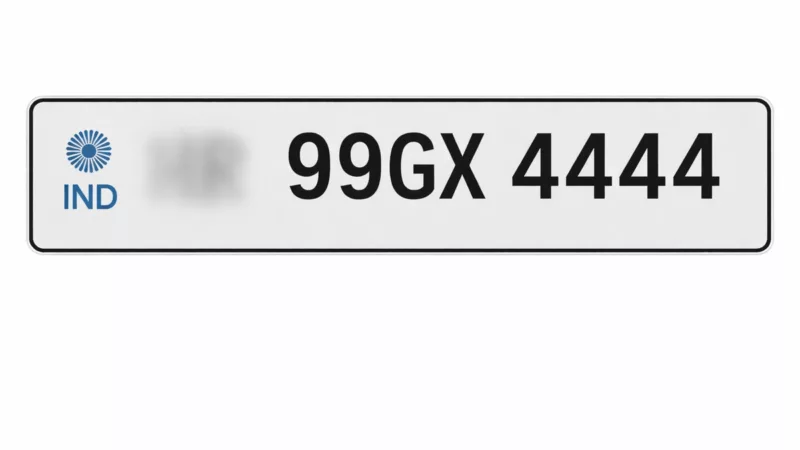
All new automobiles or two-wheelers in India must be registered with the RTO to be legally driven. RTO issues a Registration Certificate (RC) and a permanent number plate for the vehicle, which legally identifies it. RTO also performs re-registration, duplicate RCs, and transfer of ownership for second-hand vehicles.
- Issuing Driving Licenses
The RTO administers driving theory and practical tests to evaluate applicants’ driving capability. The RTO issues Learner’s Licenses, Permanent Licenses, and International Driving Permits. Furthermore, they handle license renewals and duplicate licenses so that only skilled drivers drive on Indian roads.
- Collection of Road Tax and Issuing Permits
During vehicle registration, the RTO collects road tax and other fees as applicable. It also provides permits for commercial and transport vehicles such as taxis, goods carriers, and tourist buses. This makes all commercially operating vehicles compliant with transport law.
- Vehicle Fitness Certification
The RTO periodically examines vehicles—particularly commercial vehicles—to determine whether they are fit to run on the roads and safe for the environment. Vehicles that pass the test are issued Fitness Certificates (FC). Automobiles without valid FCs are not allowed to operate since they are unsafe and polluting.
- Transfer and Verification of Ownership
When a vehicle is sold, the RTO updates the ownership information in the registration database. It facilitates a smooth and lawful transfer of Registration Certificates (RC) from buyers to sellers. The office issues No Objection Certificates (NOCs) for interstate transfers.
- Enforcement of Motor Vehicle Laws
The RTO in India enforces road safety, emission regulations, and insurance rules. It can also cancel or suspend a driver’s license for serious offences such as speeding, drunken driving, or rash driving. The RTO is also tasked with coordinating with the traffic police to enforce road discipline.
- Issuing Duplicate Documents and Conducting Auctions
In the event of lost or destroyed documents, such as RC books or licenses, duplicate copies are issued by the RTO. It also holds vehicle auctions for seized or unclaimed vehicles in accordance with proper legal protocols.
- Pollution and Environmental Control
The RTO enforces that vehicles comply with the Pollution Under Control (PUC) norms. It collaborates with testing stations to assess air quality and certify compliant vehicles, contributing to India’s battle against air pollution.
List of RTO State and Union Territory Codes of India
The codes for Regional Transport Offices vary by state and Union Territory in India, and they can be seen on vehicle registration plates. These codes are used to determine the RTO where a vehicle is registered.

Refer to the tables below to see the list of Regional Transport Office codes for each state and Union Territory:
States
| State | RTO Codes |
| Andhra Pradesh | AP |
| Himachal Pradesh | HP |
| Chhattisgarh | CG |
| Gujarat | GJ |
| Maharashtra | MH |
| Haryana | HR |
| Kerala | KL |
| Assam | AS |
| Meghalaya | ML |
| Jammu and Kashmir | JK |
| Madhya Pradesh | MP |
| Karnataka | KA |
| Jharkhand | JH |
| Manipur | MN |
| Mizoram | MZ |
| Punjab | PB |
| Tripura | TR |
| Sikkim | SK |
| Odisha | OD |
| Uttarakhand | UK |
| Bihar | BR |
| Arunachal Pradesh | AR |
| Tamil Nadu | TN |
| Goa | GA |
| Rajasthan | RJ |
| West Bengal | WB |
| Uttar Pradesh | UP |
| Telangana | TS |
| Nagaland | NL |
Union Territories
| Union Territories | RTO Codes |
| Andaman and Nicobar Islands | AN |
| Lakshadweep | LD |
| Chandigarh | CH |
| Dadra and Nagar Haveli | DN |
| Puducherry | PY |
| Daman and Diu | DD |
| Ladakh | LA |
| National Capital Territory of Delhi | DL |
RTO Fees and Charges
RTO fees can vary because they may change and can differ from one state to another:
| Service | Fees |
| Issuance/renewal of Fitness Certificate | ₹200 |
| Issuance of Learner’s Licence (LL) | ₹150 |
| Issuance/renewal of Driving Licence | ₹200 |
| Issuance of an International Driving Licence | ₹1000 |
| Test/repeat test for the issuance of Driving Licence (DL) | ₹300 |
| Registration of a two-wheeler (motorcycle) | ₹300 |
| Renewal of Driving Licence after the grace period | ₹300 (₹1000 for the delay of every year) |
| Addition of vehicle class in Driving Licence | ₹500 |
| Registration of heavy passenger vehicles | ₹1500 |
| Registration of Light Motor Vehicle | Non-Transport: ₹600, Transport: ₹1000 |
| Registration of imported two-wheeler | ₹2500 |
| Registration of imported four-wheeler | ₹5000 |
| Registration of a medium passenger vehicle | ₹1000 |
RTO Forms
The table below displays different RTO forms and briefly describes the purpose of each:
| RTO Form | Purpose |
| Form 2 | Application for Learner’s/Driving Licence and renewal of DL |
| Form 20 | Application for vehicle registration |
| Form 4A | Application for International DL |
| Form 23A | Certificate of registration |
| Form 25 | Application for renewal of Registration Certificate |
| Form 21 | Sale certificate |
| Form 34 | Application for the Addition of hypothecation/lease/hire-purchase in RC |
| Form 26 | Application for a duplicate Registration Certificate |
| Form 29 | Notice of vehicle ownership transfer |
| Form 28 | Application for NOC (No Objection Certificate) |
| Form 38 | Fitness certificate |
| Form 51 | Insurance certificate |
| Form 59 | Pollution Under Control (PUC) certificate |
How Can You Download an RTO Form?
Follow these straightforward steps to obtain an RTO form:
Step 1: Go to the Parivahan Website.
Step 2: Select the ‘Informational Services’ option from the top menu.
Step 3: Then, click on ‘Downloadable Forms’ and choose ‘All Forms’ from the drop-down list.
Step 4: A new page will appear displaying the list of forms along with their download links. The category and purpose of each form will also be indicated beside it.
How Does the mParivahan App Help Users Access RTO Services?
The mParivahan mobile app, developed by the National Informatics Centre (NIC), is the official RTO vehicle information app.
Users can view driving license and vehicle registration information, verify insurance validity, provide virtual RC and DL as valid proofs, find nearby RTOs, get vehicle details through registration number, and access services such as duplicate RC and NOC on both iOS and Android platforms.
Summary
A Regional Transport Office (RTO) is the backbone of a country’s transport administration, overseeing all vehicles and drivers under the Motor Vehicles Act. From issuing licenses to controlling pollution and collecting road tax, the RTO in India ensures transparency, legality, and safety on Indian roads.
Through digitisation of services via portals like Parivahan and apps like mParivahan, RTOs throughout India are streamlining transportation management for millions of citizens, making it quicker and more efficient.
FAQs about the Regional Transport Office (RTO)
Q. What is the function of RTO in ensuring road safety?
The RTO in India is responsible for monitoring that all motor vehicles adhere to speed limits and comply with traffic regulations. It also ensures that individuals follow road safety protocols and that drivers abide by the rules outlined in the Motor Vehicles Act.
The RTO maintains a record of all vehicles registered with third-party liability insurance and may revoke a driver’s license or a vehicle’s registration if it is found to be uninsured.Q. How can I contact the Regional Transport Office?
You can use the mParivahan app to locate the nearest RTO office or search online for the RTO in your specific state or city.
Q. How to send a request letter to the RTO?
To write a request letter to the RTO, just include your name and clearly state your question. Direct it to the appropriate authority and include any necessary documents. Usually, you can find application forms for specific needs. However, in some situations, you may need to write a letter.
Q. What is the difference between a DTO and an RTO?
An RTO (Regional Transport Office) operates at the state level, whereas a DTO (District Transport Office) operates at the district level. The main difference is in their administrative areas and jurisdictions.
Q. How can I pay my vehicle taxes at the Regional Transport Office?
The RTO offers several ways to pay vehicle taxes, including online payment systems, authorised banks, or specific counters at the RTO. You will need to provide your vehicle information and pay the required tax amount.
Q. What are the penalties for breaking traffic rules enforced by the Regional Transport Office?
Penalties for breaking traffic rules vary depending on the type and severity of the violation. The RTO works with law enforcement to enforce traffic laws and may impose fines, suspend licenses, or take legal action against offenders.