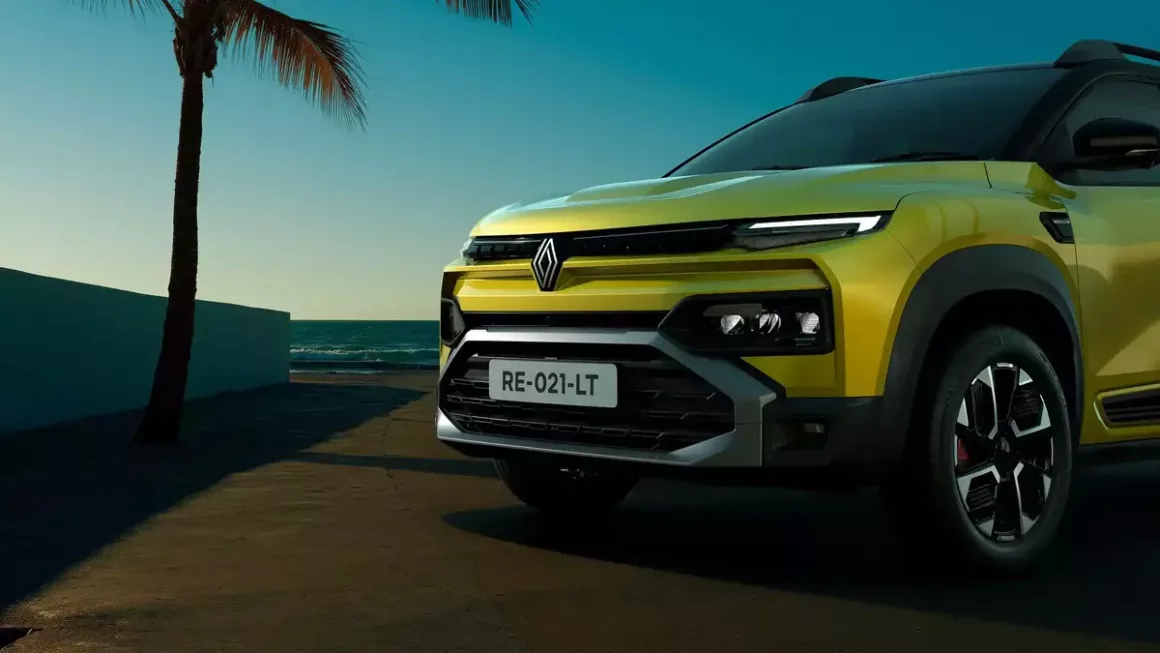
India is fast approaching the E20 fuel mandate in 2025, so petrol will be supplied with a 20% ethanol mix across the country. For car motorists, it brings up one huge question: Will my car be okay with it? Renault’s stance is now definitive. Cars on sale after April 1, 2025, are properly tested and calibrated to E20 fuel. Those built between April 2021 and March 2025 were initially neither tested to the E20 specification nor fitted with E20 parts, but are considered “material compliant” and equipped with ethanol-resistant parts to tolerate the mix with minor problems. Anything built earlier than April 2021 is less certain, as cars built then were optimised to the E10 or lower specification.
As a Renault driver, it is crucial to know where your car is on this timeline. That will establish how well your car performs on the new fuel, whether or not your warranty remains in effect, and how well your car will hold up long term.
What is E20 fuel?
E20 is a mixture of 20 per cent ethanol and 8 per cent petrol. Ethanol is made from plants, such as sugarcane, and is a renewable feedstock that reduces the production of crude oil, making it advantageous to farmers. As it is used on the road, it is a cleaner-burning fuel than petrol and reduces some emissions.
The snag is that energy density is lower in ethano, so that fuel economy may drop by anything up to 2-4%. It can also damage rubber, plastics, and some metals if a vehicle’s fuel system wasn’t built to accommodate it. Hence, manufacturers like Renault needed to improve the material and fine-tune engines to be capable of running on higher blends of ethanol in a safe manner.
Renault Cars Compatible with E20 Fuel
Renault’s line-up in India is fairly straightforward, with a few key models. Their E20 status depends on when the vehicle was manufactured.
| Model | Compatibility | Notes |
| Kwid, Kiger, Triber | E20 compliant (from April 2025) | Fully tested, calibrated, and certified for E20 use. |
| Kwid, Kiger, Triber | Material compliant (Apr 2021–Mar 2025) | Not tested on E20 but built with ethanol-resistant parts. Renault says no serious issues expected. |
| Kwid, Kiger, Triber | Not tested (Before Apr 2021) | Designed for E10 or lower blends. No official guarantee of E20 safety. |
| Duster (all gens) | Variable | Older Dusters were built for E10. Only newer H4K or HR13 turbo engines may safely run on E20; confirm individually. |
Renault Kwid
The Kwid is Renault’s entry-level hatchback with a 1.0L petrol engine, offered with manual and AMT transmissions. It’s known for fuel efficiency, averaging 21.46 – 22.3 km/l in ARAI ratings.
Warranty Guidelines for Renault Kwid on E20 Fuel
| Model | Warranty Period |
| Kwid (2025 onwards) | 4 years/100,000 km standard; extendable up to 7 years/unlimited km |
For all vehicles since the sale in April 2025, the use of E20 is entirely justified. For automobiles built between 2021 and 2025, Renault has guaranteed that E20 will not cause significant issues but will result in minor mileage decreases. For older Kwids built earlier than 2021, avoiding E20 is recommended.
Renault Kiger
The Kiger compact SUV is available with two engine options: a 1.0L naturally aspirated petrol engine and a 1.0L turbo-petrol engine, paired with manual, AMT, and CVT transmissions. The mileage is in the range of 20.38 km/l, depending on the vehicle.
Warranty Guidelines for Renault Kiger on E20 Fuel
| Model | Warranty Period |
| Kiger (2025 onwards) | 4 years/100,000 km standard; extendable up to 7 years/unlimited km |
Just like on the Kwid, recent Kigers from April 2025 are registered E20. Cars bought earlier but after April 2021 are material-compatible and can be driven on E20 safely, though Renault cautions there are likely to be “minor differences” in acceleration or economy.
Renault Triber
The Triber is Renault’s seven-seater MPV and has a 1.0L petrol engine and manual and AMT transmissions. The car offers a fuel efficiency of around 20 km/l and is very popular among families on a budget who require space.
Warranty Guidelines for Renault Triber on E20 Fuel
| Model | Warranty Period |
| Triber (2025 onwards) | 4 years/100,000 km standard; extendable up to 7 years/unlimited km |
Renault at first offered varied responses toward Triber’s suitability, mainly for 2022 automobiles, but has now assured all that E20 will not cause crucial issues in material-compliant cars. However, in pre-2021 Tribers, the warranty is not guaranteed if the fuel causes issues.
Renault Duster
The Duster SUV might be phased out, but it still has a good following in India. The earlier versions were designed to be operated on E10 or lower grades. Only newer engines, such as the H4K petrol and HR13 turbo-petrol, have been shown to have E20 viability.
Warranty Guidelines for Renault Duster on E20 Fuel
| Model | Warranty Period |
| Duster (newer petrol engines) | 4 years/100,000 km standard; extended warranty available |
| Older Duster models | Warranty risk if E20 is used |
Owners of older Dusters need to be cautious. If the car wasn’t produced with one of the newer engines, using E20 may wear down the fuel system and could invalidate the warranty or be expensive to repair.
How to Check if Your Renault Car is E20-Compatible
Even though Renault has provided a timeline for E20 compatibility, it’s still important to confirm whether your specific car can safely use the new fuel. Here’s how you can check:
- Owner’s Manual: The first port of call is the car manual. Renault lists the requirements of each model in terms of petrol. If it is an E20-qualified vehicle (after April 2025) or material-compliant (2021-2025), then it will usually be mentioned in the manual.
- Fuel Lid Sticker: Most newer Renaults now have a marking on the fuel cap or lid indicating “E20.” This is the quickest visual check and is considered an official confirmation.
- Manufacture Date: Cars produced after April 2025 are fully E20-compliant. Cars produced from April 2021 until March 2025 are material-compliant. Those produced earlier than April 2021 are recommended to keep E10 or less. The registration certificate (RC) or Vehicle Identification Number (VIN) will show the date of build.
- Service Centre Verification: If your car is near the transition period or you’re unsure, visit an authorised Renault service centre. Provide your VIN, and they can confirm the exact compatibility status.
- Official Communication: Renault India has released press notes and internal circulars clarifying which models are E20-compliant. Checking their website or speaking with a dealer can give you a written confirmation.
Pro tip: If your Renault was manufactured before 2021, play it safe. These cars weren’t tested for E20, so sticking to E10 will protect both the engine and your warranty.
Impact of E20 on Renault Cars
Switching to E20 fuel comes with both benefits and trade-offs. For Renault owners, here’s what to expect:
Mileage Drop
Ethanol is less energy-dense than petrol. You will achieve around a 2-4% drop in miles/gallon. For a Renault Kiger or a Renault Kwid, it could be a 0.5-1 km/l drop in real-world driving.
Performance
On newer, calibrated engines (2025 onwards), performance remains smooth because they’re tuned for E20. In material-compliant cars from 2021–2025, you may notice small variations in cold starts or throttle response, but nothing major. Pre-2021 models may experience knocking or hesitation.
Engine Durability
New Renaults use ethanol-proof components in the fuel system pumps, injectors, tubes, and seals to prevent rapid deterioration. Older cars lacking these parts will corrode or clog, necessitating costly repairs.
Maintenance Costs
For certified cars, there’s no change in the service schedule. For older ones, however, regular checks on fuel lines, injectors, and rubber parts may become necessary if E20 is used.
Environmental Impact
E20 burns cleaner, reducing carbon monoxide and some hydrocarbon emissions. This aligns Renault’s fleet with India’s emission goals.
Resale Value
Compliance with E20 is already on the minds of buyers. Certified Renaults (from 2025 and above) will command higher resale value, while pre-2021 units will be disadvantaged in the used market in case buyers are worried about fuel issues.
The bottom line: New Renaults are OK on E20. Material-compliance cars are fine with low mileage losses. For those pre-2020, though, it is best to be conservative the disadvantages outweigh the benefits.
Summary
Renault has been vocal about it: From April 2025 onwards, all petrol Renaults in India will be fully E20-verified. Cars made between 2021 and 2025 are fine to be run on E20 with ethanol-resistant parts, but it wasn’t tuned or tested on it. Older Renaults made before April 2021 are not recommended for use with E20.
For owners, this table is crucial when it comes to performance, warranty, and resale value. New Renaults have strong coverage on their warranty when running on E20. For older cars, it is best to re-check compatibility before switching.
FAQs
Q. Are all Renault cars E20-compatible?
No. Only models sold from April 2025 onwards are fully certified. Vehicles made between 2021 and 2025 are material-compliant but not officially tested.
Q. Will using E20 void my Renault warranty?
For certified models, no. For older cars, especially those built before April 2021, warranty risks remain if fuel-related damage occurs.
Q. How can I check if my Renault is E20-ready?
Look for “E20” on your fuel lid, check your owner’s manual, or confirm with a Renault service centre using your VIN.
Q. Does E20 affect fuel efficiency?
Yes, slightly. Expect a 2–4% drop in mileage compared to E10, which most owners may not even notice in daily driving.
Q. Is it safe to use E20 in my older Renault Duster?
Not always. Unless it has one of the newer H4K or HR13 petrol engines, E20 use in older Dusters isn’t recommended.