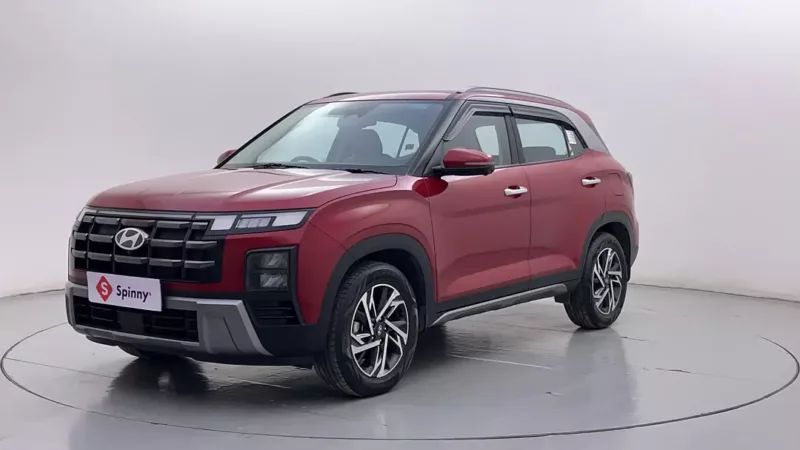

Renault has officially confirmed that the next-generation Renault Duster will make its India debut on January 26, 2026, coinciding with Republic Day. The announcement marks the long-awaited comeback of one of India’s most recognisable SUVs, a nameplate that once set the benchmark for affordability and toughness in the midsize SUV segment.
The return of the Duster is part of Renault’s broader India strategy to revitalise its product lineup and strengthen its position in one of the world’s fastest-growing SUV markets. After a four-year hiatus, the outgoing model was discontinued in early 2022. The French automaker is betting big on this new-generation SUV to reignite excitement among Indian buyers.
A Symbolic Comeback for Renault
The original Renault Duster, introduced in 2012, was instrumental in establishing Renault as a household name in India. It was among the first compact crossovers to combine SUV styling with car-like comfort and practicality, earning a reputation for being rugged, reliable, and value-driven. Its strong road presence, smooth ride quality, and capable performance made it a favourite among urban as well as rural buyers.
Now, more than a decade later, Renault is ready to reintroduce the Duster in an all-new avatar, one that reflects changing market dynamics, evolving emission norms, and customer expectations for technology, safety, and efficiency. The upcoming model represents not just a product relaunch but a renewed vision for Renault’s future in India.
Platform and Engineering
The new-gen Duster will be based on the CMF-B modular platform, a global architecture co-developed by the Renault-Nissan-Mitsubishi Alliance. This platform is known for its strength, flexibility, and ability to accommodate multiple powertrain types, including petrol, hybrid, and electric configurations.
For India, this modular foundation will be locally adapted to balance cost, durability, and ride comfort. The CMF-B platform will also underpin an upcoming Nissan SUV (rumored to be called the Tekton), which will share several mechanical components with the Duster while offering distinct styling and positioning.
This shared architecture allows both brands to leverage economies of scale, ensuring competitive pricing and efficient production for the Indian market.
Engine and Powertrain Options
While Renault has not yet disclosed final specifications for the Indian market, reports suggest that the new Duster will initially launch with petrol-only powertrains. The most likely candidate is the 1.3-litre turbocharged petrol engine that produces around 156 hp and 250 Nm of torque, paired with either a 6-speed manual or a CVT automatic transmission.
Lower variants could feature a 1.0-litre turbo-petrol engine, optimised for better fuel efficiency and urban convenience. Renault is also evaluating the introduction of a strong hybrid variant at a later stage, combining a 1.6-litre petrol engine with electric assistance, a move that aligns with its global shift towards electrified mobility.
A diesel engine, which was a key part of the old Duster’s identity, is not expected to make a comeback due to stricter emission norms and reduced demand in this segment. However, Renault may compensate with improved petrol fuel efficiency and hybrid technology in future updates.
Design: Rugged Meets Modern
The new Duster’s design language represents an evolution rather than a complete departure. It retains the muscular, square-shouldered stance that made the SUV instantly recognisable, while adopting sharper lines, sleeker proportions, and a more aerodynamic profile.
At the front, expect a bold grille flanked by C-shaped LED daytime running lamps, sculpted bumpers, and a raised bonnet that emphasises its SUV credentials. The profile will feature pronounced wheel arches, roof rails, and dual-tone alloy wheels, giving it a rugged yet sophisticated appeal.
At the rear, LED tail lamps, a wide tailgate, and body cladding enhance the sense of width and stability. Overall, the new design maintains the Duster’s adventurous DNA while adding refinement and modernity suited for contemporary buyers.
Interior and Features
Step inside, and the transformation is expected to be dramatic. The upcoming Duster will feature a completely redesigned cabin that prioritises comfort, technology, and practicality.
The SUV is likely to come equipped with a 10.1-inch touchscreen infotainment system with wireless smartphone integration, a 7-inch digital driver’s display, and Renault’s latest connected-car suite offering remote control functions, live navigation, and vehicle diagnostics.
Ergonomics and quality are expected to see major improvements, with better materials, layered dashboard design, and more intuitive controls. Higher trims may offer ambient lighting, ventilated front seats, automatic climate control, and a premium audio system.
On the safety front, the new Duster is likely to feature six airbags, ABS with EBD, electronic stability control (ESC), hill-start assist, and a comprehensive ADAS (Advanced Driver Assistance System) package. Depending on the variant, ADAS features could include lane-keep assist, adaptive cruise control, blind-spot detection, and autonomous emergency braking, technologies that are increasingly becoming standard in this segment.
Performance and Capability
Renault intends to keep the Duster’s trademark versatility intact. The SUV will continue to offer strong ride quality and handling balance, aided by the CMF-B platform’s enhanced suspension setup.
There’s also speculation that Renault could reintroduce all-wheel drive (AWD) or terrain-select modes for higher variants, catering to enthusiasts who valued the original Duster’s off-road credentials. Ground clearance is expected to be around 210–215 mm, ensuring the SUV remains practical for Indian road conditions.
Positioning and Expected Pricing
The new Duster will compete in the midsize SUV segment, one of the most hotly contested spaces in the Indian automotive market. Its primary rivals will include the Hyundai Creta, Kia Seltos, Maruti Suzuki Grand Vitara, Toyota Hyryder, Honda Elevate, and the upcoming Tata Curvv.
With a strong legacy and fresh product attributes, Renault aims to differentiate the Duster through its rugged appeal, feature-rich cabin, and competitive pricing. The expected price range is between ₹10 lakh and ₹15 lakh (ex-showroom), depending on variants and equipment levels.
Renault is also focusing on high localisation levels to ensure affordability while maintaining quality. Local manufacturing will not only help keep costs in check but also improve after-sales support and parts availability.
The Road Ahead
The official unveiling of the new Renault Duster on January 26, 2026, will be followed by detailed announcements on variant line-ups, specifications, and pricing. Bookings are expected to open soon after the debut, with deliveries likely commencing by mid-2026.
The Duster’s return represents more than nostalgia; it’s a strategic revival of a brand that helped define an entire SUV segment. If Renault manages to blend design flair, modern technology, and the Duster’s traditional toughness at the right price, it could reclaim its place as one of India’s most beloved SUVs.
The countdown to the Duster’s return has begun, and this time, it promises to be bigger, bolder, and better equipped for the road ahead.