Maruti Suzuki is gearing up for a bold transformation in its Indian product portfolio. With growing demand for electric vehicles, hybrids, larger SUVs, and compact MPVs, the company has announced plans to introduce six new models between 2026 and 2027. The refreshed line-up underscores Maruti’s ambition to retain its market leadership by acting boldly across multiple segments.
The forthcoming launches sit at the intersection of affordability, electrification, and utility. From its first dedicated electric SUV to hybrid versions of established models and an expanded 7-seater SUV offering, Maruti is positioning itself for the next wave of automotive evolution in India. The roadmap indicates a strong push into segments where Maruti has historically been weaker, such as EVs and larger multi-purpose vehicles, while reinforcing its dominance in compact urban mobility.
Upcoming Maruti Cars (2026–2027): Confirmed and Likely Launches
Maruti Suzuki has lined up a strong mix of electric, hybrid, and ICE models for 2026–2027. While some models have already entered the final development or testing phase, others are still under strategic evaluation for the Indian market.
The list below distinguishes between confirmed (officially or strongly indicated by company roadmap and internal communication) and likely (models in advanced consideration or testing stages) launches.
| Confirmed Launches | ||
| Model | Expected Launch Timeline | Key Highlights |
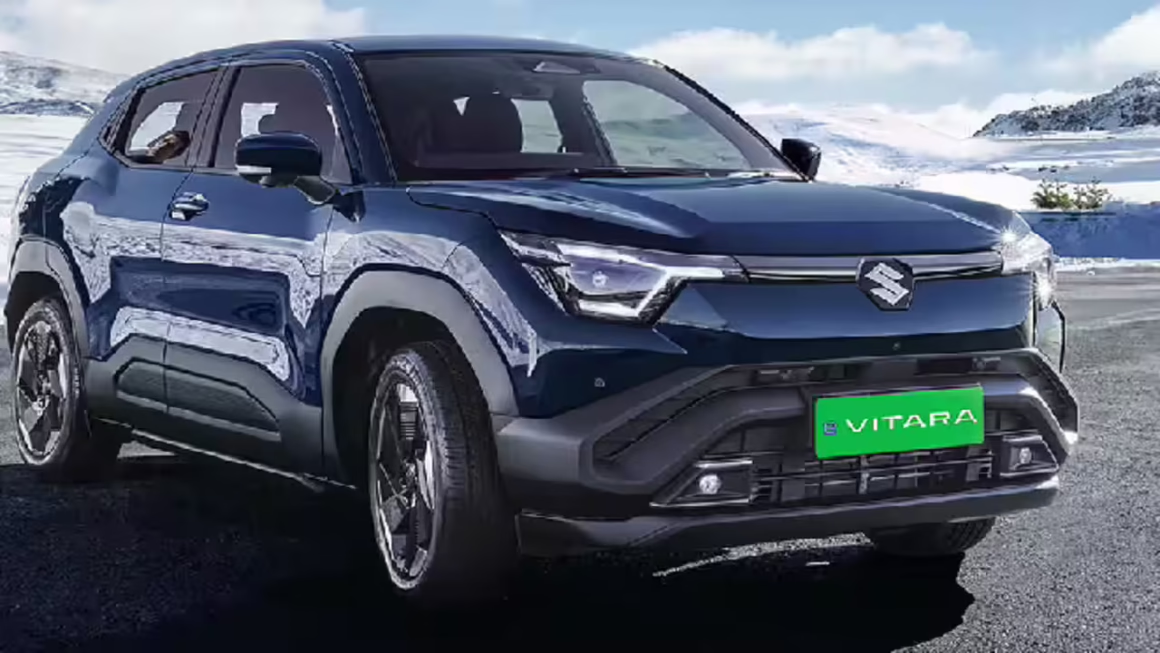
| Maruti e-Vitara (Electric SUV) | Early 2026 | Maruti’s first all-electric SUV for India, built on a localized EV platform at the Gujarat plant. Expected 49 kWh and 61 kWh battery options with up to ~500 km range. |
| Maruti Fronx Hybrid | First Half of 2026 | Hybridized version of the Fronx compact SUV featuring in-house HEV technology, optimized for better fuel economy and lower emissions. |
| Maruti Grand Vitara 7-Seater | Mid-to-Late 2026 | A stretched, three-row version of the Grand Vitara SUV designed for larger families; expected to share hybrid powertrains with its 5-seater sibling. |
| Likely Launches | ||
| Model | Tentative Launch Window | Key Highlights |
| Compact MPV (Below Ertiga) | Late 2026 | A sub-4-metre MPV positioned under the Ertiga, likely powered by a petrol + strong-hybrid setup. Expected to rival the Triber and Rumion. |
| Next-Gen Baleno | Late 2026 – Early 2027 | The Baleno is due for a complete redesign featuring a more premium cabin, improved safety kit, and hybrid-ready architecture. |
| Maruti e-WX (Electric Hatch) | Around 2027 | Maruti’s most affordable EV yet, designed for mass adoption. Built on a compact, lightweight EV platform for urban mobility efficiency. |
Summary
Maruti’s 2026–2027 roadmap clearly reflects its two-pronged strategy strengthening hybrid technology across popular nameplates while accelerating EV development to compete in emerging segments. The e-Vitara and Fronx Hybrid mark the start of this transition, while the Next-Gen Baleno and e-WX underline Maruti’s long-term commitment to a future-ready lineup.
Technology-Driven Evolution
Maruti Suzuki’s upcoming models mark a decisive move toward advanced hybridization and electrification. The company’s HEV (Hybrid Electric Vehicle) system, developed in collaboration with global partners, is set to power several new models in 2026.
The first among these, the Fronx Hybrid, will introduce a new level of efficiency in compact SUVs, blending Maruti’s lightweight design approach with hybrid performance to reduce emissions and enhance fuel economy. Similarly, the Grand Vitara 7-Seater will carry forward the strong-hybrid system, catering to larger families seeking comfort and efficiency without compromising on power.
On the EV front, the e-Vitara and e-WX hatchback are expected to leverage Maruti’s growing EV ecosystem, including localised battery sourcing, charging partnerships, and cost-efficient production at its Gujarat manufacturing facility. These steps are part of the brand’s larger electrification roadmap leading up to 2030.
Design and Platform Advancements
The second half of this decade will see Maruti Suzuki modernizing its design language and platform technology across segments.
The Next-Gen Baleno, expected in late 2026 or early 2027, is rumoured to debut with a more aerodynamic profile, improved interiors, and a refined powertrain lineup with hybrid readiness. This model will likely retain its dominant position in the premium hatchback market, but with added sophistication and connected tech features.
Meanwhile, the Grand Vitara 7-Seater is set to showcase an extended wheelbase, reworked suspension, and additional third-row comfort enhancements. Maruti is also focusing on digital connectivity and safety, a priority reflected in its efforts to equip new models with ADAS-ready architecture, six airbags, and enhanced structural integrity to meet future regulations.
Focus on Affordability and Accessibility
Even as Maruti Suzuki enters the electric and hybrid domain, the brand continues to prioritize affordability, a hallmark of its long-standing market leadership. The upcoming Compact MPV, expected to slot below the Ertiga, is a perfect example. Designed to appeal to growing families and budget-conscious buyers, this model will likely feature a petrol-hybrid combination offering higher fuel efficiency without a steep price tag.
Similarly, the e-WX electric hatchback, due in 2027, is expected to play a pivotal role in bringing EV ownership within reach of middle-class urban consumers. With compact dimensions, an efficient battery system, and a focus on low maintenance costs, this car will represent Maruti’s first serious step toward mass-market electrification.
Manufacturing and Localization Strategy
All upcoming models will benefit from Maruti’s extensive manufacturing ecosystem. The Gujarat and Haryana plants are being retooled to accommodate hybrid and EV production, ensuring cost competitiveness and high localization.
For EVs like the e-Vitara, Maruti plans to utilize locally sourced battery packs and electric drivetrains, developed through its partnership with Suzuki Motor Corporation and Toyota. This strategic collaboration will allow Maruti to bring advanced technology at accessible price points, a key differentiator in the Indian market.
Hybrid powertrains for models such as the Fronx Hybrid and Grand Vitara 7-Seater will also be locally produced, reducing dependency on imports and strengthening Maruti’s supply chain efficiency. This move aligns with India’s Make in India initiative and supports the country’s broader green mobility goals.
Strategic Importance of the 2026–2027 Lineup
This upcoming lineup is not merely a product expansion but a significant shift in Maruti Suzuki’s brand narrative. Historically known for dependable ICE vehicles, Maruti is now preparing to compete head-to-head in segments dominated by hybrid and EV rivals.
By 2027, Maruti aims to establish a comprehensive product mix covering traditional petrol, strong hybrid, and full electric options, allowing buyers to choose based on their driving needs and budgets. This flexible portfolio approach ensures Maruti remains relevant and competitive even as market dynamics shift toward sustainability.
Market Expectations and Consumer Outlook
The Indian car market in 2026–2027 will likely be more competitive than ever, with new entrants and rapid electrification. However, Maruti’s strategy to balance innovation with accessibility positions it advantageously.
Industry analysts expect models like the e-Vitara to attract first-time EV buyers who prefer reliability and brand trust over experimental offerings. Likewise, hybrids such as the Fronx Hybrid and Grand Vitara 7-Seater are projected to appeal to those seeking fuel efficiency without charging constraints.
As consumer awareness around green technology grows, Maruti’s focus on localized hybrid systems and affordable EVs is expected to yield strong results, especially in the compact and mid-size SUV segments.
Conclusion
The years 2026 and 2027 will be transformative for Maruti Suzuki as it pivots toward a hybrid-electric future while retaining its dominance in mass-market segments. From the e-Vitara to the Next-Gen Baleno, the company’s upcoming models represent a fusion of efficiency, innovation, and reliability values that have long defined Maruti’s success in India.
By combining cutting-edge technology, localized manufacturing, and consumer-centric design, Maruti Suzuki is not just keeping pace with change; it’s preparing to lead India’s next wave of automotive evolution.