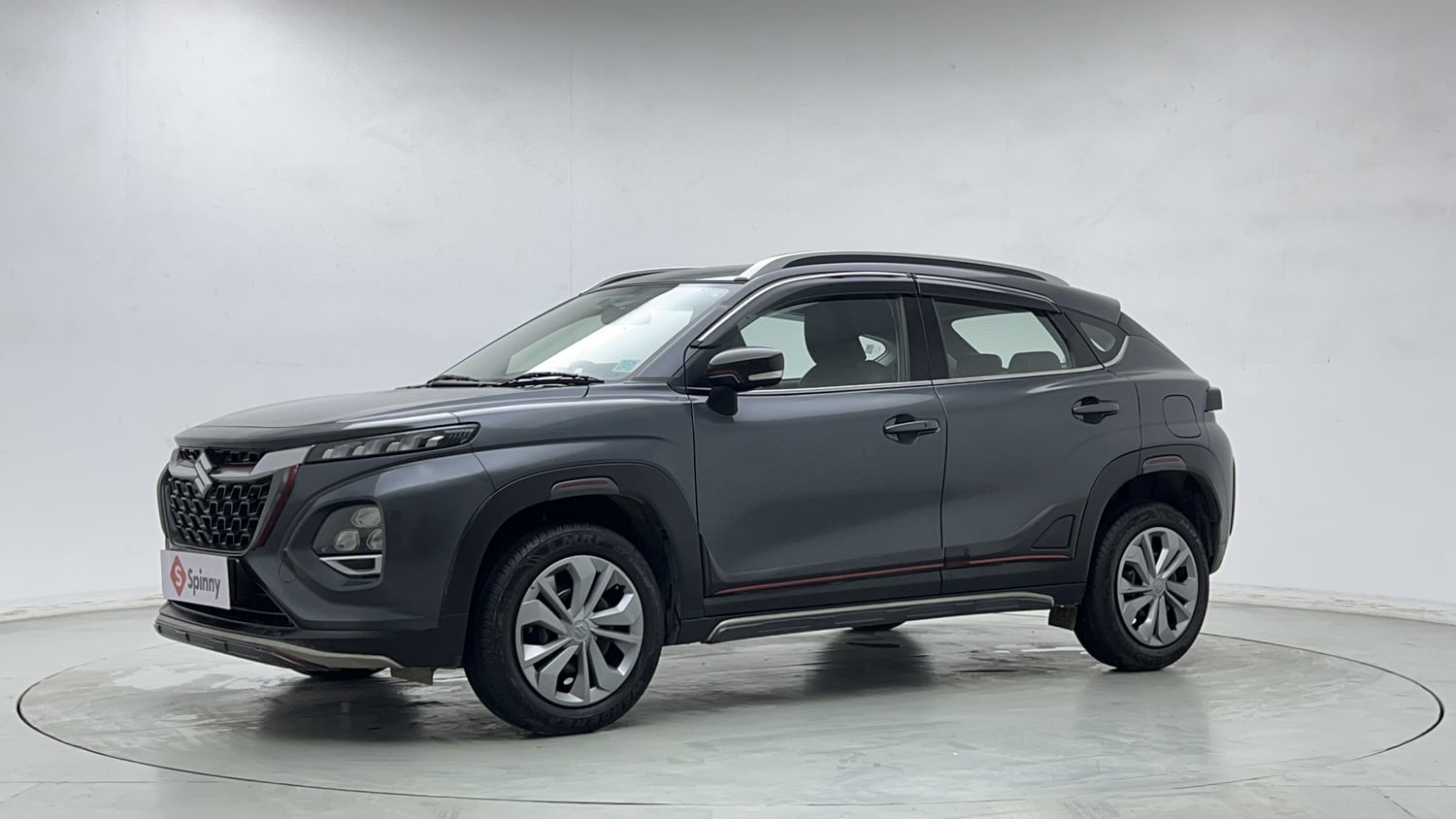
Maruti Fronx is a subcompact SUV that has gained quite a popularity among the car buyers. It comes with a 1.2-litre Naturally Aspirated (NA) petrol engine, 1.0-litre turbo petrol engine, or 1.2-litre petrol + CNG options. While the CNG models are paired only with a 5-speed manual transmission, the turbo petrol and NA petrol models offer both manual and automatic transmission options.
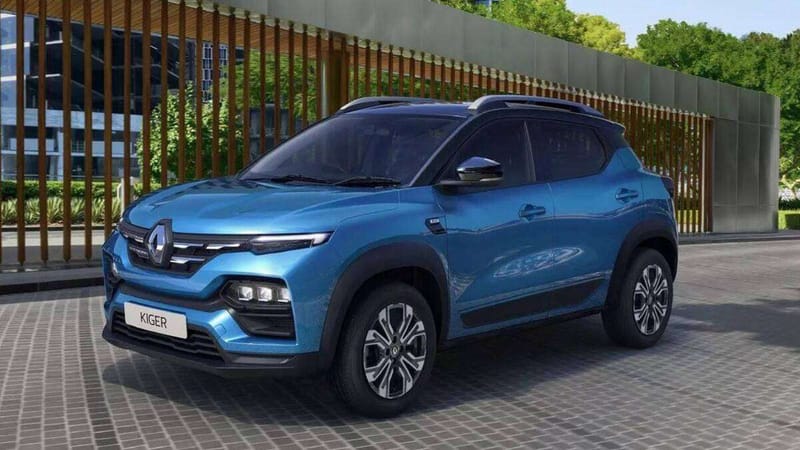
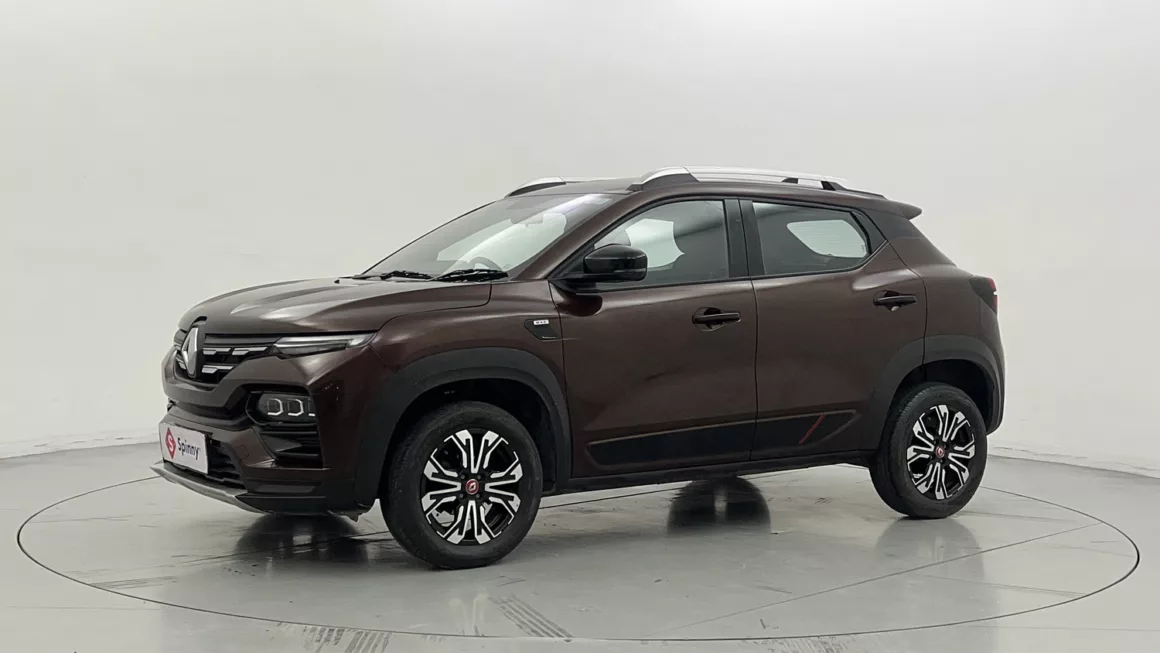
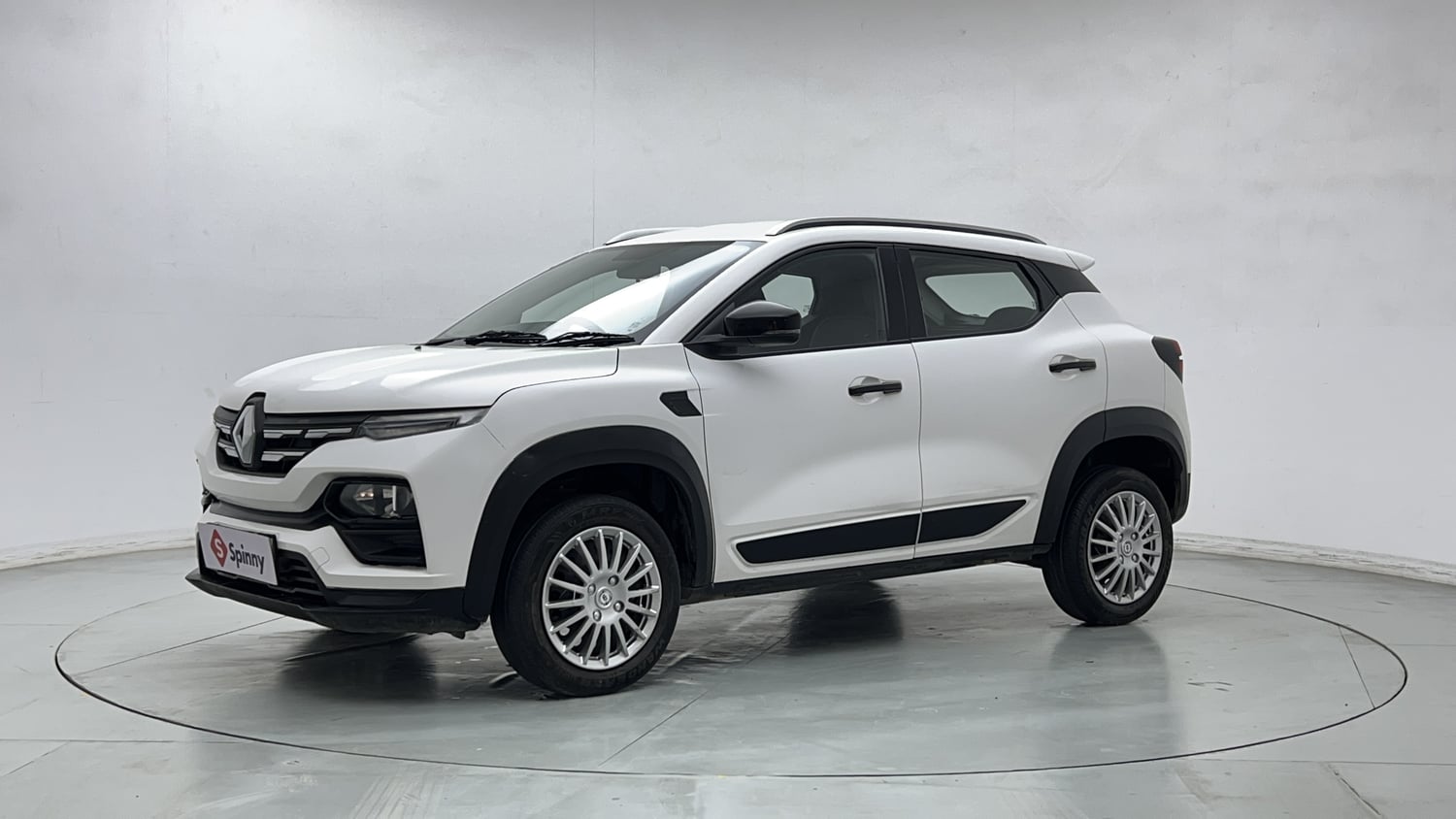
Renault Kiger is a popular compact SUV from Renault that is known for its affordability and stylish looks. It offers two petrol engine options viz. 1.0-litre NA petrol and 1.0-litre turbo petrol. While the NA petrol engine is paired with the 5-speed manual or 5-speed AMT transmission, the turbo petrol variants offer a 5-speed manual or an X-Tronic CVT automatic transmission. A dealership fitted CNG kit can also be availed with the 1.0-litre NA petrol engine but it comes only with the 5-speed manual transmission. In this blog, we will compare Maruti Fronx vs Renault Kiger with respect to their claimed and real-world mileage figures and also check their periodic fuel costs to determine the more fuel-efficient and affordable car between the two.
Table of Contents
Maruti Fronx vs Renault Kiger: Key Specs
Before understanding the differences between their fuel-efficiency, let’s compare Maruti Fronx and Kiger on the basis of their key specifications. The below table contains some important details regarding the specs of Maruti Fronx and Renault Kiger which could influence their mileage as well:
| Specification | Maruti Fronx | Renault Kiger |
| Engine | 1.2-litre Naturally Aspirated (NA) petrol engine 1.0-litre Boosterjet Turbo-Petrol 1.2-Litre DualJet CNG | 1.0-litre NA Petrol 1.0-litre turbo petrol 1.0-litre NA petrol + CNG |
| Displacement | Petrol: 1197 cc /998 cc (Turbo Petrol) CNG: 1199 cc | Petrol: 999 cc (NA)999 cc (Turbo Petrol) 999 cc (CNG) |
| Power | Petrol: 89 PS – 100 PS (Turbo Petrol) CNG: 77.5 PS | Petrol: 71 – 99 bhp CNG: 71 bhp |
| Torque | Petrol: 113 – 147.6 Nm (Turbo Petrol) CNG: 98.5 Nm | Petrol: 96 – 152 NmCNG: 96 Nm |
| Transmission | 5-speed manual transmission (MT) 5-speed automatic transmission (AMT) 6-speed manual (turbo petrol) | 5-speed MT5-speed AMT 5-speed MT (CNG) CVT Automatic (Turbo Petrol) |
| Drive layout | Front Wheel Drive (FWD) | Front Wheel Drive (FWD) |
| Kerb weight | 1050 kg to 1060 kg (depending upon the variant) | Petrol: 1012 kg CNG: 1012 kg |
| Fuel tank capacity | Petrol: 37 litres CNG: 60 litres (water equivalent) | Petrol: 40 litres CNG: 60 litres (water equivalent) |
Fronx produces higher power and torque than Renault Kiger both in petrol and CNG powertrains. Also, it is slightly heavier than Kiger in terms of kerb weight. So, it is possible that these factors can influence its mileage too. However, we must also remember that the petrol engines of Maruti Suzuki are tuned for fuel-efficiency to a large extent while Renault’s petrol engines do not come with such a level of tuning. So, this is a major factor that can tilt the mileage war between these cars to Fronx’s side.
Maruti Fronx vs Renault Kiger: ARAI Claimed Mileage
ARAI tests the mileage of all the cars in India to determine the ideal mileage delivered by all the powertrains of a car. However, as these tests are done in an ideal condition using minimum load, the ARAI claimed mileage figures don’t always translate to real-world mileage. Yet, it is an important aspect while comparing the fuel-efficiency of the cars. So, let’s compare Maruti Fronx vs Renault Kiger on the basis of their claimed ARAI mileage figures now. The below table contains some key details regarding this aspect:
| Engine & Transmission | Fuel Type | Maruti Fronx – ARAI Mileage (km/l) | Renault Kiger – ARAI Mileage (km/l) |
| 1.2-litre NA Petrol – 5-Speed MT / 1.0-litre NA petrol + 5-speed MT | Petrol | 21.79 km/l | 19.83 km/l |
| 1.2-litre NA Petrol – 5-Speed AMT / 1.0-litre NA petrol + 5-speed AMT | Petrol | 22.89 km/l | 19.83 km/l |
| 1.0-litre Turbo Petrol – 6-Speed MT/5-Speed MT | Turbo Petrol | 21.50 km/l | 20.38 km/l |
| 1.0-litre Turbo Petrol – 7-Speed DCT / CVT | Turbo Petrol | 20.01 km/l | 17.63 km/l |
| 1.2-litre Petrol + CNG with 5-speed manual | Petrol + CNG | 28.51 km/kg | Not available |
The ARAI claimed mileage of Maruti Fronx is higher than Renault Kiger both for NA petrol and turbo petrol variants. The official ARAI claimed mileage figures for the CNG models are not officially published by Renault yet. So, it is safe to say that Fronx leads the mileage war as far as the ARAI mileage figures are concerned. Now, let’s see if these figures translate into real-world mileage or not.
Summary: The ARAI claimed mileage figures of Maruti Suzuki Fronx are higher than the ARAI claimed mileage figures of Renault Kiger. Though the ARAI mileage of Renault Kiger’s CNG models are unpublished, they are likely to deliver a lower mileage than the Fronx in real-world conditions.
Also Read: Complete Guide to Buying a Maruti Fronx
Maruti Fronx vs Renault Kiger: Real-World Mileage
Real-world mileage fluctuates according to your driving style and road conditions. Factors such as transmission type, fuel-type, design of the car, drag co-efficient, etc. also influence the fuel-efficiency of a car to a certain extent. Let’s compare the real-world mileage of Maruti Fronx and Renault Kiger now to determine their actual on-road fuel-efficiency. The below tables reveal some important details in this regard:
| Maruti Fronx (1.2-litre NA Petrol) | Renault Kiger (1.0-litre NA Petrol) | |
| City | Manual: 14.50 km/l Automatic: 15.50 km/l | Manual: 14 km/l Automatic: 13 km/l |
| Highway | Manual: 19.50 km/l Automatic: 20.50 km/l | Manual: 18 km/l Automatic: 17 km/l |
| Average | Manual: 17 km/l Automatic: 18 km/l | Manual: 16 km/l Automatic: 15 km/l |
| Tank range | 647 km | 620 km |
| Maruti Fronx (1.0-litre Turbo Petrol) | Renault Kiger (1.0-litre Turbo Petrol) | |
| City | Manual: 14.50 km/l Automatic: 13.50 km/l | Manual: 13 km/l Automatic: 10.4 km/l |
| Highway | Manual: 19.50 km/l Automatic: 20.50 km/l | Manual: 18 km/l Automatic: 16.5 km/l |
| Average | Manual: 17 km/l Automatic: 17 km/l | Manual: 15.50 km/l Automatic: 13.45 km/l |
| Tank range | 629 km | 579 km |
| Maruti Fronx CNG | Renault Kiger CNG | |
| City | Manual: 21 km/kg | Manual: 20 km/l |
| Highway | Manual: 26.5 km/kg | Manual: 26 km/l |
| Average | Manual: 23.5 km/kg | Manual: 22 km/l |
| Tank range | 212 km per fill | 198 km per fill |
Maruti Fronx delivers a higher mileage than Renault Kiger in both city and highway driving for both Na petrol and turbo petrol variants. The same thing is observed with the CNG variants as well but by a slight margin. So, we can say that Fronx is a clear winner when we compare the real-world mileage of Fronx and Kiger powertrains. Yet, the difference is minimal when we compare the mileage of their CNG models.
Summary: The real-world mileage offered by Maruti Fronx is much higher than the real-world mileage offered by Renault Kiger across the powertrains.
Also Read: Complete Guide to Buying a Renault Kiger
Maruti Fronx vs Renault Kiger: Fuel-Cost Comparison
After careful analysis of the real-world mileage, let’s use those figures to calculate the periodic fuel costs of Maruti Fronx and Renault Kiger. Let’s consider that each car runs 1500 km per month for the sake of calculation. The latest petrol rates of Rs. 111.18 and CNG rates of Rs. 88 are taken for calculating the monthly, annual, and 5-yearly fuel costs of the cars. The below table reveals some key insights into this:
| Fronx 1.2-NA Petrol | Kiger 1.0-litre NA Petrol | Fronx (1.0-litre Turbo Petrol) | Kiger 1.0-litre Turbo Petrol | |
|---|---|---|---|---|
| Monthly Running | 1500 km | 1500 km | 1500 km | 1500 km |
| Monthly Fuel Use | 86 L | 97 L | 88 L | 104 L |
| Average Monthly Fuel Cost | ₹ 9561 | ₹ 10,784 | ₹ 9783 | ₹ 11,562 |
| Average Yearly Fuel Cost | ₹ 1.14 lakh | ₹ 1.29 lakh | ₹ 1.17 lakh | ₹ 1.38 lakh |
| 5-Year Fuel Cost | ₹ 5.73 lakh | ₹ 6.47 lakh | ₹ 5.85 lakh | ₹ 6.93 lakh |
| Fronx CNG | Kiger CNG | |
|---|---|---|
| Monthly Running | 1500 km | 1500 km |
| Monthly Fuel Use | 64 kg | 68 kg |
| Average Monthly Fuel Cost | ₹ 5632 | ₹ 5984 |
| Average Yearly Fuel Cost | ₹ 67,584 | ₹ 71,808 |
| 5-Year Fuel Cost | ₹ 3.37 lakh | ₹ 3.59 lakh |
The periodic fuel expenses associated with Renault Kiger’s NA petrol and turbo petrol models are much higher than the periodic fuel costs associated with the NA petrol and turbo petrol models of Fronx. The monthly fuel costs associated with the CNG variants of Fronx is slightly lower than the monthly fuel expenses associated with Kiger’s CNG models. However, this difference can create a sizable difference when we check the annual and 5-yearly fuel costs. Therefore, it is easy to conclude that the Maruti Fronx incurs much lower running costs than the Renault Kiger.
Summary: You are likely to spend more on fuel when you drive a Renault Kiger as compared to the fuel-costs associated with the Maruti Suzuki Fronx, irrespective of whether you choose their NA petrol, turbo petrol, or CNG variants.
Maruti Fronx vs Renault Kiger: Price Comparison
Finally, let’s check the pricing difference of Maruti Fronx and Renault Kiger to determine the more affordable car among the two. The below table contains the pricing details of the base and top models of Maruti Fronx and Renault Kiger:
| Model | Variant (Base to Top) | Price (Ex-Showroom) |
| Maruti Fronx | Sigma 1.2L MT to Alpha Turbo Dual Tone AT | ₹ 6.85 to ₹ 11.98 lakh |
| Renault Kiger | Kiger Authentic | ₹ 5.81 to ₹ 10.35 lakh |
From the above table, it is clear that Kiger variants are cheaper than Fronx variants. So, even though the mileage difference makes Fronx a cheaper car in terms of running costs, the ex-showroom price of Kiger makes it a cheaper car in terms of upfront cost.
Summary
Both Maruti Fronx and Renault Kiger are great cars and fuel-efficient too. However, Fronx wins the mileage war by a good margin in all the turbo petrol, NA petrol, and CNG variants. It also generates more power and torque than Renault models. So, we would recommend Fronx turbo petrol models for highway driving and Fronx NA petrol or CNG models for city driving. If you want a low running cost car for city driving only, you can think of the CNG variants of Kiger.
FAQs
Q. Which is the better car for highway driving: Fronx turbo petrol or Kiger Turbo petrol?
For a better mileage, more powerful engine, and high-speed stability, you can prefer the turbo petrol models of Fronx. For a higher ground clearance, you can go with the Kiger turbo petrol models.
Q. Do Renault Kiger NA petrol and CNG models struggle during uphill driving?
Yes, the lower power and torque generation capabilities of NA petrol and CNG models of Renault Kiger make them difficult to drive in uphill conditions, especially when the car is loaded with cargo and passengers.
Q. Which is the better car for city driving: Fronx NA petrol or Kiger NA petrol?
Fronx is a better car for city driving because of its refined, smoother, and more powerful 4-cylinder NA engine as compared to the smaller 3-cylinder petrol engine of Renault Kiger.
Q. Which car incurs less maintenance cost in the long run: Maruti Fronx or Renault Kiger?
The cheaper maintenance and service costs associated with Maruti Suzuki makes Fronx a better option in terms of maintenance costs. Also, the higher resale value and reliability of Fronx makes it a dependable option for the future as compared to Renault Kiger.
Q. Which car is better for long trips with family: Maruti Fronx or Renault Kiger?
Fronx is considered as a better option for long trips because of its better highway refinement and higher mileage. Also, the service network of Maruti Suzuki is spread across the country. So, you won’t face any issues even if your vehicle malfunctions during the trip. However, the bigger bootspace of Renault Kiger makes it a better option if you are travelling with heavy luggage.