
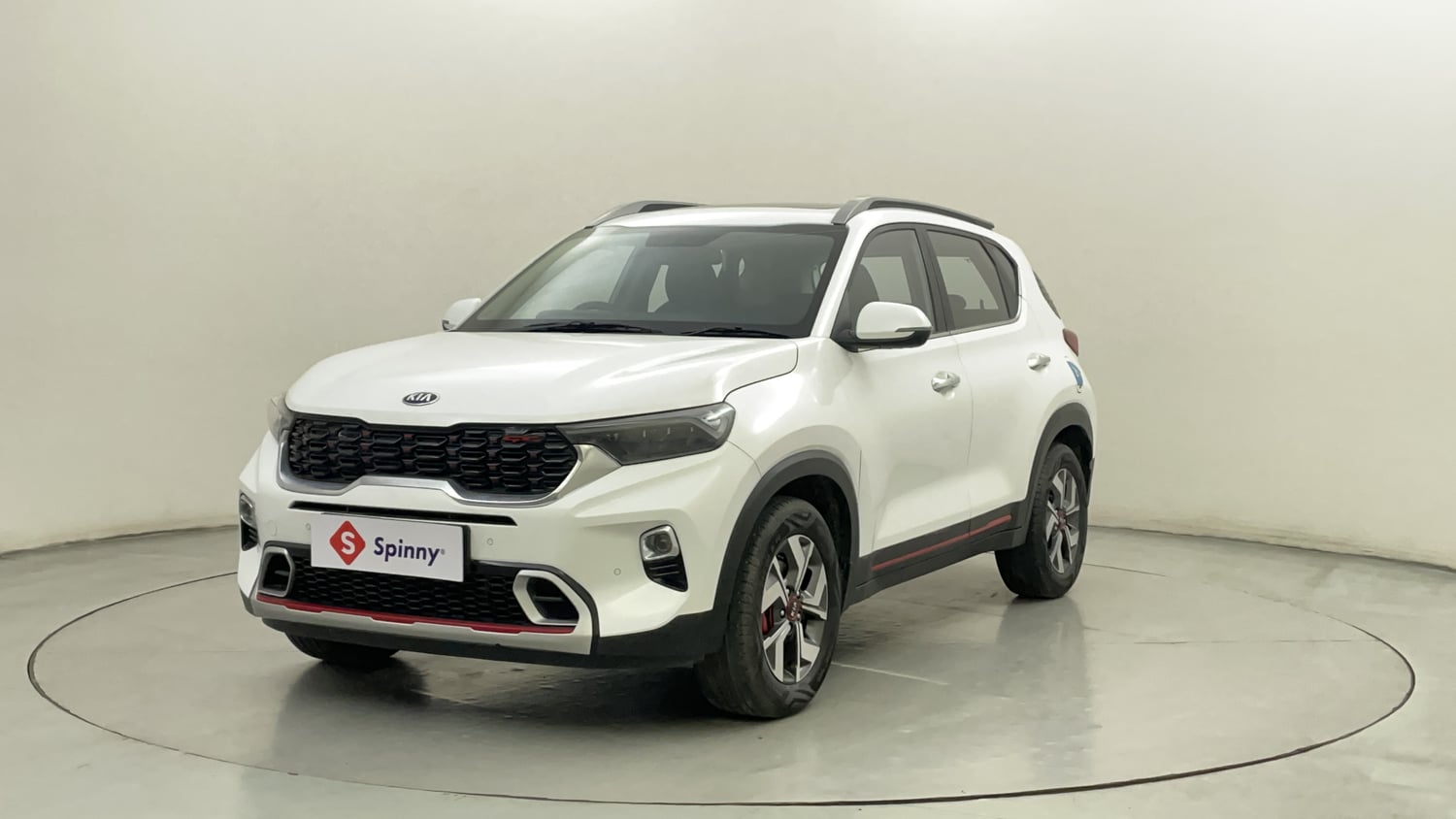
The Kia Sonet and Renault Kiger are both compact SUVs designed for urbanisation, low cost to purchase, and adequate capability for occasional highway driving. While both models have similar pricing, their performance and efficiency technologies are totally opposite to one another. The Sonet has both naturally aspirated petrol and turbocharged petrol, as well as diesel engine options. The Kiger is available with naturally aspirated and turbocharged petrol options only. Based on paper specs, the Kiger petrol has a maximum range of 20.38 km/l, whereas the Sonet diesel manual has a much higher range of 24.1 km/l.
The real-world picture is more interesting. The Kiger is more economical if you compare the basic naturally aspirated petrol manuals, but the Sonet Turbo DCT performs better than the Kiger Turbo CVT in available real-world tests. The Sonet also has a diesel option, which gives high-mileage buyers a completely different ownership proposition. So, there is no single mileage winner across every powertrain.
Table of Contents
Kia Sonet vs Renault Kiger Specs
There are three engine options available with the Kia Sonet. Starting with the least powerful, the naturally aspirated 1.2-litre petrol engine produces between 83-88hp and 115Nm and is mated exclusively to a 5-speed manual gearbox. The more powerful 1.0-litre turbo-petrol engine generates 120hp and 172Nm of torque, and buyers can choose between an intelligent manual transmission (iMT) or a 7-speed dual-clutch automatic. Lastly, for high-mileage drivers, there is a 1.5-litre diesel engine delivering approximately 116hp and 250Nm of torque through either a 6-speed manual or a 6-speed torque-converter automatic.
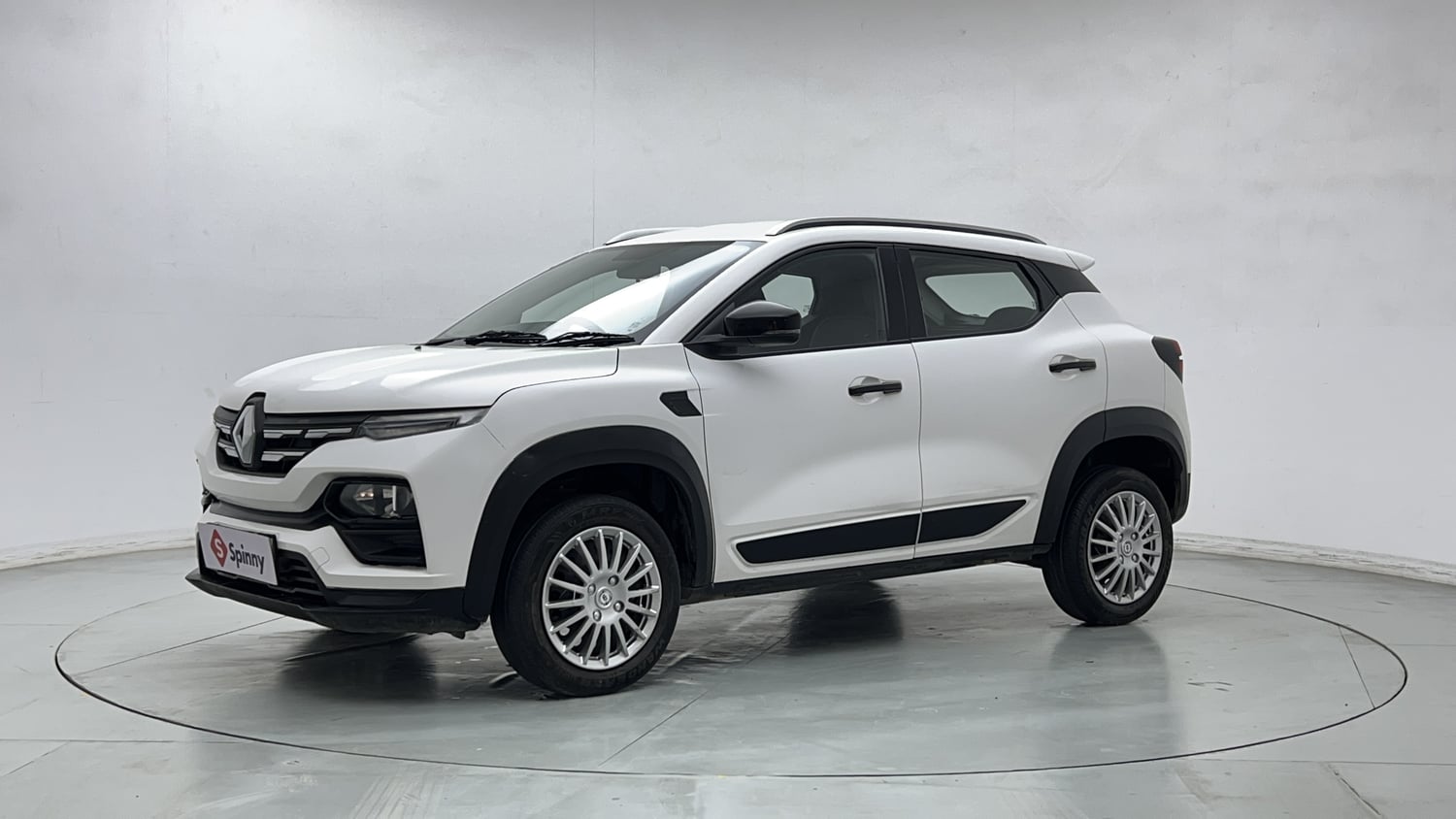
The Renault Kiger uses two 1.0-litre three-cylinder petrol engines. Its naturally aspirated engine produces 72PS and around 96Nm, with manual and AMT options. The turbo-petrol produces 100PS and roughly 160Nm and can be paired with a manual or CVT. The Sonet carries a 45-litre fuel tank, while the Kiger has a smaller 40-litre tank.
| Specification | Kia Sonet | Renault Kiger |
| Base petrol engine | 1.2L NA petrol | 1.0L NA petrol |
| Base petrol output | ~83–88hp / 115Nm | 72PS / ~96Nm |
| Turbo petrol | 1.0L, 120hp / 172Nm | 1.0L, 100PS / ~160Nm |
| Diesel | 1.5L, ~116hp / 250Nm | Not available |
| Transmission options | MT / iMT / DCT / AT | MT / AMT / CVT |
| Drive layout | FWD | FWD |
| Fuel tank | 45 litres | 40 litres |
The Sonet, therefore, has better performance from the outset; on the other hand, the Kiger provides only two engine variants with less complex specifications, causing lower costs in both time and money associated with ownership.
Kia Sonet vs Renault Kiger ARAI Mileage Figures
The Sonet’s naturally aspirated petrol manual is rated at 18.8 km/l. The turbo-petrol DCT claims 18.7 km/l, while the diesel manual is the most efficient version at 24.1 km/l. The diesel automatic is rated lower at 18.6 km/l, largely because a conventional torque-converter automatic carries an efficiency penalty compared with the manual.
From official testing results, the Kiger’s petrol lineup is relatively strong. Both the naturally aspirated manual and AMT versions received 19.83 km/l, and the turbo-manual reached 20.38 km/l. With the Kiger’s turbo-CVT being rated 17.63 km/l, this option is less fuel-efficient.
| Car | Engine & Transmission | Fuel Type | ARAI Mileage |
| Kia Sonet | 1.2L petrol MT | Petrol | 18.8 km/l |
| Kia Sonet | 1.0L turbo DCT | Petrol | 18.7 km/l |
| Kia Sonet | 1.5L diesel MT | Diesel | 24.1 km/l |
| Kia Sonet | 1.5L diesel AT | Diesel | 18.6 km/l |
| Renault Kiger | 1.0L NA petrol MT | Petrol | 19.83 km/l |
| Renault Kiger | 1.0L NA petrol AMT | Petrol | 19.83 km/l |
| Renault Kiger | 1.0L turbo MT | Petrol | 20.38 km/l |
| Renault Kiger | 1.0L turbo CVT | Petrol | 17.63 km/l |
The Kiger has a superior fuel consumption rating on petrol, while the most fuel-efficient variant on the Sonet is the diesel manual.
Also Read: Complete Buying Guide: Renault Kiger
Kia Sonet vs Renault Kiger Real-World Fuel Efficiency
The cleanest naturally aspirated petrol comparison comes from current owner-reported averages. The Sonet 1.2 petrol manual sits around 16.18 km/l, while the Kiger 1.0 petrol manual is closer to 17.53 km/l. That gives the Kiger an advantage of roughly 1.35 km/l in normal petrol use.
While the full-tank range of both vehicles tells a different story, we do see that although the Kiger has a higher rated fuel efficiency than the Sonet, it has a 5-litre larger tank. At the reference mileage, the theoretical range for one tank of fuel on the Sonet equals 728km versus 701km for the Kiger.
| Sonet 1.2 Petrol MT | Kiger 1.0 Petrol MT | |
| ARAI mileage | 18.8 km/l | 19.83 km/l |
| Real-world reference | 16.18 km/l | 17.53 km/l |
| Fuel tank | 45L | 40L |
| Approx. full-tank range | ~728 km | ~701 km |
While the Kiger gets better fuel economy per kilometre than the Sonet does, the Sonet will still be able to travel slightly further between refill points because it has a larger fuel tank.
Also Read: Kia Sonet Real World Mileage: A Detailed Overview
Sonet Turbo DCT vs Kiger Turbo CVT Real-World Mileage
The turbo-automatic comparison produces the opposite result. The Sonet Turbo DCT has returned around 11.6 km/l in city driving and 16.5 km/l on highways, giving a simple combined reference of approximately 14.05 km/l. The Kiger Turbo CVT has returned around 10.41 km/l in the city and 15.56 km/l on highways, producing an average close to 13 km/l.
| Sonet Turbo DCT | Kiger Turbo CVT | |
| Power | 120hp | 100PS |
| Torque | 172Nm | ~160Nm |
| City | 11.6 km/l | 10.41 km/l |
| Highway | 16.5 km/l | 15.56 km/l |
| Combined reference | ~14.05 km/l | ~13.0 km/l |
Since these results were produced from separate test facilities, they aren’t necessarily a “controlled” comparison. However, it is noteworthy that the Sonet is not only more powerful than the Kiger, but also provides a better fuel economy “on paper” as recorded during the tests of the two turbo-double automatics.
The explanation lies partly in the transmission. The Sonet’s 7-speed DCT uses fixed gear ratios and can keep engine revs low when cruising. The Kiger’s CVT focuses more on smoothness and continuously adjusts engine speed, which can raise revs during acceleration and hurt efficiency.
Kia Sonet Diesel Real-World Mileage
When looking at diesel vs petrol, the Sonet diesel changes everything because the Kiger currently does not have a diesel alternative. The diesel manual provides the strongest economy rating “on paper” at the official 24.1 KM/L, and the automatic version also has favourable real-world performance ratings.
The diesel automatic has returned around 13.8 km/l in city use and 18.8 km/l on highways, giving a combined reference close to 16.3 km/l. That is similar to the naturally aspirated petrol Sonet in terms of kilometres per litre, but diesel costs less per litre and the engine produces 250Nm of torque.
For those who typically travel long distances, carry multiple passengers, or use highways regularly, the diesel Sonet is a more logical option. It provides better low-end torque and lower fuel costs compared to the turbo-petrol automatic.
Kia Sonet vs Renault Kiger Fuel Cost Comparison
For this comparison, we have assumed 1,500 km of driving per month, equal to 18,000 km annually. Petrol is calculated at approximately ₹102.12 per litre in New Delhi in September 2026. For the basic petrol manuals, we use the current real-world references of 16.18 km/l for the Sonet and 17.53 km/l for the Kiger.
| Sonet Petrol MT | Kiger Petrol MT | |
| Reference Mileage | 16.18 km/l | 17.53 km/l |
| Monthly Fuel Use | 92.7L | 85.6L |
| Monthly Fuel Cost | ₹9,467 | ₹8,738 |
| Annual Fuel Cost | ₹1.14 lakh | ₹1.05 lakh |
| 5-Year Fuel Cost | ₹5.68 lakh | ₹5.24 lakh |
In terms of the Kiger’s cost savings compared to the Sonet petrol manual, the Kiger saves about ₹730 per month. The annual total works out to approximately ₹8750, and over the course of five years driving a total of 18,000 KM each year would result in a cost difference of about ₹44000.
The Kiger’s petrol advantage is therefore real, but not enormous. For someone driving fewer than 1,000km per month, the difference becomes relatively small compared with other ownership factors such as purchase price, features and service costs.
Turbo Automatic Fuel Cost Comparison
In real-world usage, the findings contradict those of turbo automatics. As an example, the Sonet Turbo DCT uses approximately 106.8 litres of fuel to travel 1,500km at a rate of around 14.05 km/l, while the Kiger Turbo CVT requires approximately 115.4 litres of petrol to travel this same distance at an estimated rate of 13 km/l.
| Sonet Turbo DCT | Kiger Turbo CVT | |
| Reference Mileage | 14.05 km/l | ~13.0 km/l |
| Monthly Fuel Cost | ~₹10,902 | ~₹11,783 |
| Annual Fuel Cost | ~₹1.31 lakh | ~₹1.41 lakh |
| 5-Year Fuel Cost | ~₹6.54 lakh | ~₹7.07 lakh |
Comparing the two vehicles based on the above information, the Sonet Turbo DCT saves approximately ₹880 in monthly fuel expenses over the course of five years, with a total savings of approximately ₹53,000.
Again, these figures come from different road tests, so the exact rupee gap should be treated as a practical reference rather than a laboratory result. The broad conclusion remains that the Sonet DCT is surprisingly efficient considering its higher power output.
Also Read: Renault Kiger Mileage Comparison: Petrol vs Turbo Petrol
Sonet Diesel Automatic Running Cost
The real-world fuel consumption reference for the Sonet diesel automatic is approximately 16.3 km/l; therefore, the Sonet needs approximately 92 litres of diesel to travel 1,500km. If we assume a diesel price of around ₹95.20 per litre in New Delhi, the monthly fuel costs would be approximately ₹8,760.
That becomes roughly ₹1.05 lakh annually and around ₹5.26 lakh over five years. Interestingly, this is almost identical to the Kiger petrol manual’s five-year fuel cost, despite the Sonet diesel automatic offering far more torque and automatic convenience.
The Sonet diesel automatic is therefore very appealing to those who drive a lot, as they can enjoy the benefits of the additional power without incurring significant additional fuel expenses.
Also Read:
Why Is the Kiger Petrol More Efficient?
The Kiger’s naturally aspirated petrol advantage comes down largely to weight and engine size. Its 1.0-litre engine produces just 72PS, while the Sonet’s 1.2-litre petrol produces more power and torque. The Kiger therefore needs less fuel under light-throttle city and highway driving.
The manual turbo option for the Kiger is focused on efficiency due to the fact that it’s a lighter vehicle, which allows Renault to declare fuel consumption figures over 20 km/litre without sacrificing a lot of performance compared to the naturally aspirated version.
The trade-off is that the Sonet delivers a stronger driving experience. Even the base petrol feels more substantial under load, while the turbo and diesel versions have a clear performance advantage over the equivalent Kiger options.
Also Read: Kia Sonet Mileage Comparison: Petrol vs Diesel vs Turbo Petrol
Kia Sonet vs Renault Kiger Price
The Kia Sonet has a starting price of approximately ₹7.41 lakh ex-showroom and can be upgraded up to approximately ₹14.27 lakh depending on the engine, transmission and trim level. The Kiger has a much lower entry price, starting from a price of approximately ₹5.81 lakh and rising to a maximum of approximately ₹10.40 lakh.
| Model | Variant / Powertrain | Approx. Ex-showroom Price |
| Kia Sonet | HTE 1.2 Petrol MT | ₹7.41 lakh |
| Kia Sonet | HTE(O) Petrol | ~₹7.84 lakh |
| Kia Sonet | HTK(O) Petrol | ~₹8.85 lakh |
| Kia Sonet | Turbo DCT variants | ~₹9.9 lakh onward |
| Kia Sonet | Diesel AT variants | ~₹9.77 lakh onward |
| Kia Sonet | GTX+ Turbo DCT | ~₹13.6 lakh |
| Kia Sonet | GTX+ Diesel AT | ~₹14.1–14.3 lakh |
| Renault Kiger | Authentic | ₹5.81 lakh |
| Renault Kiger | Evolution | ₹6.59 lakh |
| Renault Kiger | Evolution+ | ₹7.03 lakh |
| Renault Kiger | Techno | ₹7.60 lakh |
| Renault Kiger | Emotion | ₹8.50 lakh |
| Renault Kiger | Top Turbo CVT | ~₹10.40 lakh |
When it comes to value for money and fuel efficiency, it’s hard to overlook the Kiger. It’s significantly cheaper than the Sonet, and the base model (manual) version also offers a lower fuel consumption rate than the Sonet.
The Sonet justifies its higher price through a broader range of engines, stronger performance, diesel availability and more transmission choices. Buyers who want a more premium compact SUV experience may find those benefits more important than the initial price difference.
Summary
In terms of naturally aspirated petrol mileage, the Kiger has a real-world reference distance of approximately 17.53 km/litre, which exceeds the Kia Sonet 1.2 petrol’s approximate figure of 16.18 km/litre, and it’s also significantly cheaper to purchase. For those who are looking mainly for an affordable petrol compact SUV that has low running costs, the Kiger presents a very strong case.
The result changes with turbo automatics. The Kia Sonet Turbo DCT has returned around 14.05 km/l, compared with roughly 13 km/l for the Kiger Turbo CVT in available tests. The Sonet also produces more power and torque, making that result particularly impressive.
In conclusion, if you’re looking for a less expensive purchase price and a simple petrol-manual fuel-efficient vehicle, then choose the Renault Kiger. If you want more power and a turbo-diesel or automatic engine option for better fuel efficiency (great for long-distance, high-mileage driving), choose the Kia Sonet Diesel.
Also Read: Comparison: Renault Kiger vs Nissan Magnite
FAQs About Kia Sonet vs Renault Kiger Mileage
Q. Which has better petrol mileage, Kia Sonet or Renault Kiger?
The Renault Kiger has better mileage in the naturally aspirated petrol-manual comparison. Its real-world reference is around 17.53 km/l compared with roughly 16.18 km/l for the Sonet 1.2 petrol manual.
Q. What is the real-world mileage of the Kia Sonet petrol?
The Sonet 1.2 petrol manual has a current owner-reported reference around 16.18 km/l. The Turbo DCT has returned approximately 11.6 km/l in the city and 16.5 km/l on highways.
Q. What is the real-world mileage of the Renault Kiger?
The Kiger petrol manual has a real-world reference around 17.53 km/l. The Turbo CVT has returned approximately 10.41 km/l in the city and 15.56 km/l on highways.
Q. Which automatic has better mileage, Sonet DCT or Kiger CVT?
Available real-world testing favours the Sonet Turbo DCT, at roughly 14.05 km/l combined compared with about 13 km/l for the Kiger Turbo CVT.
Q. Is the Sonet diesel cheaper to run than the Kiger petrol?
The Sonet diesel automatic and Kiger petrol manual have very similar estimated fuel costs at 1,500km per month. The Sonet diesel also provides significantly more torque and automatic convenience.
Q. Which is cheaper to buy, Kia Sonet or Renault Kiger?
The Renault Kiger is considerably cheaper. It starts at around ₹5.81 lakh ex-showroom, while the Sonet begins at approximately ₹7.41 lakh.