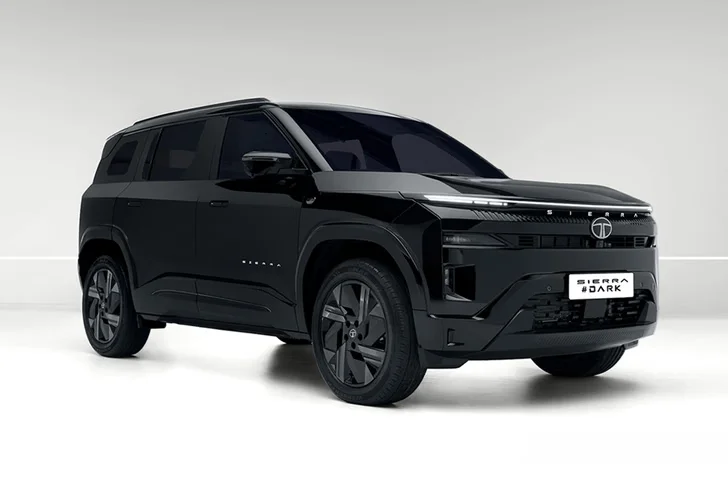

Kia Carens and Kia Carnival belong to the same family of three-row passenger vehicles, but they cater to very different needs. The Carens is meant for families in need of a practical MPV priced reasonably high for those looking for a car with three rows. At the same time, the Carnival is more luxurious in terms of being really spacious and comfortable. The current Carens diesel manual is rated at 21.3 km/l, while the Carnival diesel auto is rated at 14.85 km/l.
Real-world efficiency follows the same broad pattern. The Carens diesel generally delivers around 14–18 km/l depending on traffic and driving conditions, while the Carnival has returned about 10.9 km/l in mixed use. However, the Carnival’s much larger 72-litre fuel tank gives it impressive touring range despite its lower efficiency. So, while the Carens clearly wins on kilometres per litre and fuel cost, the Carnival is a substantially larger and more powerful luxury MPV.
Table of Contents
Kia Carens vs Kia Carnival Specs
The Kia Carens lineup for 2026 has been considerably simplified. The regular Carens now comes with a 1.5-litre naturally aspirated petrol engine and a 1.5-litre turbo-diesel engine on the options list, both mated to the same six-speed manual gearbox. The petrol motor churns out around 115hp and 144Nm, while the diesel variant gives around 116hp and 250Nm. The diesel is the more relevant choice in this fuel consumption comparison because the current generation of the Carnival is also diesel-powered.
The Kia Carnival uses a significantly larger 2.2-litre turbo-diesel engine producing around 190–193hp and 441Nm, paired with an 8-speed torque-converter automatic. It is also much larger physically, measuring more than 5.1 metres in length compared with the Carens’ 4.54 metres. That extra size, weight, stronger engine and automatic gearbox inevitably increase fuel consumption.
| Specification | Kia Carens Diesel | Kia Carnival Diesel |
| Engine | 1.5L turbo-diesel | 2.2L turbo-diesel |
| Displacement | 1,493cc | 2,151cc |
| Power | ~116hp | ~190–193hp |
| Torque | 250Nm | 441Nm |
| Transmission | 6MT | 8AT |
| Seating | 7 seats | 7 seats |
| Fuel tank | 45 litres | 72 litres |
| Length | 4,540mm | 5,155mm |
So, the Carnival therefore boasts significantly more power (nearly 75hp) and torque (almost 200Nm). This means that it is very much stronger at full load and while overtaking and highway driving; however, the smaller engine and lighter weight of the Carens give the car significant fuel efficiency benefits.
Kia Carens vs Kia Carnival ARAI Mileage
The current Carens diesel manual is rated at 21.3 km/l, making it the most efficient powertrain in the regular Carens range. The 1.5-litre petrol manual is rated lower at 15.7 km/l. With no automatic currently listed for the standard Carens, the diesel manual is the obvious choice for buyers covering high annual kilometres.
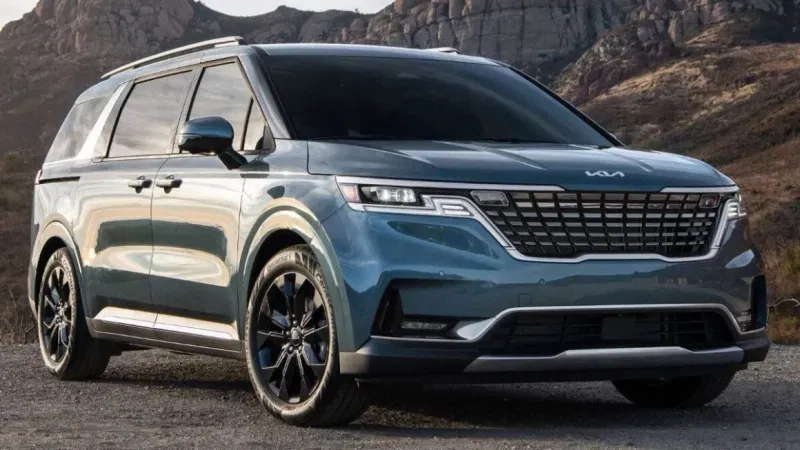
The Carnival has only one current on-sale powertrain: the 2.2-litre diesel with an 8-speed automatic. Its ARAI-certified figure is 14.85 km/l. That is respectable for a large luxury MPV with 441Nm, but still around 6.45 km/l behind the Carens diesel.
| Car | Powertrain | Claimed Mileage |
| Kia Carens | 1.5 petrol MT | 15.7 km/l |
| Kia Carens | 1.5 diesel MT | 21.3 km/l |
| Kia Carnival | 2.2 diesel AT | 14.85 km/l |
The Carens, according to official information, is 43% more fuel-efficient than the Carnival. Although practical use has made the actual results slightly better, it being less efficient than the Carens does not prevent the Carnival from outperforming it in practice.
Also Read: Kia Carens Alternatives: Competitors of Kia Carens
Kia Carens vs Kia Carnival Real-World Mileage
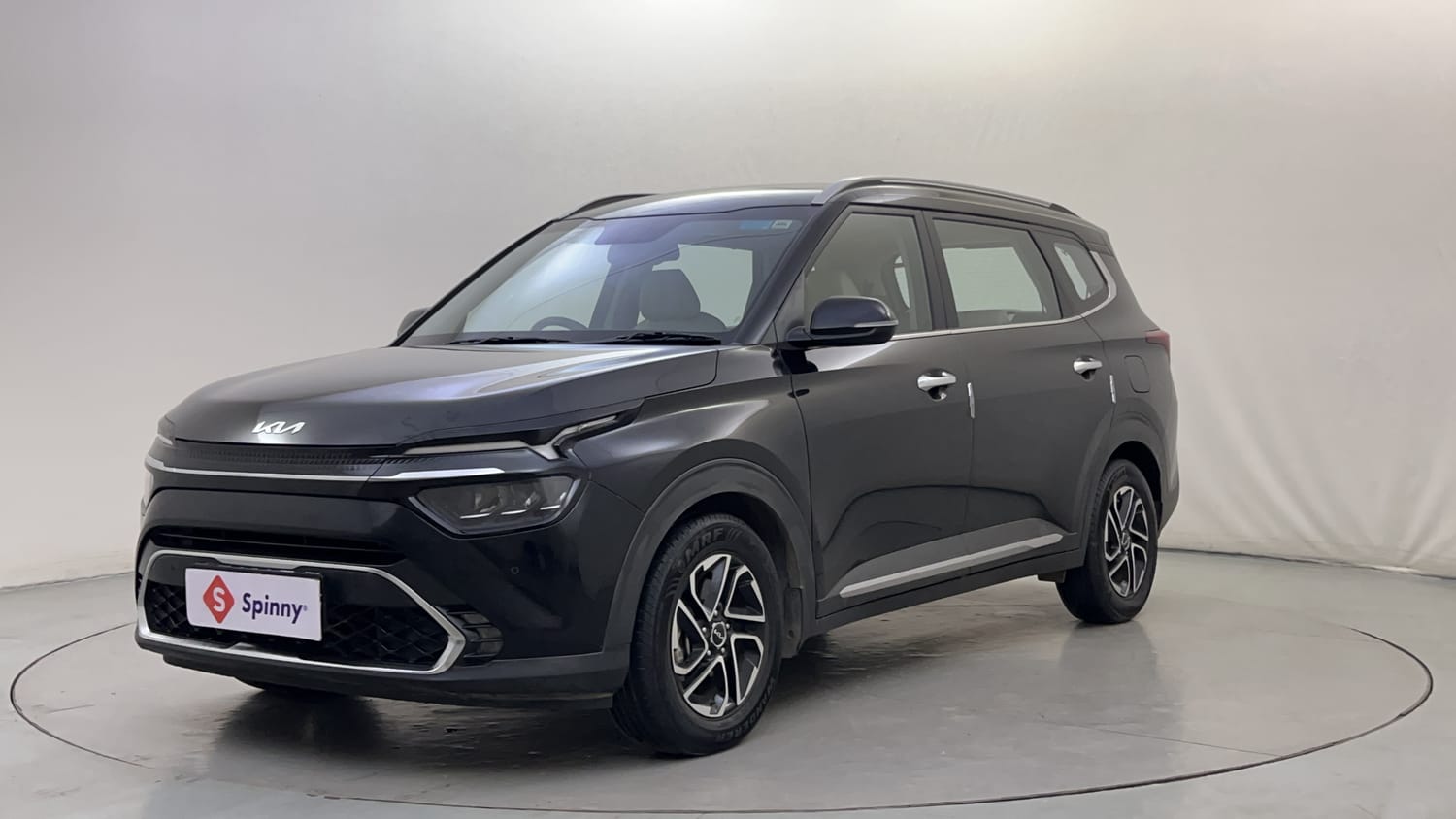
Current guidance for the Carens diesel manual places real-world economy at roughly 14–18 km/l depending on traffic, load and road conditions. For ownership-cost calculations, around 16 km/l is a sensible working midpoint. An earlier Carens using the same 1.5-litre diesel with the iMT gearbox returned 14.9 km/l in the city and 19.1 km/l on the highway, which supports that general real-world range.
In road testing, the Carnival has achieved fuel efficiency ratings of 10.9 km/s in mixed work conditions. In a separate efficiency test, the vehicle performed around 10.2 km/l. This means that the fuel efficiency ratings of 10.9 km/l are more reflective of its performance in mixed-condition driving than a specific driving cycle.
| Mileage Reference | Carens Diesel | Carnival Diesel |
| ARAI mileage | 21.3 km/l | 14.85 km/l |
| Real-world reference | ~14–18 km/l | ~10.9 km/l mixed |
| Working figure for costs | ~16 km/l | ~10.9 km/l |
| Fuel tank | 45L | 72L |
| Approx. mixed full-tank range | ~720 km | ~785 km |
What is noteworthy is the distance travelled. Although the Carens is more fuel-efficient (uses less fuel per kilometre), the Carnival is capable of holding 27 litres more fuel. This means that while the Carnival has lower fuel economy, it can still theoretically travel a longer distance before needing to stop at a filling station.
Why Is the Carens More Fuel-Efficient?
The biggest reason is simply size and weight. The Carens is a smaller MPV powered by a 1.5-litre diesel producing 250Nm. The Carnival uses a much larger 2.2-litre engine producing 441 Nm and has considerably more body mass to move. Every acceleration from a stop therefore demands more energy in the Carnival.
The Carens also comes with a six-speed manual transmission, which allows the driver to control gear selection and achieve great economy at fixed speeds due to the diesel operation. The Carnival automatic is equipped with an eight-speed automatic gearbox, which provides smooth and easy operation. While it is perfectly suitable for a luxury MPV, the big seven-seater requires much more fuel since the torque almost doubles.
Also Read: Kia Carnival: Price, Specifications, Images
Kia Carens vs Kia Carnival Fuel Cost Comparison
For a realistic running-cost comparison, assume 1,500 km per month, equal to 18,000 km annually. Using the September 22, 2026 New Delhi diesel price of approximately ₹95.20 per litre, the Carens diesel at 16 km/l requires around 93.8 litres every month.
While the Carnival averages 10.9 km/l, it still requires roughly 137.6 litres for the distance stated before, meaning that it uses around 44 litres more diesel monthly.
| Carens Diesel | Carnival Diesel | |
| Real-world reference | 16 km/l | 10.9 km/l |
| Monthly fuel use | ~93.8L | ~137.6L |
| Monthly fuel cost | ~₹8,925 | ~₹13,100 |
| Annual fuel cost | ~₹1.07 lakh | ~₹1.57 lakh |
| 5-year fuel cost | ~₹5.36 lakh | ~₹7.86 lakh |
The Carens thus saves around ₹4,175 per month in diesel. This means that over the year the figures will amount to some ₹50,000, and during the five years of its running the difference will reach around ₹2.5 lakhs.
Kia Carens vs Kia Carnival Price

The regular Carens is dramatically more affordable. In September 2026, the Premium (O) petrol manual was priced at roughly ₹11.02 lakh ex-showroom, while the diesel version is around ₹12.8 lakh. The range has been simplified, so buyers do not have the wwidespread rangeof variants once offered under the Carens name.
The current Carnival has a price tag of approximately ₹59.65 lakh ex-showroom and comes in a fully loaded Limousine+ diesel automatic variant. The huge difference in prices indicates that both Kia MPVs are not competitors in any way, as they are both seven-seaters.
| Model / Variant | Approx. Ex-showroom Price |
| Carens Premium (O) Petrol MT | ~₹11.02 lakh |
| Carens Premium (O) Diesel MT | ~₹12.8 lakh |
| Carnival Limousine+ 2.2 Diesel AT | ~₹59.65 lakh |
Since the Carnival positions itself as a luxury MPV with amenities and level of comfort greater than the Carens has been created for, it has a much higher price.
Also Explore: Kia Carens Image Gallery: Interior and Exterior
Summary
The Kia Carens diesel is the clear mileage winner. Its 21.3 km/l official figure and practical 14–18 km/l real-world range are substantially better than the Carnival diesel’s 14.85 km/l claim and approximately 10.9 km/l tested mixed economy.
In case we consider a typical distance of 1,500 km per month, the Carens diesel is much cheaper to run and costs ₹8,92,5 compared to ₹13,100 for the Carnival, which equals an annual amount of savings of approximately ₹50,000. Thus, we can conclude that the Carens is a better option for buyers who want inexpensive seven-seat family transport.
The Kia Carnival is the stronger choice for luxury, performance and long-distance comfort. Its 2.2-litre diesel produces 441Nm, its automatic gearbox makes touring effortless, and the 72-litre tank gives it excellent overall range despite lower efficiency. Choose the Carens for economy and practicality; choose the Carnival when premium comfort and effortless performance matter more than fuel consumption.
Related Blogs:
Kia Carens vs Maruti XL6 Real-World Mileage Comparison
Kia Carens vs Renault Triber Real-World Mileage Comparison
Kia Carnival Alternatives: Competitors of Kia Carnival
FAQs about Kia Carens and Kia Carnival Mileage
Q. Which has better mileage, Kia Carens or Kia Carnival?
The Kia Carens diesel has better mileage. It is rated at 21.3 km/l, while the Carnival diesel is rated at 14.85 km/l.
Q. What is the real-world mileage of the Kia Carens diesel?
The current Carens diesel can typically return around 14–18 km/l depending on traffic and driving conditions. Around 16 km/l is a reasonable mixed-use working figure.
Q. What is the real-world mileage of the Kia Carnival?
The Carnival diesel has returned around 10.9 km/l in mixed real-world driving.
Q. Which is cheaper to run, Carens diesel or Carnival diesel?
The Carens is substantially cheaper to run. At 1,500 km per month, the estimated diesel cost is around ₹8,925 for the Carens versus approximately ₹13,100 for the Carnival.
Q. Which has the longer driving range?
Despite lower mileage, the Carnival can offer a slightly longer theoretical full-tank range because it has a 72-litre tank compared with the Carens’ 45-litre tank.
Q. Is the Kia Carnival hybrid available in India?
Kia has opened pre-bookings for the Carnival hybrid, but as of September 2026, it had not yet officially launched with final Indian mileage and pricing.