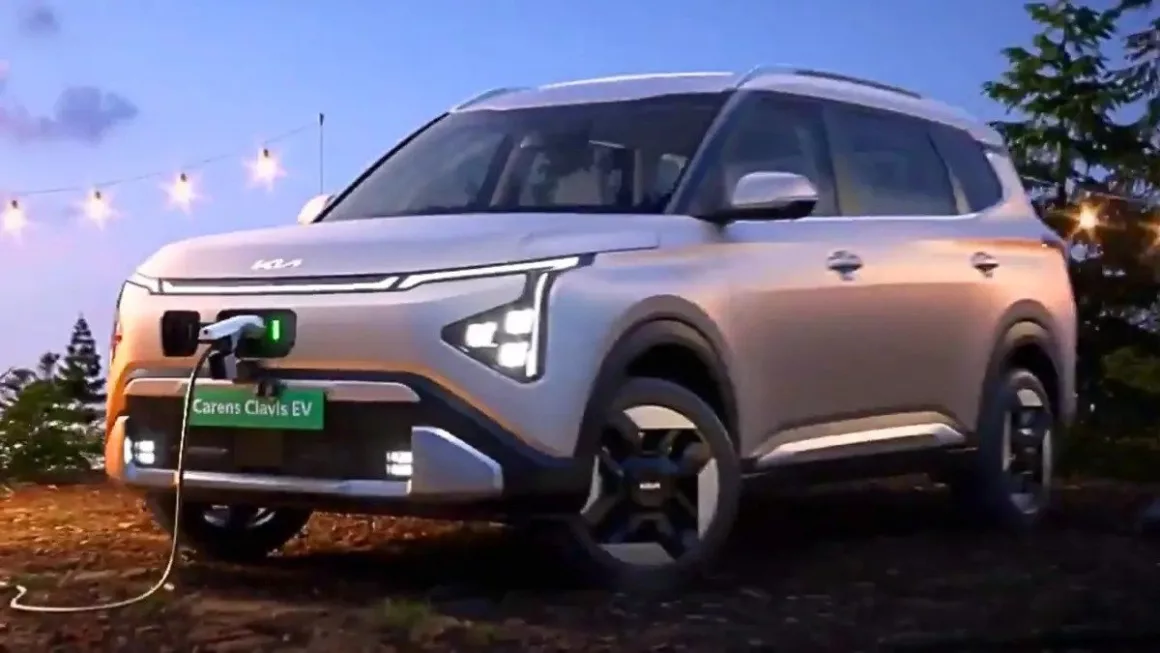
Purchasing a family EV presents new questions upon entering the showroom. It is still important to consider comfort of seating, cargo capacity, and reasonable pricing, but it now becomes critical to find out whether or not a short weekend jaunt requires a charging station stop. The range stated in the brochure only provides part of the answer.
The Kia Carens Clavis EV and MG Hector Tomahawk EV are interesting alternatives for families considering electric mobility. In separate independent range tests, the MG covered more kilometres per charge, while the Kia used less electricity per kilometre. This comparison focuses on the Kia’s 51.4kWh Extended Range version, explaining what those results mean for everyday driving, charging and ownership costs.
Carens Clavis EV vs Hector Tomahawk EV: Specifications
The biggest difference is battery size. The Clavis electric vehicle has a 51.4kWh battery, while the Hector Tomahawk electric vehicle has a 69.2kWh battery. Both competitors have a single motor at the front which powers the front axle, with MG being the more powerful and torquier competitor.
| Specification | Kia Carens Clavis EV ER | MG Hector Tomahawk EV |
| Battery capacity | 51.4kWh | 69.2kWh |
| Maximum motor power | 126kW | 150kW |
| Maximum torque | 255Nm | 310Nm |
| Driven wheels | Front | Front |
| Seating options | Six or seven, depending on variant | Five or seven, depending on variant |
| Claimed MIDC range | 490km | 517km |
Kia offers a more compact version, known as the 42kWh model, yet the information on its price and range should not be confused with the ER findings below. Likewise, the Hector Tomahawk PHEV features a different power train. In this article, we look at MG’s all-electric model and refrain from using the petrol-assisted driving range of the plug-in hybrid.
Claimed Range vs Real-World Range
The claimed range difference is only 27km. In separate independent tests (Kia in December 2025, MG in October 2026), the gap was larger. The average real-world range was about 364km for the Kia and 446km for the MG, an 82km advantage for the latter.
| Range measure | Carens Clavis EV ER | Hector Tomahawk EV |
| Claimed MIDC range | 490km | 517km |
| City range | 383km | 495km |
| Highway range | 345km | 397km |
| Published average range | 364km | 446km |
The figures were obtained from energy used on a standard test circuit instead of testing cars until the battery was completely drained. Tyres were inflated to the correct pressure and air conditioning was set to 22 degrees in automatic mode. These tests provide valuable data for comparison, but are not distances guaranteed for use by everyone.
The average row is the test publication’s reported summary. Your own mix of city and highway kilometres, passenger load and speed may produce a different outcome. For journey planning, start with the relevant highway or city result and allow a reserve.
City Range: More Distance Between Charging Sessions
MG’s test-derived city range was 112km more, which helps if you can’t charge every night or drive a lot within the city. You can go longer before plugging in again.
However, distance between charges and electricity consumption are different things. In urban testing, the Kia returned 7.45km/kWh, compared with the MG’s 7.15km/kWh. The Kia therefore needed slightly less battery energy to cover the same city distance, even though the MG could travel further before recharging.
Think about where you park. If you can charge at home, you can top up every night, so a slightly smaller range matters less. If you rely on public chargers, fewer charging stops will probably matter more than using slightly less electricity.
Highway Range: Plan Around a Charging Reserve
The highway figures were lower for both vehicles: 345km for the Kia and 397km for the MG. Higher speeds increase aerodynamic resistance, while steady cruising offers fewer opportunities to recover energy through regenerative braking. This is why a city range estimate should not become your expressway target.
As an example, if we rely on 70% of those highway estimates, we could expect the Kia to drive around 242 km while the MG could reach 278 km. This is based on a hypothetical situation where we travel from 80% battery level to 10% battery level,with energy use matching the test results. It remains a planning calculation rather than a roadway test outcome.
Real journeys need more flexibility. A climb, strong headwind, heavy rain or an unavailable charger can change the plan. Check charging locations before leaving and identify a backup stop. Arriving with a comfortable reserve is more useful than trying to match the highest published range.
Efficiency: Why the Kia Uses Less Electricity
“On the highway, the Kia returned 6.71km/kWh against the MG’s 5.73km/kWh. So the Kia was more efficient in both city and highway testing. The MG goes further on a charge only because its battery is much bigger. It uses more energy per kilometre.
A simple example illustrates the differences in these terms. A larger battery means an EV has a greater range, even if its electricity consumption per km is greater. An efficient EV may use less energy over the same distance but will still have to stop for a recharge sooner.
The presence of these advantages by itself should not be what determines the purchase of one of these vehicles. For example, a family that takes a lot of long-distance trips may be swayed by the extra range more than a person who has home charging and predictable driving needs.
Charging Times: Compare the Same Battery Percentage
Kia quotes approximately 39 minutes for a 10–80% charge using a suitable 100kW DC charger. MG quotes about 35 minutes for 30–80% with a 90kW DC charger. Those figures cover different amounts of battery replenishment, so the shorter time alone does not establish a charging winner.
| Manufacturer charging estimate | Carens Clavis EV ER | Hector Tomahawk EV |
| AC charging | About 4 hours 45 minutes, 10–100%, using 11kW | About 12.5 hours, 10–100%, using 7.4kW |
| DC charging | About 39 minutes, 10–80%, using a 100kW charger | About 35 minutes, 30–80%, using a 90kW charger |
Your home’s electrical supply must support the charger to get the quoted AC time. Public charging speed also depends on the charger’s output, battery temperature and starting charge level. A high number stated on the charger does not imply the car will be consuming that energy level during the whole time of charging.
Before buying, confirm installation requirements, charger inclusion and any additional electrical work. For many families, dependable overnight charging will influence ownership more than a small difference between advertised fast-charging times.
Electricity Costs: What Could You Spend Monthly?
As an example that illustrates the budget, we can presume driving 1,500 km in urban areas per month and an electricity cost of ₹8/ kWh. Based on the figures of recorded city efficiencies, the Kia needs about 201 kWh of power from its battery, while the MG will take around 210 kWh.
| City-use calculation | Carens Clavis EV ER | Hector Tomahawk EV |
| Test efficiency | 7.45km/kWh | 7.15km/kWh |
| Battery energy for 1,500km | Approximately 201kWh | Approximately 210kWh |
| Cost at an assumed ₹8/kWh | Approximately ₹1,611 | Approximately ₹1,678 |
The numbers given do not take charging losses into account. This means that the electricity taken from the grid will be greater than the actual amount of energy used for motion. Simultaneous use of charges for public charging, parking, and session fees may add up to the bill. Battery subscription fees are separate, if applicable.
The difference in this city example is only about ₹68 per month. That puts the efficiency advantage into perspective: it is measurable, but purchase price, charging access and family practicality are likely to have a larger influence on your decision.
Also Read: How Much Does It Cost to Charge an Electric Car?
Carens Clavis EV vs Hector Tomahawk EV: Pricing
In order to ensure that the comparison is objective, the table listed below uses outright purchase prices inclusive of the battery. It compares the Kia ER range with that of the MG EV instead of starting with the cheaper model of the Kia – the 42 kWh.
| Model or variant | Ex-showroom price |
|---|---|
| Carens Clavis EV ER range (HTX E ER to GTX+ / X-Line ER) | ₹21.99 lakh–₹24.99 lakh |
| Hector Tomahawk EV Excite seven-seater | ₹20.25 lakh |
| Hector Tomahawk EV Exclusive seven-seater | ₹22.75 lakh |
| Hector Tomahawk EV Essence five-seater | ₹23.75 lakh |
| Hector Tomahawk EV Essence seven-seater | ₹24.25 lakh |
Prices were checked in November 2026. MG’s introductory prices have ended, and the EV now costs up to ₹75,800 more than at launch. Be sure to check the final price quote that includes insurance, registration costs, paint selections and installation for the charging station.
Battery-as-a-Service (BaaS) needs a separate calculation. MG’s BaaS starts at ₹13.99 lakh plus ₹4.90 per km for battery rental. Kia’s BaaS for the Clavis EV ER starts at ₹15.94 lakh plus ₹3.3 per km. Compare the exact variant, contract terms and total payments, and add electricity on top.
Also Read: Battery as a Service (BaaS) Explained
Family Practicality and Everyday Ownership
While the level of your mileage is important, it’s not the only thing to keep in mind. If you think having individual seats in the second row may be useful, Kia offers an option with six seats. Alternatively, the MG provides options with five and even seven seats, but you should decide on the layout based on the number of regular passengers before you compare your options.
Bring the family along for the test drive. Check third-row access, seating comfort with the front seats adjusted normally, and luggage space with every required seat occupied. Also consider parking dimensions and whether the charging cable can conveniently reach the car in your usual space.
Before buying a second-hand electric vehicle, it is important to make sure about the battery model, battery health history (if available), service history of that car, and warranty coverage remaining. Make sure about the ownership of the battery and whether or not the buyer has to pay for the subscription. On Spinny, filter listings by budget and check each car individually rather than relying only on its original specs.
Which EV Should You Choose?
For the longest distance between charging stops in this comparison, the Hector Tomahawk EV has the stronger result. Its bigger battery is useful for buyers who regularly travel further or have fewer opportunities to charge conveniently.
The Carens Clavis EV ER achieves a good score for its electric efficiency and choice of family seating configurations. If you undertake the same daily trips and have access to charging facilities,its shorter range may not matter much, and its efficiency and seating choices may suit your family better.
Choose around a normal week and your longest regular journey. Compare outright prices or subscription contracts on the same basis, and plan with a charging reserve. The most suitable EV is the one that makes your routine easier at a cost you are comfortable with.
Related Blogs:
Complete Guide on Buying the Kia Carens Clavis EV
MG Hector Tomahawk EV BaaS Explained: Price, Payment Plan
FAQs
Q. Which EV delivered the longer real-world range?
The MG Hector Tomahawk EV had a published average test-derived range of 446km, compared with 364km for the Kia Carens Clavis EV ER. The MG also recorded higher city and highway range estimates.
Q. Which Carens Clavis EV battery is compared here?
This comparison uses the 51.4kWh Extended Range version. Kia also offers a 42kWh battery, but the tested range and efficiency figures in this article should not be applied to that smaller-battery model.
Q. Is the Kia more efficient despite having less range?
Yes. It covered more kilometres per kWh in both city and highway testing. The MG travelled further per charge because its battery stores more energy, which outweighs its higher consumption per kilometre.
Q. Can either EV reliably deliver its claimed range?
Claimed figures come from controlled testing. Everyday results vary with speed, weather, terrain, load and climate-control use. Use road-test evidence as a reference and keep a reserve rather than planning to exhaust the battery.
Q. Which one charges faster?
The quoted DC times cover different charge windows, so they are not directly comparable. For AC charging, Kia quotes a shorter time using 11kW, while MG’s estimate uses 7.4kW. Actual conditions matter.
Q. Does the MG’s BaaS rental include electricity?
No. MG’s BaaS rental of ₹4.90/km is separate from what you pay for charging. Kia’s BaaS for the ER costs ₹3.3/km, also excluding electricity. Check each contract for minimum billing, loan terms and other charges.
Q. Are both available with seven seats?
Yes. Both offer seven-seat versions. The Kia also offers six-seat configurations on selected variants, while the MG has a five-seat Essence option. Confirm the layout of the specific variant you shortlist.
Q. What should I check before buying either EV?
Confirm home-charging feasibility, regular route coverage, seating comfort and the full purchase or subscription cost. For a used example, also review battery condition, service records, warranty transferability and any outstanding battery-contract obligations.