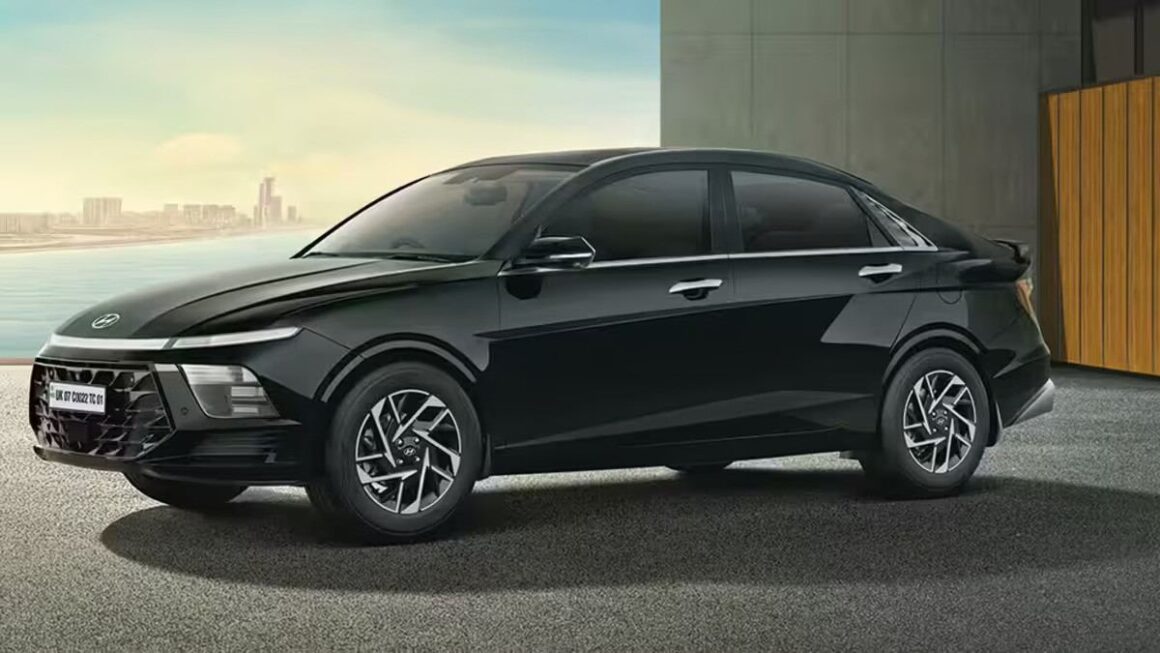
Safety is one of the most important considerations for modern car buyers, and the Hyundai Verna is one of the best in this regard. It is a stylish sedan with exhilarating performance and an excellent Global NCAP (New Car Assessment Program) safety rating.
Priced between ₹10.80 to ₹17.13 lakh (ex-showroom), the Hyundai Verna is a perfect combination of performance, comfort, and safety. Read on to learn more about Verna’s NCAP rating and safety features to help buyers make an informed decision.
Hyundai Verna NCAP Safety Rating
The Global NCAP is an organisation that sets global safety standards and tests cars by conducting crash tests under varying conditions. The rating is conducted with the support of the United Nations and aims to reduce accidents and promote car safety worldwide.
The Hyundai Verna is ranked among the best sedans for safety. It received a full 5-star safety rating from Global NCAP. This is a testament to Hyundai’s dedication to building vehicles with robust structures, excellent occupant safety, and advanced safety technologies that help reduce injuries in accidents.
Furthermore, the Hyundai Verna’s excellent safety rating in both frontal and side-impact crash tests demonstrates its ability to protect occupants in real-world accident scenarios. This makes it a dependable and safety-focused family sedan.
Hyundai Verna Adult Occupant Protection Safety Rating
The Hyundai Verna scored 28.18 out of a possible 34.00 points with regard to Adult Occupant Protection, as tested by Global NCAP. The bodyshell integrity of the Hyundai Verna was rated stable, indicating it could withstand greater loads during a crash.
Here is a crash test rating breakdown:
| Test Type | Protection Level |
| Frontal Crash | |
| Head & Neck | Good |
| Driver Chest | Marginal |
| Passenger Chest | Good |
| Knee Protection | Marginal |
| Driver’s Tibias | Marginal |
| Passenger’s Tibias | Good |
| Side-Impact | |
| Head | Good |
| Pelvis | Good |
| Abdomen | Good |
| Chest | Adequate |
| Side Pole Impact | |
| Head | Good |
| Pelvis | Good |
| Chest | Marginal |
| Abdomen | Adequate |
Based on these results, the Hyundai Verna offers a reassuring level of safety for daily commutes and highway drives. This makes it a dependable choice for families and long-distance travellers alike.
Hyundai Verna Child Occupant Protection Safety Rating
Based on the Hyundai Verna, the car scored 42.00 out of 49.00 points in the Child Occupant Protection Rating, indicating it is safe for children in the event of a crash. The Hyundai Verna performed exceptionally well in the dynamic crash test, where the car dummies for the infant and toddler were restrained and moved little during the impact.
The car scored full points in the dynamic test and the CRS Installation. This indicates that the car is compatible with the child restraint system and can provide a safe environment for children during an impact. The availability of ISOFIX anchors and support for i-Size child seats further improves safety by ensuring proper positioning and stability of child restraint systems. Here is a child occupant protection score breakdown:
- Dynamic Score: 24.00 (max 24.00)
- CRS Installation Score: 12.00 (max 12.00)
- Vehicle Assessment Score: 6.00 (max 13.00)
| Age Range | Child restraint | Dynamic score | CRS Type | Adjust | Position |
| 18-month-old child | Britax Baby Safe 3 + FlexBase 5z | Front 8.00 (8 max)Side 4.00 (4 max) | i-SIZE | ISOFIX/LEG | RWF |
| 3-year-old child | Britax Dualfix 3 | Front 8.00 (8 max)Side 4.00 (4 max) | i-SIZE | ISOFIX/LEG | RWF |
Hyundai Verna Safety Features
The Hyundai Verna provides a comprehensive array of safety features for enhanced protection during normal driving, including highway driving. Here are the safety features:
- Six Airbags: It provides protection for the driver and passengers by minimising the impact of a frontal or side crash.
- Hill Start Assist: It prevents the car from moving backwards on slopes by maintaining the brake pressure for a few seconds.
- Electronic Stability Control (ESC): It helps maintain stability during driving by automatically applying the brakes and controlling engine torque when the car starts to skid.
- ISOFIX Mounts: They provide stable, secure anchoring of the car seat, enhancing occupant protection, especially for children.
- ABS with EBD: It prevents the wheels from locking during hard braking and applies the brakes uniformly across all four wheels.
- Rear Parking Sensors: Help the driver detect objects behind the car and alert them when reversing or parking.
- Rear Defogger: It removes fog or moisture from the rear windshield to enhance visibility during cold or rainy conditions.
- AUTO Headlights: Automatically turn on the headlights when ambient light levels drop for enhanced visibility and protection during night driving.
However, increasing the number of variants adds more advanced safety and driver-assistance features. Here are the safety features in higher variants:
- Tyre Pressure Monitoring System (TPMS): Continuously monitors tyre pressure and alerts the driver if pressure falls below the recommended level.
- Front Parking Sensors: Help detect obstacles in front of the car, making parking easier in congested areas.
- 360 Degree Camera: It provides a bird’s-eye view of the car and is helpful for parking and manoeuvring.
- AUTO Inside Rear View Mirror (IRVM): Automatically dims rear view mirror reflections from vehicles behind while driving at night.
- Rear Disc Brakes (Available in Turbo Variants): It improves braking efficiency and offer better heat dissipation during repeated braking.
- Electronic Parking Brake (Available in Turbo DCT Variants): It allows drivers to easily engage or disengage the parking brake by pressing a simple switch.
Table Breakdown
| Feature | Availability |
| Airbags | 6 |
| ISOFIX (Child-Seat Mount) | Yes |
| Overspeed Warning | 1 beep over 80 kmph & Continuous beeps over 120 kmph |
| ABS (Anti-lock Braking System) | Yes |
| EBD (Electronic Brake-force Distribution) | Yes |
| EBA (Electronic Brake Assist) | Yes |
| ESP (Electronic Stability Program) | Yes |
| ASR / Traction Control | No |
| Tyre Pressure Monitoring System | No |
| Lane Departure Warning | Yes |
| Emergency Brake Light Flashing | Yes |
| Seat Belt Warning | Yes |
| Rear Middle Three Point seatbelt | Yes |
| Rear Middle Head Rest | No |
| Hill Assist | Yes |
| Hill Descent Control | No |
| Parking Camera | Rear Only |
| Blind Spot Detection | Yes |
| Engine Immobiliser | Yes |
| Central Locking | Yes |
| Speed Sensing Door Lock | Yes |
| Child Safety Lock | Yes |
| Fog Lights | No |
| Door Ajar Warning | Yes |
| Lane Watch Camera/ Side Mirror Camera | No |
| ADAS | Yes |
| ADAS Type | Level 2 |
| Dashcam | No |
| BNCAP Adult Rating | Not Tested |
| BNCAP Child Rating | Not Tested |
| BNCAP Rating | Not Tested |
| GNCAP Adult Rating | 5 Star |
| GNCAP Child Rating | 5 Star |
| GNCAP Rating | 5 Star |
| Inside Rear View Mirror | Auto Dimming |
| Surround View Camera | No |
| Blind Spot Monitor | Yes |
Summary
The Hyundai Verna’s 5-star safety rating from the Global NCAP is a remarkable achievement for the entire automotive industry. When choosing a car, safety is often the deciding factor, and the Verna offers peace of mind for families and daily commuters alike.
Its combination of structural strength, advanced driver assistance systems, and child protection features makes it a practical and confident choice for those prioritising safety.
As the automotive industry continues to advance, the Hyundai Verna sets a benchmark in safety, serving as a model for future vehicles in its segment.
FAQs about Hyundai Verna Safety Rating
Q. What is the overall safety rating of the Hyundai Verna?
The Hyundai Verna has achieved an impressive 5-star safety rating from Global NCAP. It scored 28.18 out of 34 points for adult protection and 42 out of 49 points for child protection, reflecting its strong crash performance and robust safety design.
Q. How do the Verna’s safety features compare to its competitors?
With a full 5-star rating, the Hyundai Verna stands out among its rivals in the midsize sedan segment. Its strong structure increases the likelihood of occupant survival in a crash. Few cars in its class match the Verna’s blend of high-tech safety features and well-built steel body structure.
Q. What enhancements have been made in the Hyundai Verna that make its safety rating high?
The Hyundai Verna has an excellent rating due to its active and passive safety features, including Electronic Stability Control (ESC), Anti-lock Brake System (ABS) with Electronic Brakeforce Distribution (EBD), and strategically placed airbags throughout the cabin.
It also includes modern driver assistance technologies such as adaptive cruise control, lane-keeping assist, and automatic emergency braking, which help prevent accidents and enhance overall safety.Q. How many airbags is the Hyundai Verna equipped with?
The Hyundai Verna is equipped with six airbags that help protect the driver and passengers in the event of an accident.
Q. Is the Hyundai Verna equipped with an ADAS system?
Yes, the Hyundai Verna is equipped with an Advanced Driver Assistance System (ADAS). This includes lane departure warning, forward collision warning, adaptive cruise control, and other technologies designed to assist the driver and enhance safety in various driving conditions.