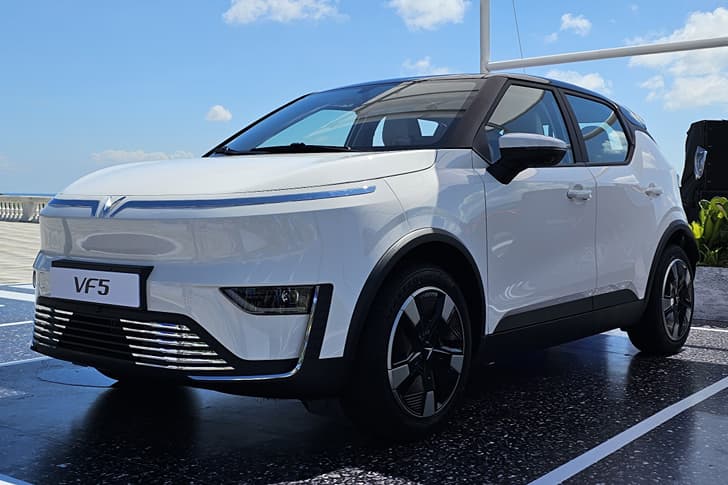
One brand offers a menu, the other a single dish done well. The new-generation Hyundai Venue comes with three engines: a 1.2-litre petrol, a 1.0-litre turbo-petrol with a dual-clutch automatic, and a 1.5-litre diesel that now gets a proper torque-converter automatic. The Skoda Kylaq keeps things simple, with just one 1.0-litre TSI turbo-petrol and the choice of a 6-speed manual or 6-speed automatic. Both are sub-four-metre SUVs with five-star Bharat NCAP ratings, 45-litre tanks and overlapping price lists, which makes them natural rivals on many shortlists. This Hyundai Venue vs Skoda Kylaq real-world mileage comparison lines up independent test results for each engine and gearbox, then works out what each one costs to run every month.
Table of Contents
Hyundai Venue vs Skoda Kylaq: Specifications
The Hyundai Venue spreads its line-up across three engines. The 1.2-litre four-cylinder petrol makes about 83 hp and comes only with a 5-speed manual. The 1.0-litre turbo-petrol makes around 120 hp and 172 Nm, with a 6-speed manual or 7-speed DCT, and the 1.5-litre diesel makes around 116 hp and 250 Nm, with a 6-speed manual or 6-speed automatic. The Skoda Kylaq uses a single 1.0-litre TSI turbo-petrol making about 115 PS and 178 Nm.
| Specification | Hyundai Venue | Skoda Kylaq |
| 1.2L petrol | ~83 hp / 115 Nm, 5-speed MT | Not offered |
| 1.0L turbo-petrol | ~120 hp / 172 Nm, 6-speed MT or 7-speed DCT | ~115 PS / 178 Nm, 6-speed MT or 6-speed AT |
| 1.5L diesel | ~116 hp / 250 Nm, 6-speed MT or 6-speed AT | Not offered |
| Auto engine stop-start | On the turbo-petrol; not on the 1.2 petrol | Yes |
| Fuel tank | 45 litres | 45 litres |
The two turbo-petrols are closely matched on paper, both being three-cylinder 1.0-litre units with similar outputs. The real difference is the gearbox: Hyundai uses a dual-clutch automatic, while Skoda uses a conventional torque converter.
Also Read: Skoda Kylaq Alternatives: Competitors of Skoda Kylaq
Hyundai Venue vs Skoda Kylaq: ARAI Mileage Figures

Looking only at the turbo-petrols, the certified numbers point in opposite directions depending on the gearbox. The Kylaq manual is rated at 19.68 km/l, ahead of the Venue turbo manual’s 18.74 km/l. With automatics, the Venue’s DCT is rated at 20 km/l against the Kylaq automatic’s 19.05 km/l. Outside that head-to-head, the Venue diesel manual carries the highest figure of the lot at 20.99 km/l.
| Version | Hyundai Venue | Skoda Kylaq |
| 1.2 petrol MT | 18.05 km/l | Not offered |
| Turbo-petrol MT | 18.74 km/l | 19.68 km/l |
| Turbo-petrol automatic | 20 km/l (DCT) | 19.05 km/l (AT) |
| Diesel MT | 20.99 km/l | Not offered |
| Diesel AT | 17.9 km/l | Not offered |
The gaps are small, never more than about 1 km/l between comparable versions. Real-world testing shows how those lab numbers hold up once traffic and air-conditioning enter the picture.

Hyundai Venue vs Skoda Kylaq: Real World Fuel Efficiency
The most telling comparison is between the two turbo-petrol automatics, which were run over the same fixed city and highway routes. The Venue’s turbo-DCT, tested in the mechanically identical N Line in Eco mode, returned 9.9 km/l in the city and 14.3 km/l on the highway. The Kylaq automatic managed 8.7 km/l and 13.36 km/l, putting it behind on both counts.
Swap to manuals and the story changes. The Kylaq manual returned 10.6 km/l in town and 15.12 km/l on the highway, edging out the Venue’s 1.2-litre petrol manual, which recorded 10.7 km/l and 14.9 km/l, by the smallest of margins overall.
| Version | City | Highway | 50:50 mixed |
| Venue 1.0 turbo-petrol DCT | 9.9 km/l | 14.3 km/l | 12.1 km/l |
| Kylaq 1.0 turbo-petrol AT | 8.7 km/l | 13.36 km/l | 11.03 km/l |
| Venue 1.2 petrol MT | 10.7 km/l | 14.9 km/l | 12.8 km/l |
| Kylaq 1.0 turbo-petrol MT | 10.6 km/l | 15.12 km/l | 12.86 km/l |
The Venue diesel automatic, which has no Kylaq equivalent, was tested separately. It returned 11.05 km/l in the city and 16.93 km/l on the highway, making it the most frugal automatic in this comparison. No comparable controlled test of the Venue turbo-petrol manual or diesel manual was available at the time of writing.
What stands out? If you want a petrol automatic, the Venue’s DCT is the more efficient choice, by just over 1 km/l. If you’re happy with a manual, the Kylaq and the Venue 1.2 are virtually level, with the Skoda offering far more power for the same fuel. And if mileage is your top priority, the Venue diesel is the one to beat.
Also Read: Hyundai Venue Mileage Comparison: Petrol vs Diesel vs Turbo Petrol
Hyundai Venue vs Skoda Kylaq: Fuel Cost Comparison

A kilometre-per-litre gap only matters once it shows up in your monthly budget. We’ve priced petrol at ₹100 a litre and diesel at ₹90, and assumed 1,000 km of driving a month, half in town and half on the highway, which works out to 12,000 km a year.
| Version | Mixed mileage | Cost per km | Monthly (1,000 km) | Yearly (12,000 km) |
| Venue 1.0 turbo-petrol DCT | 12.1 km/l | ₹8.26 | ₹8,264 | ₹99,174 |
| Kylaq 1.0 turbo-petrol AT | 11.03 km/l | ₹9.07 | ₹9,066 | ₹1,08,794 |
| Venue 1.2 petrol MT | 12.8 km/l | ₹7.81 | ₹7,813 | ₹93,750 |
| Kylaq 1.0 turbo-petrol MT | 12.86 km/l | ₹7.78 | ₹7,776 | ₹93,313 |
| Venue 1.5 diesel AT | 13.99 km/l | ₹6.43 | ₹6,433 | ₹77,198 |
Between the petrol automatics, the Venue DCT saves around ₹800 a month, which adds up to nearly ₹9,600 over a year. The manuals are practically level, separated by less than ₹40 a month. The biggest saving, though, comes from the Venue diesel automatic, which costs roughly ₹2,600 a month less to fuel than the Kylaq automatic. For high-mileage drivers who want two pedals, that’s hard to ignore.
Also Read: Hyundai Venue Real World Mileage
Hyundai Venue vs Skoda Kylaq: Price Comparison
The Kylaq undercuts the Venue at both ends. After a small price revision in October 2026, the Skoda costs from about ₹7.59 lakh to ₹13.09 lakh. The Venue starts at roughly ₹8 lakh and climbs to around ₹15.8 lakh, partly because its range stretches to diesel automatics and the sportier N Line (all prices ex-showroom).
| Car | Approx. ex-showroom price |
| Hyundai Venue | ₹8 lakh to ₹15.8 lakh |
| Skoda Kylaq | ₹7.59 lakh to ₹13.09 lakh |
So who should buy which? The Kylaq is a strong pick if you want a punchy turbo-petrol at a lower price, enjoy driving a manual and value its solid, European feel. The Venue makes more sense if you want a smoother DCT automatic that costs less to run, the option of a frugal diesel, or a wider spread of variants and features to choose from.
Buying used? The Venue has been on sale since 2019, so there’s plenty of choice among pre-owned examples on Spinny, while the Kylaq, launched in early 2025, is newer to the used market. If you’re looking at an older Venue, remember that cars built before late 2025 belong to the previous generation, and diesel automatics are only available from the new generation onwards. Every Spinny Assured car comes with a 200-point inspection, a 1-year warranty, fixed pricing and a 5-day money-back guarantee, and it’s worth checking the DCT’s behaviour in slow traffic on your test drive.
Summary
This contest has a different winner depending on what you put in the tank and how you like to change gear. With petrol automatics, the Venue’s turbo-DCT is the more frugal option, returning about 12.1 km/l in mixed driving against the Kylaq automatic’s 11.03 km/l and saving around ₹800 a month. With manuals, the Kylaq and the Venue 1.2 are virtually tied at just under 13 km/l, though the Skoda brings a lot more power for the same fuel. The Venue diesel automatic, at around 14 km/l on cheaper fuel, is the most economical choice in either showroom. Pick the Kylaq if you want a punchy, well-priced turbo-petrol, especially as a manual. Pick the Venue if a frugal automatic or a diesel matters more, and you don’t mind paying a little extra upfront.
Related Blogs:
Skoda Kylaq vs Skoda Kushaq Real-World Mileage Comparison
Hyundai Venue vs Maruti Fronx Real World Mileage Comparison
FAQs about Hyundai Venue and Skoda Kylaq Mileage Comparison
Q. Venue turbo DCT or Kylaq automatic: which one uses less petrol?
The Venue. In real-world tests on the same routes, its turbo-DCT averaged about 12.1 km/l, while the Kylaq automatic managed 11.03 km/l. The Hyundai was ahead both in city traffic and on the highway.
Q. Why is the Kylaq manual more efficient than the Kylaq automatic?
Part of it is down to how each one drives in traffic. In testing, the manual returned 10.6 km/l in the city against the automatic’s 8.7 km/l, a gap of almost 2 km/l. On the highway, the manual stayed ahead, at 15.12 km/l against 13.36 km/l.
Q. Does the Venue N Line give different mileage from the regular Venue turbo?
It shouldn’t, in principle. The N Line uses the same 1.0-litre turbo-petrol and 7-speed DCT as the regular Venue turbo automatic, and the real-world figures in this article come from an N Line driven in Eco mode. Its sportier tuning elsewhere doesn’t change the powertrain.
Q. Is there a diesel or CNG version of the Skoda Kylaq?
The Kylaq is offered only with the 1.0-litre TSI turbo-petrol, with a manual or automatic gearbox. If you need a diesel in this size, the Venue offers one with both a manual and an automatic.
Q. How good is the new Venue diesel automatic on mileage?
In real-world testing, it returned 11.05 km/l in the city and 16.93 km/l on the highway, making it the most economical automatic in this comparison once you account for diesel being cheaper than petrol.
Q. Did the Kylaq’s price go up recently?
In October 2026, Skoda raised prices on most Kylaq variants by up to ₹10,000, with only the base Classic manual left unchanged at ₹7.59 lakh (ex-showroom). The range now tops out at about ₹13.09 lakh.
Q. Is a used Venue a better buy than a new Kylaq on a tight budget?
A pre-owned Venue gives you a wider choice of engines, including frugal diesel options, at a lower price than a new Kylaq. Just check which generation you’re looking at, since the latest Venue’s diesel automatic and updated features are only on cars built from late 2025.