
For years on end, the Indian market has been dominated by two juggernauts, with Hyundai having locked the number two position as its own. However, in recent months, Hyundai’s position on the monthly sales charts has slipped to number four. The trend started in February 2025, when the South Korean car maker slipped to the third spot before recovering and occupying the number two spot once again in March.
However, the worrying trend continued in the months of April and May as Hyundai continuously placed fourth and third respectively in both these months. Could this be a worrying sign that Hyundai is finally losing grip on its long held second position in the Indian market. Or, does Hyundai have a game plan to recover its lost footing and cement its long held number two spot?
Chinks In Hyundai’s Armour
Hyundai India’s loosening grip over the number two spot in the Indian car market can be attributed to many factors. Heavy competition from other Indian car makers, gaps in its portfolio and not understanding the changing expectations of Indian buyers have been the main contributors to Hyundai India’s current problems.
Mahindra and Tata’s ICE Offensive
Indian car makers Mahindra and Tata have been upping the ante over the last few years and have quite literally taken the fight to Hyundai. Both companies have established a robust SUV portfolio.
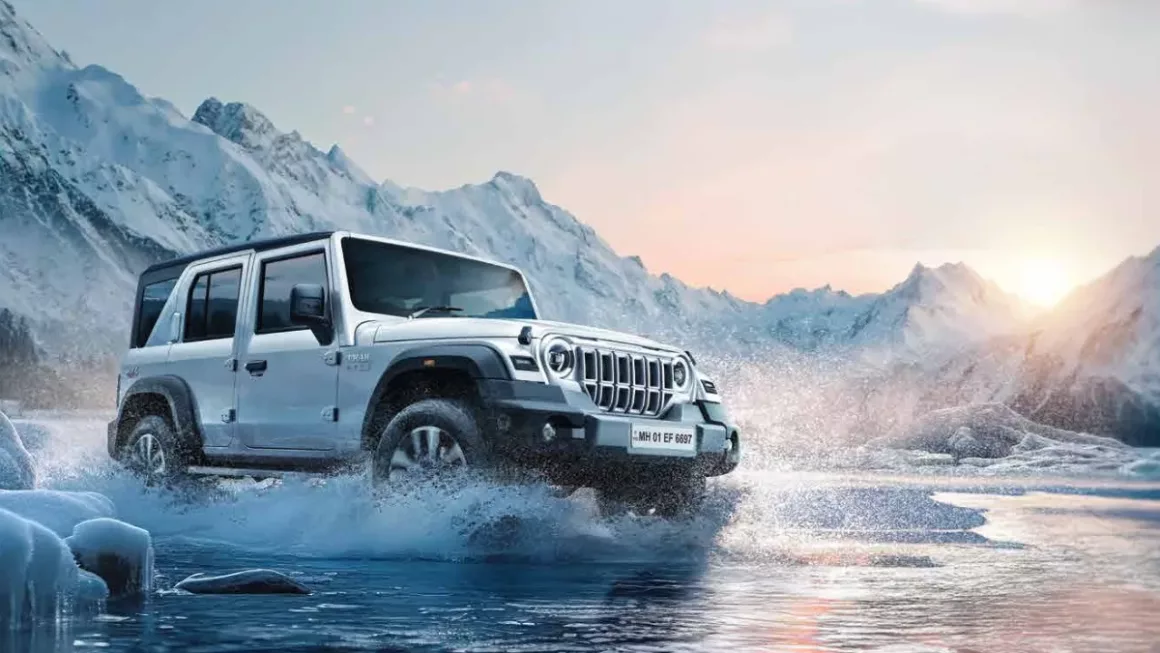
Taking a look at their ICE (internal combustion engine) models, Mahindra, with the launch of the Thar, XUV700, Scorpio N and the Thar Roxx, has positioned itself as a lifestyle SUV manufacturer which can take on the urban grind, open highways and the trails for those truly wanting to squeeze out every drop of adventure from their SUVs. On the other hand, Tata Motors has adopted a more balanced approach by offering SUVs such as the Punch, Nexon, Curvv, Harrier and Safari, basically an SUV in all price brackets.
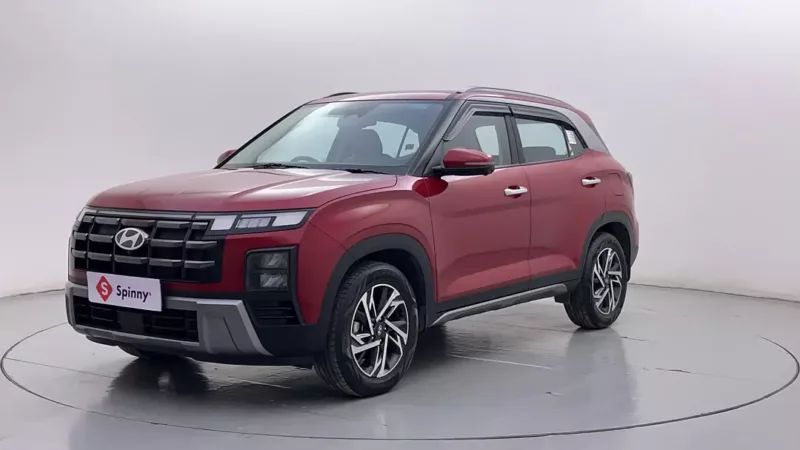
On the other hand, while Hyundai does offer SUVs like the Exter, Venue, Creta and Tucson, it is only the Creta which stands out for its all-round approach and popularity among Indian buyers. While the Venue too has its own decent following, Hyundai’s SUVs are seen as the safe choice. However, Indian buyers are opting for more exciting SUVs, and Mahindra and Tata have been offering just that.
Slow Progress On The EV and Hybrid Front
The Indian government has been slowly and steadily nudging the Indian automotive industry to transition to EV and Hybrid powertrains which are touted as greener alternatives and established players like Hyundai and Maruti Suzuki have been slow on this front. However, Maruti Suzuki has made progress by offering the Strong Hybrid Grand Vitara, whereas Hyundai has introduced EVs like the Kona Electric and Ioniq 5. These have been niche models and haven’t made any meaningful impact on the Indian market.
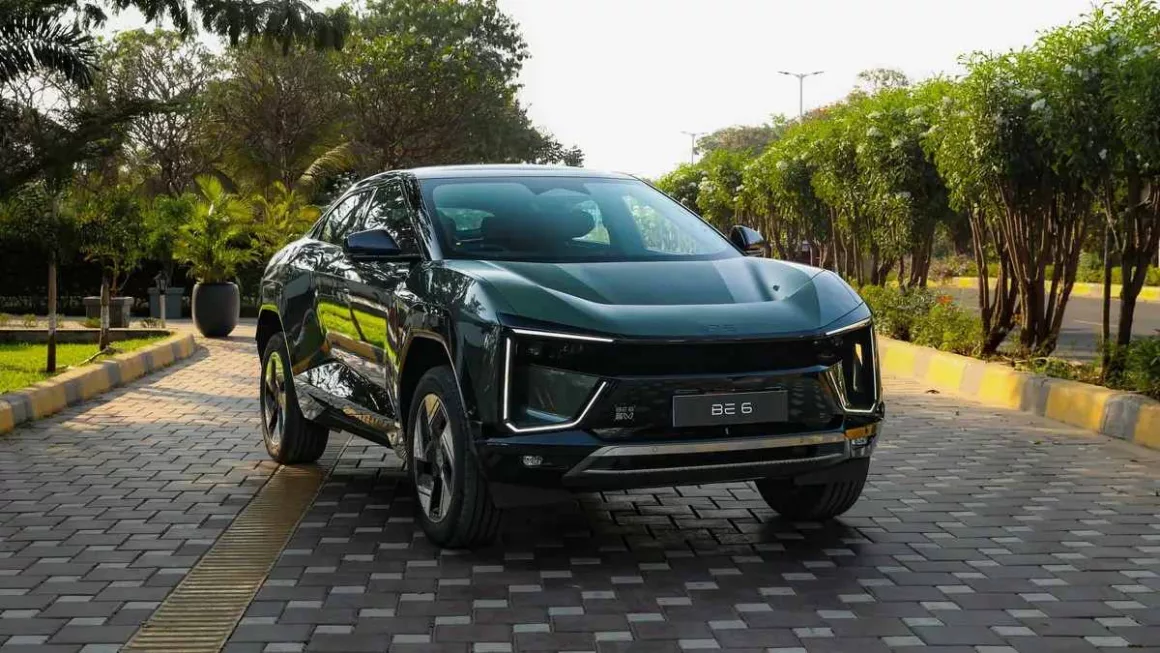
On the other other hand, Mahindra and Tata have jumped onto the EV bandwagon. Tata Motors has offerings like the Punch EV, Nexon EV, Curvv EV and now the Harrier EV, and they have done well to position an electric SUV at incremental price points to address consumer needs. On the other hand, Mahindra has taken the same route as before and offered electric SUVs like the BE 6 and XEV 9e, both of which look highly futuristic and feel aspirational. With such products, Mahindra continues to target adventurous Indian buyers who want to break the mould of making the safe choice when it comes to their next car purchase.
Hyundai, however, does not have any hybrid vehicles on offer in India. Furthermore, the recently launched Creta Electric, aimed at mass market buyers, has seen a slow response from buyers, largely due to it feeling too familiar with the regular Creta.
Neglecting the Sub Rs. 10 Lakh Bracket
Once upon a time, cars positioned under Rs. 10 lakh were the bread and butter models for Hyundai India. However, with models like the Grand i10 Nios, Aura, Exter, i20 and Venue currently falling in this bracket, the Korean car maker has been slow in offering regular updates that freshen up the product line up. In fact models like the i20 have seen feature deletion on lower models, reducing its appeal as a value for money premium hatcback.
Furthermore, in the absence of diesel engines (barring the Venue), the company has been slow in offering an expansive CNG lineup for its models, with only the Grand i10 Nios, Aura and Exter being offered with a factory fitted CNG kit, albeit only with their manual variants. On the other hand, Maruti Suzuki and Tata Motors have been quick to make inroads in this segment by not just offering factory fitted CNG kits across a variety of models, with Tata even offering it with an automatic transmission on the Tiago and Tigor.
While Indian car buyers are slowly rising above the Rs. 10 lakh bracket, it still continues to account for a major chunk of car sales in India and Hyundai’s stagnating portfolio in this bracket is another key reason behind their slip up from second position in the Indian car market.
How will Hyundai India Reclaim its Position?
The South Korean car maker is acutely aware of its dwindling position in the Indian market and is looking to make amends. However, the road to recovery can often be steep, but it first needs to be mapped out. To this effect, Hyundai Global sent in a team to investigate the reason behind its lacklustre performance in the Indian market in recent months, especially when the company recently underwent an IPO that proved to be largely successful and showcased the long term faith Indian buyers have in Hyundai. While there has been no direct comment by Hyundai on the matter, moves made in the public domain are indicative of the restructuring steps that lie ahead.
26 New Product Launches By 2030
The biggest issue as we already know is that Hyundai’s lineup of cars isn’t as robust as it used to be, and to combat this issue, the South Korean car maker plans to launch 26 new products in the Indian market by 2030. Out of these, 20 launches will pertain to ICE models while the remaining 6 will be EVs. The company also has plans to introduce strong hybrid variants of their popular models.
While some of these models will be facelifts for existing variants, 26 launches over a period of five years means that Hyundai will launch an average of 4 new ICE cars and at least one EV every year till 2030. This move is expected to fill up the gaps in Hyundai’s portfolio that have been exposed by the bold steps taken by Mahindra and Tata in the Indian car market. A Hyundai Tucson facelift, a whole new generation Venue, the Ioniq 6 and maybe even the Stargazer MPV will be some of the new product offerings from Hyundai. Furthermore, the Creta is expected to undergo a full generation update in 2028 and it is expected to have petrol, diesel, hybrid and EV variants.
Increasing Investment in India
The company has earmarked a total of Rs. 18,000 crore for investments in India. Out of this, Rs. 10,000 crore has been allocated for the development of new models, which will be utilised to develop and launch the 26 new models that Hyundai plans to introduce in India by 2030. The remaining Rs. 8,000 crore has been earmarked for increasing the R&D and manufacturing capacity of the South Korean car maker on Indian soil.
In fact, Hyundai’s third manufacturing plant is coming up in Talegaon, Maharashtra, and is expected to be operational in the coming months. This will greatly boost the brands ability to churn out new cars. Furthermore, a 450 acre R&D centre with a test track is being built in Telangana. This will help the brand to shorten its product development cycle and lower the associated costs at the same time, both of which are crucial for staying competitive in a market like India.
Enhanced Market Penetration
While Hyundai is well established in the Indian market with a wide dealership and service centre network, the brand isn’t as popular in rural areas as compared to its main rivals Mahindra and Tata. Both these brands are known for their robust build quality and have a loyal fan base in the rural parts of India. Hyundai India is looking to enhance its share in the Indian market by tapping this base, however, it has not yet revealed any concrete plans as to how it will do so.
Hyundai is also looking to expand its market share by targeting institutional sales, which means that the car maker is looking to target companies which operate fleets of vehicles. Previously, this segment of the market has largely been a mainstay of Maruti Suzuki or Tata Motors. Lastly, Hyundai is also targeting increasing the sale of its pre-owned cars to help achieve better market penetration.
The Road Ahead for Hyundai
While Hyundai was losing out on market share from February of 2025, the brand still managed to hold on to the number two spot in car sales for FY25 due to its better performance in earlier quarters. However, with April and May both seeing Hyundai slip up, the brand has its work cut out if it wants to retain its number two spot for FY26. The good news is that the brand has recognised key areas it needs to target and has an action plan for them. However, with its momentum currently stalled, Hyundai will have to fight tooth and nail with Mahindra and Tata to reclaim its number two spot in this financial year.