The Honda Amaze has established its market credibility as a comfortable compact sedan with smooth driving performance and a spacious interior, complemented by a beautiful design. It is a smooth-performing, fuel-efficient vehicle which fits a broad range of audiences, including first-time car customers and families requiring a second car that is comfortable and reliable.
This car is powered by a reliable Honda 1.2-litre i-VTEC petrol engine and comes in both manual and CVT automatic versions. Although earlier versions were available with diesel engines, the most recent models now feature only petrol engines, which provide impressive fuel consumption rates.
With this blend of transmission options and fuel economy, the Amaze will be a good buy in cities where parking is a challenge and for those who need to save on running costs. Its CVT variant is particularly more convenient in urban traffic, and the manual gives a bit more power and engagement at highway speeds.
In this comparison, we will delve into official mileage and examine how it can be applied to real-life fuel costs. By the end, you will be well-versed in choosing which Honda Amaze version will offer you the best value for your daily driving.
Honda Amaze ARAI Mileage Figures
Here are the official ARAI mileage figures for all variants of the Honda Amaze:
| Engine & Transmission | ARAI Mileage (km/l) |
| Petrol – Manual | 18.65 Kmpl |
| Petrol – Automatic | 19.46 Kmpl |
Honda Amaze Real-World Mileage vs ARAI Mileage
The Honda Amaze has established itself as a leading brand in the compact sedan segment, boasting a spacious cabin, elegant design, and smooth performance in urban environments. As a reliable car with low repair and maintenance expenses, the Amaze has remained attractive to many customers, from first-time car owners to families requiring a handy second car.
However, it is worth noting that the ARAI-rated mileage is determined in ideal laboratory conditions, which are seldom representative of real-world urban environment conditions. The Amaze fuel consumption statistics rate is prone to fluctuation under real-world scenarios, particularly in an urban traffic setup:
- City Driving: Fuel efficiency typically ranges between 11 and 15 km/l.
- Highway Driving: Up to 17 to 20 km/l, depending on driving style and conditions.
Some drivers, under ideal conditions of steady cruising between 80 and 90 km/h with minimal braking, have achieved remarkable fuel efficiency records of 22 to 24 km/l. Nonetheless, these performances are case-specific and highly conditional upon driving temperament and road conditions.
Several factors contribute to the gap between claimed and actual fuel efficiency:
- Driving Style: Sudden braking, rapid gear shifting, and hard acceleration can significantly reduce fuel efficiency and mileage.
- Traffic Conditions: Idling at signals and stop-and-go traffic can reduce fuel economy issues compared to constant highway cruising.
- Load & AC Usage: Additional passengers or constant air conditioning use increase fuel consumption.
- Maintenance: Clean air filters, proper tyre pressure, and regular servicing help maintain optimal fuel efficiency.
Irrespective of these variables, the Honda Amaze is a capable car within its segment. The CVT variant, although marginally more expensive, offers a smoother drive and higher mileage on highway roads, making it a clever option when comfort and overall fuel savings are more important.
Honda Amaze Fuel Efficiency Comparison: Manual vs Automatic
The Honda Amaze is powered by a smooth 1.2L i-VTEC petrol engine, offering a maximum power of 90 PS and a torque of 110 Nm. It comes in two transmission solutions: either a 5-speed manual or a CVT automatic.
The manual transmission is more engaging to operate, while the CVT is smooth and convenient when navigating city traffic. In daily commuting, particularly in crowded areas with numerous stops and slow traffic, there are measurable differences in fuel consumption between the two variants.
Honda Amaze City Fuel Efficiency Comparison
City traffic, in particular, which is characterised by numerous stops, idling, and short trips, is likely to greatly affect fuel economy. The manual version claims a mileage of 18.65 km/l, but in city conditions, the mileage tends to be lower due to frequent gear shifts and congestion.
With an ARAI rating of 19.46 kmpl, it is found that its average city mileage is about 11 to 15 km/l.
Urban driving may seem simple enough, but it puts a significant strain on your engine, causing it to burn fuel at an unexpected rate. Here’s how:
- Prolonged Use of Lower Gears: Sitting in first or second gear on a busy street wastes fuel by placing unnecessary power demands on the engine and contributing to excessive fuel costs.
- Air Conditioner Load During Idle: Leaving the AC on while idling exposes the engine to excess stress, as indicated by the lower mileage.
- Short-Distance Driving: Lack of optimum operating temperature increases the amount of fuel consumed by engines. Short and frequent trips result in poor fuel economy, as efficient combustion does not occur.
- Aggressive Acceleration: Throttle bursts to a standstill not only waste fuel, but they also increase wear on the clutch.
- Low Tyre Pressure: Even a reduction of 3-4 PSI below the recommended air pressure raises rolling resistance, which makes the engine work more and reduces overall mileage.
- CVT’s Rubber-Band Effect: In automatic versions with CVT, sudden bursts of throttle can result in the engine revving disproportionately high relative to speed, lowering fuel economy.
Honda Amaze Highway Fuel Efficiency Comparison
On highways, the petrol varieties tend to be more fuel-efficient, owing to frequent cruising and gentle braking. Manual petrol car models are more economical in terms of mileage than automatics since there is less indirect transmission of power.
The manual one offers steady performance, with actual mileage not far from the claimed 18.65 km/l. Meanwhile, the CVT automatic version can achieve an average of 16.62 km/l on the highway, with some users reporting a figure of more than 20 km/l under ideal conditions.
The following tips should be remembered:
- Driving Over 100 km/h: The Honda Amaze achieves the best fuel economy when driven at speeds of 80 and 90 km/h. Speeds above this limit cause excess aerodynamic drag, which forces the engine to work harder and consume more fuel, resulting in a discernible reduction in mileage.
- Rapid Acceleration and Harsh Braking: Both these practices burn excess fuel. Driving at constant speeds in city traffic will go a long way to enhancing fuel consumption.
- Windows Open at High Speeds: Opening windows when travelling at high speed raises wind resistance, reducing efficiency. Remarkably, it is more economical to use the air conditioner at highway speed than to drive the car with open windows.
- Excessive Load in the Boot: Unnecessary weight exerts added stress on the engine, especially when travelling on a long trip or driving up a hill. Reducing the load to a manageable weight will facilitate better mileage.
- Tyre Misalignment: The misalignment amplifies rolling resistance, causing the engine to work harder. Frequent alignment inspections not only increase fuel consumption, but they also reduce tyre life and integrity.
Honda Amaze Fuel Cost Comparison: Manual vs Automatic
Comparing the cost of fuel when considering the manual and automatic petrol variants of the Honda Amaze will provide a substantial determinant of the most economically viable model. Considering a median monthly travelled distance of 1,500 km, we can calculate the monthly running costs.
Check out the table below for more details:
| Aspects | Petrol – Manual | Petrol – Automatic |
| Monthly Running Distance | 1500 km | 1500 km |
| Monthly Fuel Use | Approx. 80 liters | Approx. 77 liters |
| Average Monthly Fuel Cost | ₹7200 | ₹6930 |
| Average Yearly Fuel Cost | ₹86,400 | ₹83,160 |
| 5-Year Fuel Cost | ₹1,72,800 | ₹4,15,800 |
Note: The cost of fuel has been estimated at a mean petrol price of ₹90/litre (in Delhi). The actual costs can vary depending on the local costs and market fluctuations. Cars that use CVT have significantly reduced fuel costs, which can save a substantial amount of money in the long run, particularly for drivers with high mileage.
Honda Amaze Mileage vs Competitors
Comparing the Honda Amaze’s mileage to that of some of its key competitors provides a clearer picture of its fuel efficiency. Below are the official mileage figures for both petrol and CNG variants:
| Model | Petrol Mileage (km/l) |
| Honda Amaze | 18 – 19 km/l |
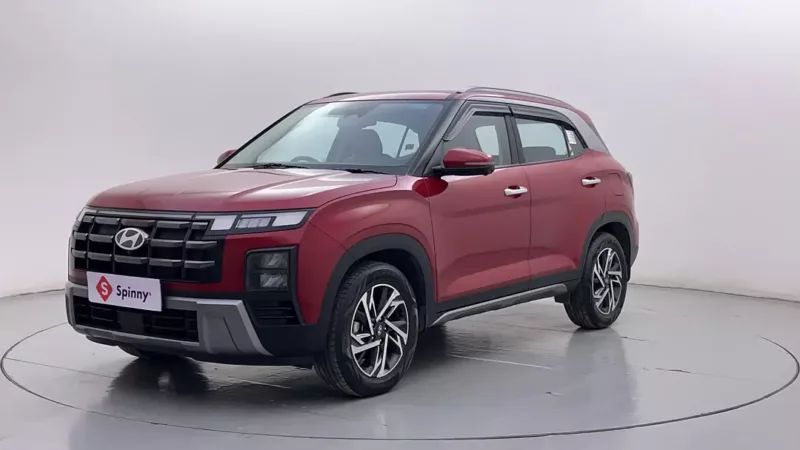
| Creta | 17 – 21 km/l |
| Fronx | 21 – 22 km/l |
| Grand i10 | 18 – 27 km/l |
Summary
The petrol-powered manual and automatic variants of the Honda Amaze offer specific benefits depending on their intended usage. They both feature the efficient 1.2L i-VTEC engine, yet they also have differences in price and ease of use.
The manual variant suits budget-conscious drivers who prefer control and better fuel savings, especially on highways. In contrast, the CVT automatic emphasises comfort and ease, making it ideal for city traffic, although it may offer slightly lower fuel efficiency.
Choosing between them depends on your driving habits, traffic conditions, and preference for either engagement or convenience.
FAQs About Honda Amaze Mileage Comparison
Q. Does the Honda Amaze manual offer better mileage than the automatic?
Yes. The manual variant delivers a mileage of around 18.65 km/l, while the CVT automatic offers 19.46 km/l under standard test conditions. However, real-world mileage may vary based on driving style and traffic conditions.
Q. Is the Honda Amaze CVT automatic good for city driving?
The CVT ensures smooth gear shifts and a stress-free driving experience, especially in stop-and-go traffic. It’s ideal for urban commuters who prioritise comfort over manual control.
Q. Does the Honda Amaze manual variant require less maintenance?
Generally, yes. Manual transmissions have fewer moving parts and lower maintenance costs over time. However, the difference is modest, and Honda’s service packages help keep both variants affordable.
Q. Which Honda Amaze variant is better for long-distance travel?
Both are capable, but the manual variant offers better control and fuel savings on highways. The automatic provides a smoother ride, especially on long urban commutes.
Q. Does the automatic Honda Amaze variant come with paddle shifters?
Yes, the CVT automatic variant features sporty paddle shifters, enabling drivers to manually control gear shifts for a more engaging driving experience.