Today, ‘safety’ can hardly be considered a footnote in the car-buying process for the Indian consumer, and the reason for this is the prominent display of the results of the ratings given by ‘Global NCAP’ in every car ad seen today! Today, ‘Global NCAP’ has ensured a stricter criterion for the assessment of cars tested, the _‘number of tested cars’_ has increased, and the ‘safety’ aspect has been emphasised for cars sold in the Indian market!
And then, there’s a sea change on the homely front as well! With the Bharat NCAP in place, the country now has an indigenous security rating scheme aligned with international norms. Suddenly, the manner in which cars are tested for their crashworthiness and the meaning behind the star rating are entirely different in 2025!
However, before you compare cars or shortlist a car based on the star rating score, it’s useful to understand the current NCAP testing process, changes, and the meaning behind the star score results for real-world road performance. Here’s an easy guide to help you understand the details.
What is Global NCAP?
Global NCAP (Global New Car Assessment Programme) – A Car Safety Assessment Programme funded by the FIA Foundation. NCAP aims to measure the safety quality a car provides to passengers in the event of an accident. Though the NCAP schemes operate in various parts of the world – Euro NCAP, Latin NCAP, and ASEAN NCAP – the importance of Global NCAP lies in its focus on developing nations, such as India.
The initiative began in 2011 to ensure uniformity in the standards for conducting car crash tests worldwide and to facilitate the adoption of enhanced car safety standards in nations where such norms were in the process of development. In India, the process of car modelling began in 2014, and the results directly led to the development of improved standards.
With time, the protocols by Global NCAP have changed. Initially, the tests focused on the car’s performance in the offset crash test, while the protocols from 2022 to 2023 cover aspects such as stability, child protection features, and the presence of active safety features. Currently, in 2025, assessment requirements have become stricter, providing prospective owners with a realistic view of the car’s safety level.
How are new cars assessed?
The Global NCAP’s vehicle assessments used to centre on the front offset collision test, although the standards have toughened over the years. With the new standards for the assessment of passenger car requirements under the UN norms for 2022, the assessment pattern focuses on bodyshell rigidity, child protection, and essential active automotive technologies.

The offset front collision remains the major component of the assessment process. In the offset front collision test, the car is driven at 64 km/h towards the deformable barrier with a 40% overlap, thereby simulating a typical collision between two cars of equal weight travelling at equal speeds.
The dummies depict an average family, with the two parents seated in the front and the two children in the ISOFIX-supported seats at the back of the car. The results from the above dummies comprise the Adult Protection (AOP) and Child Protection (COP) scores. Currently, the Global NCAP assessment also includes support features for enhanced safety, such as Electronic Stability Control (ESC), side-impact protection, and seat belt reminders.
These changes mean the star ratings you see in 2025 are far more comprehensive, stricter, and representative of real-world road safety than the original star rating scheme designed for the program.
Adult Occupant Protection Score
Adult Occupant Protection (AOP), based on the new protocols from the Global NCAP, is rated on a 34-point scale, providing an assessment much more detailed than the previous 16-point scale. These points are derived from readings taken on adult dummies during offset and side-impact tests of crucial body parts, including the head, neck, chest, abdomen, knees, femur, and tibia, to measure the level of protection provided by the car during an actual impact.
In addition to injury risk information, the Global NCAP score also includes points for basic safety features. Features such as ESC (Electronic Stability Control), belt warning, and side-impact protection, when made standard, enhance the AOP score. In the final calculation, the score also takes into consideration the rigidity of the passenger compartment during an impact, which might greatly increase the risk of serious injury in the event of a passenger compartment collapse.
Since the new points scheme is stricter and more detailed, the assessment of adult occupant protection in a car in 2025 yields a clear result on the car’s crashworthiness compared to earlier years.
Child Occupant Protection Score
Child Occupant Protection (COP) centres on the assessment of the level of protection children achieve while seated in child restraints, according to their appropriate group. In line with the new NCAP protocols, the Child Occupant Protection takes note of the injury measurements for both the 18-month-old and the 3-year-old dummies, the performance of the ISOFIX child seats, and the support level for proper installation of the child seats in the new protocols.
The score also considers several critical factors:
- Frontal impact protection for the head, neck and chest
- Side impact performance under the newer mandatory test
- ISOFIX anchorage quality and top-tether effectiveness
- Airbag behaviour, including whether the front passenger airbag can be safely disabled when required
- Vehicle compatibility with recommended CRS (Child Restraint Systems)
Such improvements have made the COP rating much more informative than the old rating, which was based solely on data from the front of the collision. In the year 2025, a high child-safety rating would mean a lot more than the performance in the crash, as well as the ease of seating children and the seating arrangement for children in the car.
Safest Cars in India
Understanding the new protocols of Global NCAP could provide you with clear insight into the performance of cars sold in India in real-life crash situations. In the past few years, certain brands have implemented sturdier platforms, enhanced reinforcement, and new-generation safety features, thereby increasing the percentage of cars on the market with a 5-star rating.
Below are the updated lists of some of the best cars tested in recent years by the programs Global NCAP and/or Bharat NCAP:
| Car Name | Safety Rating | Adult / Child Score | Ex-Showroom Price (Approx.) |
| Tata Harrier (2023) | 5-Star (Bharat NCAP) | 30.08 / 44.54 | ₹15.49 – ₹24.49 lakh |
| Tata Safari (2023) | 5-Star (Bharat NCAP) | 30.08 / 44.54 | ₹16.19 – ₹25.99 lakh |
| Volkswagen Virtus | 5-Star (GNCAP) | 29.71 / 42.00 | ₹11.56 – ₹19.41 lakh |
| Skoda Slavia | 5-Star (GNCAP) | 29.71 / 42.00 | ₹10.69 – ₹18.69 lakh |
| Volkswagen Taigun | 5-Star (GNCAP) | 29.64 / 42.00 | ₹11.70 – ₹20.00 lakh |
| Skoda Kushaq | 5-Star (GNCAP) | 29.64 / 42.00 | ₹11.89 – ₹20.49 lakh |
| Mahindra Scorpio-N | 5-Star (GNCAP) | 29.25 / 28.93 | ₹13.60 – ₹24.54 lakh |
| Mahindra XUV700 | 5-Star (GNCAP) | 16.03 / 41.66 (Old Protocol) | ₹12.99 – ₹24.99 lakh |
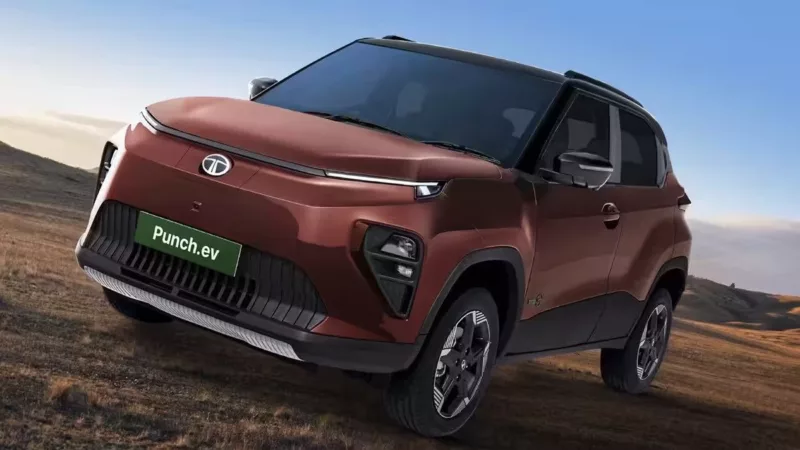
| Tata Punch | 5-Star (GNCAP) | 16.45 / 40.89 (Old Protocol) | ₹6.13 – ₹10.20 lakh |
| Tata Altroz | 5-Star (GNCAP) | 16.13 / 29.00 (Old Protocol) | ₹6.60 – ₹10.74 lakh |
Note: Prices and model years are approximate and may change with the latest variant updates.
For buyers prioritising safety, these cars offer strong structures, better restraint systems, and more advanced active-safety equipment—making them among the safest choices in the country.
Global NCAP vs Bharat NCAP
With an increasing number of car purchasers concerned about car safety, the Indian market today boasts two key rating agencies—Global NCAP and Bharat NCAP. Though both rate the car’s efficacy for passengers, their intentions and methods are distinct.
The Global NCAP launched an overseas program in 2014 to test the Indian car for its strength. The organisation played an essential role in raising awareness of the car’s enhanced strength and security features.
NCAP Bharat, established in 2023, is the indigenous Indian government-supported rating scheme for automobile safety and performance. NCAP Bharat follows new protocols that are largely in line with global standards and are designed specifically for the cars available for purchase in the Indian market. The results from NCAP Bharat provide greater clarity for consumers, taking into account driving conditions across the country.
In other words, Global NCAP started the journey toward safe cars in India. In contrast, the new Bharat NCAP results offer an official, country-specific rating for consumers to choose a safe car.
How NCAP Tests Electric Cars
Electric cars have a distinct technical configuration compared to petrol and diesel cars, so NCAP tests them a little differently, including a few additional checks. The aim is to ensure the battery pack, high-voltage elements, and the body are safe for various types of collisions.
EVs are subjected to the same basic crash tests as other conventional cars, such as offset front and side impacts. In addition to these, NCAP focuses on protecting the battery pack, ensuring the performance of the wiring and cooling circuits, and addressing the risks of thermal runaway and electrical leakage after a collision. The EV must not exhibit fire, smoke, or fluid leaks from the high-voltage component.
Such checks are essential because an electric car not only needs to be safe for passengers, regardless of the severity of the accident, but also to ensure the smooth functioning of the electric system after the accident.
With the increasing number of electric cars in the Indian market, such checks are very useful for consumers, as they can compare the level of safety associated with electric cars in the same way they do for conventional cars.
2025 Safety Trends to Watch
Car safety solutions are evolving rapidly, and the automotive sector is gearing up to offer stronger structures, improved warning devices, and intelligent technologies for greater security and enhanced driving convenience and comfort. With the new guidelines set by Global NCAP and the launch of Bharat NCAP, the emphasis will soon shift to realistic performance and serious security features in the automotive sector in 2025.
1. Stronger emphasis on side impact protection
Side impact tests now carry more weight in the overall safety score. Carmakers are improving door structures, reinforcement beams and curtain airbag coverage to meet the updated criteria.
2. Electronic Stability Control is becoming standard on more cars
ESC is one of the most effective technologies for preventing loss of control. More models across different price segments now offer it as standard, reflecting its importance in modern safety ratings.
3. Wider adoption of ISOFIX and improved child safety systems
Child occupant protection has become a major focus. Manufacturers are refining ISOFIX mounts, top-tether points, and recommended child-seat compatibility to score higher under both Global NCAP and Bharat NCAP protocols.
4. Better battery and thermal protection in EVs
Electric cars are seeing stronger battery enclosures, better underbody shielding, and improved thermal management systems. These upgrades help prevent electrical hazards and improve crash performance for EV buyers.
5. More active safety features in affordable cars
Features like hill-start assist, traction control, and all-seatbelt reminders are becoming standard in more entry-level variants. This shift is driven by stricter scoring and increased buyer awareness.
Conclusion
One such parameter for purchasing a new car in the country today is ‘safety.’ The increasing number of five-star-rated cars in the country indicates the importance given by the new car manufacturers to the aspect of ‘safety.’ With changes in the new protocols of the Global NCAP and the launch of the new ‘Bharat NCAP’ programme, new car buyers in the country today can know the performance of the car in a real-life crash situation. With the introduction of new ‘safety’ programs and the increasing number of car tests each year, the level of ‘safety’ of new cars in the country will improve. Any new car buyer today should check the new ‘safety’ rating of the car to assess its performance level in terms of ‘safety.’
FAQs about Global NCAP
Q. Is the Global NCAP test mandatory in India?
No. Global NCAP testing is voluntary. However, India now has Bharat NCAP, the country’s own government-backed safety rating programme. Manufacturers can choose to get their cars tested under Bharat NCAP to receive an official star rating for the Indian market.
Q. Which is better: Euro NCAP or Global NCAP?
Both are respected crash-test programmes, but they follow different protocols.
Euro NCAP conducts more comprehensive testing, including full-frontal, side-impact, side-pole, whiplash, and active safety evaluations.
Global NCAP focuses on key crash tests for emerging markets and now includes side-impact and safety-feature checks.
For India-specific evaluations, Bharat NCAP is the most relevant today.Q. Which variant of a car is tested by Global NCAP?
Global NCAP usually tests the base or entry variant, provided it includes all mandatory safety features. This shows how well the car’s most affordable version protects its occupants. If a manufacturer volunteers a higher variant, the final result reflects the features of that specific model.
Q. Is a 3-star Global NCAP rating good enough?
A 3-star rating indicates moderate protection. It is acceptable for basic crash performance but may lack important structural strength or advanced safety features that higher-rated cars offer. Checking the detailed score helps you understand exactly where the car performs well and where it falls short.
Q. Which is the safest car in India based on recent NCAP tests?
Recent Global NCAP and Bharat NCAP results highlight several five-star performers, including the Tata Harrier, Tata Safari, Volkswagen Virtus, Skoda Slavia, Volkswagen Taigun, Skoda Kushaq, Mahindra Scorpio N, and Tata Punch. Ratings depend on the test year, the scoring protocol, and the variant tested.
Q. Do NCAP ratings apply to used cars as well?
The rating for a specific model stays the same, but protocols become stricter over the years. A car that earned five stars under older rules may not achieve the same result under the latest testing standards. This is why newer ratings are more informative.