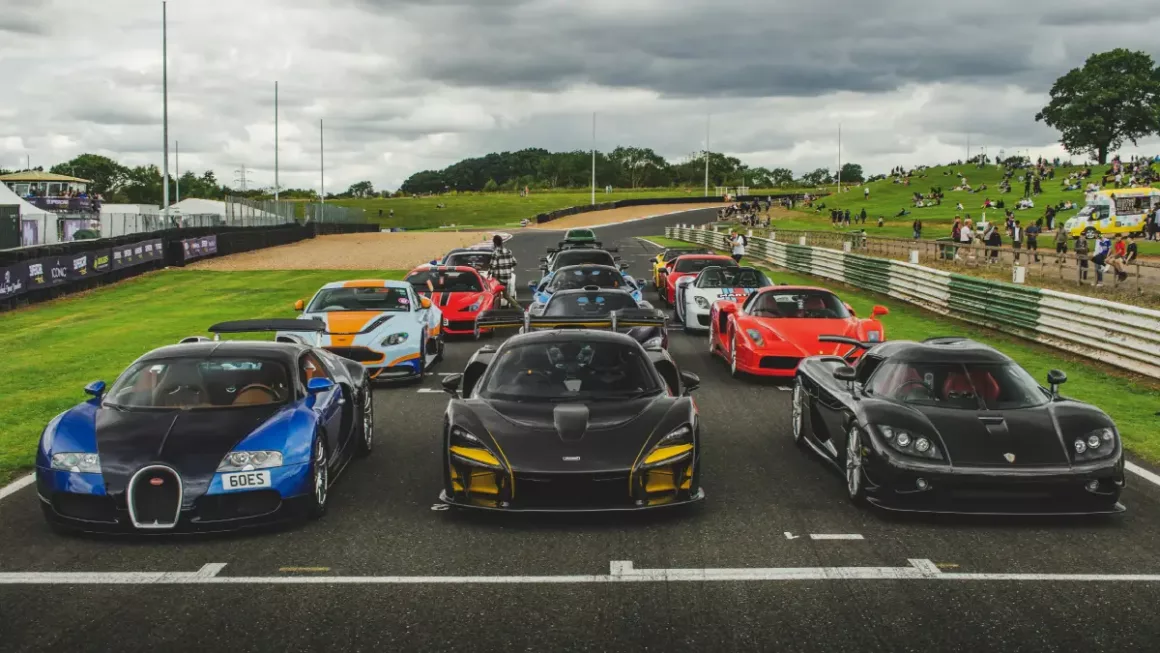
When it comes to bragging rights, nothing beats being the fastest car in the world. It’s not about high-end figures alone-it’s about scorching acceleration, unparalleled engineering, and breaking the laws of physics.
The Koenigsegg Jesko Absolut takes the crown as the world’s fastest car in 2025, on a mind-bending fastest car in the world 2025 record of 531 km/h or 330 mph. Although it has not yet run the official top-speed course, the design, simulations, and engineering credentials of the car render this claim difficult to refute.
Close behind this beast are the Hennessey Venom F5 and the Bugatti Chiron Super Sport 300+, each of which has gained speeds over 300 mph and demonstrated their capability under real-world conditions. But the fastest cars in the world are not simply about numbers alone. They’re about innovation; taking something which is deemed impossible and integrating it into your garage (if you can afford it, of course). If you’re still unsure which is the fastest car in the world, read on because the competition is as fierce as ever.
Here is the list of the fastest cars in the world for 2025 including cars like Koenigsegg Gemera, Czinger 21c, Bugatti Tourbillon, Bugatti Bolide, Koenigsegg Regera, Koenigsegg Agera and more, along with their top speeds and engine options.
Table of Contents
1. Koenigsegg Jesko Absolut: World Fastest Car Ever
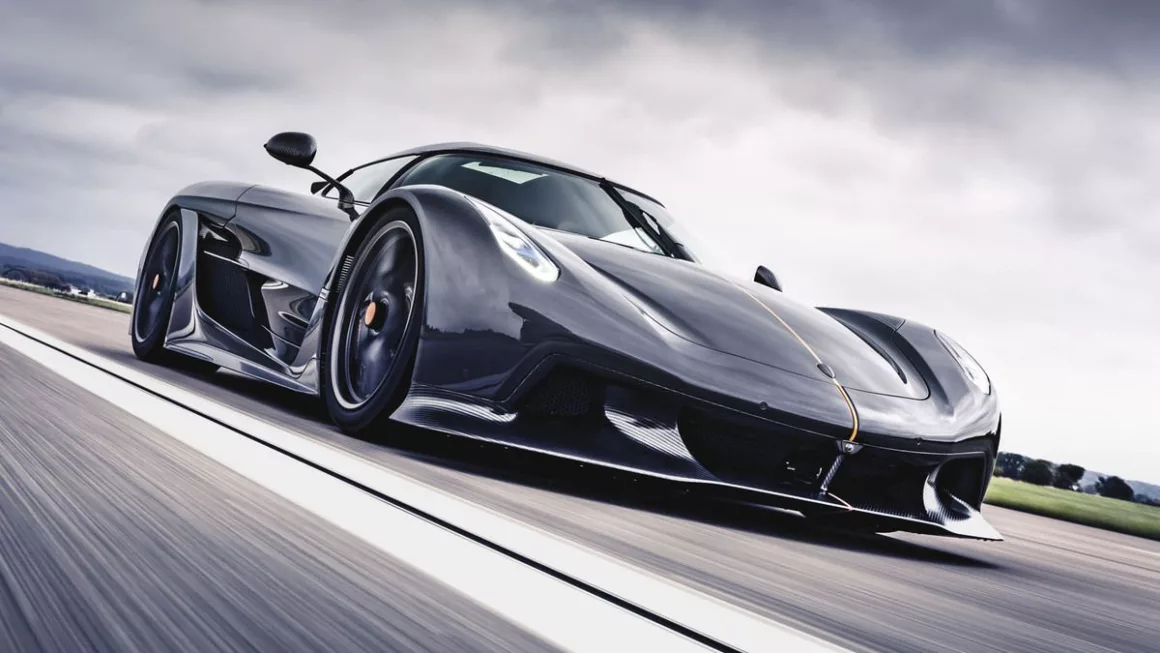
Top Speed Car in the World: When Christian von Koenigsegg says a car is “the fastest Koenigsegg we will ever make,” the world listens. The Jesko Absolut isn’t just a hypercar. It’s a declaration of aerodynamic dominance and Swedish engineering at its peak making it the fastest car in the world. The Jesko Absolut is Koenigsegg’s wind-tunnel-optimised variant of the Jesko hypercar, featuring rear fins in place of a wing and smooth underbody panels to drop drag to 0.278 Cd. Christian von Koenigsegg predicts a 330-mph top speed, which would eclipse all production cars to date. Its carbon-fibre monocoque tub is slightly longer to improve high-speed stability.
At its heart sits a 5.0 L twin-turbo V8, developed from the Agera RS engine, delivering 1,578 hp on E85 Biofuel and 1,280 hp on petrol, matched to Koenigsegg’s 9-speed Light Speed Transmission (LST). The LST changes gears in 20–30 ms without interrupting torque, which is crucial for a top-speed run.
High-speed safety comes from dual Triplex dampers front and rear, electronically controlled rear wheel steering, and monitored downforce levels. The car uses Michelin Pilot Sport Cup 2 R tires and a bespoke air-pressure tank to feed its turbos, ensuring stable boost at extreme speeds. However, Koenigsegg has yet to attempt a top-speed run officially. Still, with simulations and the brand’s track record backing the claim, the Jesko Absolut stands at the pinnacle of speed potential among the fastest cars in the world.
Koenigsegg Jesko Absolut Specifications:
- Engine: 5,000 cc twin-turbo V8
- Transmission: LST 9-speed multi-clutch
- Power: 1,578 hp (E85) / 1,280 hp (petrol)
- Torque: 1,000 Nm (petrol) / 1,100 Nm (E85)
- Top Speed: 330 mph (531 km/h)
- Curb Weight: 1,420 kg
- Body: Carbon-fibre monocoque
Koenigsegg Jesko Absolut Key Features:
- Drag coefficient 0.278
- Triplex active dampers
- Autoskin hydraulic doors
- 20 L carbon-fibre intake tank
- Electronically controlled rear steering
2. Hennessey Venom F5
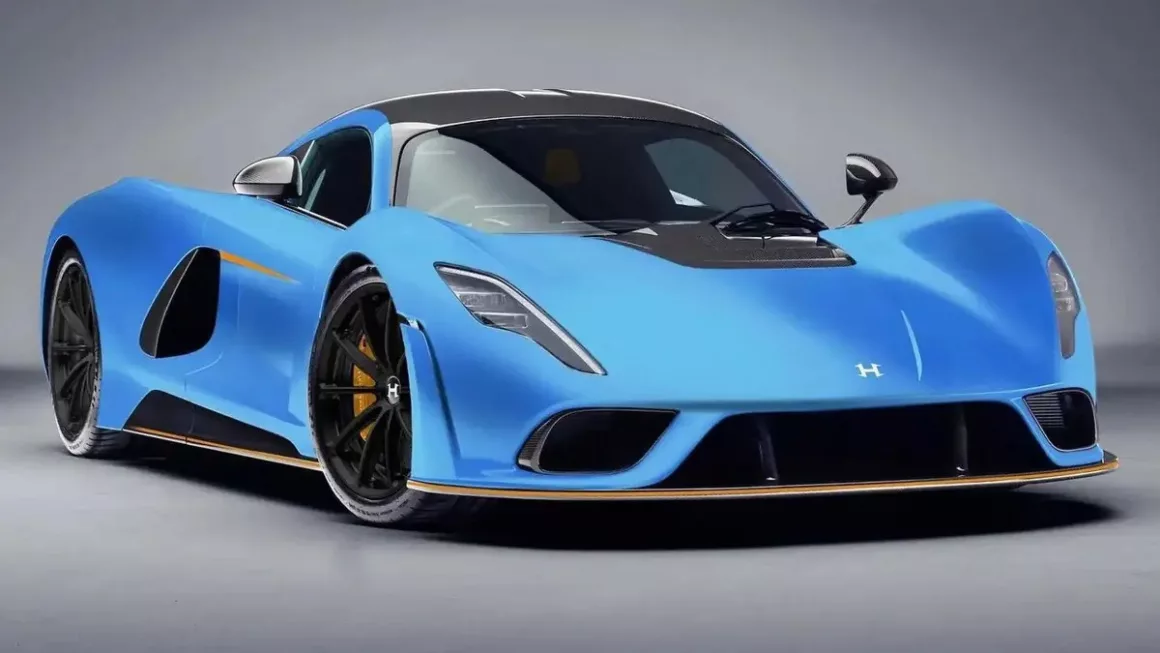
The Venom F5 takes its name from the most violent tornado on the Fujita scale and targets a top speed of 311 mph to claim the world’s fastest production car title. Its hand-built carbon-fiber tub and bespoke bodywork are optimised to cut drag and maximise stability at extreme speeds.
Under the rear deck sits a 6.6 L twin-turbo V8 developed in-house, producing 1,817 hp on E85 and driving the rear wheels through a 7-speed single-clutch automatic transmission or 6-speed manual gearbox. Hennessey claims the F5 will sprint from 0–100 km/h in under 2 seconds, thanks to its 1,200 kg curb weight and massive torque output.
High-speed runs are governed by an active rear wing, underbody diffusers, and a hydraulic suspension that adjusts ride height and damping on the fly. Carbon-ceramic brakes with six-piston calipers front and rear ensure consistent stopping power from triple-digit speeds.
Hennessey Venom F5 Specifications:
- Engine: 6,600 cc twin-turbo V8
- Transmission: 7-speed single-clutch automatic transmission / 6-speed manual transmission
- Power: 1,817 hp (E85)
- Torque: 1,617 Nm
- Top Speed: 311 mph (500 km/h)
- Curb Weight: 1,200 kg
- Body: Carbon-fibre monocoque
Hennessey Venom F5 Key Features:
- Active aerodynamics with rear wing and diffusers
- Hydraulic lift system for low-speed clearance
- Six-piston carbon-ceramic brakes
- Full digital instrument cluster
ALSO READ: Best Luxury Sedans in India
3. Bugatti Chiron Super Sport 300+
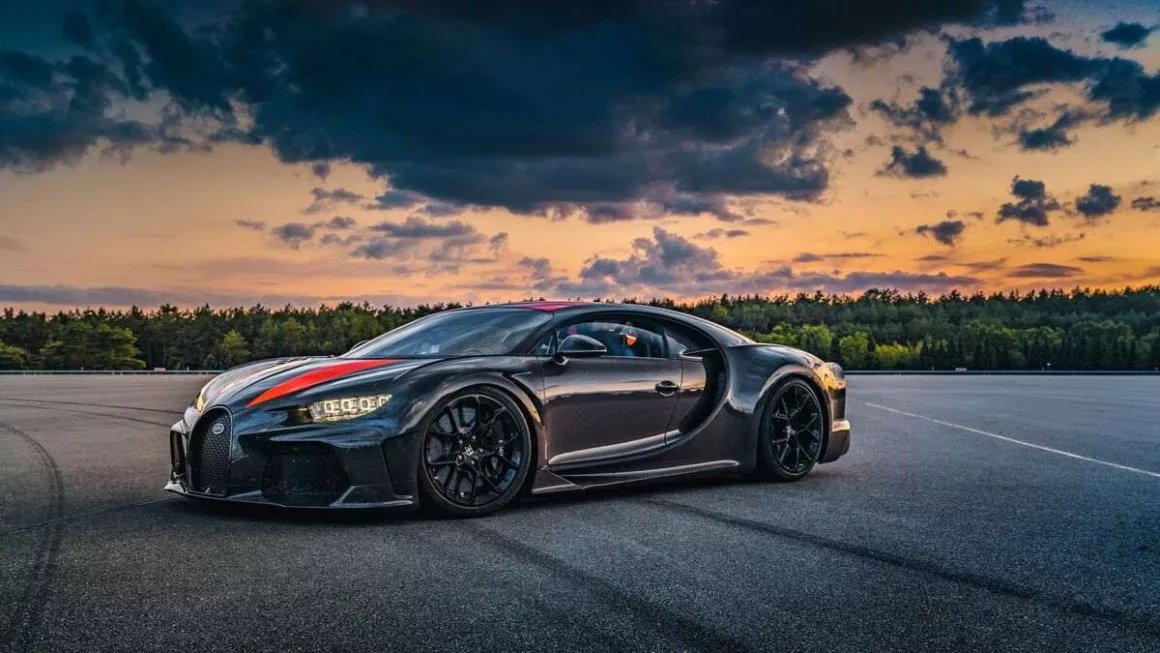
In August 2019, a modified Chiron broke the 304.77 mph (490 Km/h) barrier, becoming the first production-based car to exceed 300 mph (482 km/h) . Bugatti then released the Super Sport 300+ as a limited-run model, featuring a longer tail (“longtail” body) to reduce drag further.
This version boosts its venerable 8.0 L quad-turbo W16 from 1,500 PS to 1,600 PS, mated to a 7-speed dual-clutch transmission that channels power to all four wheels. Despite weighing nearly 2.0 t, it rockets from 0–60 mph in just 2.4 seconds.
Bugatti’s stability control calibrations, active aerodynamic flaps, and a bespoke suspension tune ensure predictable handling at the limit, while ceramic-composite brakes deliver fade-free deceleration from 300 mph.
Bugatti Chiron Super Sport 300+ Specifications:
- Engine: 7,993 cc quad-turbo W16
- Transmission: 7-speed DCT
- Power: 1,600 PS
- Torque: 1,600 Nm
- Top Speed: 304.77 mph (490.48 km/h)
- Curb Weight: 1,998 kg
- Body: Carbon-fibre with long tail
Bugatti Chiron Super Sport 300+ Key Features:
- Longtail aerodynamic package
- Carbon-ceramic brakes with 10-piston front callipers
- Full LED lighting with active flaps
- Bespoke luggage set
4. SSC Tuatara
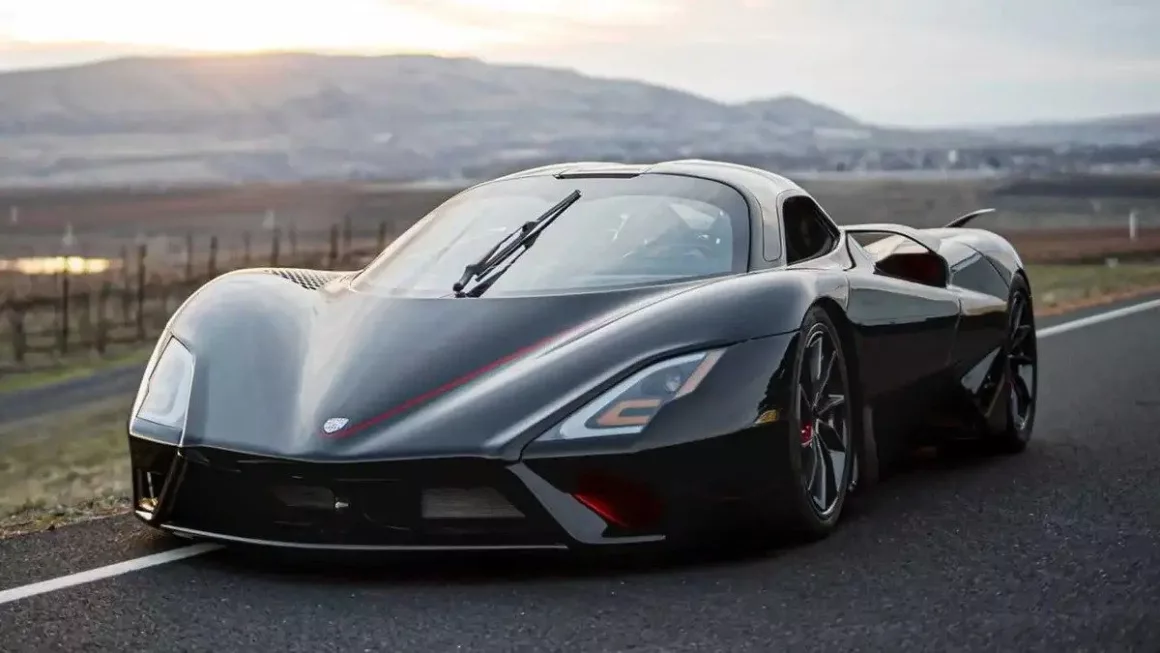
SSC’s Tuatara sports a drag coefficient of just 0.279, among the lowest of any production car, and a sleek teardrop silhouette that hints at its 295 mph (474.7 km/h) potential. Its ultra-low profile and retractable rear wing are moulded into a carbon-fibre tub for rigidity and lightness.
A 5.9 L twin-turbo V8 produces up to 1,750 hp on E85, paired with a 7-speed automated manual transmission that SSC calls the “C-P Transmission”. SSC claims 0–60 mph in 2.5 seconds and a theoretical run beyond 300 mph (482 km/h) under ideal conditions.
Active suspension tunes ride height based on speed, while carbon-ceramic brakes and six-piston callipers handle high-energy stops. An integrated rollover structure and six-point harnesses keep occupants secure.
SSC Tuatara Specifications:
- Engine: 5,900 cc twin-turbo V8
- Transmission: 7-speed automated manual
- Power: 1,750 hp (E85) / 1,350 hp (petrol)
- Torque: 1,752 Nm
- Top Speed: 295 mph (475 km/h)
- Curb Weight: 1,247 kg
- Body: Carbon-fibre monocoque
SSC Tuatara Specifications Key Features:
- Integrated active aerodynamic surfaces
- Triplex damper system front & rear
- Six-piston carbon-ceramic brakes
- Pushrod suspension
5. Bugatti Bolide
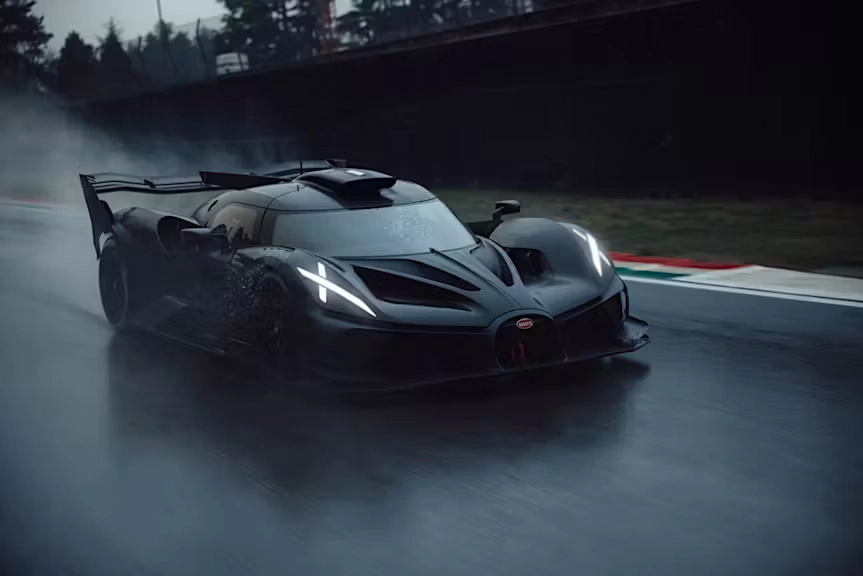
Although Bugatti has a reputation for being bold, they have completely thrown the rules out the window with the Bolide. This is a track-only beast designed only to break lap records and leave people speechless. It is not a hypercar for the general public. The Bolide Bugatti’s ultimate flex is stripped of all the luxuries and tuned solely for performance.
A fighter jet would be alarmed by the Bolide’s power-to-weight ratio, which is a remarkable 1578 horsepower at a mere 1240 kg. With its enormous rear diffuser, X-shaped lights, and aerodynamic elements throughout the design, it screams downforce. Although its real-world top speed is limited for safety, Bugatti claims it can reach over 500 km/h in simulated runs and lap the Le Mans circuit faster than an LMP1 car.
There will never be more than 40 of these space-age missiles produced. You’ll have a great time on the track even though you can’t drive one to dinner.
- Price of the car: €4 million (~$4.7 million)
- Number of cars produced: 40 units
Bugatti Bolide Specifications:
- Engine: 8.0 L quad-turbo W16
- Transmission: 7-speed dual-clutch automatic
- Power: 1,578 hp (1,177 kW)
- Torque: 1,600 Nm
- Top Speed: 236 mph (380 km/h)
- 0–100 km/h: 2.17 seconds
- Curb Weight: 1,240 kg
- Body: Carbon-fibre monocoque
Bugatti Bolide Key Features:
- X-theme aero with rear X-wing & X-shaped LED lights
- Downforce of 1,800 kg at 320 km/h (front) and 3,600 kg (rear)
- FIA-compliant roll cage & harness setup
- Pushrod suspension & racing dampers
- Brembo carbon-carbon brakes from Formula 1
- Intake scoop morphs shape at high speeds to reduce drag
- Magnesium wheels & aerospace-grade titanium fasteners
6. Hennessey Venom GT
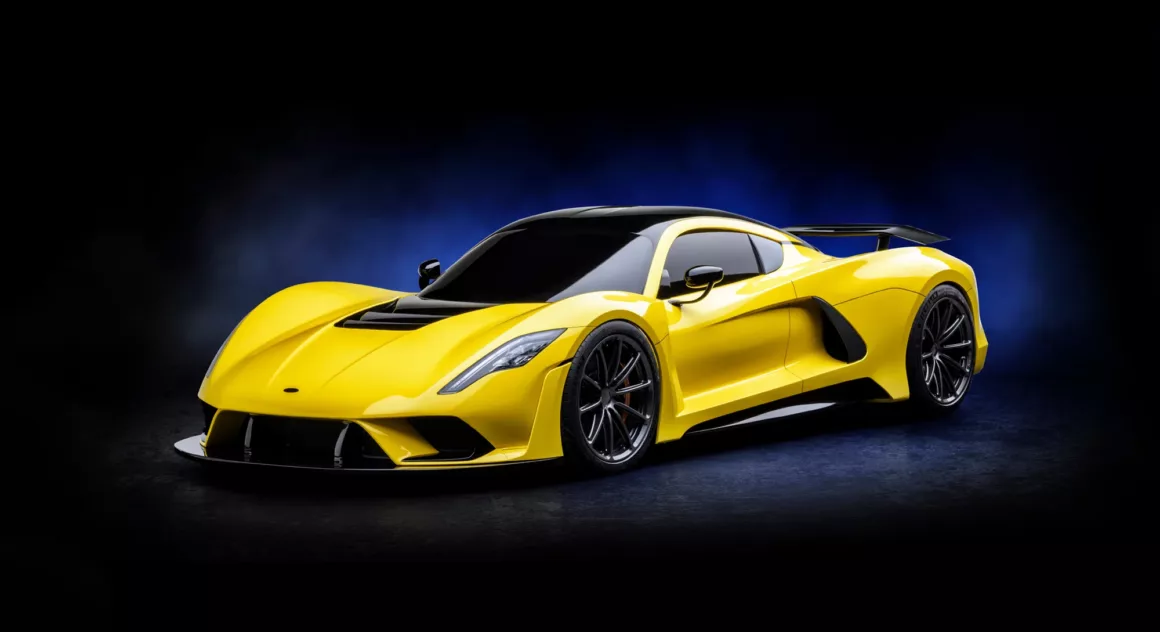
A full-throttle declaration of war against the speed gods, the Hennessey Venom GT was more than just another hypercar when it first appeared on the scene. With its lightweight British agility and raw Texan horsepower, this American-engineered missile, which was built on a heavily modified Lotus Exige chassis, not only challenged but also destroyed records.
At NASA’s Kennedy Space Centre, the Venom GT reached a scorching top speed of 270. 49 mph (435 31 km/h) in 2014, making it one of the fastest cars ever made. Despite not being formally acknowledged by Guinness because of production count requirements, this accomplishment solidified the Venom GT’s place in the hypercar hall of fame.
Only 13 Venom GTs, including roadsters and coupes, were made, making them one of the world’s rarest and most sought-after speed machines.
- Price of the car: $1.2 million
- Number of cars produced: 13 units
Hennessey Venom GT Specifications:
- Engine: 7.0 L twin-turbocharged V8 (GM LS7)
- Transmission: 6-speed manual (Ricardo)
- Power: 1,244 hp @ 6,600 rpm
- Torque: 1,155 lb-ft @ 4,400 rpm
- Top Speed: 270.49 mph (435.31 km/h)
- 0–60 mph: 2.7 seconds
- 0–200 mph: 14.5 seconds
- Curb Weight: 1,244 kg (2,743 lbs)
- Body: Carbon-fibre and composite/aluminium hybrid monocoque space frame
Hennessey Venom GT Key Features:
- Adjustable power settings: 800 hp, 1,000 hp, and 1,244 hp
- Carbon-ceramic brakes with 6-piston Brembo callipers
- Michelin Pilot Super Sport tyres
- Active aerodynamics for enhanced stability
- Limited production for exclusivity
- Record-setting acceleration and top speed
7. SSC Ultimate Aero TT
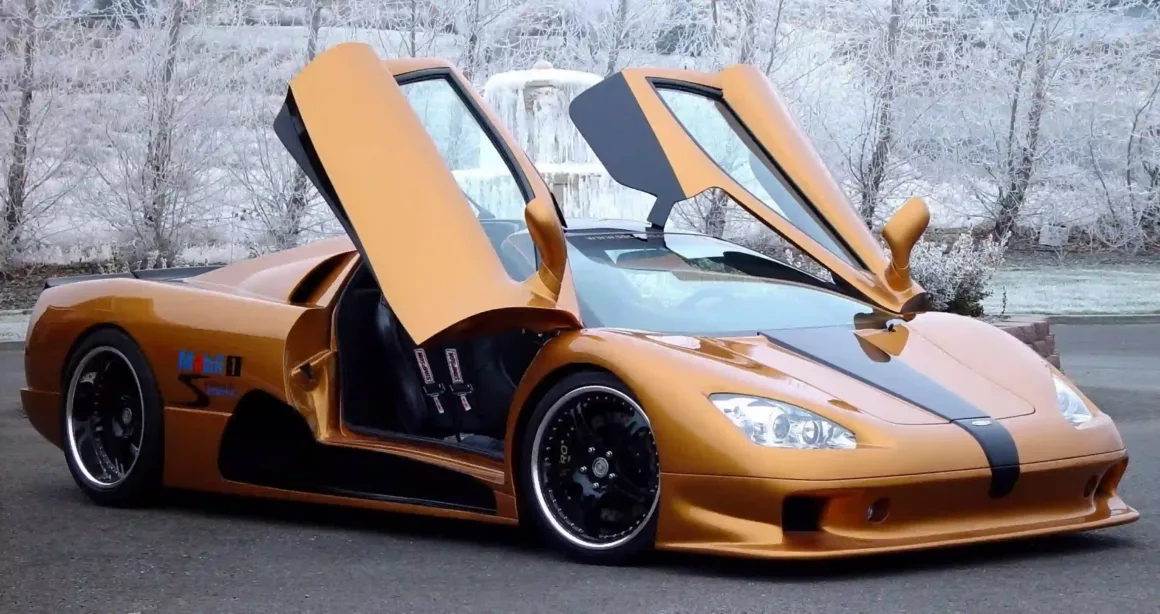
Prior to Bugatti and Koenigsegg claiming the crown in the top-speed competition, it was an underdog stateside vehicle that had the world talking. The SSC Ultimate Aero TT was the car that, back in 2007, burst onto the scene and obliterated the record held by the Bugatti Veyron with an officially verified 256.18 mph (412.28 km/h).
No AWD, stability control, or traction nanny, only a twin-turbocharged 6.3L V8 mated to a light carbon-fibre chassis and enough acceleration to cause the bitumen to perspire. SSC threw the frills in the trash and concentrated singularly on performance. The car was raw, mechanical, and downright brutal off the running line.
And to boot, it didn’t even have ABS. The Aero TT was designed to do one thing and one thing only: go flat-out quickly, and it succeeded admirably. It might not be sleek or luxurious, but for a fleeting moment, it was the speed king. A classic old-fashioned speed demon in the age of the digital world.
- Price of the car: $654,500 (at launch)
- Number of cars produced: 24 units
SSC Ultimate Aero TT Specifications:
- Engine: 6.3 L twin-turbocharged V8
- Transmission: 6-speed manual (TREMEC)
- Power: 1,183 hp @ 6,950 rpm
- Torque: 1,483 Nm (1,094 lb-ft) @ 6,600 rpm
- Top Speed: 256.18 mph (412.28 km/h)
- 0–60 mph: 2.7 seconds
- Curb Weight: 1,247 kg
- Body: Carbon-fibre and aluminium composite monocoque
SSC Ultimate Aero TT Key Features:
- Guinness-certified fastest car in the world (2007)
- No ABS or traction control—just raw driving
- Low drag coefficient (0.357) for top-speed runs
- Mid-engine layout for better weight distribution
- Carbon-ceramic brakes and forged alloy wheels
- Hyper-exclusive production run of just 24 cars
ALSO READ: Best Luxury SUV Cars in India
8. Bugatti Veyron Super Sport
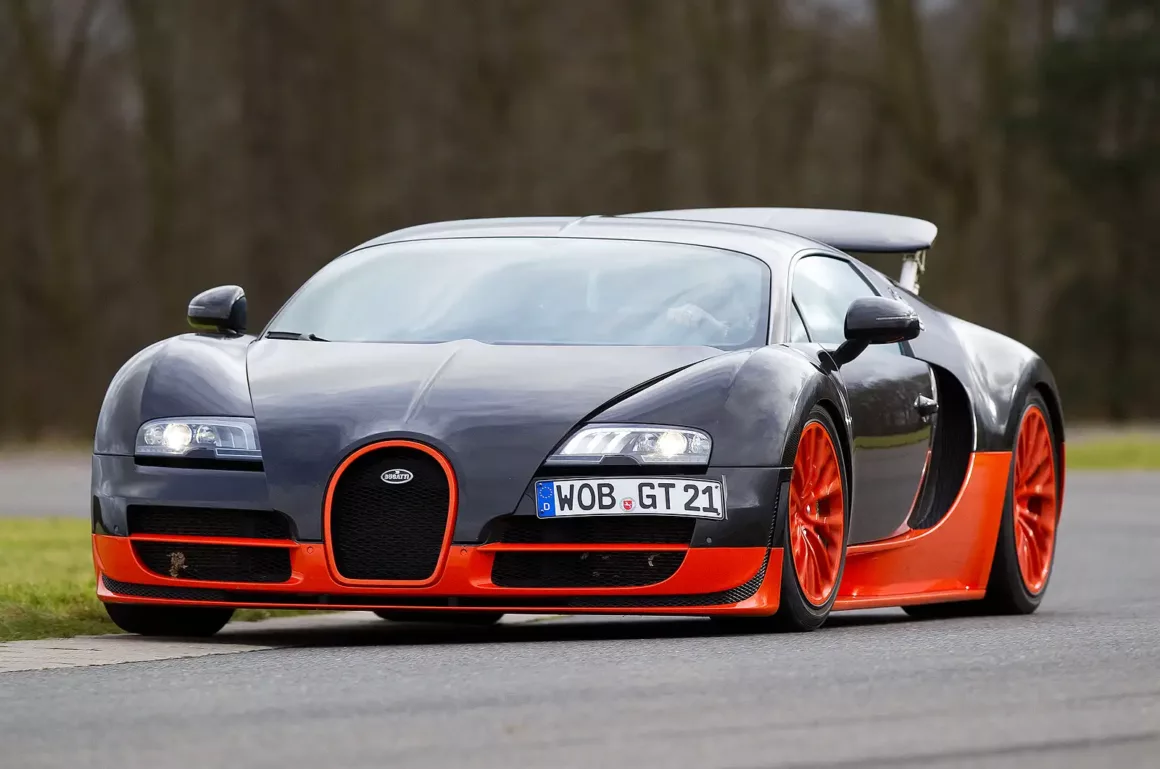
When Bugatti launched the Veyron Super Sport in 2010, it was not only an improvement, but rather a clamorous declaration which redefined the boundaries of car engineering. The Super Sport version improved on the already iconic Veyron 16.4, pushing limits in terms of aerodynamics, more power, and unrelenting pursuit of pace.
It resulted in a Guinness World Record as the world’s fastest factory car, reaching 431.072 km/h (267.856 mph). In order to do this, the engineers at Bugatti outfitted the Super Sport with four bigger turbochargers and larger intercoolers, bumping the 8.0-litre W16 engine’s power level to 1,200 PS (1,183 hp) and 1,500 Nm of torque. The bodywork of the vehicle was also carefully honed to enhance air flow, with the front fascia revamped, air inlets increased, and the rear diffuser updated. Not only did this increase stability at high speeds, but it also added to the vehicle’s aggressive and unique look.
Only 48 Veyron Super Sport units were produced in the years 2010 and 2012, and it is thus an exclusive masterpiece within the category of hypercars. Of these, five vehicles were labelled as “World Record Edition” cars, with special black and orange exterior colouring to celebrate the record performance.
- Price of the car: $2.7 million
- Number of cars produced: 48 units (including 5 World Record Edition models)
Bugatti Veyron Super Sport Specifications:
- Engine: 8.0-liter quad-turbocharged W16
- Transmission: 7-speed dual-clutch automatic
- Power: 1,200 PS (1,183 hp)
- Torque: 1,500 Nm
- Top Speed: 431.072 km/h (267.856 mph)
- 0–100 km/h (0–62 mph): 2.5 seconds
- Curb Weight: 1,838 kg
- Body: Carbon-fibre monocoque
Bugatti Veyron Super Sport Key Features:
- Enhanced aerodynamics with revised front and rear sections
- Larger turbochargers and intercoolers for increased performance
- Reinforced chassis for improved stability at high speeds
- Unique black and orange “World Record Edition” livery
- High-performance carbon-ceramic brakes
- Luxurious interior with bespoke materials and finishes
9. Rimac Nevera
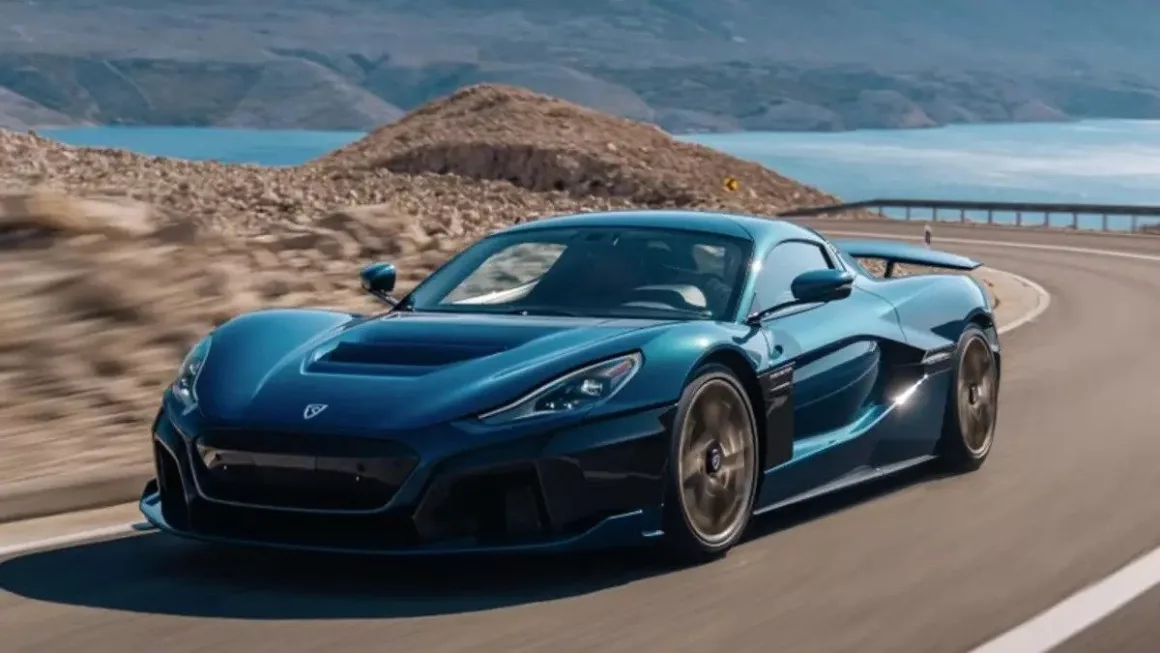
The Nevera is the first four-motor electric hypercar, each wheel driven independently to deliver precise torque vectoring and a claimed top speed of 258 mph (415.21 km/h). Its 120 kWh battery pack and liquid-cooled motors generate up to 1,914 hp in short bursts.
Quad electric motors produce instantaneous torque of 2,360 Nm, propelling the car from 0–60 mph (0-100 km/h) in just 1.85 seconds. The bespoke battery architecture keeps weight distribution near 50:50 for balanced handling.
Rimac’s carbon-monocoque chassis is bonded to the battery pack for stiffness and crash protection. Regenerative braking blends with Brembo carbon-ceramic brakes, while torque vectoring stabilizes cornering.
Rimac Nevera Specifications:
- Powertrain: 4× electric motors, single-speed
- Battery: 120 kWh liquid-cooled
- Power: 1,914 hp
- Torque: 2,360 Nm
- Top Speed: 258 mph (415 km/h)
- Curb Weight: 2,150 kg
- Body: Carbon-fibre monocoque
Rimac Nevera Key Features:
- Four-wheel torque vectoring
- 120 kWh battery with V-shape cooling
- Brembo carbon-ceramic brakes
- Active rear wing & underbody flaps
10. Koenigsegg Agera RS
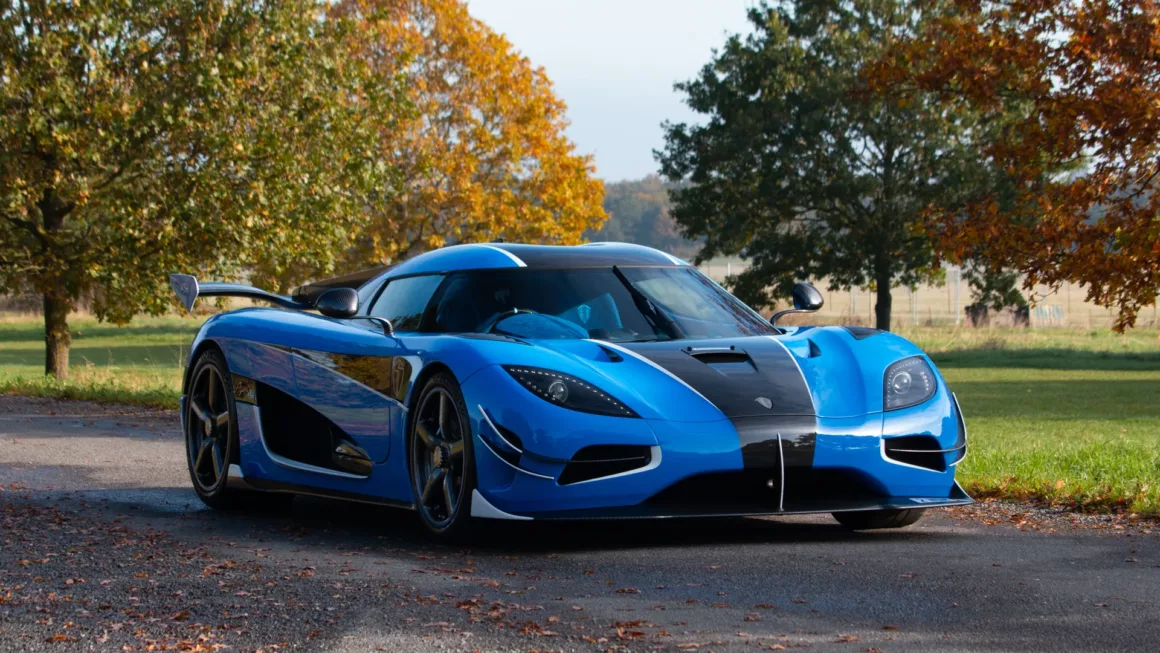
You don’t construct a car like the Agera RS; you arm it to annihilate. This car is a high-speed executioner that rewrote the books on a sunbaked Nevada straight, recording a validated average of 277.9 mph (447.2 km/h) and reaching a hair-raising 284.55 mph (457.94 km/h).
Call it not speed, but physics going down on bended knee. This monster has a 5.0-litre twin-turbo V8 under its super-light carbon-fibre body, and when dressed with the 1MW package, it makes 1,341 hp as if it weren’t even breaking sweat. No hybrid boost, no electric assists. Simply raw, fuel-guzzling pandemonium delivered directly to the rear axle.
There are only 27 Agera RSs, and each and every one was a one-off special. From bespoke paint to track-only aero, every car was hand-assembled to be unique. And thanks to the magic of Koenigsegg, it’s not only blisteringly quick – it’s also manageable, agile, and surprisingly polished.
- Price of the car: $2.5 million
- Number of cars produced: 27 units
Koenigsegg Agera RS Specifications:
- Engine: 5.0 L twin-turbo V8
- Transmission: 7-speed paddle-shift automatic
- Power: 1,160 hp (standard), 1,341 hp (1MW upgrade)
- Torque: 1,280 Nm / 1,371 Nm
- Top Speed: 284.55 mph (457.94 km/h)
- 0–100 km/h: 2.8 seconds
- Curb Weight: 1,395 kg
- Body: Carbon-fibre monocoque
Koenigsegg Agera RS Key Features:
- Record-breaking top speed on a public highway
- Optional 1MW power upgrade with crazy torque figures
- Active rear spoiler and variable ride height
- Dihedral Synchro-Helix doors (yes, the cool ones)
- Lightweight titanium exhaust system
- One-off builds with custom interiors and aero setups
11. Saleen S7 Twin Turbo
Bred of American ingenuity and technological expertise, the Saleen S7 Twin Turbo was created with the intent to challenge the European supercars on their own turf. With aggressive design and brute capability, the S7 Twin Turbo turns heads and provides performance capabilities which still amaze us today.
Under the hood, the S7 Twin Turbo has a 7.0-litre twin-turbocharged V8 engine, which churns out a powerful 750 horsepower and 700 lb-ft of torque. The powerplant takes this car from 0-60 mph in 2.8 seconds, and the maximum speed is 248 mph. The lightweight nature of the car, which includes the carbon-fibre body and aluminium honeycomb chassis, makes it deliver such high-performance figures. In terms of the driving experience, the S7 Twin Turbo within is the focus.
A minimalist cabin, free of any extraneous luxuries, centres the experience on performance. A Formula-1 steering wheel and six-speed manual transmission keep the driver and the road in intimate contact at every turn.
- Price of the car: $555,000 (original MSRP)
- Number of cars produced: Approximately 30 units
Saleen S7 Twin Turbo Specifications:
- Engine: 7.0 L twin-turbocharged V8
- Transmission: 6-speed manual
- Power: 750 hp @ 6,300 rpm
- Torque: 700 lb-ft @ 4,800 rpm
- Top Speed: 248 mph (399 km/h)
- 0–60 mph: 2.8 seconds
- Curb Weight: 2,750 lbs (1,247 kg)
- Body: Carbon-fibre with aluminium honeycomb chassis
Saleen S7 Twin Turbo Key Features:
- Twin Garrett turbochargers for enhanced performance
- Lightweight carbon-fibre body construction
- Aerodynamic design with functional air intakes and diffusers
- Minimalist interior focused on the driving experience
- Limited production run ensuring exclusivity
12. McLaren Speedtail
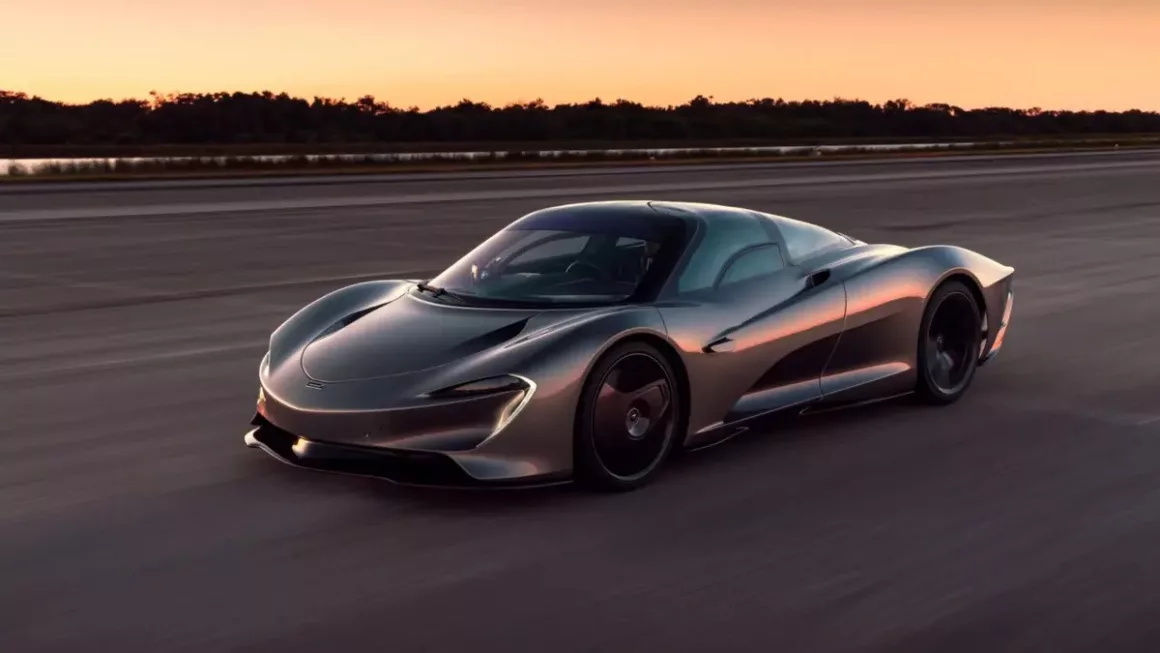
McLaren’s Speedtail revives the three-seat layout of the F1 in a hybrid hyper-GT that can hit 250 mph (402.33 km/h). Its teardrop body and active aero reduce drag, trading downforce for straight-line speed.
Under the hood, you find a 4.0 L twin-turbo V8 paired with an e-motor that yields 1,036 hp, driving on a 7-speed DCT. McLaren claims 0–250 mph or 0-402 km/h takes just 12.8 seconds.
The Speedtail uses hydraulic active suspension and adaptive dampers to modulate ride height. Retractable mirror-cams in place of door mirrors cut drag, and carbon-ceramic brakes deliver repeatable performance.
McLaren Speedtail Specifications:
- Engine: 3,994 cc twin-turbo V8 + e-motor
- Transmission: 7-speed DCT
- Power: 1,036 hp
- Torque: 848 lb-ft (combined)
- Top Speed: 250 mph (402 km/h)
- Curb Weight: 1,597 kg
- Body: Carbon-fibre monocoque
McLaren Speedtail Key Features:
- Three-seat central driving position
- Retractable mirror-cam system
- Electrochromic glass roof
- Active aerodynamic surfaces
13. Aston Martin Valkyrie
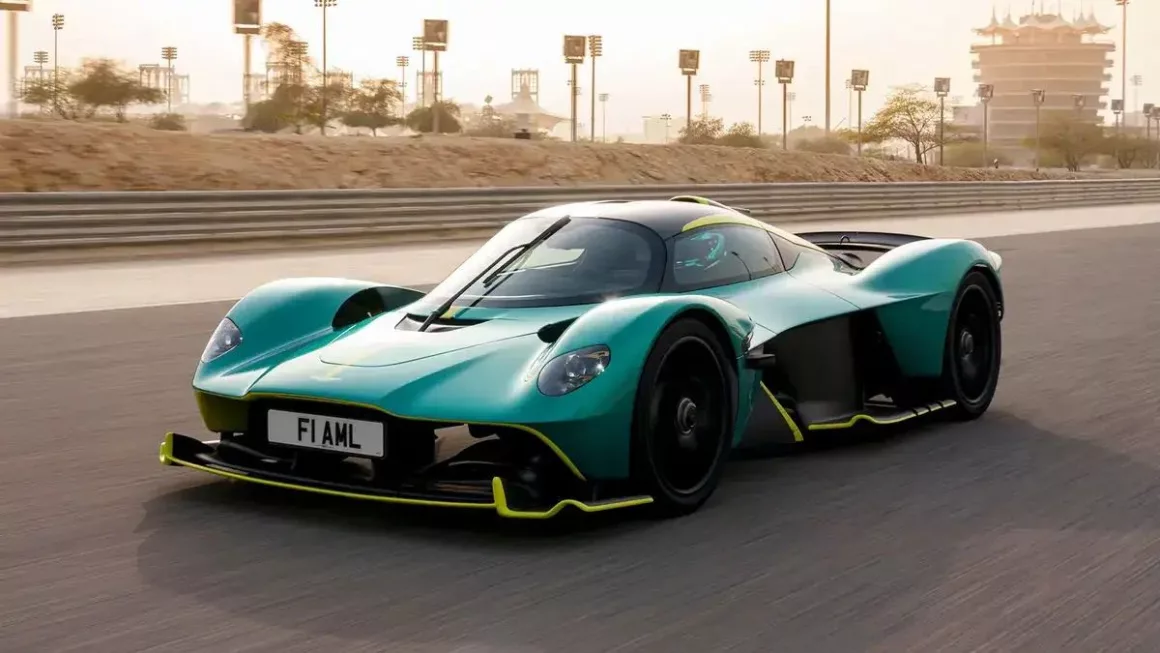
Co-developed with Red Bull Racing, the Valkyrie brings F1-level downforce to the road and targets 250 mph (402 km/h). Its radical styling and open-cockpit layout underscore its track-focused DNA.
When you open the hood, you find a 6.5 L naturally aspirated Cosworth-built V12 that generates 1,000 hp, augmented by a lightweight hybrid unit for a total of 1,160 hp, driving a 7-speed single-clutch gearbox. It accelerates from 0–60 mph (0-100 km/h) in just 2.5 seconds. With a weight of just 1,030 kg, thanks to its carbon-fibre monocoque and lightweight design, the Valkyrie accelerates with a level of agility and precision that feels almost otherworldly.
The Valkyrie’s cabin is minimalistic but functional, inspired by F1 cockpits, built for precision, comfort, and pure performance. Lastly, the brake steer technology and active aero manage cornering loads. For those seeking to experience what it feels like to drive a modern-day F1 car on public roads, the Valkyrie is as close as it gets.
Aston Martin Valkyrie Specifications:
- Engine: 6,500 cc naturally aspirated V12 + hybrid
- Transmission: 7-speed single-clutch
- Power: 1,160 hp
- Torque: 900 Nm
- Top Speed: 250 mph (402 km/h)
- Curb Weight: 1,030 kg
- Body: Carbon-fibre tub
Aston Martin Valkyrie Key Features:
- Open-cockpit “Speedster” design
- Active underbody and rear wing
- Carbon-ceramic brakes
- F1-derived brake steer
14. Koenigsegg Regera
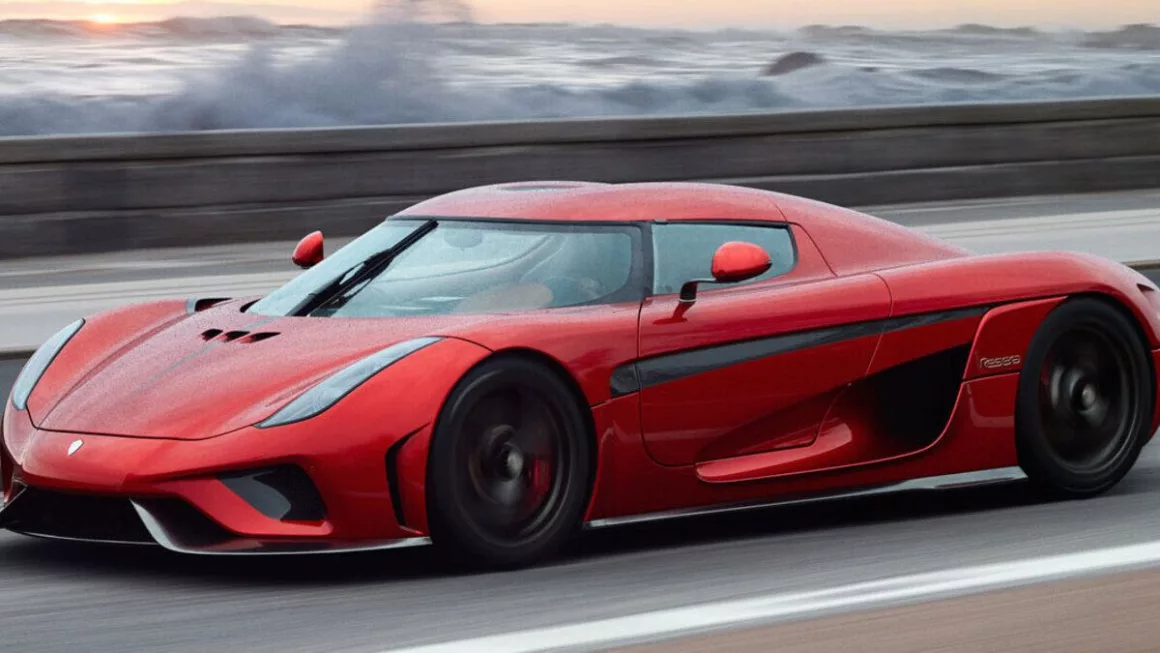
The Koenigsegg Regera is one of the fastest cars in the world that questions all you believe about hybrid performance. Koenigsegg has always been renowned for stretching limits; with the Regera, they have elevated the concept of hybrid power to a whole new level and produced a vehicle that combines extraordinary power with modern technologies.
What sets the Regera apart is its unique Direct Drive System, which eliminates the need for a traditional multi-gear transmission. Instead, it uses a single-speed gearbox combined with a twin-turbocharged 5.0-litre V8 and three electric motors, producing a total of 1,500 hp and 2,000 Nm of torque. This insane power allows the Regera to hit an estimated top speed of 400 km/h, but it’s the way it accelerates that truly sets it apart. The car accelerates quickly from 0-100 km/h in just 2.8 seconds.
Acceleration with the Direct Drive System is smooth, strong, almost instantaneous; no gears, no interruption in power supply. It is just flawless performance. The Regera’s innovative active aerodynamics and lightweight carbon fibre construction help it to retain extraordinary handling despite its great power.
Koenigsegg Regera Specifications:
- Engine: 5,000 cc twin-turbo V8 + 3× e-motors
- Transmission: Direct Drive hydraulic coupling
- Power: 1,500 hp
- Torque: 2,000 Nm
- Top Speed: 250 mph (402 km/h)
- Curb Weight: 1,740 kg
- Body: Carbon-fibre monocoque
Koenigsegg Regera Key Features:
- Direct Drive system (no gearbox)
- Active dynamic engine mounts
- 850 V battery pack
- LED ground-lighting
15. Koenigsegg CCXR
In 2007, Koenigsegg not only created one hypercar, but one powered by ethanol and still leaving most of the competition in the dust. The Koenigsegg CCXR took the CCX’s cutting-edge engineering and ramped it up with a biofuel kick, producing 1,018 hp and 249-mph (400 km/h) performance.
This was not only a gesture towards green motoring; it was Koenigsegg one-upping. Powered by E85 flex-fuel, the CCXR delivered bigger punches, ran cooler, and coaxed that supercharged V8 to sing like a canary. Twin Rotrex superchargers dumped air into a light 4.8L V8, bolted into a carbon-fibre body, the same weight as most hatchbacks.
No more than 9 units of the CCXR ever existed, and it’s one of the most interesting and exclusive Koenigsegg cars ever to roll off the line in Ängelholm. Love saving the earth or not, one thing is certain: this green monster is utterly, ridiculously fast.
- Price of the car: $700,000
- Number of cars produced: 9 units
Koenigsegg CCXR Specifications:
- Engine: 4.8 L twin-supercharged V8
- Transmission: 6-speed manual
- Power: 1,018 hp @ 7,200 rpm
- Torque: 1,060 Nm @ 5,600 rpm
- Top Speed: 249 mph (400 km/h)
- 0–100 km/h: 3.1 seconds
- Curb Weight: 1,180 kg
- Body: Carbon-fibre monocoque
Koenigsegg CCXR Key Features:
- Runs on E85 biofuel and unleaded petrol
- Twin Rotrex superchargers for that instant punch
- Active rear spoiler and traction control
- Iconic Koenigsegg dihedral synchro-helix doors
- Ultra-limited production with bespoke details
- Carbon-fibre everything—because weight is the enemy
16. Czinger 21C V Max
The Czinger 21C V Max is not simply a hypercar, but a statement of what’s possible when technological innovation comes face to face with unbridled ambition. Created in Los Angeles, this vehicle is the product of a father-son collaboration that went against the conventions of automotive engineering.
With SR-71 Blackbird-inspired design and manufactured through the aid of artificial intelligence-driven 3D printing, the 21C V Max is the combination of aerospace-inspired style and frontier-pushing manufacture. Underneath lies a 2.88-litre twin-turbo V8 engine, supplemented by two electric motors, which produce 1,250 hp combined. The three-stage gearbox accelerates the vehicle from 0 to 100 km/h in 1.9 seconds, while the V Max has a 407km/h (253mph) top end. The V Max’s low-drag, elongated bodywork reduces aerodynamic drag to the bare essentials, allowing it to cut through air with surgical accuracy. Each detail, from butterfly doors to tandem seating, is optimised for performance and dramatic appearance.
With only 80 units produced, the 21C V Max is as rare as it is thrilling. Every vehicle is a reflection of Czinger’s dedication to innovation, performance, and design leadership.
- Price of the car: $2 million (base price)
- Number of cars produced: 80 units (combined total for 21C variants)
Czinger 21C V Max Specifications:
- Engine: 2.88 L twin-turbocharged V8 + 2 electric motors
- Transmission: 7-speed sequential automatic
- Power: 1,250 hp
- Top Speed: 407 km/h (253 mph)
- 0–100 km/h: 1.9 seconds
- Curb Weight: 1,250 kg
- Body: 3D-printed carbon-fiber monocoque
Czinger 21C V Max Key Features:
- AI-driven design and 3D-printed construction
- Aerodynamically optimised longtail bodywork
- Tandem seating configuration
- Butterfly doors
- Hybrid powertrain with regenerative braking
- Limited production run ensuring exclusivity
17. Bugatti Mistral
The Bugatti Mistral is more than just a hypercar; it’s the grand finale of an era. As the last road-going Bugatti to feature the legendary 8.0-litre quad-turbo W16 engine, the Mistral stands as a testament to two decades of engineering excellence. Unveiled in August 2022, this open-top masterpiece combines breathtaking performance with unparalleled luxury, delivering an experience that’s both visceral and refined.
In November 2024, the Mistral etched its name into the history books by setting a new world record for the fastest open-top production car, reaching a staggering 453.91 km/h (282 mph) at the ATP Papenburg test track in Germany, piloted by Bugatti’s official driver, Andy Wallace.
Limited to just 99 units, all of which were pre-sold before its official reveal, the Mistral offers exclusivity that matches its performance. Priced at €5 million, this roadster is not just a car; it’s a collector’s dream and a piece of automotive history.
- Price of the car: €5 million
- Number of cars produced: 99 units
Bugatti Mistral Specifications:
- Engine: 8.0 L quad-turbocharged W16
- Transmission: 7-speed dual-clutch automatic
- Power: 1,578 hp (1,600 PS)
- Torque: 1,600 Nm
- Top Speed: 453.91 km/h (282 mph)
- 0–100 km/h: 2.4 seconds (estimated)
- Curb Weight: 1,995 kg
- Body: Carbon-fibre monocoque
Bugatti Mistral Key Features:
- Final production model featuring the iconic W16 engine
- Open-top design with structural reinforcements for rigidity
- Aerodynamic enhancements inspired by the Chiron Super Sport
- Luxurious interior with bespoke materials and finishes
- Advanced cooling system with roof-mounted air intakes
- Limited production run ensuring exclusivity
18. Koenigsegg Gemera
Who’s to say four seats and a trunk necessarily means slowing down? The Koenigsegg Gemera turns the performance car on its head. It’ll fit the kids, the bags, and yes, as much as 2,300 hp in the engine compartment.
This is not some watered-down GT. The Gemera accelerates to 0–100 km/h in 1.9 seconds, breaks past 400 km/h, and offers you a choice of engines: Koenigsegg’s unhinged “Tiny Friendly Giant” 3-cylinder hybrid arrangement with 1,700 hp, or this as-tested 5.0L V8 hybrid, which propels you to another dimension of velocity. It’s spaceship-inspired construction—carbon-fibre monocoque, torque-vectoring AWD, rear-steer, and Koenigsegg’s proprietary 9-speed Light Speed Tourbillon Transmission.
And when you think it’s all about firepower, it surprises with eight cup holders (heated and cooled), four comfortable seats, and dihedral doors like something out of Star Wars. Practical? Yes, kind of. Ridiculous? Yeah, definitely!
There will only be 300 ever made. It’s a unicorn—and can outrun most twoseaters in reverse.
- Price of the car: $1.7 million
- Number of cars produced: 300 units
Koenigsegg Gemera Specifications:
- Engine Options:
- 2.0 L twin-turbo I3 + 3 electric motors (TFG)
- 5.0 L twin-turbo V8 hybrid (optional)
- Transmission: 9-speed Light Speed Tourbillon Transmission (LSTT)
- Power: 1,700 hp (TFG) / 2,300 hp (V8)
- Torque: Up to 3,500 Nm
- Top Speed: 400 km/h (249 mph)
- 0–100 km/h: 1.9 seconds
- Curb Weight: 1,988 kg
- Body: Carbon-fibre monocoque
Koenigsegg Gemera Key Features:
- AWD with torque vectoring and rear-wheel steering
- Unique 4-seat layout with tandem-style doors
- Active aero and adaptive suspension
- 8 cup holders (yes, really) and heated memory-foam seats
- 2 engine options, both bonkers in their own right
- Koenigsegg LSTT gearbox: smooth, brutal, lightning-fast
19. Bugatti Tourbillon
Bugatti did what everyone least anticipated: sacrificed the W16 and brought in something even wilder: triple electric motors combined with a naturally aspirated V16. And what do you get? The Bugatti Tourbillon is a 1,800 hp hybrid hypercar that is not only fast but stunningly elegant, reaching 445 km/h.
This is not a remake of the Chiron or a remix of the Bolide. The Tourbillon is an original, created for tomorrow but with an addiction to ageless design. It hums like music, accelerates like a bullet, and appears as though carved out of air. Bugatti’s iconic Speed Key still activates the company’s vaunted top-speed mode, but now you have 60 kilometres of electric running when you don’t need to shatter land-speed records.
With only 250 units ever made, this is the company’s bristlingest gambit yet, and it does not disappoint.
- Price of the car: €3.8 million ($4.1 million)
- Number of cars produced: 250 units
Bugatti Tourbillon Specifications:
- Engine: 8.3 L naturally aspirated V16
- Electric Motors: 3 (2 front, 1 rear)
- Combined Power: 1,800 hp
- Torque: 2,300 Nm
- Transmission: 8-speed dual-clutch automatic
- Top Speed: 276 mph (445 km/h)
- 0–100 km/h: 2.0 seconds
- Electric Range: 60 km (37 miles)
- Curb Weight: Under 1,995 kg
- Body: Carbon-fibre monocoque
Bugatti Tourbillon Key Features:
- Brand-new V16 engine developed with Cosworth
- Hybrid drivetrain with torque vectoring and AWD
- Analogue watch-inspired instrument cluster
- Active aero, including adjustable rear wing and diffuser
- Dihedral doors anda fully digital cockpit
- First Bugatti of the post-W16 era
20. Tesla Roadster (2008–2012)
The first Tesla Roadster wasn’t only Tesla’s first vehicle, but the electric vehicle that dispelled every expectation regarding what an EV could be. Based on the Lotus Elise chassis but with a game-changing lithium-ion battery pack, the Roadster demonstrated that electric vehicles could be as fast, as much fun, and as desirable as any other car on the road. It took only 3.7 seconds to reach 0–60 mph and had a range of 244 miles, the first mass-market EV to deliver sports car performance. It wasn’t a science experiment; it was an industry wake-up call.
Tesla manufactured around 2,450 vehicles during 2008-2012, with prices between $98,000 and $128,500, depending on the year and options chosen. The Roadster is now highly prized as a collector’s item, with perfectly preserved examples selling for more than $250,000 at auction.
- Price of the car: $98,000–$128,500 (original MSRP)
- Number of cars produced: ~2,450 units
Tesla Roadster (2008–2012) Specifications:
- Motor: 3-phase, 4-pole AC induction
- Power: 248 hp (standard) / 288 hp (Sport)
- Torque: 200 lb-ft (270 Nm)
- Transmission: Single-speed fixed gear
- Top Speed: 125 mph (201 km/h)
- 0–60 mph: 3.7 seconds (standard) / 3.7 seconds (Sport)
- Battery: 53 kWh lithium-ion pack (6,831 cells)
- Range: 244 miles (393 km) EPA-rated
- Curb Weight: 2,723 lbs (1,235 kg)
- Body: Carbon-fibre composite over aluminium chassis
Tesla Roadster Key Features:
- First production EV with lithium-ion battery technology
- Lightweight carbon-fibre body
- Regenerative braking system
- Minimalist interior with digital instrumentation
- Removable soft top
- Limited production, with special editions like the “Final Edition”
21. McLaren F1
The McLaren F1 is more than a vehicle; it is a legend that changed what was possible in the supercar world. Designed by Gordon Murray and Peter Stevens, the F1 was approached with one clear goal: to produce the definitive road-going sports car. With its middle driving position, naturally aspirated V12 engine, and innovative application of carbon fibre, the F1 raised the performance and design benchmarks forever.
In 1998, the F1 reached a maximum of 240.1 mph (386.4 km/h), which was the world’s fastest production vehicle at the time, a performance which stood the test of time by over ten years. The car was powered by 618 hp delivered by a 6.1-litre BMW V12 engine, which moved the vehicle from 0 to 60 mph in only 3.2 seconds. To this date, F1 is still the world’s fastest naturally aspirated production vehicle ever manufactured. Between 1992 and 1998, only 106 units, including racing variants and prototypes, were manufactured, which makes it one of the world’s most exclusive vehicles. It originally cost about $800,000, but now, because of its iconic status and scarcity, F1s are selling at over $20 million in auctions.
- Price of the car: Originally ~$800,000; recent auctions have seen prices over $20 million
- Number of cars produced: 106 units (including prototypes and racing versions)
McLaren F1 Specifications:
- Engine: 6.1 L naturally aspirated BMW S70/2 V12
- Transmission: 6-speed manual
- Power: 618 hp
- Torque: 479 lb-ft (650 Nm)
- Top Speed: 240.1 mph (386.4 km/h)
- 0–60 mph: 3.2 seconds
- Curb Weight: 2,509 lbs (1,138 kg)
- Body: Carbon-fibre monocoque
McLaren F1 Key Features:
- Central driving position with two passenger seats flanking the driver
- First production car to use a carbon-fibre monocoque chassis
- Gold-lined engine bay for optimal heat insulation
- Dihedral doors for unique aesthetic and functional access
- Minimalist design focused on driver engagement and performance
22. Porsche 918 Spyder
The Porsche 918 Spyder is proof of Porsche’s dedication to innovation, where hybrid technology and supercar performance complement each other perfectly. As a plug-in hybrid produced in limited quantities, the 918 Spyder demonstrated how ecological awareness and stunning velocity could go hand in hand. Its engineering genius lies in how perfectly it brought together a high-revving V8 engine with twin electric motors, generating combined output corresponding to the best in the world of hypercars.
One of the 918 Spyder’s greatest accolades was the lap time at the Nürburgring Nordschleife track. It was the first production vehicle to cross the 7-minute threshold, at 6 minutes and 57 seconds, in 2013, which was proof of its track performance capability. The achievement was not about sheer power; this time, it was an indication of the car’s sophisticated aerodynamics, chassis dynamics, and hybrid drive coming together.
Production of the 918 Spyder was limited to 918 units, in honour of the same, and each was carefully assembled at Porsche’s Stuttgart-Zuffenhausen factory. The level of exclusivity, along with technological innovation, has made it a modern-day classic in the car world.
- Price of the car: $845,000 (base price at launch)
- Number of cars produced: 918 units
Porsche 918 Spyder Specifications:
- Engine: 4.6 L naturally aspirated V8
- Electric Motors: Two (front and rear axles)
- Combined Power Output: 887 hp
- Torque: 944 lb-ft (1,280 Nm)
- Transmission: 7-speed PDK dual-clutch
- Top Speed: 211 mph (340 km/h)
- 0–60 mph: 2.5 seconds
- Curb Weight: 3,616 lbs (1,640 kg)
- Battery: 6.8 kWh lithium-ion
- Electric Range: 12 miles (19 km)
Porsche 918 Spyder Key Features:
- All-wheel drive with torque vectoring
- Carbon-fibre reinforced polymer monocoque chassis
- Active aerodynamics, including an adjustable rear wing
- Weissach Package (optional): weight reduction through magnesium wheels and other lightweight components
- Five driving modes ranging from full electric to performance-focused settings
23. Chevrolet Corvette ZR1 (2025)
The 2025 Chevrolet Corvette ZR1 revolutionises American performance, combining pinnacle engineering with unbridled energy. The highest-performance Corvette ever, it features a 5.5-litre twin-turbo V8 engine producing 1,064 horsepower, launching the vehicle at a top speed of 233 mph. The outcome makes the ZR1 the fastest vehicle ever produced by an American manufacturer.
In October 2024, GM President Mark Reuss personally drove the ZR1 to its record-setting performance level at the ATP Automotive Testing Papenburg facility in Germany. The vehicle used a standard chassis and aerodynamics package, including the short wicker spoiler and carbon fibre ground effects, highlighting its production-spec capabilities.
The ZR1 is complemented by a combination of performance and aerodynamics, including a Carbon Fibre Aero Package, which creates more than 1,200 pounds of downforce, providing stability at high speeds. Drivers are provided with stability, ABS, and advanced traction systems, which ensure confidence and control, allowing the ZR1 to be used as either a track monster or a street-worthy supercar.
- Price of the car: Starting at $174,995
- Number of cars produced: Production began in Q2 2025; exact numbers not yet disclosed
Chevrolet Corvette ZR1 (2025) Specifications:
- Engine: 5.5 L twin-turbocharged DOHC flat-plane crank V8 (LT7)
- Transmission: 8-speed dual-clutch automatic
- Power: 1,064 hp at 7,000 rpm
- Torque: 828 lb-ft at 6,000 rpm
- Top Speed: 233 mph (375 km/h)
- 0–60 mph: Approximately 2.3 seconds
- Quarter Mile: Sub-10 seconds
- Curb Weight: Approximately 3,670 lbs (1,664 kg)
- Body: Carbon-fibre reinforced polymer with aluminium structure
Chevrolet Corvette ZR1 (2025) Key Features:
- Carbon Fibre Aero Package generating over 1,200 lbs of downforce
- Performance Data Recorder with telemetry analysis
- Carbon-ceramic brakes for superior stopping power
- Michelin Pilot Sport 4S tires for enhanced grip
- Available ZTK Performance Package with high-downforce rear wing
- Advanced traction and stability control systems
24. Aston Martin One-77
The Aston Martin One-77 is a rare combination of British artisanship and innovative engineering. Designed to be a showpiece of Aston Martin’s expertise, this low-series production hypercar unites hand-forged aluminium bodywork with a carbon-fibre monocoque structure, creating a body that is not only light but rigid beyond comparison. Its shape, which is typified by flowing lines and aggressive attitude, represents a state of absolute equilibrium between aesthetic appeal and efficiency in terms of aerodynamics.
Under the hood is a naturally aspirated 7.3-litre V12 engine, co-designed with Cosworth, producing 750 horsepower and 553 lb-ft of torque. The powerplant propels the One-77 to accelerate from 0 to 60 mph in about 3.5 seconds and to a 220-mph top speed, one of the fastest naturally aspirated cars ever produced. Production was kept to only 77 units, each customised to meet the specific requirements of their respective owners, focusing on exclusivity and personalisation.
The One-77’s cabin features a combination of premium materials like leather and carbon fibre, as well as a high level of technological features like a sound system from Bang & Olufsen. Its suspension, which was derived from race car technology, features pushrod-operated dampers and adjustable height, providing better handling and ride quality.
- Price of the car: £1,150,000 (approximately $1.8 million at launch)
- Number of cars produced: 77 units
Aston Martin One-77 Specifications:
- Engine: 7.3 L naturally aspirated V12
- Transmission: 6-speed automated manual (Graziano)
- Power: 750 hp
- Torque: 553 lb-ft (750 Nm)
- Top Speed: 220 mph (354 km/h)
- 0–60 mph: Approximately 3.5 seconds
- Curb Weight: 3,594 lbs (1,630 kg)
- Body: Carbon fibre monocoque with aluminium body panels
Aston Martin One-77 Key Features:
- Handcrafted aluminium bodywork
- Carbon ceramic brakes for superior stopping power
- Pushrod suspension with adjustable dampers
- Bang & Olufsen sound system
- Customisable interior with premium materials
- Limited production run for exclusivity
25. Gordon Murray Automotive T.50
The Gordon Murray Automotive T.50 is the pinnacle of engineering, reflecting the true nature of a driver-oriented supercar. Designated by the designer of the McLaren F1, Gordon Murray, the T.50 takes the art of driving to the next level, prioritising lightweight construction, aerodynamic efficiency, and mechanical simplicity. A nod to the good old days of motoring, yet equipped with the best of technology, is the naturally aspirated V12 engine, the central driving position, and the six-speed manual transmission.
At the core of the T.50 is a hand-built 3.9-litre V12 Cosworth engine, which produces 663 PS at 11,500 rpm and 467 Nm of torque at 9,000 rpm. Weighing only 178 kg, the engine is the lightest and highest-revving naturally aspirated V12 ever to be used in a volume-production car, with the redline at 12,100 rpm. The featherlight nature of the construction gives the T.50 a dry weight of 986 kg, giving it very sharp handling and responsiveness.
Unique to the car is the 400 mm rear-mounted fan, which is one component of the Fan Assisted Aerodynamics, serving to increase downforce while minimising drag, dynamically variable according to driving mode for maximum performance. The design ethos of the T.50 revolves around creating the unadulterated, unfiltered relationship between driver and machine, unencumbered by superfluous electronics.
- Price of the car: £2.36 million (approximately $3.2 million)
- Number of cars produced: 100 units
Gordon Murray Automotive T.50 Specifications:
- Engine: 3.9 L naturally aspirated V12 (Cosworth GMA)
- Transmission: 6-speed manual (Xtrac H-pattern)
- Power: 663 PS (654 hp) @ 11,500 rpm
- Torque: 467 Nm (344 lb-ft) @ 9,000 rpm
- Top Speed: 226 mph (364 km/h)
- 0–60 mph: Approximately 2.8 seconds
- Dry Weight: 986 kg (2,174 lbs)
- Body: Carbon-fibre monocoque with aluminium honeycomb core
Gordon Murray Automotive T.50 Key Features:
- Central driving position with two passenger seats
- Fan Assisted Aerodynamics system with 400 mm rear-mounted fan
- High-revving V12 engine with 12,100 rpm redline
- Manual 6-speed transmission for direct driver engagement
- Lightweight construction emphasising driver-centric performance
- Limited production run ensuring exclusivity
26. Pagani Huayra
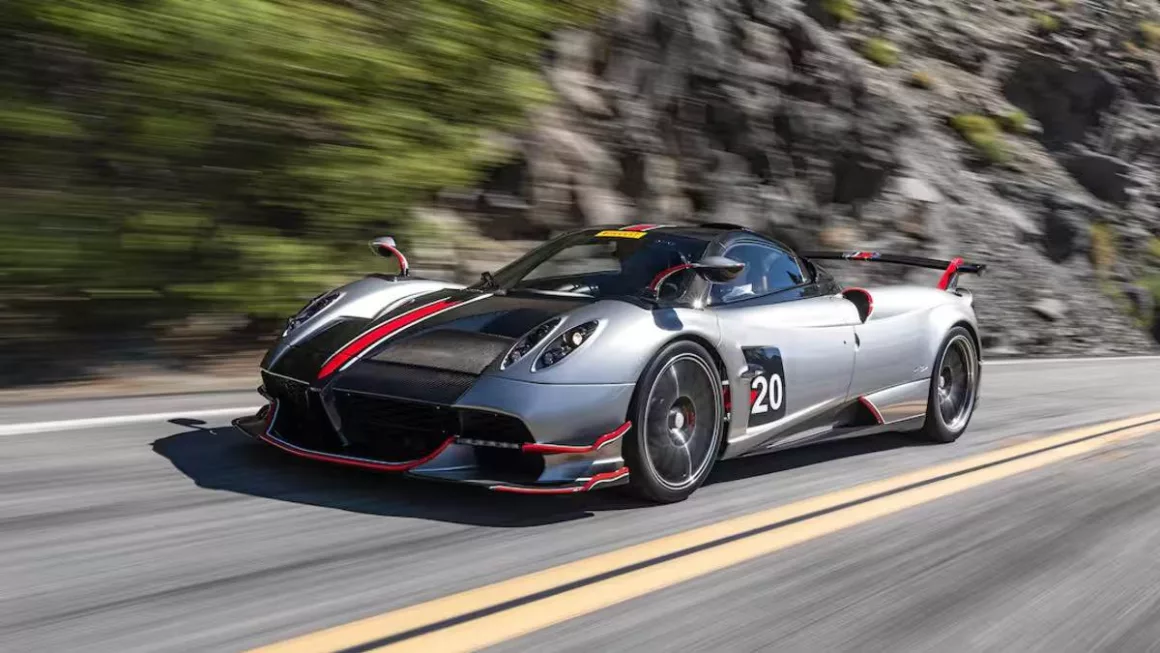
Pagani’s art-meets-engineering ethos shines through the Huayra’s handformed carbon-titanium body and elaborate engine bay, backed by twin turbochargers and a 383 km/h top speed.
At the heart of this stunning hypercar lies a 6.0-litre twin-turbo V12 engine, developed in collaboration with Mercedes-AMG, producing 730 hp and 1,000 Nm of torque. The result? A top speed of 383 km/h, which is not quite the top of the speed charts, but still an astonishing number for a car that focuses just as much on a refined driving experience as it does on outright speed.
Dry-sump lubrication, Brembo carbon-ceramic brakes, and a rigid carbon-titanium monocoque tub provide both crash protection and weight savings. Active suspension ensures compliant ride quality despite its supercar performance. Lastly, the intelligent aero system in Huyara denotes that the Huayra doesn’t just go fast, it stays glued to the road with precision that’s nearly impossible to match.
Pagani Huayra Specifications:
- Engine: 5,980 cc twin-turbo V12
- Transmission: 7-speed single-clutch sequential
- Power: 740 PS (730 hp)
- Torque: 1,000 Nm
- Top Speed: 238 mph (383 km/h)
- Curb Weight: 1,350 kg
- Body: Carbon-titanium monocoque
Pagani Huayra Key Features:
- Carbotanium® monocoque
- Brembo 6-piston front, 4-piston rear brakes
- Pirelli P Zero™ Corsa tires
- Active front-axle lift system
27. Lamborghini Revuelto
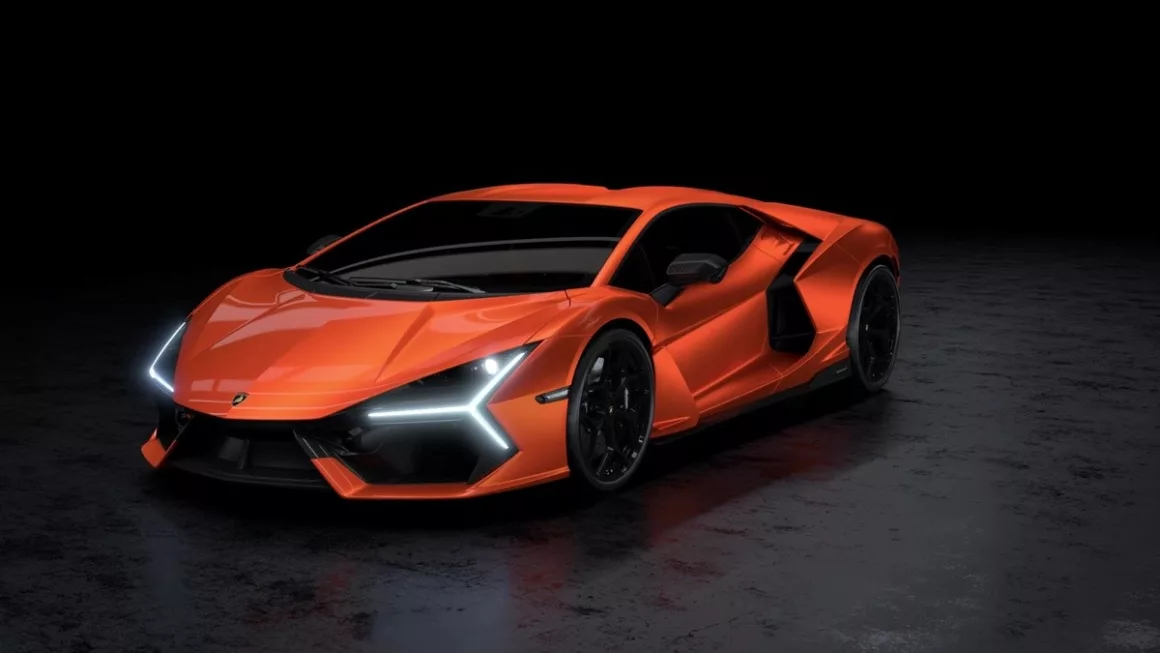
Lamborghini’s Revuelto marks a new era for the brand, ushering in a hybrid future without compromising on the raw, untamed performance Lamborghini is famous for. With the Revuelto, the iconic Italian automaker has merged traditional V12 power with the latest hybrid technology to create a car that not only delivers blistering speed but also pushes the envelope on driving dynamics.
Under the hood, the Revuelto houses a 6.5-litre naturally aspirated V12 engine combined with three electric motors, resulting in a total system output of 1,001 hp. This power allows the car to achieve a top speed of 350 km/h. This figure places it firmly in the hypercar realm, all while staying true to Lamborghini’s commitment to unrelenting performance and brutal acceleration. Its combined system torque exceeds 927 Nm, driving all four wheels via an 8-speed DCT.
The Revuelto’s dynamic torque vectoring system is really remarkable since it enables outstanding handling and agility despite the great power of the car. Thanks to the ideal mix of electric torque and the raw power of the V12, this car can go from 0 to 100 km/h in just 2.5 seconds. The active aerodynamics of the vehicle help control airflow for best stability at high speeds, therefore guaranteeing that the Revuelto is not only quick but also able to handle every curve and straight line precisely.
Lamborghini Revuelto Specifications:
- Engine: 6,496 cc V12 + 3× e-motors
- Transmission: 8-speed DCT
- Power: 1,001 hp
- Torque: 927 Nm
- Top Speed: 217 mph (350 km/h)
- Curb Weight: 1,680 kg
- Body: Carbon-fibre monocoque
Lamborghini Revuelto Key Features:
- PHEV “Torque-Vectoring” system
- Active aero with flaps and diffusers
- Magnetorheological suspension
- Wireless smartphone projection
ALSO READ: Most Expensive Cars In The World
Summary: Fastest Car in the World
These ten hypercars represent the cutting edge of automotive engineering in 2025. Whether you prize raw top-end speed, electric acceleration, or the drama of a naturally aspirated V12, there is a record-chaser here for you. The industry is clearly moving toward electrification and hybridisation, even at the pinnacle of performance.
All in all, the fastest cars in the world are at the height of engineering, where raw power, design, and ingenuity join together to challenge the boundaries of what is feasible. From the Koenigsegg Jesko Absolut and its record-breaking potential to the jaw-dropping elegance of the Pagani Huayra, each of these vehicles offers a different tale of technological advancement, artistic ability, and the ceaseless search for speed.
The blistering acceleration of the SSC Tuatara, the hybrid mastery of the Lamborghini Revuelto, or the relentless pursuit of power seen in the Bugatti Chiron Super Sport 300+ are about experiencing the very essence of performance in its purest form, not just about numbers. These machines, each of which can reach top speeds beyond 400 km/h, show that for the fastest cars, speed is only the beginning.
FAQs about the Fastest Car in the World
Q. What is the fastest car in the world?
Ans: As of 2025, the Koenigsegg Jesko Absolut takes the crown of the most fastest car in the world with a theorised top speed of 531 km/h (330 mph). Although the record has yet to be formally verified, it’s generally regarded as the world’s fastest car based on simulations. Of officially tested speeds, the Bugatti Chiron Super Sport 300+ is the reigning champion with 304.77 mph (490.48 km/h).
Q. What is the world fastest car top speed?
Ans: Koenigsegg Jesko Absolut, the world most fastest car top speed can go up to 531 km/h or 330 mph.
Q. Which car can go 600 km per hour?
Ans: The Mercedes-Benz T 80 and the Keating Bolt were both designed to reach speeds of over 600 km/h, with the T 80 aiming for 650 km/h and the Keating Bolt targeting 612 km/h.
Q. Has a car reached 400 mph?
Ans: Yes, vehicles like the Turbinator II (over 500 mph) and GoldenRod (409 mph in 1965) have exceeded 400 mph, but no street-legal production car has reached this speed.0 mph.
Q. Which car can go 550 km per hour?
Ans: No production car currently reaches 550 km/h. The Bugatti Chiron Super Sport 300+ reached 490.48 km/h, while the Koenigsegg Jesko Absolut is claimed to have a theoretical top speed of 531 km/h. The Devel Sixteen is rumored to reach 559 km/h, but none of these speeds are officially verified.
Q. Which car has 1000 kmph speed?
Ans: Bloodhound LSR, previously known as Bloodhound SSC is designed to reach a speed of 1000 mph or 1609 kmph. It is a British land vehicle designed to break the world land speed but it is yet to be put to test.
Q. Which production car currently holds the highest top speed?
Ans: Koenigsegg’s Jesko Absolut claims a theoretical 531 km/h, though it has yet to be officially validated on a public road. The Hennessey Venom F5 and Bugatti Chiron SS 300+ follow closely.
Q. Are there any all-electric hypercars in this fastest cars list?
Ans: Yes, the Rimac Nevera is fully electric, with four motors and a 120 kWh battery, making it the fastest EV at 415 km/h.
Q. How does hybrid power affect top speed?
Ans: Hybrids like the McLaren Speedtail and Lamborghini Revuelto use electric boost to fill torque gaps and improve acceleration, but pure ICE models still edge out in outright top speed due to simpler aerodynamic and thermal management.
Q. How do manufacturers ensure safety at 250+ mph?
Ans: Active aero, carbon-fibre monocoque, high-performance brakes, and sophisticated suspension systems (often with real-time adjustments) are critical for stability and occupant protection at extreme velocities.
Q. Will the fastest cars’ speeds ever be legal on public roads?
Ans: Realistically, no. These figures are achieved under controlled conditions on closed courses. Public road limits and safety regulations preclude such speeds outside specialised venues.
Q. Can a car go 400 mph?
Ans: Yes, a car can technically go up to 400 mph if it is designed for the same. However, every location has its limitation for speed set in place.
Q. Which is the fastest car in the world?
Ans: Koenigsegg Jesko Absolut is the fastest car in the world. Read about other fast cars from this article to get 360 degree information on the topic.
Q. Which car is faster than Bugatti?
Ans: The Koenigsegg Jesko Absolut is faster than the Bugatti Chiron Super Sport 300+, with a projected top speed of 330 mph, compared to the Chiron’s verified 304 mph. However, the Jesko’s speed has not yet been officially recorded.
Q. Is Koenigsegg legal in India?
Ans: Yes, Koenigsegg cars are road-legal in India, but they are rare due to high import costs, specialized service, and infrastructure limitations. Their limited production and high price make them exclusive.
Q. What is the slowest car in the world?
Ans: The Peel P50 is the slowest car, with a top speed of just 28 mph (45 km/h). It’s also the smallest car in the world ever made, produced between 1962-1965 and revived in 2011.
Q. What is the rarest car in the world?
Ans: The Mercedes-Benz 300 SLR Uhlenhaut Coupé is the rarest car, with only two ever made. One is in the Mercedes-Benz Museum, and the other sold for $143 million at auction.
Q. What is the fastest car from 0-60mph?
Ans: The fastest car from 0-60 mph is the McMurtry Spéirling, reaching it in just 1.4 seconds. Other fast contenders include the Dodge Challenger SRT Demon 170 (1.66 sec), Rimac Nevera (1.74 sec), and Pininfarina Battista (1.79 sec).
Q. What is the fastest anyone has gone in a car?
Ans: The highest speed ever recorded in a car is 763 mph (1,227 km/h), set by Andy Green in the ThrustSSC, a jet-powered vehicle. This remarkable land speed record was achieved in October 1997.