Driving during monsoons and winters can be a refreshing experience. However, it brings with it additional challenges in the form of low visibility and windshield condensation. Obstructed vision can be fatal if not dealt with and can become a big reason behind crashes and mishaps. However, like most car problems, the solution to these visibility issues lies within the car itself. By using your car’s defogger, you can easily tackle weather-related visibility issues in no time. But in order to correctly use the defogger, you must know how the defogger works and when to use one. So here is everything you need to know about a defogger in a car.
What is a Windshield Defogger?
More than just a feature, a defogger is a tool that ensures clear vision every time you drive, especially during unpredictable and harsh weather conditions. But before diving into what a defogger is, it is important to know why it is needed.
When you take a hot shower, you might have noticed your bathroom mirrors steaming up with tiny water droplets. This is called condensation, and the same thing happens to your car as well. When the warm air inside your cabin meets the cold windows, it turns into tiny water droplets or fog, which settles down on the windshield and windows, causing visibility issues. This is where the defogger steps in.
Also called a “demister” or “defroster”, a car defogger is a component that is equipped to remove the fog/water droplets that settle on your car’s windows and windshield due to temperature differences between the cabin and outside. The front defogger works by blowing hot air onto the windshield through the car’s vents to help raise the temperature of the windshield, removing accumulated fog and ensuring the temperature difference is eliminated.
Most vehicles nowadays are also equipped with rear defoggers that are designed to prevent condensation on the rear windshield. Rear defoggers work by heating the thin electrical heating elements that are spread across the rear windshield in lines, evaporating any moisture/fog that is causing the visibility issues. Defoggers are particularly useful during extreme weather conditions such as winter or monsoon seasons.
How to Use a Defogger in a Car
Using a defogger is one of the simplest and most effective things to do in case of front or rear windshield fogging. If you happen to notice fog accumulating on the windshield of your vehicle, here’s how you can tackle it by using a defogger:
Defogger for Front Windshield
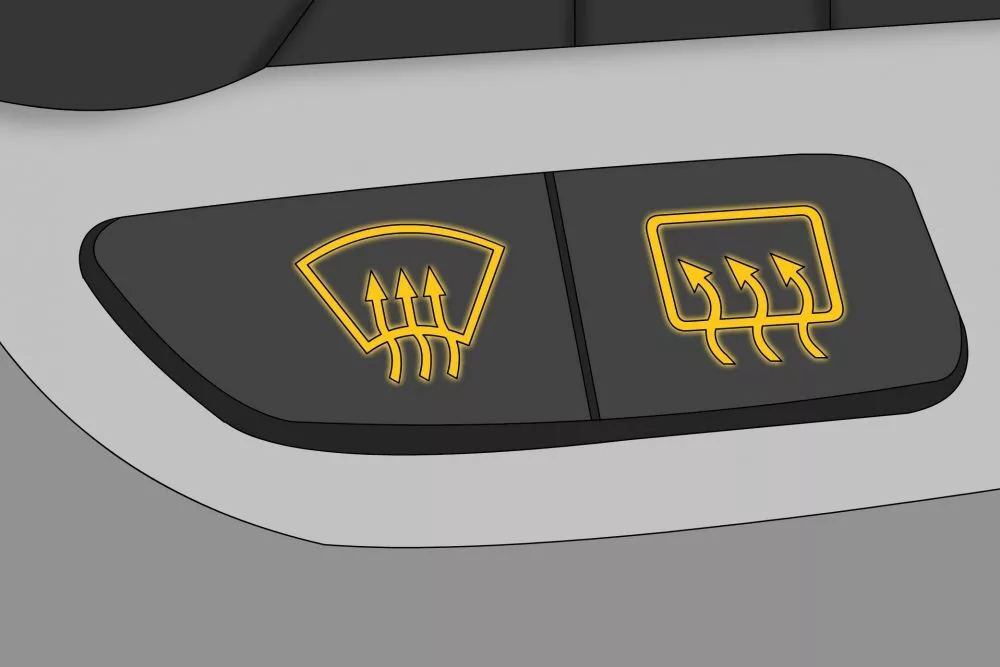
When you notice fogging on the front windshield while driving, reach out for the front defogger button present in your vehicle. This button is usually marked by an icon with three wavy arrows over a windshield.
Upon pressing the front defogger button, air will be redirected towards the front windshield vents. When that happens, turn off the air recirculation mode to let fresh air enter the cabin. After that, adjust the temperature according to the outside temperature. If the temperature outside is cold, adjust your AC system for hot air; if the temperature outside is hot or moderate, cool air will also suffice. Change your blower speed to maximum for quicker and more effective de-condensation. Once the fog is cleared, adjust your car temperature to balance it out with the outside weather.
Defogger for Rear Windshield
When you notice fogging on the rear windshield while driving, reach out for the rear defogger button present in your vehicle. This button is usually the one which has three wavy arrows over a square shaped windshield.
Upon pressing the rear defogger, an electric current will go through the heating elements present on your rear windshield. When that happens, the elements will get heated up, removing all fog that is accumulated on the rear windshield. Once the fog is cleared, adjust your car temperature to balance it out with the outside weather.
Best Practices for Using a Defogger
Now that you know everything about a car defogger, here are some best practices you can follow for effective defogging:
- When driving in winter or during the monsoon season, make sure to adjust your in-cabin temperature to prevent any temperature differences.
- If you still notice condensation, make sure to use the defogger as and when the condensation starts to prevent extreme visibility issues.
- When using a defogger, adjust your car temperature according to the outside temperature. If the weather outside is cold, turn up the heat; if not, let cold air do the job.
- When using the defogger, make sure to adjust the blower speed to quicken the de-condensation process.
- Some defoggers, especially the rear ones, switch off automatically after a certain while. In such a case, make sure to turn off the defogger again if the fog is not fully removed.
- After the fog is removed, make sure to turn off the defogger, as that will help maintain cabin temperature.
FAQ
Q: What is a car defogger?
Ans: A car defogger is a component that is equipped to remove the fog/water droplets that settle on your car’s windows and windshield due to temperature differences between the cabin and outside.
Q. How does the front defogger work?
Ans: The front defogger works by blowing hot air onto the windshield through the car’s vents to help raise the temperature of the windshield, removing accumulated fog and ensuring the temperature difference is eliminated.
Q: How does the rear defogger work?
Ans: Rear defoggers work by heating the thin electrical heating elements that are spread across the rear windshield in lines, evaporating any moisture/fog that is causing the visibility issues.
Q How to use car defogger?
Ans: To use a car defogger, press the front/rear defogger button depending upon where the condensation has occurred. Once pressed, adjust the car temperature according to the outside weather. If the weather outside is cold, turn up the heat; if not, let cold air do the job. Also, adjust your blower speed to quicken the process. Once fog is removed, turn off the defogger to maintain cabin temperature.