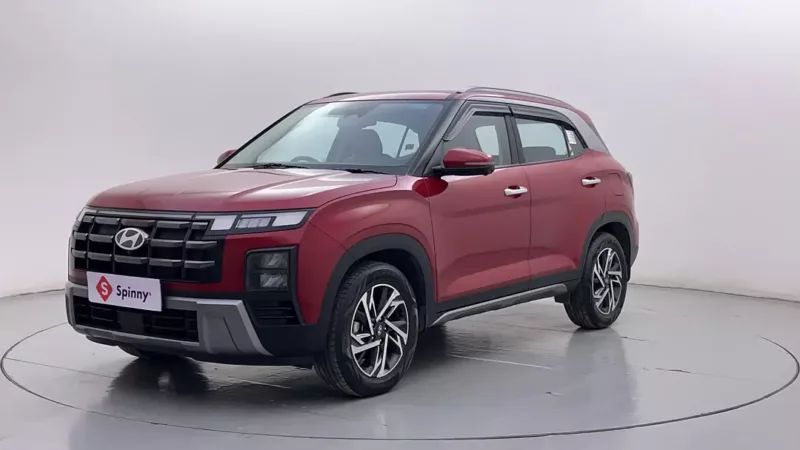

When comparing cars, we often look at different car models. However, in recent years, Indian car buyers have been looking at a different type of comparison, one that pits sedans against SUVs. In the last decade, SUVs have gained a major following among buyers with all car makers now offering a plethora of options. In the initial years when SUVs were becoming popular, car makers were almost on the verge of ditching sedans.
However, car makers like Hyundai, Skoda, Volkswagen and Honda have continued to offer refreshed models of their old sedans or launched new models which have enticed car buyers to take a second look at sedans. Sedans continue to remain active in the Indian car market due to their driving experience, elegant design, and smooth ride quality whereas SUVs are not enticing buyers with their brawny looks, better ground clearance and overall practicality and utility.
So, in this battle between two different types of car design, which one will work better for you? To answer this question, we need to take a more in-depth look at what sedans and SUVs bring to the table and how that aligns with your driving requirements. To make things easier, we have put together this comparison between sedans and SUVs to give you a better idea of the strengths and weaknesses of both body styles. This will allow you to form a better idea of whether a sedan or an SUV will be the better fit for you.
Table of Contents
Sedan vs SUV: Understanding the Basics
To get a better idea of the difference between a sedan and an SUV, it is important to understand the core definition of the two.
What is a sedan?
A sedan is a type of body style of cars which features a three box layout. These three boxes are the engine compartment, the passenger cabin and the boot. When viewed from the side, any sedan can easily be separated into these three boxes.
Also Read: Best Sedan Cars in India
What is an SUV?
The traditional definition of an SUV is much different compared to the SUVs that are offered in by Indian car makers today. Modern SUVs are defined by an upright stance and when viewed from the side, SUVs mimic a two box layout. The first box is the engine compartment and the passenger cabin and the boot space is encompassed in the second box.
Also Read: Best SUVs in India
Sedan vs SUV: Practical Differences
Sedans and SUVs are not just different in how they are designed, but also offer different practical conveniences.
Ground Clearance
One of the biggest differences between a sedan and an SUV is their ground clearance. SUVs offer a higher ground clearance compared to sedans and this makes them more adept and handling bad roads or large potholes. Not just that, higher ground clearance also makes it easier to navigate water logging, which can be a big issue in urban environments during the monsoon.
Previously, sedans used to be notorious for having a low ground clearance. One great example of this are the earlier generations of the Honda City which often scraped their underbelly against tall speed breakers. This could often lead to major damage and could incur hefty repair bills.
Modern sedans have taken a cue from SUVs and now come with adequate ground clearance. Most sedans in India now have a ground clearance of at least 160 to 170 mm, that can take on most road obstacles with ease. However, when it comes to ground clearance, SUVs still remain king in the Indian car market, with most small SUVs having a higher ground clearance. In this regard, the Honda Elevate is one of the prominent SUVs in the Indian market with a ground clearance of 220 mm. Most other SUVs tend to offer a ground clearance of 190 to 200 mm.
Boot Space
When it comes to boot space, the script is reversed and it is sedans that offer a major advantage. The three box layout of sedans allows car engineers to extract extra space for luggage. This becomes evident when we compare sedans and SUVs from the same car maker that are also priced similarly.
The Volkswagen Virtus has a boot space of 521 litres, which is a lot more when compared to the 385 litres of boot space offered by the Volkswagen Taigun. This is largely because the Virtus is longer than the Taigun, and offers a more deeply designed boot that can take in more luggage. This remains the case with other car makers such as Honda, Skoda and even Hyundai.
However, while sedans do offer more boot space in terms of volumes, it can be limited in other ways. The way sedans are designed, the boot area is well separated from the passenger cabin whereas the boot area of SUVs is part of the passenger compartment and is often separated by just the rear seats and a parcel tray. SUVs can therefore fold the seats to liberate more boot space, whereas sedans are restricted in this manner.
Ultimately, when it comes to stowing regular luggage such as suitcases, bags and other small items, sedans do a great job with their already larger boots. However, vertically tall items such as pieces of furniture can be challenging to fit in the boot of a sedan due to a smaller boot opening and less vertical space compared to SUVs. So, while you get more boot space in a sedan, SUVs tend to offer more versatility.
Seating Position
Sedans and SUVs also greatly differ in their seating positions. In sedans, the seats are generally closer to the ground. Furthermore, the rear seats offer better recline angles which make long journeys more comfortable. The seat base of sedans is also generally inclined to offer more under thigh support. This is usually a prevalent practice for the back seat of a sedan.
On the other hand, SUVs have a higher seating position relative to the floor of the car. Furthermore, the front seats of an SUV are set higher up to offer a commanding view of the outside surroundings. This is greatly beneficial for drivers, especially beginners, who struggle to judge their car’s footprint. SUVs simply make it a little bit easier to establish the edges of your car. While SUVs seats are also designed to be comfortable, they usually have an upright stance and offer a comfortable experience during smaller journeys, however, they can’t always match the comfort of a sedan’s rear seat over longer journeys.
Furthermore, coupled with the high ground clearance and the usually upright seats, SUVs make ingress and egress from the car easier. This makes it easier and less taxing for older citizens to get in and out of the cars. In fact, many senior citizens tend to migrate from sedans to SUVs due to this issue.
Sedan vs SUV: Driving Dynamics
Due to their design differences, sedans and SUVs have completely different driving dynamics and will appeal to different types of drivers.
Aerodynamic Advantage
Sedans feature a tapered design in how their passenger cabin starts from the edge of the bonnet, all the way back to the boot areThis allows sedans to cut through air more effectively as they face less resistance. Furthermore, sedans often don’t require rear wipers as the air flows over the rear windscreen effectively enough to clear away water and other debris.
SUVs are designed like a brick and that means they have to work that much harder to cut through wind resistance. Due to their two block design, the air passing over SUVs doesn’t effectively move over their rear windscreen, and these rear wipers are required in such cars to clean the are
Having an aerodynamic advantage can result in multiple advantages. Sedans are able to utilise more of the engine’s power to increase speed and acceleration compared to SUV engines that have to work harder to overcome aerodynamic drag. This becomes even more instrumental at higher speeds, as aerodynamic forces on a car significantly increase at higher speeds.
Low Slung Driving Position
Sedans are lower to the ground, and coupled with the lower seating position as well, the driver is much closer to the ground in a sedan compared to an SUV. The lower seating position is considered highly important for driving dynamics, as it allows drivers to better feel the movement of the car underneath them, aiding in better feedback and allowing the driver to make careful and correct driving inputs to drive in a spirited fashion.
Due to higher seating position and the higher ground clearance of SUVs, driver feedback can often be dull and might also be slightly delayed in some cases. This robs drivers of confidence when driving in a spirited manner. For these reasons, SUVs don’t offer the same level of driving confidence as sedans. Car makers often compensate for this by offering larger tyres on SUVs to increase overall grip, however, sedans continue to offer better driving feedback.
Body Roll
Sedans, due to their lower ground clearance, tend to have less travel in the suspension. For the uninitiated, suspension travel refers to however much the shock absorber of a car can compress to dilute the effect of road imperfections. Longer suspension travel means that SUVs can take on larger potholes and broken road surfaces with relative ease, compared to sedans.
However, this also leads to body roll in a cornering. As SUVs are taller, they have a higher centre of gravity. When a car corners, it shifts its weight from one side to the other, compressing the suspension on one side. SUVs, with their longer suspension travel and higher centre of gravity lead to a larger amount of compression on the outside shock absorbers in a corner. This is called body roll and it can negatively affect a car’s handling.
Body roll can be dealt with in many ways, by making the suspension setup stiffer or using anti-roll bars. However, SUVs tend to suffer from this problem a lot more than sedans do and the higher the speed around a corner, the more the body roll there will be. Uncontrolled body roll can also destabilise the car and results in poor cornering performance.
Sedan vs SUV: Running Costs
Sedans and SUVs are also subject to different running costs and these amounts can add up to significant amounts over the ownership period of a car.
Fuel Efficiency
The biggest difference in the running cost of sedans and SUVs is their fuel efficiency. This can be attributed to two major factors. Sedans usually have a lower kerb weight compared to SUVs, and thus their engines have to do less work to deliver the same performance. This is mostly applicable at lower speeds generally seen in urban areas, where stop-start traffic can often be a challenge.
At higher speeds, aerodynamic efficiency comes into the picture. As we explained earlier, sedans are more aerodynamically efficient than SUVs and at highway speeds, they can through air more easily. This also contributes to a higher fuel efficiency.
Overall, sedans tend to offer better fuel cost savings due to their design and lower weight.
Bigger Tyres
In comparison with sedans, SUVs are often equipped with wider tyres. These tyres are designed to handle the additional weight of an SUV and also help in bettering their driving dynamics. The most important difference can often be seen in emergency braking scenarios, where the grip from wider tyres can often help SUVs stop in a shorter distance and also keep them more stable during emergency manoeuvres.
However, this comes at a cost which is literally the price of the tyres. Wider tyres are more expensive and over the years, the difference can stack up, allowing sedans to offer a lower running cost. This is also true for other wear and tear components such as suspension and brakes, although the difference often does not turn out to be as big as in the case of tyres.
Conclusion
In this comparison between sedans and SUVs, it becomes vastly clear that sedans and SUVs both have their own advantages and disadvantages. In today’s day and age, sedans cater to enthusiast drivers who love a sporty driving package. Furthermore, sedans also offer better rear seat comfort and are often preferred by chauffeur-driven owners. On the other hand, SUVs are more practical, offer commanding road presence and can tackle rough terrain better than sedans. Hence, if you want a car that offers a better driving experience, especially on a winding road, you should look to buy a sedan whereas if overall ease of driving and practicality matter to you, you should look towards SUVs.
FAQs about Sedans vs SUVs
Q. Which is better, sedan or SUV?
A sedan offers better driving dynamics and also has a lower running cost whereas SUVs offer more practicality, can be easier to drive and offer better peace of mind when driving over bad roads and tall speed breakers.
Q. What is the main difference between a sedan and an SUV?
Sedans feature a three box design in which the engine compartment, passenger compartment, and the boot are clearly distinguishable when viewed from the side. SUVs feature a two box layout in which the engine compartment, and the passenger compartment and boot space are rolled into one box when viewed from the side.
Q. Which is more fuel efficient, sedans or SUVs?
Typically speaking, sedans are more fuel efficient than SUVs because of their more aerodynamic design. Sedans are able to cut through air easily at higher speeds and the engine doesn’t have to work as hard as in an SUV to offer the same performance.
Q. Which offers more boot space, sedans or SUVs?
When it comes to boot space between similarly priced SUVs and sedans, it is usually the sedans that offer more boot space due to their three box layout. However, while the boot space in sedans is horizontally deep, the boot opening is often vertically challenged and thus it is difficult to carry taller items in the boot of a sedan. In SUVs, the rear seats often fold down converting the entire area into cargo space, making them more versatile.
Q. Is there a difference in the running cost of sedans and SUVs?
Generally, sedans have a lower running cost as they are more fuel efficient. Furthermore, SUVs can have bigger, more expensive suspension components and tyres, and replacing these can also add to the maintenance costs of an SUV compared to that of a sedan.