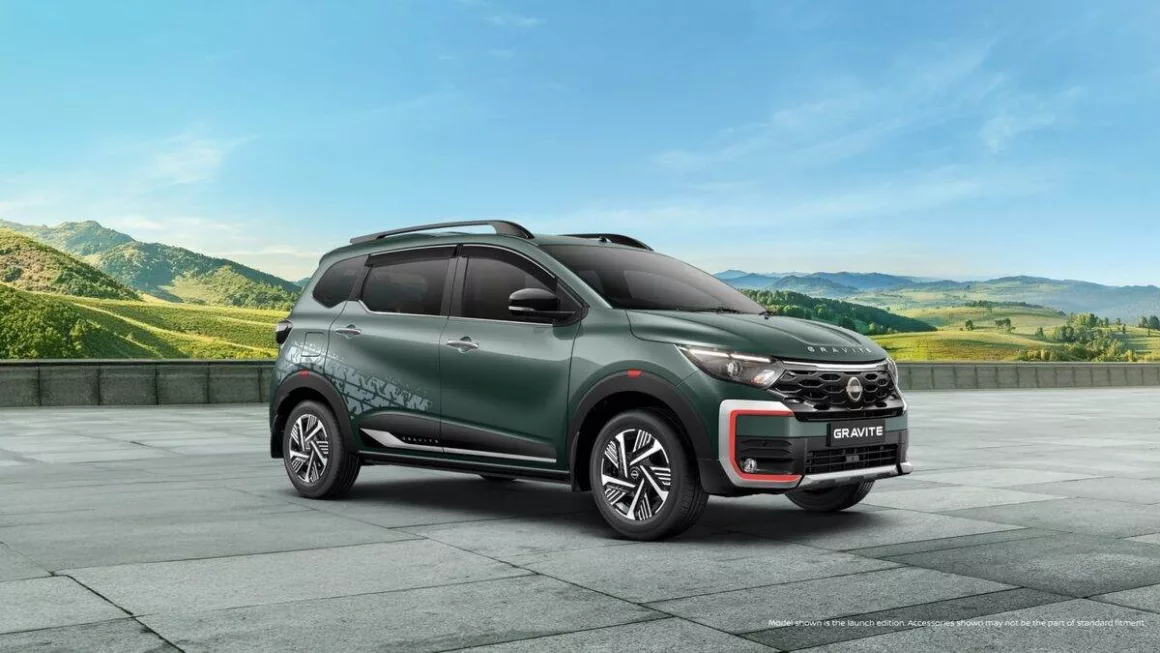
A good 7-seater car should strike a balance between space, comfort, and price. Most families we speak to want a car that is pragmatic for daily use but still long-distance comfortable. Enter the Nissan Gravite and Toyota Rumion.
Both are designed to haul extra people, but each prioritizes in different areas. The Gravite is an affordable, practical-orientated vehicle that can comfortably seat up to six people, which has no doubt led to its suitability for everyday family use.
Conversely, the Rumion is slightly more upmarket. More comfortable overall and with a more luxurious driving experience, it makes a better refined family car.
The other big difference comes as far as these cars are concerned with their market positioning. Gravite should appeal to buyers who prioritise top dollar for a lower price, while Rumion is targeted more towards purchasers willing to pay a little more for greater refinement and reliability. That difference is a huge part of how they perform on a day-to-day basis.
This comparison examines how these two vehicles stack up in terms of size, performance, features, safety, and price, making it easy for you to choose the right one for you.
Nissan Gravite vs Toyota Rumion: Dimensions
| Dimension | Nissan Gravite | Toyota Rumion |
| Length | 3987 mm | 4420 mm |
| Width | 1734 mm | 1735 mm |
| Height | 1644 mm | 1690 mm |
| Wheelbase | 2636 mm | 2740 mm |
| Boot Space | 625 litres (5-seater mode) | 209 litres |
| Ground Clearance | 182 mm | 185 mm |
The Nissan Gravite is tailored for city driving and is going to be quite easy and relaxing to drive. They are easy to maneuver in traffic and easy to park, which is handy in everyday use, thanks to their overall size. Even so, it still offers sufficient interior space to accommodate a small to medium-sized family.
Inside the spaciousness is accented even more by the rest of the interior where the Toyota Rumion feels like it has a lot more space inside. It’s more appropriate for families that travel regularly or require additional space for passengers to sit comfortably for an extended period.
The experience of driving both cars is different as well. The Gravite is also light and controllable, making it excellent for urban driving. When you are on the highway or at higher speeds, the Rumion feels more planted on the road.
Both vehicles can function in daily life, but for different needs. This makes the Gravite ideal if you have a flexible usage cycle and if you are just traveling in the city while, the Rumion is more suited for comfort and spaciousness on long journeys. The Rumion offers more overall space, while the Gravite is easier to drive in the city.
Nissan Gravite vs Toyota Rumion: Engine & Transmission
| Specification | Nissan Gravite | Toyota Rumion |
| Engine | 1.0L 3-cylinder petrol | 1.5L 4-Cylinder Petrol |
| Power | 72 PS | 103 PS |
| Torque | 96 Nm | 137 Nm |
| Transmission | 5-speed Manual / AMT | 5-speed Manual / 6-speed Automatic |
| Mileage | 19.3 kmpl | ~20.51 kmpl |
The Gravite is set up for comfort and ease of driving. It is best suited for daily city use and family trips where comfort is more important than speed. In traffic, the engine has a very placid, predictable quality. The information about the mileage also goes a long way in managing the running costs over the years, which is why most buyers check the same before making the purchase.
Unlike the Rumion, which offers a more potent engine. This is particularly noticeable on highways or when loaded up with passengers. This extra power aids overtaking and maintaining quicker speeds throughout the day. The Rumion also makes for a more refined drive, particularly at speed. Meanwhile, the Gravite is more about drivability than it is about performance.
In the end, the Rumion takes the lead for better performance and efficiency while the Gravite majors on the no-frills and convenience. The Rumion offers better performance, while the Gravite focuses on smooth and easy driving.
Also Read: Nissan Cars in India
Nissan Gravite vs Toyota Rumion: Features & Comfort
| Feature | Nissan Gravite | Toyota Rumion |
| Infotainment | 8-inch touchscreen | 7-inch touchscreen |
| Music System | JBL Speakers (Top variants) | Standard 4-Speaker + 2 Tweeters |
| Climate Control | Manual AC | Automatic climate control |
| Ventilated Seats | No | No |
| Adjustable Steering | Yes (Tilt) | Yes (Tilt) |
| Drive Modes | No | No |
| Sunroof | No | No |
| Instrument Cluster | 7-inch Full Digital Display | Semi-digital (Analog + TFT MID) |
| Adjustable Seats | Manual | Manual |
| Rear AC Vents | Yes | Yes |
| 60:40 Rear Seat Split | Yes | Yes |
| Cruise Control | Yes (Top Trims) | Yes |
The Gravite is designed to meet the need for a practical, comfortable cabin in family life. The interior is designed for flexibility, allowing users to adjust seating to their needs. It also makes this relevant as a daily driver, as well as a longer road trip vehicle.
That said, the Rumion does deliver a more premium feeling cabin. Qualitatively, with the materials and the finish itself, it feels more refined, helping also for long-distance travel.
Feature-wise, the Rumion does come with some functional bits in the kit department, but it would be the more well-rounded of the two. They have dialled down on how many features you really need, and the ease of use comforts are geared toward making the experience better instead of bombarding you with advanced features.
For buyers content with a no-frills family car, the Gravite keeps it simple and practical. The Rumion offers a more refined cabin, while the Gravite focuses on practicality and flexibility.
Nissan Gravite vs Toyota Rumion: Safety Features
| Safety Feature | Nissan Gravite | Toyota Rumion |
| GNCAP Safety Rating | Awaiting Test | Not Rated |
| Airbags | 6 | 6 |
| ABS with EBD | Yes | Yes |
| ESC | Yes | Yes |
| Traction Control | Yes | Yes |
| Automatic Headlamps | Yes | Yes |
| Rain-sensing Wipers | Yes | No |
| Hill Hold Assist | Yes | Yes |
| Hill Descent Control | No | No |
| Rear Sensors | Yes | Yes |
| Rear Parking Camera | Yes | Yes |
| ISOFIX | Yes | Yes |
| ADAS | No | No |
The two cars are equipped with features that matter for daily usage and are key to keeping occupants safe.
The Nissan Gravite also boasts a much newer safety configuration, featuring systems to help you maintain or regain control and stability during driving. These capabilities prove handy in challenging roadway conditions or emergency scenarios, making the overall driving experience more palpable.
In contrast, the Toyota Rumion will offer simple yet trustworthy safety equipment. It gets everything you need in a daily driver, just not so many of the systems as the Gravite. Many buyers also look for the safety rating of this car before making a decision. But with no broadly corroborated high crash-test rating, many turn to the safety features on offer instead.
There’s a close run on safety, however, the advanced tech edge swings slightly in favour of the Gravite here. The Gravite offers more safety features, while the Rumion focuses on basic reliability.
Nissan Gravite vs Toyota Rumion: Price Comparison
| Variant | Nissan Gravite (Ex-showroom) | Toyota Rumion (Ex-showroom) |
| Base Variant | ₹5.65 lakh | ₹9.55 lakh |
| Mid Variant | ₹6.59 lakh | ₹10.51lakh- ₹ 11.40 lakh |
| Upper Mid Variant | ₹7.8 lakh (approx.) | ₹11.64 lakh -₹12.05 lakh |
| Top Variant | ₹8.49 lakh | ₹13.86 lakh |
There is a noticeable difference in the pricing of these two cars.
The Nissan Gravite is built as a budget vehicle. A decent, spacious and practical car for the buyers to have for themselves on a lower budget, as an option to buy a 7-seater car in India. The Toyota Rumion is more expensive because it offers a smoother driving experience and better overall quality. Overall, if buyers are more interested in saving bucks, the Gravite does the job; if it’s the other way round and buyers are looking more for a comfortable and premium feel, then the Rumion is the way to go. The Gravite is more affordable, while the Rumion offers a more refined experience at a higher price.
Summary
For a practical 7-seater, both the Nissan Gravite and Toyota Rumion make sense for buyers looking in this space, but there is a difference in target audience here.
Gravite will better suit buyers who want an affordable, easy-to-park family car. It provides practical space, flexible seating, and an agreeable experience without much increase in cost.
Conversely, the Rumion will appeal to buyers who want a more sophisticated and powerful vehicle. It treats you to more performance, greater comfort and a more luxurious experience all around.
The Gravite is the one for you if saving money and everyday usability are top of your list. However, if you are willing to pay extra for added comfort and performance, the Rumion makes a strong case for itself.
FAQ about Nissan Gravite vs Toyota Rumion
Q. Which car is better for long trips?
The Toyota Rumion is better for long trips because it offers more power and a more comfortable ride.
Q. Is the Nissan Gravite good for city driving?
Yes, the Gravite is easy to drive in the city due to its compact size and smooth engine.
Q. Which car has better mileage?
Both cars offer good mileage, but the Rumion can deliver slightly better efficiency depending on driving conditions.
Q. Which car is more affordable?
The Gravite is much more affordable compared to the Rumion, making it suitable for budget buyers.
Q. Which car offers better features?
The Rumion offers a more refined feature set, while the Gravite focuses on practical and useful features.