The Tata Punch has grown into one of the most sought-after compact SUVs in India since its arrival on the market in 2021. Its upright design, high driving position, impressive ground clearance and great safety features have helped make the car an attractive choice for first car owners and young families.
In January 2026, Tata introduced the Punch’s first major facelift. The update brings revised styling, more standard safety equipment, newer cabin technology and two important mechanical additions: a 120 PS turbo-petrol engine and a CNG-AMT option.
Now, does the new Tata Punch provide value for money when compared to a used pre-makeover Punch?
New Tata Punch vs Old Tata Punch: Quick Comparison
| Area | New Tata Punch | Old Tata Punch |
| Model covered | 2026 facelift | Pre-facelift model sold from 2021 to early 2026 |
| Length | 3,876 mm | 3,827 mm |
| Ground clearance | 193 mm | 187 mm |
| Petrol engines | 1.2-litre naturally aspirated and 1.2-litre turbo-petrol | 1.2-litre naturally aspirated |
| CNG transmission | Manual and AMT | Manual |
| Airbags | Six as standard | Dual front airbags |
| Crash-test rating | Five stars for adults and children under Bharat NCAP | Five stars for adults and four stars for children under Global NCAP |
| Key additions | Turbo engine, CNG AMT, 360-degree camera and upgraded safety | Touchscreen, sunroof and connected features on later variants |
| Current status | Available new | Available mainly as a used car |
For clarity, it should be noted that the “old Punch” refers to cars from the 2024 and 2025 model years, as the earlier units generally have fewer features, thanks to multiple upgrades made by Tata to the pre-facelift Punch since its launch.
Exterior Design
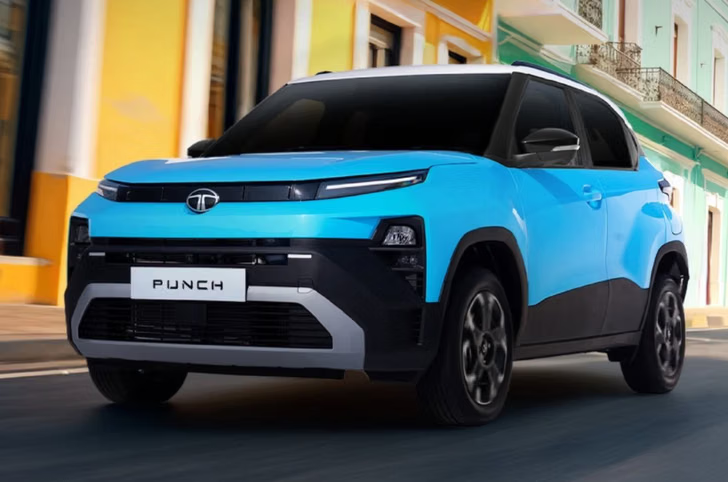
The new Punch retains the tall, upright shape of the original. It still features a split-headlamp arrangement, squared wheel arches, black body cladding and a compact footprint that works well in the city.
Most of the visual updates have been made to the front of the vehicle. The facelift variant features thinner upper light elements, updated headlights, an updated grille and a bigger bumper. At the back, the vehicle now has connected LED taillights and a redesigned bumper. Tata also offers new alloy wheel designs for selected variants.
The facelift looks cleaner and more modern, but it remains clearly recognisable as a Punch.
Dimensions and Boot Space
| Dimension | New Tata Punch | Old Tata Punch |
| Length | 3,876 mm | 3,827 mm |
| Width | 1,742 mm | 1,742 mm |
| Height | 1,615 mm | 1,615 mm |
| Wheelbase | 2,445 mm | 2,445 mm |
| Ground clearance | 193 mm | 187 mm |
| Petrol boot space | 366 litres | 366 litres |
The new version is longer by 49 mm now due to the redesigned front and rear bumpers. The wheelbase, width, and height remain unchanged; hence, the extra length does not provide significantly more space inside.
Ground clearance has increased by 6 mm, which offers a little more reassurance over broken roads and tall speed breakers. Both petrol versions retain a 366-litre boot. Tata lists the new Punch with 193 mm of ground clearance and 366 litres of petrol boot space.
The CNG versions have less boot space as they are fitted with twin cylinders. Yet, if the cylinders are located under the boot floor, it allows for a flatter space compared to a traditional single-cylinder layout.
What Has Stayed the Same?
The facelift brings several visible and mechanical changes, but the basic strengths of the Punch remain familiar.
The interior still has a high seating position, wide doors, and a flat rear floor. These factors make it easier for older passengers to get in and out of the car and contribute to creating a family-friendly environment inside the car. The narrow body allows for easier driving and parking in congested cities.
The 1.2-litre naturally aspirated petrol engine continues with the same basic outputs and the choice of a five-speed manual or AMT. Buyers who were satisfied with the old Punch’s everyday city performance will therefore find the standard new Punch familiar to drive.
The wheelbase and petrol trunk capacity remain the same too, which means that the new facelift does not change the rear passenger or trunk space. Instead, most notable changes refer to safety features, technologies, appearance, and newfound engine options.
Interior, Space and Comfort
The basic dashboard layout remains recognisable, but the facelift looks more modern. It gets a redesigned two-spoke illuminated steering wheel, while higher variants add a seven-inch digital instrument cluster. Tata also offers a 10.25-inch infotainment system, wireless Android Auto and Apple CarPlay on selected variants.
Space in the cabin has not changed. The Punch continues to provide sufficient headroom, convenient access, and a commanding position. Four people can sit comfortably in the first two rows, while three in the third row are evidently not ideal for long rides.
Later versions of the old Punch already offered a touchscreen, smartphone connectivity, cruise control, climate control, rear AC vents and a sunroof on selected variants.
The facelift retains these conveniences and adds or expands equipment such as:
- A 360-degree surround-view camera
- Blind-view monitoring
- Auto-dimming inside rear-view mirror
- Ambient cabin lighting
- Air purifier
- 65W Type-C charging
- SOS, emergency and breakdown calling
- Paddle shifters on selected AMT variants
- Connected LED tail lamps
The new Punch has four speakers and four tweeters, while the old Punch had four speakers and two tweeters. Tata officially states that the newly updated audio system, internet display, 360-degree camera, and other features are part of the facelift.
These features are variant-dependent. The reversing camera, 360-degree camera, automatic headlamps, rain-sensing wipers and sunroof are not included with every version. Buyers should compare the exact variants rather than relying only on the overall feature list.
Engine and Gearbox Comparison
| Engine | New Tata Punch | Old Tata Punch |
| 1.2-litre petrol | 87.8 PS and 115 Nm | 87.8 PS and 115 Nm |
| Petrol gearbox | Five-speed manual or AMT | Five-speed manual or AMT |
| 1.2-litre CNG | Around 73.5 PS and 103 Nm | Around 73.5 PS and 103 Nm |
| CNG gearbox | Five-speed manual or AMT | Five-speed manual |
| 1.2-litre turbo-petrol | 120 PS and 170 Nm | Not available |
| Turbo gearbox | Six-speed manual | Not available |
The naturally aspirated petrol mill is still a good option for city driving. It is less expensive than the CNG AMT engine, and it is available with both the manual and the automatic transmission (AMT). Although there are no delays in changing gears while driving, people may experience a delay in the shifting sequence.
The new turbo-petrol engine is the biggest performance upgrade. It produces 120 PS and 170 Nm and is paired with a six-speed manual gearbox. That is a considerable increase over the standard petrol engine, making the turbo version more suitable for frequent highway driving, quicker overtakes and journeys with a full passenger load.
The other new option is CNG-AMT, which has low fuel consumption and does not have a clutch, unlike the previous Punch iCNG. The new Punch is likely to be appealing to certain audiences with high fuel expenses but who still prefer driving vehicles with automatic transmission.
Mileage Comparison
The standard petrol Punch remains the balanced choice for mixed city and occasional highway use. The CNG model is more suitable for buyers who cover long distances and have convenient access to CNG stations. The turbo-petrol version prioritises stronger performance over the lowest possible running cost.
The claimed fuel consumption rate can vary based on the engine and transmission, while the actual fuel consumption may depend on conditions such as traffic, driving behaviour, load, tyre pressure, and use of the air conditioning system. The customer should always look for the certified number for the particular version they want to purchase instead of using one value of fuel consumption for the whole sales range of Punch cars.
Safety Comparison
Both models have strong crash-test credentials, but their ratings come from different programmes and should not be treated as directly identical.
| Safety area | New Tata Punch | Old Tata Punch |
| Test organisation | Bharat NCAP | Global NCAP |
| Adult rating | Five stars | Five stars |
| Child rating | Five stars | Four stars |
| Airbags | Six as standard | Dual front airbags |
| Stability control | Standard | Not fitted to the original tested car |
| Hill-hold assist | Standard | Model and variant dependent |
| Hill-descent control | Available on selected variants | Not available |
| 360-degree camera | Available | Not available |
| ISOFIX mounts | Standard | Available |
The 2026 model of Punch appeared in Bharat NCAP ratings with a points score of 30.58 points (maximum 32) under the adult safety section and 45 points (maximum 49) for the child safety section.
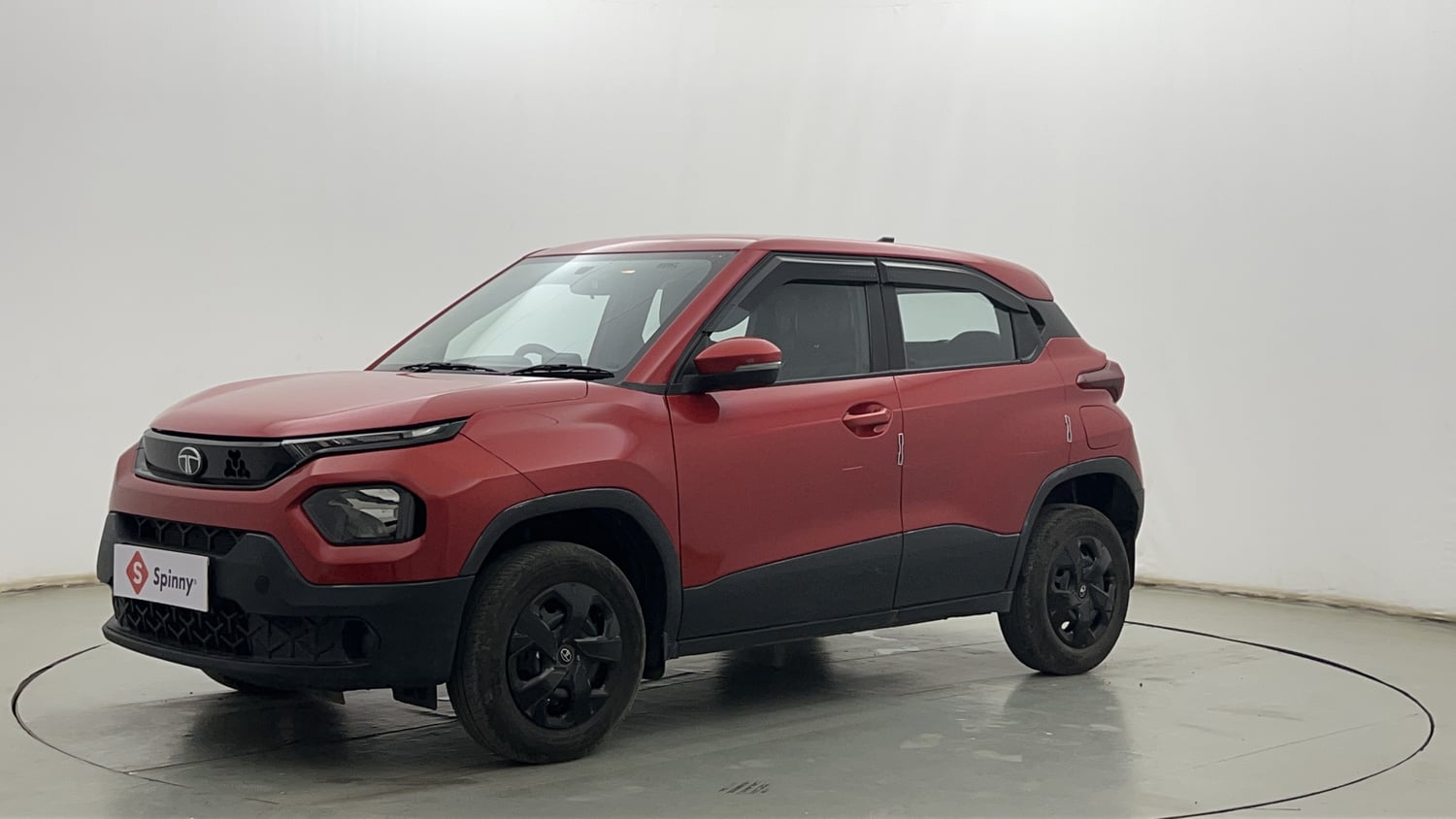
The old Punch was tested by Global NCAP in 2021 with two airbags. It received five stars for adult occupant protection and four stars for child occupant protection.
Therefore, the new Punch model offers a better overall safety set. Six airbags, electronic stability control, and advanced driver assistance systems are standard features of this model. Besides, the manufacturer states that the new Punch model has ISOFIX support, ESP, 360-degree camera and blind spot monitoring sensors.
Price Comparison
The new Tata Punch covers a wider price band than the old model because the range now includes naturally aspirated petrol, turbo-petrol, petrol-AMT, CNG manual and CNG-AMT options.
The discontinued Punch model of the previous generation is considered a second-hand car purchase only, and its price depends on the age of the car, trim level, fuel type, mileage, condition and service history.
A 2024 or 2025 Punch can be attractive if it costs significantly less than an equivalent new variant. However, paying close to new-car money for the old model is difficult to justify because it misses the facelift’s six airbags, updated safety technology and wider engine range.
Which Version Offers the Best Value?
To many consumers, the naturally aspirated petrol manual is probably the least complex choice. The car is good enough for everyday use, commuting as well as low running expenses.
The petrol AMT makes sense for buyers who spend most of their time in traffic and value convenience over perfectly smooth gear changes. The CNG manual suits high-mileage users focused on running costs, while the CNG-AMT adds convenience but will cost more to buy.
On the other hand, turbo-petrol is interesting for those who are eager to get more power from the engine, thus being able to utilise the Punch on the highways, although its users in the city will not appreciate this feature much.
Should You Buy the New Tata Punch?
The new Punch is the better option when you want:
- Six airbags and electronic stability control as standard
- A stronger child-occupant crash-test result
- Turbo-petrol performance
- CNG with an AMT gearbox
- A 360-degree camera and newer technology
- A new-car warranty
- The latest design and cabin equipment
In the case of the majority of city drivers, it is clear that the naturally aspirated petrol option is better. Turbo petrol is more suitable for use on the highways, and CNG-AMT will be great for those who drive a lot in the urban environment.
Should You Buy a Used Old Tata Punch?
A used Punch can still make sense when:
- Your budget is lower
- You find a clean car at a clear discount
- The regular petrol engine meets your needs
- You do not need a turbo engine or CNG automatic
- The car has complete service and ownership records
It is also important to keep in mind that one should pay plenty of attention to the model year of the vehicle. For example, one car produced in 2021 might strongly resemble one not older than 2025; however, its equipment could be completely different.
During inspection, test the AMT or clutch operation, suspension, infotainment, tyres and electrical features. Also check for accident repairs and verify the service history. For CNG cars, inspect the cylinder documents and installation records.
Final Verdict
The generation of the Punch made in 2026 doesn’t reinvent the original one but still makes some important improvements to it. It implies higher safety standards and a more luxurious cabin; it also has the advantages of CNG-AMT and a stronger version of the turbo-petrol engine.
The old Punch still offers compact dimensions, a practical cabin, useful ground clearance and strong adult occupant protection. A clean used example can therefore offer good value, particularly when it is a later model with more equipment.
However, looking at the prices of the new models that are almost identical and seeing the many advantages of the new Punch, including the fact that there are 6 airbags in the car, it can be stated without any doubt that the updated model is definitely a better family car.
Related Blogs:
Comparison: New Tata Punch vs Used Tata Nexon
Comparison: New Tata Punch vs Used Tata Altroz
FAQs
Q. Is the new Tata Punch bigger than the old Punch?
It is 49 mm longer and has 6 mm more ground clearance. Its width, height and wheelbase are unchanged, so cabin space remains similar.
Q. Does the new Tata Punch have six airbags?
Yes. Tata lists six airbags as standard across the new Punch range.
Q. Does the new Punch have a turbo engine?
Yes. The 1.2-litre turbo-petrol produces 120 PS and 170 Nm and is paired with a six-speed manual gearbox.
Q. Is Tata Punch CNG available with an automatic gearbox?
Yes. The new Punch iCNG is available with a five-speed AMT, while the old Punch CNG was manual only.
Q. Which Punch has the better safety rating?
The new Punch received five stars for adults and children under Bharat NCAP. The old Punch received five stars for adults and four stars for children under Global NCAP. The programmes use different protocols, so their scores should not be compared directly.
Q. Is a used Tata Punch worth buying?
Yes, if it is priced well, has a clean history and passes a thorough inspection. Later 2024 and 2025 examples generally offer more equipment than early cars.
Q. Is the 2026 Tata Punch worth the upgrade?
For most buyers, yes. The facelift brings meaningful safety, technology and powertrain improvements while retaining the practicality of the original.