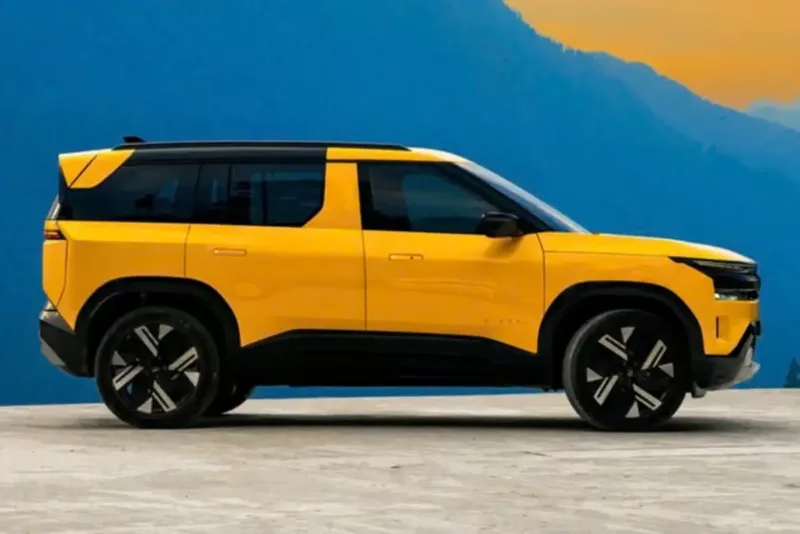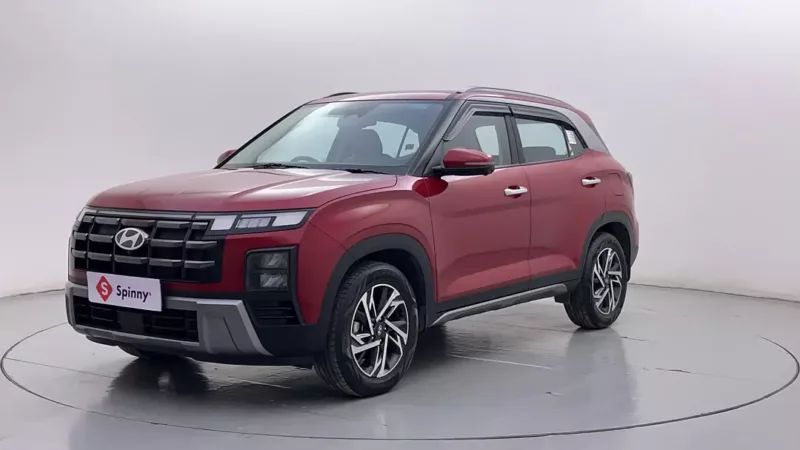
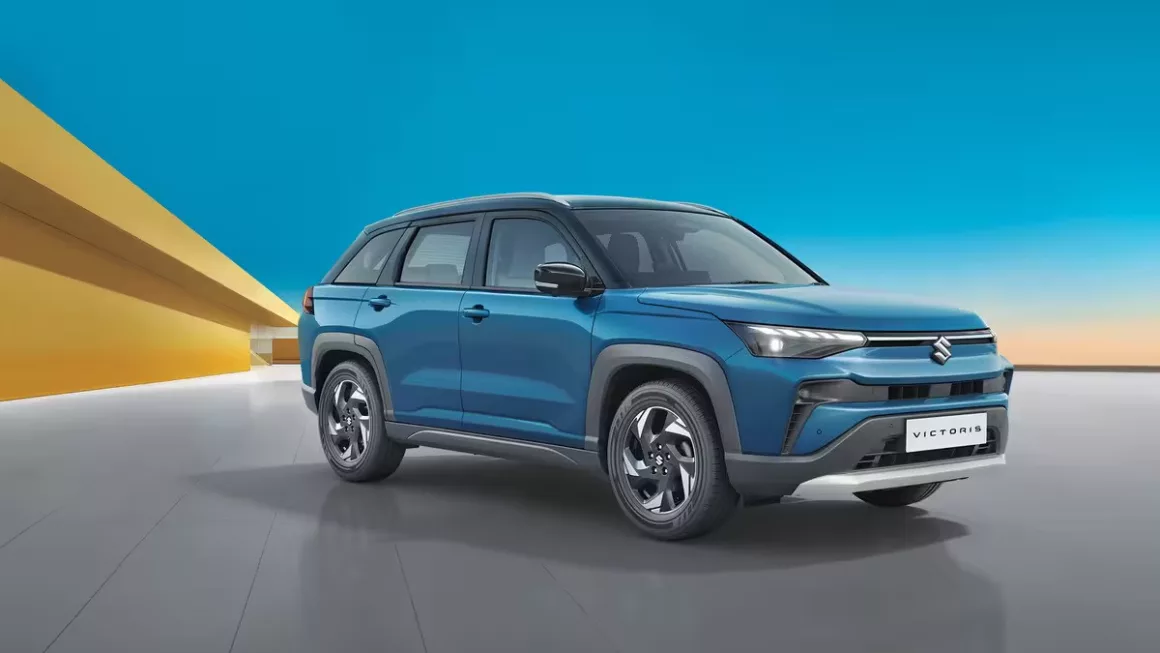
The compact SUV segment in India is a hotbed of activity, and two names are creating quite the buzz these days — the Volkswagen Taigun and the Maruti Suzuki Victoris.
Maruti Victoris, Maruti’s new entrant in the SUV space, is built on value, safety, and fuel efficiency, and there are multiple powertrains available, including hybrid and CNG. The Volkswagen Taigun, on the other hand, depends on German technology, solidity of construction, and punchy TSI turbo-petrol motors, among others, for delivering a sporty and exciting driving experience.
So, would you opt for the Victoris with its feature-rich, tech-loaded cabin and unparalleled mileage, or the upmarket-built Taigun with its good dynamics? We compare both SUVs head-to-head in terms of dimensions, performance, features, safety, and price in this blog and deduce which of the two is the smarter buy.
Maruti Suzuki Victoris vs Volkswagen Taigun: Dimensions
| Specification | Maruti Suzuki Victoris | Volkswagen Taigun |
| Length | 4,360 mm | 4,221 mm |
| Width | 1,795 mm | 1,760 mm |
| Height | 1,655 mm | 1,612 mm |
| Wheelbase | 2,600 mm | 2,651 mm |
| Boot Space | 433 litres reduced in CNG trims | 385 litres |
| Ground Clearance | ~200 mm (petrol/mild-hybrid trims); CNG slightly lower | ~188 mm |
It’s the largest SUV by length, width, and height, so it has a larger road presence and a more vertical, SUV-like appearance. It’s especially valued by families who want space and a dominant appearance.
Volkswagen’s Taigun, however, does an intelligent thing by utilising its longer 2,651 mm wheelbase, which provides more legroom for rear passengers despite its smaller dimensions in other areas. While its smaller 385-litre boot space compares less favourably than the Victoris’ (specifically non-CNG models), the Taigun finds a compromise between compact shape and superior interior packaging.
The Victoris also manages a higher ground clearance (~200 mm, slightly lower in CNG), and thus, is better suited for Indian road conditions. At the same time, the Taigun is sportier and lower-slung in form.
Maruti Victoris is bulkier and SUV-like, while the Volkswagen Taigun achieves space efficiency through its longer wheelbase and German premium looks.
Maruti Suzuki Victoris vs Volkswagen Taigun: Engine & Transmission
| Specification | Maruti Suzuki Victoris | Volkswagen Taigun |
| Engine Options | 1.5L mild-hybrid petrol (103 hp, MT/AT)1.5L strong-hybrid petrol (116 hp, e-CVT)1.5L petrol-CNG (89 hp, MT) | 1.0L TSI turbo-petrol (114 hp, MT/AT)1.5L TSI EVO turbo-petrol (150 hp, MT/DSG) |
| Transmission Options | 5-speed MT, 6-speed AT, e-CVT | 6-speed MT, 6-speed AT, 7-speed DSG |
| Power Output | 89–116 hp | 114–150 hp |
| Torque | Up to 141 Nm | 178 Nm (1.0 TSI) / 250 Nm (1.5 TSI) |
| Mileage / Efficiency | 19.1–28.6 kmpl (best with hybrid/CNG) | 18.5–19.9 kmpl (best with 1.0 TSI) |
| AWD Availability | Yes (AllGrip AWD on mild-hybrid trims) | Not available |
It leverages efficiency through diverse engines. Here, the ace card is the strong-hybrid petrol, which achieves best-in-class mileage of over 25 kmpl, and there’s an eco-friendly CNG model for the cost-conscious customers. Its AllGrip AWD is available on mild-hybrid trims only and provides better traction in mixed-use conditions than the Taigun, which does not offer AWD.
The Volkswagen Taigun, on the other hand, is a performance-focused car. Its 1.5L TSI EVO motor, producing 150 hp and 250 Nm of torque, alongside the 7-speed DSG transmission, provides a spirited drive no Victoris can match. Even the smaller 1.0L TSI is spritely due to the turbocharger. Although it can’t rival the Victoris in terms of efficiency, the Taigun targets customers who value exciting dynamics and sporty response, rather than merely efficient travel.
In a nutshell, the Victoris is the value-for-money all-rounder, nd the Taigun is the driver’s SUV.
The Maruti Victoris wins on mileage and transmission choice, and the Volkswagen Taigun on outright acceleration and fun-to-drive factor.
Maruti Suzuki Victoris vs Volkswagen Taigun: Features & Comfort
| Feature | Maruti Suzuki Victoris | Volkswagen Taigun |
| Infotainment System | 10.1-inch touchscreen | 7-inch infotainment system |
| Music System | 8-speaker Harman Kardon with Dolby Atmos | 8-speaker system (premium, tuned by VW) |
| Climate Control | Dual-zone automatic | Automatic climate control |
| Ventilated Seats | Yes (front) | Yes (front, higher trims) |
| Adjustable Steering | Tilt & telescopic | Tilt & telescopic |
| Drive Modes | Yes (select trims) | Yes (sporty tuning on GT trims) |
| Sunroof | Panoramic sunroof | Regular sunroof (top trims) |
| Adjustable Seats | Electric driver’s seat (top trims) | Manual/electric, depending on trim |
| Rear AC Vents | Yes | Yes |
| Ambient Lighting | 64-colour ambient lighting | Subtle ambient lighting (GT branding focus) |
| Digital Cluster | Semi-digital + ADAS display | Full digital cockpit cluster |
| Cruise Control | Adaptive (Level 2 ADAS-equipped) | Standard/adaptive depending on trim |
The Maruti Victoris goes large on features to attract tech-savvy customers. From a sunroof, a Harman Kardon sound system, Dolby Atmos, and 64-colour ambient lights, it offers a premium feel at an affordable cost. By adding adaptive cruise control through its ADAS suite, it becomes more of an advanced offering in this segment.
The Volkswagen Taigun, though less flashy in terms of features, emphasises a sporty, driver-oriented, and focused cabin. Its digital instrument cluster gives it a touch of modernity, and the GT versions get red stitching and sporty details. It does get ventilated front seats, premium finish, and VW’s good build quality, imparting a sense of refinement you cannot quite overlook.
In short, the Victoris dazzles us with its features and luxury factor, and the Taigun goes for refinement, sportiness, and European sophistication.
The Maruti Victoris dominates with added equipment at this price, and the Volkswagen Taigun retaliates with a sportier, more solidly built cabin experience.
Maruti Suzuki Victoris vs Volkswagen Taigun: Safety Features
| Safety Feature | Maruti Suzuki Victoris | Volkswagen Taigun |
| NCAP Safety Rating | 5-star Bharat NCAP & Global NCAP | 5-star Global NCAP |
| Airbags | 6–7 airbags (depending on variant) | 6 airbags |
| ABS with EBD | Yes | Yes |
| ESC (Electronic Stability) | Yes | Yes |
| Traction Control | Yes | Yes |
| Automatic Headlamps | Yes | Yes |
| Rain-Sensing Wipers | Yes | Yes |
| Hill Hold Assist | Yes | Yes |
| Hill Descent Control | Yes (higher trims) | Yes (higher trims) |
| Rear Parking Sensors | Yes | Yes |
| Rear Parking Camera | 360° camera (higher trims) | Rear-view / 360° camera (higher trims) |
| ISOFIX Child Seat Anchors | Yes | Yes |
| ADAS Features | Level 2 ADAS (lane keep, adaptive cruise, emergency braking) | Basic ADAS features (limited availability) |
Maruti Victoris is one of the safest cars in the segment, and sharing the rare honour of a 5-star safety rating from both the Bharat NCAP and the Global NCAP only goes towards establishing its credibility. It also comes standard with up to seven airbags and a full ADAS suite, featuring adaptive cruise control, lane-keeping assistance, and automatic emergency braking. It thus gains a decisive advantage in safety tech.
Volkswagen’s own C-segment product, the Taigun, shares a similar strong image, having been given a 5-star Global NCAP rating. While similar to the Victoris in terms of standard safety equipment, including six airbags, ESC, and ISOFIX anchors, it lags somewhat in ADAS application, as the equipment is only available on select higher trims and not across the entire range.
Both cars are safe choices, but the Victoris gains an edge through its established crash ratings in both Bharat and Global NCAP, and its wider availability of ADAS across trims.
Maruti Victoris gains the upper hand via its dual NCAP 5-star ratings and broader ADAS suite, and the Volkswagen Taigun via its solid build quality and Global NCAP certification.
Maruti Suzuki Victoris vs Volkswagen Taigun: Price Comparison
| Variant Level | Maruti Suzuki Victoris (Ex-Showroom) | Volkswagen Taigun (Ex-Showroom) |
| Base Variant | ~₹10.50 lakh | ~₹11.39 lakh |
| Mid Variant | ~₹13.36–₹15.35 lakh | ~₹14.29–₹15.35 lakh |
| Upper Mid Variant | ~₹16.00–₹17.38 lakh | ~₹17.00–₹17.38 lakh |
| Top Variant | ~₹18.91–₹19.15 lakh | ~₹18.91–₹19.15 lakh |
Maruti Victoris is available at the lower end, at ₹10.50 lakh and up to around ₹19.15 lakh. Even its costlier versions running on hybrid technology and ADAS come at pretty competitive prices, and these prices will attract value-hunters.
The Volkswagen Taigun, however, begins at a higher price of ₹11.39 lakh and tops out at ₹19.15 lakh for its top variants. Its pricing is commensurate with its German craftsmanship, superior quality of build, and sportier driving dynamics. Its pricing, naturally, is at a premium over the Victoris for similar features.
From a value-for-money approach, the winner here is Victoris, which delivers more features and superior efficiencies at lower prices. The Taigun, however, is worth paying for if you want superior performance, European finesse, and a sportier badging appeal.
There’s better value for money offered by the Maruti Victoris, and the Volkswagen Taigun prices a premium for performance, superior engineering, and brand image.
Summary: Maruti Suzuki Victoris vs Volkswagen Taigun
The battle between the Volkswagen Taigun and the Maruti Victoris highlights two very different priorities in the compact SUV space.
Maruti Victoris is efficient, safe, and feature-loaded at a competitive price. It offers different powertrains, mild-hybrid, strong-hybrid, and CNG and delivers unmatched fuel efficiency and lower cost of ownership. Its 5-star Bharat NCAP and global NCAP safety rating rank it among the safest in the segment, and features such as a sunroof, Arkamys-tuned system, and 64-colour ambience illumination deliver a luxurious cabin. Its prices start at ₹10.50 lakh and offer brilliant value across the range.
However, the Volkswagen Taigun is for those who value performance and construction quality. Its TSI turbo-petrol engines, especially the 1.5L EVO of 148 hp and 250 Nm, provide a sporty and exciting driving experience that the Victoris cannot match. Then add Volkswagen’s rugged German build, respectable crash ability, and comfortable, upmarket cabin shape, and the Taigun is the choice of those who will not mind paying extra for driving pleasure and European sensibilities.
If you’re considering fuel efficiency, safety, and value for money, then the Maruti Victoris is the more sensible choice. If you’re after performance, sporty road-holding, and European-built finish, then the Volkswagen Taigun is the automobile you’re after.
FAQ about Maruti Suzuki Victoris vs Volkswagen Taigun
Q. Which is cheaper, the Maruti Suzuki Victoris or the Volkswagen Taigun?
The Maruti Victoris is cheaper, starting at around ₹10.50 lakh, while the Volkswagen Taigun begins at ₹11.39 lakh and goes up to ₹19.15 lakh.
Q. Which SUV has better mileage: Maruti Victoris or Volkswagen Taigun?
The Maruti Victoris offers superior mileage, especially with its strong-hybrid (up to 28.6 kmpl) and CNG variants. The Volkswagen Taigun delivers around 18.5–19.87 kmpl, which is efficient but not at Victoris’ level.
Q. Which has more performance: Maruti Victoris or Volkswagen Taigun?
The Volkswagen Taigun is the stronger performer, with its 1.5L TSI EVO engine producing 148 hp and 250 Nm, offering a sporty drive. The Maruti Victoris tops out at 116 hp with its strong-hybrid engine, prioritising efficiency over outright performance.
Q. Which is safer: Maruti Victoris or Volkswagen Taigun?
Both SUVs are safe, but the Maruti Victoris has the distinction of scoring 5-star ratings in both Bharat NCAP and Global NCAP. The Volkswagen Taigun also holds a 5-star Global NCAP score, backed by German engineering and solid build quality.
Q. Which SUV has better features: Maruti Victoris or Volkswagen Taigun?
The Maruti Victoris stands out with features like a panoramic sunroof, 64-colour ambient lighting, ADAS, and a premium Arkamys audio system. The Volkswagen Taigun offers a digital cockpit, ventilated seats, and sporty GT-line styling, appealing more to driving enthusiasts.
Q. Which SUV should I buy: Maruti Victoris or Volkswagen Taigun?
Choose the Maruti Victoris if you prioritise mileage, affordability, safety, and feature value. Go for the Volkswagen Taigun if you want stronger performance, European styling, and a sporty driving experience.