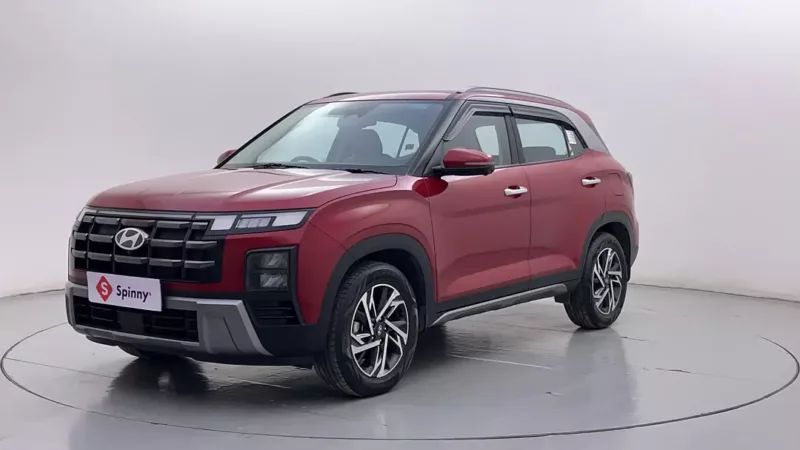
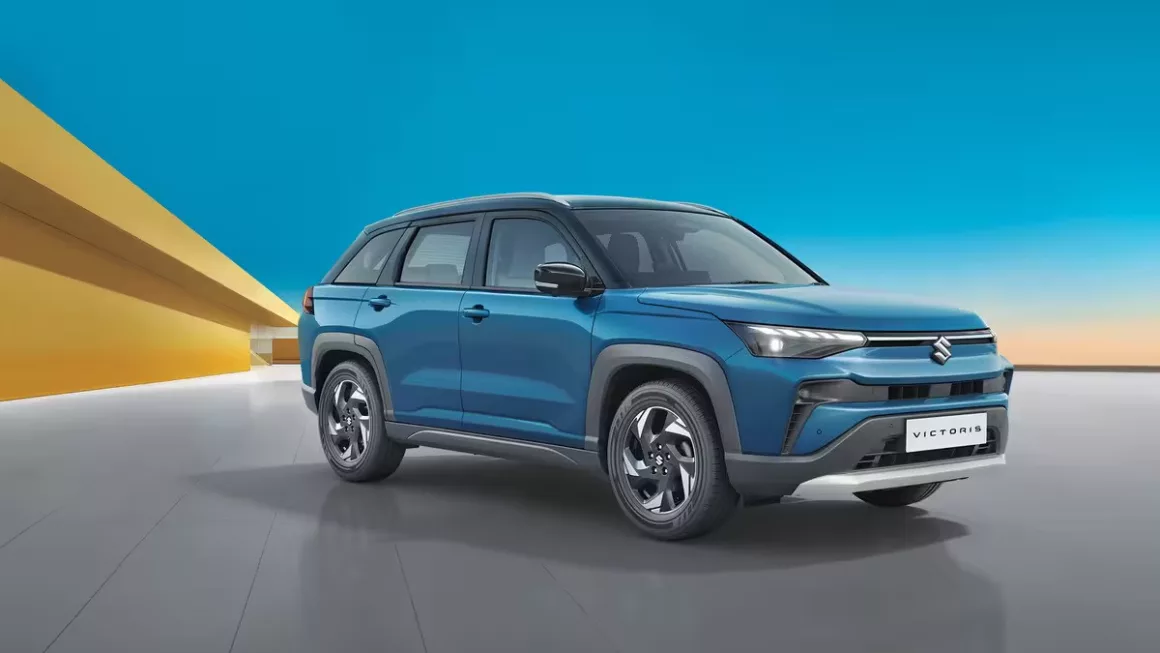
If the two leading mid-size SUVs, Maruti Suzuki Victoris and MG Astor, have grabbed your attention, you’re not alone. Both cars are strong contenders in India’s mid-size SUV market. The newly unveiled Maruti Victoris is Maruti’s flagship Arena-brand SUV with features like Level-2 ADAS and a 5-star Bharat NCAP safety rating.
On the other hand, the MG Astor has established itself as a strong contender in the mid-size SUV space, offering reliable petrol power, solid feature content, and competitive pricing. This guide makes a head-to-head comparison of the two cars — Maruti Suzuki Victoris and MG Astor.
Read more below to learn how these two cars compare across features like safety, mileage, engine and transmission, dimensions and more.
Maruti Suzuki Victoris vs MG Astor: Dimensions
When we look at the dimensions of both the Maruti Suzuki Victoris and the MG Astor, the numbers closely match. However, the subtle parameter differences influence the practicability and comfort.
Here’s a brief overview of the dimensions of both cars:
| Parameter | Maruti Suzuki Victoris | MG Astor |
| Length | 4,360 mm | 4,323 mm |
| Width | 1,795 mm | 1,809 mm |
| Height | 1,655 mm | 1,650 mm |
| Wheelbase | 2,600 mm | 2,585 mm |
| Boot Space | 373 Litres | 488 Litres |
| Ground Clearance (unladen) | 210 mm | 205 mm |
The Victoris is slightly longer (4,360 mm vs 4,323 mm) and taller (1,655 mm vs 1,650 mm), giving it a more upright stance and better road visibility, especially useful in Indian traffic conditions. Its wheelbase of 2,600 mm is marginally longer than the Astor’s 2,585 mm, which translates into slightly better legroom for rear passengers.
On the other hand, the MG Astor takes the lead in boot space with a generous 488 litres, compared to Victoris’ 373 litres.
If passenger comfort and rough-road ability are priorities, the Maruti Suzuki Victoris edges ahead. But for those who need maximum luggage capacity for long journeys, the MG Astor clearly wins.
Maruti Suzuki Victoris vs MG Astor: Engine & Transmission
Regarding engine and transmission choices, the Maruti Suzuki Victoris offers significantly more variety and efficiency than the MG Astor.
The following table provides the breakdown of details about the engine and transmission for both cars:
| Engine & Transmission | Maruti Suzuki Victoris | MG Astor |
| Engine Options | 1.5L mild-hybrid (K15C)/strong-hybrid petrol, 1.5-litre petrol+CNG option | 1.5 L Naturally Aspirated Petrol (VTi-TECH) |
| Transmission Options | 5-speed MT, 6-speed AT, e-CVT | 5-speed MT, CVT Automatic |
| Power | 88 – 116 bhp | 108.49 bhp |
| Torque | 121.5 Nm – 141 Nm | 144 Nm |
| Mileage | 20.49 – 28.65 kmpl | 14.82 – 15.43 kmpl |
The Victoris has three engine options—a 1.5L mild-hybrid petrol (K15C), a 1.5L strong-hybrid petrol, and a 1.5L CNG. This flexibility means you can choose depending on whether you prioritise affordability (CNG), balanced daily use (mild-hybrid), or advanced fuel efficiency with EV-like performance (strong-hybrid). In contrast, the MG Astor keeps things simpler with a 1.5L naturally aspirated petrol engine (VTi-TECH).
The Maruti Suzuki Victoris offers an impressive mileage of 20.49–28.65 kmpl, thanks to its hybrid and CNG options, making it highly fuel-efficient for both city and highway runs, whereas the MG Astor delivers a more modest 14.82–15.43 kmpl, which might lead to higher running costs in the long term.
The range of advanced powertrain options in the Maruti Suzuki Victoris, especially the strong-hybrid variant, clearly has an edge over the MG Astor regarding fuel efficiency. If your priority is long-term running costs and eco-conscious driving, Victoris gives you multiple ways to save. Meanwhile, the MG Astor might cost you more fuel over time.
Maruti Suzuki Victoris vs MG Astor: Features & Comfort
When it comes to features and comfort, both the Maruti Suzuki Victoris and MG Astor bring a premium experience but differ from each other in various ways.
The table below provides a feature-by-feature comparison to help understand this difference:
| Feature | Maruti Suzuki Victoris | MG Astor |
| Infotainment System | 10.1-inch touchscreen with wireless Android Auto and Apple CarPlay | 10.1-inch infotainment system with Bluetooth connectivity, four speakers and steering-mounted audio controls. |
| Music System | 8-speaker Infinity by Harman Sound System with Dolby Atmos 5.1 Support | JBL 6-speaker sound system |
| Climate Control | Automatic Climate Control Available. (Front AC: Single Zone with Fan Speed Control; Second row AC: Blower with Vents Behind Front Armrest) | Automatic Climate Control Available. (Front AC: Single Zone with Fan Speed Control; Second row AC: Blower with Vents Behind Front Armrest) |
| Ventilated Seats | Ventilated Front Seats | Available |
| Adjustable Steering | Tilt and Telescopic Adjustment for the Steering Wheel | Tilt Adjustment for the Steering Wheel |
| Drive Modes | Eco, Normal, Power (strong hybrid); Terrain Modes with AWD Setup – Snow, Sport, Lock and Auto | Eco, City, and Sport |
| Instrument Cluster | 4.2″ TFT Instrument Cluster | Digital Instrument Cluster with Adjustable Cluster Brightness |
| Sunroof | Panoramic Sunroof | Panoramic Sunroof |
| Adjustable Seats | 8-way manually adjustable driver seat / 6-way manually adjustable front passenger seat / 2-way manually adjustable (headrest: up / down) second row seat | 8-way manually adjustable driver seat / 6-way manually adjustable front passenger seat / 2-way manually adjustable (headrest: up / down) second row seat |
| Rear AC Vents | Available | Available |
| 60:40 Rear Seat Split | Yes | Yes |
| Cruise Control | Cruise Control (MT and strong-hybrid variants only) | Cruise Control (Only in top variants) |
The Victoris packs an infotainment system supported by Dolby Atmos 5.1—delivering a more immersive audio-visual experience. In comparison, the Astor gets a JBL 6-speaker system and wired connectivity that may feel slightly less premium for tech-savvy buyers.
While both SUVs provide good comfort, the Maruti Suzuki Victoris takes the lead with ventilated seats, better infotainment, and more versatile drive modes.
Maruti Suzuki Victoris vs MG Astor: Safety Features
Safety is a decisive factor when choosing a family SUV, and here both the Maruti Suzuki Victoris and MG Astor have similar specs. Here is a tabular representation of the safety features of each car:
| Safety Feature | Maruti Suzuki Victoris | MG Astor |
| NCAP Safety Rating | 5-Star Bharat NCAP Rating | 5-Star Global NCAP Safety Rating |
| Airbags | Up to 6 | Up to 6 |
| ABS with EBD | Yes | Yes |
| ESC (Electronic Stability Control) | Yes (with guidelines) | Yes (with guidelines) |
| Traction Control | Yes | Yes |
| Automatic Headlamps | Available in Top Variants | Available in Top Variants |
| Rain-sensing Wipers | Only in Top Variants | Only in Top Variants |
| Hill Hold Assist | Yes | Yes |
| Hill Descent Control | Yes | Yes |
| Rear Sensors | Rear Parking Sensors (standard) | Rear Parking Sensors (standard) |
| Rear Parking Camera | Reverse parking camera/ 360-degree camera available | Reverse parking camera/ 360-degree camera available |
| ISOFIX Child Seat Anchors | Yes | Yes |
| ADAS (Advanced Driver Assistance System) | Yes (Level-2 ADAS System) | Yes (Level-2 ADAS System) |
Maruti Suzuki Victoris proudly holds a 5-star Bharat NCAP rating, giving buyers peace of mind with proven crash test results. In comparison, the MG Astor has a 5-Star Global NCAP Safety Rating. Both cars offer Level 2 ADAS and hill descent control, which make them ideal for use in hilly terrain.
Maruti Suzuki Victoris vs MG Astor: Price Comparison
Pricing is often the final deciding factor when choosing between two mid-size SUVs. The Maruti Suzuki Victoris is expected to launch with a price range starting at ₹9.75 lakh (ex-showroom, estimated) for its base variant, going up to around ₹20 lakh (ex-showroom, estimated) for the fully loaded top trims.
In contrast, the MG Astor is priced from ₹10 lakh to ₹17.56 lakh (ex-showroom) across its variants.
Here’s how the two models compare across their variant tiers:
| Variants | Maruti Suzuki Victoris (Estimated Prices) | MG Astor |
| Base Variants | ₹9.75 lakh – 10.75 lakh (LXi MT / LXi CNG) | ₹10.00 lakh (Sprint MT) |
| Mid Variants | ₹10.85 lakh – ₹14.50 lakh (VXi MT, VXi AT / VXi eCVT/ VXi CNG) | ₹11.60 lakh (Shine MT) |
| Upper-Mid Variants | ₹13.10 lakh – ₹18 lakh (ZXi MT/ ZXi AT/ ZXi (O) MT / ZXi eCVT / ZXi CNG) | ₹12.70 lakh – ₹14.81 lakh (Select and Select BLACKSTORM Variants) |
| Top Variants | ₹15.10 lakh – ₹20 lakh (ZXi Plus and ZXi Plus (O) variants) | ₹14.90 lakh – ₹17.56 lakh (Sharp Pro and Savvy Pro Variants) |
Breaking it down, the Victoris has a clear advantage in base and mid variants, with the entry pricing being a bit lower compared to the Astor. This makes it more attractive for budget-conscious buyers looking for an affordable entry point into the SUV segment.
The mid and upper-mid variants of both SUVs overlap in pricing, but the Victoris offers hybrid and CNG options in this bracket, adding more flexibility for customers.
From a value perspective, the Victoris delivers more for less, especially with its hybrid technology and a broader range of engine options. Buyers who want advanced tech at a competitive price may find Victoris the better deal. However, for buyers aiming for the top variants, the MG Astor offers a lower entry point.
Summary
The Maruti Suzuki Victoris and the MG Astor target the competitive mid-size SUV segment but approach it differently. The Victoris brings a future-ready package with hybrid and CNG options, strong safety credentials (5-star Bharat NCAP + ADAS), and a lower entry price point, appealing to budget buyers and tech-focused customers.
The Astor, meanwhile, positions itself as a stylish and premium urban SUV with solid features, good refinement, and a more established on-road presence.
For buyers who prioritise fuel efficiency, advanced driver aids, and affordability, the Victoris is the smarter pick. On the other hand, those who value driving dynamics, brand appeal, and a more straightforward petrol-only setup may find the Astor more fitting.
Ultimately, the choice comes down to whether you want a value-driven, future-focused SUV (Victoris) or a stylish, conventional premium SUV (Astor).
FAQs About Maruti Suzuki Victoris vs MG Astor
Q. Which is the safer choice, Maruti Suzuki Victoris or MG Astor?
While the Maruti Suzuki Victoris and MG Astor offer up to 6 airbags, ABS with EBD, and stability aids, the key difference lies in the tested safety assurance. The Victoris has secured a 5-star Bharat NCAP rating, India’s official crash test programme evaluating a car’s real-world crashworthiness. In contrast, the Astor comes with a 5-Star Global NCAP Safety Rating.
Q. Do Victoris’ hybrids require expensive or specialised service?
While hybrid systems add complexity—since they combine petrol engines and electric motors—the maintenance remains comparable to standard cars. Maruti hybrids like the Suzuki Victoris (similar in tech to Victoris) incur annual service costs in the ₹6,000–₹10,000 range for hybrid-specific upkeep, not significantly more than conventional models. Moreover, Maruti’s extensive service network means trained technicians and parts are broadly available, keeping costs predictable and manageable.
Q. Which car is better in terms of fuel efficiency: Maruti Suzuki Victoris or MG Astor?
The Maruti Suzuki Victoris leads the pack by a clear margin regarding fuel efficiency. Its strong-hybrid (e-CVT) variant delivers an impressive 28.65 kmpl, making it one of the most fuel-efficient SUVs in India. Even the CNG model achieves a noteworthy 27.02 km/kg. In contrast, the MG Astor—powered solely by a 1.5 L naturally aspirated petrol engine— registers a considerably lower fuel efficiency, typically between 14 kmpl and 15.43 kmpl as per ARAI figures. Real-world driving tests further underscore this gap: some CVT-equipped Astor units managed just 8.3 kmpl in city conditions.
Q. Which SUV has a better interior design – Maruti Suzuki Victoris or MG Astor?
The MG Astor feels more premium with its dual-tone ivory theme, soft-touch dashboard, leather layering on doors and console, satin chrome highlights, and unique 100-year edition embroidery on seats. Alternatively, the Maruti Suzuki Victoris offers a practical yet elegant cabin with ventilated seats, soft-touch IP with premium stitching, chrome door handles, ambient lighting, and Suzuki Connect alerts. If you prefer luxury and detailing, Astor takes the edge; if you value functionality with modern comfort, the Suzuki Victoris is a strong choice.
Q. Which SUV offers better advanced internet features – Maruti Suzuki Victoris or MG Astor?
Both SUVs are packed with smart connectivity, but they differ in focus. The MG Astor brings Hinglish voice commands, OTA updates, a smartwatch app, remote AC on/off, live traffic navigation, and an in-car remote control app, making it highly interactive. On the other hand, the Maruti Suzuki Victoris emphasises safety and convenience with Google/Alexa connectivity, an SOS button, live weather updates, a tow-away alert, valet mode, and a remote immobiliser. If you want engaging AI and interactive features, Astor is the pick; if you prefer safety-driven and utility-focused tech, Suzuki Victoris stands stronger.