The Indian electric SUV market has progressed beyond an experimental stage into a mature segment with substantial volume and alternative fuel-powered vehicles, so there are many options available to consumers now that can compete with the quality of mainstream petrol or diesel SUVs with respect to all aspects of utility, interior space & comfort levels.
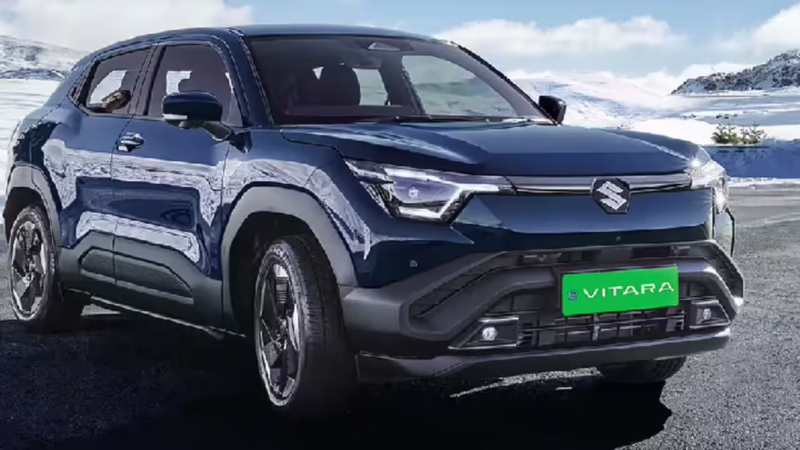
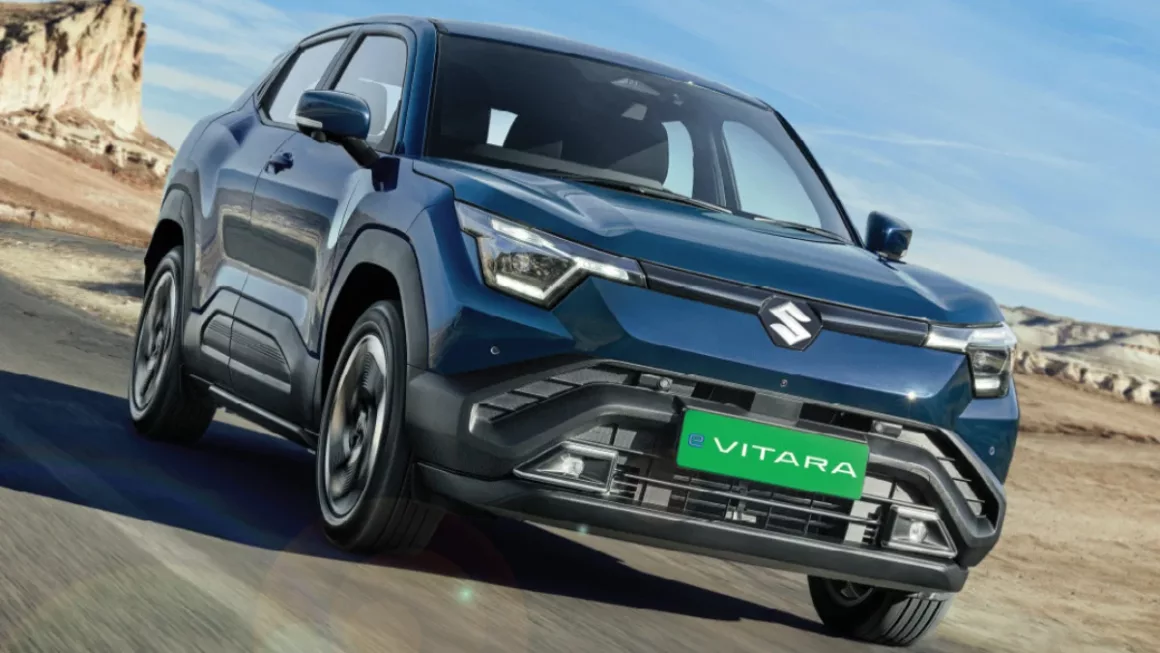
Two notable contenders today are the Maruti Suzuki e-Vitara and the MG ZS EV. The e Vitara is Maruti’s firstborn electric SUV, designed to blend mainstream usability, strong driving range, and family comfort under a familiar SUV form factor. The MG ZS EV, launched earlier, has established itself as one of the more complete compact electric SUVs in the country, offering a balanced blend of technology, range, practicality, and cabin space.
On paper, both cars sit in similar pricing and size brackets, but the way they deliver performance, features, and ownership experience differs significantly. This comparison helps you understand where each SUV shines and where it might compromise, so you can align your choice with your priorities.
In this blog, we compare the Maruti Suzuki e-Vitara and MG ZS EV in terms of size, battery, performance, features, comfort, safety and cost (while giving you helpful tips).
Table of Contents
Maruti Suzuki e Vitara vs MG ZS EV: Dimensions
| Specification | Maruti Suzuki e Vitara | MG ZS EV |
| Length | 4,275 mm | 4,323 mm |
| Width | 1,800 mm | 1,809 mm |
| Height | 1,635 mm | 1,649 mm |
| Wheelbase | 2,700 mm | 2,585 mm |
| Ground Clearance | 185 mm | 177 mm |
| Boot Space | Approx. 310 litres | Approx. 448–488 litres |
The MG ZS EV’s larger size is clear on paper, given it’s also a little longer and taller. This makes for a more usable cabin and boot space when packing for a long break away, or just a weekday supermarket run.
The Maruti Suzuki e-Vitara counters with a considerably longer wheelbase. At 2,700 mm, this is a key number for families and frequent rear passengers. A longer wheelbase doesn’t just translate into more measurable legroom; it also improves ride quality and stability at highway speeds by reducing the pitch and providing a more planted feel. This is why, even if the ZS EV is bigger overall, the e-Vitara’s cabin packaging often feels roomier for rear passengers.
The boot capacity for the ZS EV can vary because there are different methods of measurement, but the storage area is about 400 litres at a minimum. Some storage may have a squared-off shape, which is usually a good storage option for luggage, particularly if you go on long family trips. The e Vitara pales in comparison.
Ground clearance also shows a slight divergence. The e-Vitara’s 185 mm is sufficient for Indian roads and speed breakers, while the ZS EV’s 177 mm puts it more in line with settled highway use and urban driving. Neither will scrape unnecessarily in everyday conditions, but the e-Vitara’s numbers give it a practical edge over uneven rural patches or raised crossings.
Simply put, the ZS EV has a bit more width on the outside, while the e-Vitara appears much more efficiently designed for comfort. If comfort and space are your top priorities, you will have more space for people with the e-Vitara. If your main concern is capacity and presence with your immediate load, then the ZS EV will be more suitable.
Also Read: Complete Guide to Buying a Maruti Suzuki e Vitara
Maruti Suzuki e Vitara vs MG ZS EV: Battery & Performance
| Specification | Maruti Suzuki e Vitara | MG ZS EV |
| Battery Options | 49 kWh / 61.1 kWh | 50.3 kWh |
| Claimed Range | Up to 543 km | Up to 461 km (MIDC) |
| Power Output | 142 to 172 bhp | ~173 bhp |
| Torque | ~192 Nm | ~280 Nm |
| Drivetrain | Front-wheel drive | Front-wheel drive |
| DC Fast Charging | Yes | Yes |
| AC Charging | Yes | Yes |
Battery and range figures are often the first thing EV buyers look at.
The Maruti Suzuki e-Vitara delivers a headline of up to 543 km on its larger 61.1 kWh battery. This figure is significant because it moves the e-Vitara into the “comfortable long-distance SUV” bracket, reducing range anxiety and making multi-city travel feel attainable without frequent charging stops.
The MG ZS EV uses a single 50.3 kWh battery pack and claims up to 461 km of range under the MIDC cycle. While lower than the e-Vitara’s range, this remains more than adequate for a typical weekday commute and even weekend trips. For most Indian buyers, 461 km covers well over a week’s typical driving with a single charge.
A comparison of performance actually tells another type of story. The ZS EV has a much greater torque number on paper; therefore has much better initial acceleration and feels much more lively to drive in city traffic compared with an e Vitara; however, due to its evenly delivered torque, the e Vitara provides sufficient power to feel very relaxed and composed when driving, which is appropriate for an SUV designed for family transportation.
Both vehicles support DC fast charging and household AC charging, but the e-Vitara’s larger battery translates to fewer charging stops on long runs. It’s not just a numbers game; the larger battery also tends to be better thermally managed for longer high-speed driving.
The e-Vitara provides long-distance peace of mind from the buyer’s point of view. And from the ZS EV’s perspective, it provides a more immediate “punchy” driving experience that fits suburban/city-type driving.
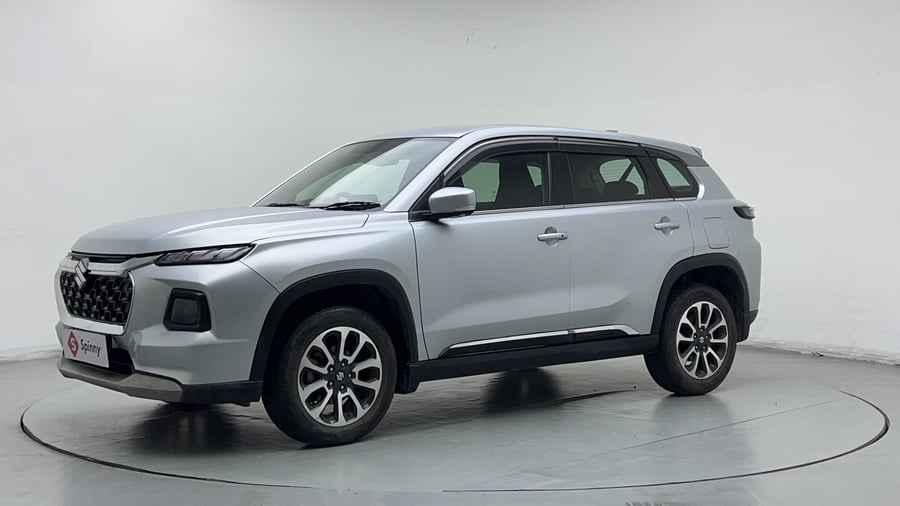
Maruti Suzuki e Vitara vs MG ZS EV: Features & Comfort
| Feature | Maruti Suzuki e Vitara | MG ZS EV |
| Infotainment System | Large touchscreen | 10.1-inch touchscreen |
| Instrument Cluster | Fully digital | Digital cluster |
| Climate Control | Automatic | Dual-zone automatic |
| Ventilated Seats | Yes (front) | Yes (front) |
| Sunroof | Panoramic | Panoramic |
| Powered Driver Seat | Yes | Yes (higher trims) |
| Rear AC Vents | Yes | Yes |
| Drive Modes | Multiple | Multiple |
| Connected Car Tech | Yes | Yes |
| Audio System | Premium | Premium |
The personality of each vehicle is revealed when comparing contemporary electric SUVs based on features and perceived comfort.
The MG ZS EV has received recognition for its extensive feature set, which includes ventilated seats, dual-zone climate control, a large touchscreen, and a well-designed digital cluster. Premium audio and cutting-edge connected car technology that feels sophisticated and mature are also available on higher variants from MG.
The Maruti Suzuki e-Vitara takes a slightly more holistic comfort approach. Its cabin layout prioritises ergonomics and rear-seat space without crowding the dashboard with too many competing screens or gimmicks. The panoramic sunroof, ventilated seats, and supportive cushions make long journeys more relaxed. Maruti’s connected car technology, while intuitive, focuses more on usability and reliability rather than overwhelming users with features.
The experience of rear seating is another useful distinction. The e-Vitara’s back seat actually feels roomier with more legroom and a less crowded posture because of its longer wheelbase, which is a huge plus for taller passengers or for longer trips.
In contrast, the ZS EV’s rear space is acceptable and comfortable, but the more traditional compact SUV footprint means it feels slightly more constrained than the e-Vitara.
The interior of the ZS EV will feel more thrilling if you value a high-end, technologically advanced cabin. The e-Vitara is superior if you value everyday usability and comfort in the backseat.
Maruti Suzuki e Vitara vs MG ZS EV: Safety
| Safety Feature | Maruti Suzuki e Vitara | MG ZS EV |
| Bharat NCAP Rating | 5-star | 5-star (Euro NCAP referenced) |
| Airbags | 6 | 6 |
| ESC | Yes | Yes |
| Traction Control | Yes | Yes |
| Hill Hold Assist | Yes | Yes |
| 360-degree Camera | Yes | Yes |
| ISOFIX Child Seat Anchors | Yes | Yes |
| ADAS | Level 2 | Level 2 |
For EV buyers, safety is now a crucial consideration rather than a secondary one.
The Maruti Suzuki e-Vitara boasts robust adult and child occupant protection and a verified five-star Bharat NCAP rating. This indicates that the e-Vitara performed exceptionally well in independent crash tests pertinent to Indian roads. Additionally, it offers Level 2 ADAS features, such as autonomous emergency braking, adaptive cruise, lane keeping assistance, and forward collision warning.
The MG ZS EV has long been recognised for its safety features, and while its Bharat NCAP status hasn’t been tested under the current regimes at the same time as the e Vitara, it carries six airbags, ESC, ISOFIX mounting points, and a suite of driver aids that match or closely mirror what the e Vitara offers.
When it comes to actual ownership, the safety features of both cars offer comfort. The ZS EV’s well-established safety suite provides robust daily protection, while the e Vitara’s independent rating gives it a slight advantage in verified crash performance.
Both SUVs are comforting options for families, but many safety-conscious consumers may feel more confident about the e-Vitara due to its NCAP rating.
Maruti Suzuki e Vitara vs MG ZS EV: Price Comparison
| Variant Level | Maruti Suzuki e Vitara (Ex-Showroom) | MG ZS EV (Ex-Showroom) |
| Base Variant | Around ₹17 lakh | ₹17.99 lakh |
| Mid Variant | ₹19–20 lakh | ₹18.50–19.50 lakh |
| Top Variant | Up to ₹22.5 lakh | Up to ₹20.50 lakh |
In this market, pricing has a significant impact on consumer choices.
With top variants approaching ₹20.50 lakh, the MG ZS EV’s range includes entry-level to mid-range models priced between ₹18 and ₹20 lakh ex-showroom.
The Maruti Suzuki e-Vitara has been launched with a slightly more aggressive entry point, starting around ₹17 lakh. Higher trims and larger battery options push it into the ₹19–22.5 lakh band. The broader price spread reflects the range of battery choices and trim levels, giving buyers more flexibility on how they trade features versus price.
Due to the significant mid-range overlap between the two SUVs, buyers can choose between the more range-focused e-Vitara and the well-equipped ZS EV without experiencing significant price differences.
The e-Vitara’s lower entry price appeals to buyers on a tight budget. The ZS EV’s price points are well-known and flexible for individuals who value dependable equipment and a well-established retail experience.
Summary: Maruti Suzuki e-Vitara vs MG ZS EV
Although they target somewhat different priorities, both SUVs appear to offer strong value.
The MG ZS EV is a well-established, reasonably priced small electric SUV with a luxurious interior, well-balanced performance, and a recognisable SUV footprint. Its well-rounded feature set and comfortable size for both city and suburban driving are its strongest points.
The Maruti Suzuki e-Vitara pushes the envelope on electric SUV practicality. Its longer wheelbase delivers superior rear-seat comfort, its larger battery options translate into longer claimed range with fewer stops, and its verified Bharat NCAP rating offers confidence to safety-focused families.
If price certainty, high-end cabin technology, and a comfortable urban driving experience are your top priorities, go with the MG ZS EV. If range confidence, comfort for rear passengers, and proven safety performance are important to you, go with the Maruti Suzuki e-Vitara.
Also Read :
Comparison: Maruti Suzuki Grand Vitara vs Hyundai Creta
Comparison: Maruti Suzuki Vitara Brezza vs Tata Nexon
FAQs: Maruti Suzuki e-Vitara vs MG ZS EV
Q. Which electric SUV has better range: Maruti Suzuki e-Vitara or MG ZS EV?
The Maruti Suzuki e-Vitara offers up to 543 km of claimed range, while the MG ZS EV offers up to 461 km.
Q. Which SUV is more spacious for passengers: Maruti Suzuki e-Vitara or MG ZS EV?
The Maruti Suzuki e-Vitara has a longer wheelbase and generally more rear legroom, making it feel more comfortable for rear passengers.
Q. Which electric SUV has a stronger safety rating: Maruti Suzuki e-Vitara or MG ZS EV?
The e-Vitara has a verified five-star Bharat NCAP result. The MG ZS EV also offers robust safety equipment, though its specific NCAP rating under current protocols is not yet published.
Q. Which is more affordable: Maruti Suzuki e Vitara or MG ZS EV?
The e-Vitara starts at a lower price, making it more accessible at entry-level trims. The ZS EV’s pricing is more stable and familiar for buyers looking at the current electric SUV market.
Q. Which electric SUV should I buy: Maruti Suzuki e Vitara or MG ZS EV?
Choose the MG ZS EV if you want a premium cabin experience and balanced urban performance. Choose the Maruti Suzuki e Vitara if you prioritise longer range, better rear comfort, and a verified safety rating.