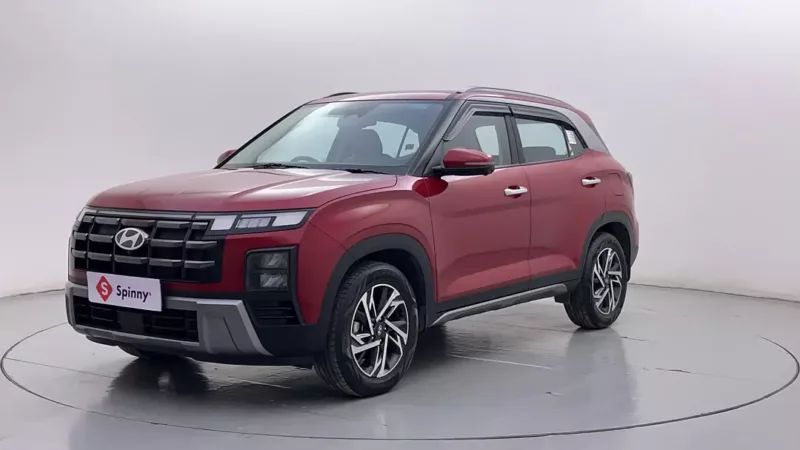

Kia made its debut in India with the Seltos back in 2019, a compact SUV that has retained its position as one of the top-selling SUVs in the country ever since. But the Korean veteran is all set to compete with its latest family member, the Kia Syros.
This futuristic compact SUV joins Kia’s lineup with a price point shy just a few lakhs below the Seltos.
The Seltos, with its established reputation, has long been a favorite in urban settings, while the newer Syros steps in with a more city-focused design and next-generation features.
In this side-by-side comparison of Korean siblings, we’ll go over what sets the two apart in terms of design, powertrains, safety features, technology, and overall driving appeal. Here’s a detailed breakdown to help you choose your next Kia.

Kia Syros vs Kia Seltos: Dimensions
| Aspects | Kia Syros | Kia Seltos |
|---|---|---|
| Length (mm) | 3995 mm | 4365 mm |
| Width (mm) | 1805 mm | 1800 mm |
| Height (mm) | 1680 mm | 1645 mm |
| Wheelbase (mm) | 2550 mm | 2610 mm |
| Boot Space (L) | 390-564 litres | 433 litres |
| Ground Clearance (mm) | 190 mm | 190 mm |
Park the Kia Syros and Seltos side by side, and you’ll see that the Syros is noticeably shorter in length. It’s under 4 meters, which makes it a great pick for tight city parking and zipping through traffic. The Seltos, on the other hand, is a relatively larger compact SUV with a commanding road presence that stands out.
Interestingly enough, the Syros is shorter overall, but it’s still wider and taller than the Seltos. That might not seem like a huge deal, but those extra few millimeters can make the cabin feel airier, especially if you’ve got taller passengers in the back.
Now, in terms of wheelbase, the distance between the front and rear axles, the Seltos takes the lead. It offers 60 mm more, which usually translates into more rear legroom and overall stability at higher speeds. Boot space is another area where the Syros excels. Depending on seat configuration, it ranges from 390 to a generous 564 liters. The Seltos has a steady 433 liters, which is still solid but not quite as flexible if you often switch between grocery runs and road trip mode. Both vehicles have 190 mm of ground clearance, so they’re equally capable of handling potholes or rough patches.
When it comes to the design, the Syros borrows the EV9’s angular, boxy stance, squared wheel arches, flush handles, and stacked vertical LEDs, giving it a modern, rugged look. The Seltos, by contrast, sports a pronounced grille, flowing lines and an aggressive tail, for a more streamlined, sporty vibe.
While both SUVs are pretty well-sized for daily driving, the Seltos edges out its sibling when it comes to overall body proportions. That extra bit of length gives it a roomier feel inside, plus it stands a little taller on the road, figuratively and literally.
Kia Syros vs Kia Seltos: Engine & Transmission
| Parameter | Kia Syros | Kia Seltos |
|---|---|---|
| Engine options | 1-litre turbo petrol engine 1.5-litre turbo diesel engine | 1.5-litre petrol engine1.5-litre diesel engine1.5-litre turbocharged petrol engine |
| Transmission | 6-speed manual transmission with both engines7-speed DCT automatic with a petrol engine6-speed torque converter automatic with the diesel engine | 6-speed Manual6-speed iMT7-speed DCT6-speed AT |
| Power | 120 PS116 PS | 160 PS 115 PS116 PS |
| Torque (Nm) | 172 Nm250 Nm | 144 Nm250 Nm253 Nm |
| Mileage | 17.68 to 18.2 km/l (petrol) 17.65 to 20.75 km/l (diesel) | 17.0 to 17.9 km/l (Petrol)20.7 km/l (Diesel) |
Kia Syros keeps things simple with two engine options: a 1.0-litre turbo-petrol and a 1.5-litre turbo-diesel. Meanwhile, the Seltos offers more variety with three choices — a 1.5-litre naturally aspirated petrol, a 1.5-litre diesel, and a 1.5-litre turbo-petrol. Hence, the Kia Seltos is the better pick if you’re looking for varied performance options.
When it comes to transmissions, the Syros is available with a 6-speed manual across both engines, while the petrol variant also gets a 7-speed DCT automatic, and the diesel comes with a 6-speed torque converter automatic. In contrast, the Seltos lineup gives buyers even more choice — including a 6-speed manual, a 6-speed iMT (clutchless manual), a 7-speed DCT, and a 6-speed automatic. The wider transmission options in the Seltos mean that it can cater to a broader range of driver preferences, whether you love the ease of an automatic or the control of a manual, Seltos has a variant waiting just for you.
Performance-wise, the Seltos has a clear advantage in terms of power output. The turbocharged petrol version of the Seltos produces up to 160 PS and 253 Nm of torque, making it a strong performer on highways and city roads alike. In comparison, the Syros’ petrol motor puts out 120 PS and 172 Nm, which is more suited for daily commutes rather than spirited driving. On the diesel side, both models offer comparable torque figures, but the Seltos still edges ahead slightly depending on the variant.
Talking about fuel efficiency, both SUVs perform well, with only marginal differences. The Syros claims between 17.68 to 18.2 km/l for its petrol engine and 17.65 to 20.75 km/l for its diesel engine. On the other hand, the Seltos offers about 17.0 to 17.9 km/l with its petrol motor and approximately 20.7 km/l for the diesel. Real-world mileage will depend heavily on your driving style, but either way, both SUVs deliver numbers that are quite respectable in their respective categories.
Both SUVs are mechanically similar enough that minor differences won’t matter if you’re not chasing performance figures. But, on the flipside, if you are chasing performance figures or want a wider array of engine and transmission combinations to pick from, the Kia Seltos is your car.
Kia Syros vs Kia Seltos: Features and Comfort
| Feature | Kia Syros | Kia Seltos |
| Infotainment System | 12.3-inch touchscreen infotainment | 10.25-inch HD infotainment system with Android Auto and Apple CarPlay |
| Music System | 8-speaker Harman Kardon music system | BOSE Premium SoundSystem with 8 Speakers |
| Climate Control | Yes | Yes |
| Ventilated Seats | Front ventilated seats and thigh-only ventilation for the rear seats | Yes (Front) |
| Adjustable Steering | Tilt | Tilt & Telescopic |
| Drive Modes | Eco, Normal, Sport | Eco, Normal, Sport |
| Instrument Cluster | 12.3-inch digital instrument cluster | 10.25-inch digital instrument cluster |
| Sunroof | Panoramic sunroof | Panoramic sunroof |
| Adjustable Seats (Manual or Electric) | 4-Way Power Driver’s Seat | 8-Way Power Driver’s Seat |
| Rear AC Vents | Yes | Yes |
| 60:40 Rear Seat Split | Yes | Yes |
| Cruise Control | Yes | Yes |
Both the Syros and the Seltos come loaded with everything you’d expect in today’s compact SUV class, touchscreen infotainment, rear AC vents, a panoramic sunroof, cruise control, and even ventilated front seats. They both sport powered driver seats, a 60:40 split-folding rear bench, and climate control, so you won’t lose anything basic by choosing either.
The Syros packs a 30″ “Trinity” display—anchored by a 12.3″ high-definition instrument cluster—plus haptic-touch controls, a floating console and 64-colour ambient lighting.
The Seltos, on the other hand, relies on twin 10.25″ screens, physical knobs and vents, and a fixed console with open storage. While Syros uses a floating console with a hidden wireless charger, motorized lid, and drive-mode toggles, Seltos sticks with a fixed console featuring exposed cup-holders, a traditional gear lever, and open bins.
The Syros feels ultra-modern and tech-heavy, while the Seltos sticks to a familiar, practical layout. The Syros sets itself apart from an eight-speaker Harman Kardon audio system. It also takes cabin comfort up a notch with front-seat ventilation and thigh-only cooling for rear passengers, and it lets you toggle between Eco, Normal, and Sport modes for a truly tailored drive.
On the flip side, the Seltos keeps things a bit more balanced. When you opt for its top models, you’ll find a 10.25-inch HD screen brings Android Auto and Apple CarPlay support, and you get a BOSE sound system with eight speakers, front-seat cooling, and multiple drive modes (Sport, Normal, and maybe Eco, depending on trim). Steering adjustment is more nuanced here—tilt in the base model and tilt-plus-telescopic higher up—while the powered driver seat gets a slightly broader range of motion.
If you crave sprawling displays, a premium soundstage, and rear-seat ventilation, you should go for the Syros, which feels like a rolling tech gallery. But if you can make do without the 30-inch panoramic display, rear-seat ventilation, and want more flexibility with your steering setting, go ahead with the Seltos.
Kia Syros vs Kia Seltos: Safety Features
| Feature | Kia Syros | Kia Seltos |
| GNCAP Safety Ratings | 5-star in Bharat NCAP | Not Tested |
| Airbags | Six airbags as standard | Six airbags as standard |
| ABS with EBD | Yes | Yes |
| ESC | Yes | Yes |
| Traction Control | Yes | Yes |
| Automatic Headlamps | Yes | Yes |
| Rain-sensing Wipers | Yes | Yes |
| Hill Hold Assist | Yes | Yes |
| Hill Descent Control | No | No |
| Rear Sensors | Yes | Yes |
| Rear Parking Camera | 360-degree camera | 360-degree camera |
| ISOFIX Child Seat Anchor Points | Yes | Yes |
| ADAS | Level-2 ADAS features | Yes |
Safety is often the first thing on your checklist when picking a new SUV, and both the Syros and Seltos bring a hefty toolkit. Starting off strong, the Syros boasts a 5-star rating from Bharat NCAP, while the Seltos is still awaiting its official crash-test results—so that extra seal of approval is something you’d want to consider if you want proven protection.
Both models come standard with six airbags, ABS with EBD, electronic stability control, and traction control. They also feature automatic headlamps and rain-sensing wipers to keep visibility sharp, plus hill-hold assist to prevent rollback on steep starts (though neither offers hill-descent control).
Safety for little ones and hassle-free parking get their fair share of attention.
Safety for little ones and hassle-free parking get their fair share of attention. Rear-parking sensors and a full 360° camera help you nail tight spots, and ISOFIX anchors make installing a child seat quick and secure. On top of that, the Syros rolls out a complete Level-2 ADAS suite—lane-keep assist, adaptive cruise, and the like—while the Seltos packs its own advanced driver-assist features across all trims.
With a confirmed 5-star crash rating and standard Level-2 ADAS, the Syros clearly outclasses the Seltos in safety. And since both offer a near-identical feature set, the Syros emerges as the safer choice—no question.
Kia Syros vs Kia Seltos: Prices & Variants
| Variant | Kia Syros | Kia Seltos |
| Base | Rs. 9.00 – Rs. 11.00 lakh | Rs. 10.90 – Rs. 12.00 lakh |
| Mid | Rs. 11.5 – Rs. 12.8 lakh | Rs. 12.10 – Rs. 15.00 lakh |
| Upper-Mid | Rs. 13.3 – Rs. 14.6 lakh | Rs. 15.18 – Rs. 19.40 lakh |
| Top | Rs. 16 – Rs. 17.80 lakh | Rs. 19.38 – Rs. 20.30 lakh |
Kia’s compact SUVs span a broad budget bracket, starting just under Rs. 9 lakh and topping out around Rs. 20 lakh. That spread means first-time buyers and tech-hungry enthusiasts alike can find a spec that fits both their wallet and wish list.
Priced between Rs. 9 to 11 lakh, the entry-level Syros doesn’t feel stripped down and offers outstanding value-for-money. The Kia Syros boasts top-of-the-line features like a 12.3-inch touchscreen infotainment, rear AC vents, semi-leatherette upholstery, rear view camera, electrically adjustable ORVMs, and 6 airbags right from the base variant. These are features you’d usually expect only in higher trims of other cars.
As you move up to the Mid (Rs. 11.5 –12.8 lakh) and Upper-Mid (Rs. 13.3–14.6 lakh) versions, you gain access to additional comforts like panoramic sunroof, 16-inch alloy wheels, and paddle shifters. Lastly, there’s the top-end variant (Rs. 16–17.8 lakh), which leaves little to be desired, offering features like 30” Trinity display, 64-color ambient lighting, an 8-speaker Harman Kardon audio system, and advanced safety features like Level 2 ADAS, a 360-degree camera, and blind spot monitoring.
The Seltos takes a slightly loftier starting point at Rs. 10.90 – 12 lakh for its base model, which feels lacking when viewed against the Syros base model. But it’s still not something to frown upon. Kia Seltos’s base model includes features an 8-inch touchscreen infotainment system, LED DRLs, and a digital instrument cluster.
The mid-range variants (Rs. 12.10 – 15 lakh) add features like a panoramic sunroof, 16-inch alloy wheels, and cruise control, making daily drives feel more upscale and breezy. With the Upper-Mid trim priced between Rs. 15.18 – 19.40 lakh, you get premium niceties like the 17-inch alloy wheels, LED headlamps with sequential turn signals, and auto-folding ORVMs. Finally, the Top variant (Rs. 19.38 – 20.30 lakh) is for buyers who want every bell, whistle, and ADAS feature Kia has developed.
If you’re working with a budget of around Rs. 12 lakh, the Syros gives you strong value in a compact, easy-to-live-with package. The Seltos steps in at a higher price, but brings more size, cabin space, and road presence in return. It really depends on whether you prioritise practicality and price or prefer a larger SUV feel with a bit more stretch.
Kia Syros vs Kia Seltos: Summary
At first glance, the Syros feels like Kia’s most forward-thinking compact SUV—wider, taller, and loaded with safety tech like a 5-star crash rating and Level-2 ADAS. Meanwhile, the Seltos dubbed “The Badass. Reborn” takes a rather formidable stance with it’s strong chiseled looks, offering multiple engine choices, a slightly longer wheelbase for added road presence, and a feature list slightly shorter than it’s Korean sibling.
If you’re after fresh design, built-in safety, and premium features even at the entry level, the Syros fits the bill. But if you lean toward proven performance, variety under the hood, and long-term reliability, you’d definitely want to consider going after the Seltos.
Frequently Asked Questions
Which SUV is safer, the Kia Syros or the Kia Seltos?
The Kia Syros is clearly the safer choice with its 5-star Bharat NCAP crash rating and standard Level-2 ADAS. While the Seltos is equipped with safety features, it hasn’t matched the Syros in terms of crash testing or advanced driver assistance systems.
Which one gives you more premium features right from the base variant?
The Syros stands out by offering premium features like LED DRLs, a touchscreen infotainment system, and Level-2 ADAS from the base trim. The Seltos, in comparison, reserves some of these features for higher trims.
Who is the Kia Syros ideal for?
The Syros is perfect for those who want cutting-edge technology, top-notch safety, and premium features even in the base variant. It’s a great choice for urban drivers and anyone looking for a modern, tech-packed SUV.
Who should consider the Kia Seltos?
The Seltos is better suited for those who want engine variety, solid performance, and a more traditional SUV experience. It’s ideal for those who spend a lot of time on highways or prefer a larger, more versatile vehicle.