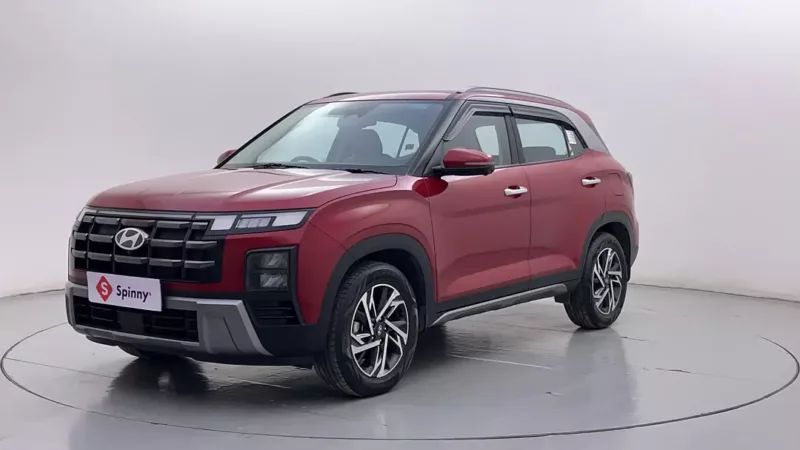

The Citroën C3 excels in fashionable appearance, smooth ride, and efficient cabin. While the purchase price of the vehicle falls in the reasonable range, a smart car buyer also knows that the cost of ownership exceeds the purchase price of the car on the lot. Recurring expenditures, such as periodic maintenance, the cost of gasoline or electricity to power it, and potential repairs, make up the lion’s share of the total financial expenditure.
This in-depth buyer’s guide of 2025 aims to present an open and data-driven examination of the ownership cost of the Citroën C3. We will examine the cost of its three major variations: the 1.2L naturally aspirated gasoline, the 1.2L turbo gasoline, and the all-electric eC3. By examining the cost of service for five years as well as the cost of daily use, you can gain a comprehensive idea of the actual cost of owning a C3 and make the right decision that suits your budget.
Table of Contents
The Cost of Maintenance: 5-Year Service Breakdown
The Citroën has been established to cost minimal in maintenance, and the C3 is no different. A simple service schedule is also included, so the owners will know what to expect and can plan accordingly. Labour on the first three services is free, so the initial cost of ownership is significantly reduced. For our five-year study, the standard annual mileage of 10,000 km will be assumed.
| Service Interval | Odometer Reading (km) | Approximate Cost (Petrol Variants) |
| First Service | 2,000 | ₹0 (Inspection Only) |
| Second Service | 10,000 | ₹2,500 |
| Third Service | 20,000 | ₹3,000 |
| Fourth Service | 30,000 | ₹3,800 |
| Fifth Service | 40,000 | ₹5,700 |
| Sixth Service | 50,000 km | ₹4,000 |
| Total 5-Year Cost | 50,000 km | ~₹19,000 |
Maintenance expenditures of the petrol variants are very minimal. In five years, the overall annual maintenance expense amounts to just slightly more than ₹3,800, which is highly competitive in the Indian context. Service intervals for both the naturally aspirated and turbo petrol variants are the same, resulting in no difference in maintenance costs.
For the all-electric eC3, the servicing schedule is even more basic and cheaper. EVs require minimal maintenance due to having many fewer moving parts. In an eC3 service, the chief items inspected are the brakes, suspension, tires, and the condition of the motor and the battery pack. In five years, the servicing cost of the eC3 should be practically zero, costing less than half of that of the petrol versions, the clear victor in the maintenance category.
Fuel and Electricity Costs: The Real-World Impact
While the service prices of vehicles are an interesting aspect of vehicle ownership, it’s the daily operating cost of the vehicle that you care about the most. We use the in-the-road kilometers and gas prices of the earlier study to estimate the daily and yearly cost per vehicle. For this estimate, we have assumed that each of the vehicles traverses an average daily distance of about 40 kilometers per vehicle.
Assumptions:
- Daily running: 40 km
- Annual running: 14,600 km
- Petrol price: ₹104.14/litre
- Electricity price: ₹8/kWh (home charging)
1.2L Petrol Manual
- Real-world mileage: ~14.5 km/l
- Cost per km: ₹104.14 / 14.5 = ₹7.18/km
- Daily fuel cost: ₹7.18 * 40 km = ₹287.6
- Annual fuel cost: ₹7.18 * 14,600 km = ₹1,04,828
1.2L Turbo Petrol Manual
- Real-world mileage: ~13.5 km/l
- Cost per km: ₹104.14 / 13.5 = ₹7.71/km
- Daily fuel cost: ₹7.71 * 40 km = ₹308.4
- Annual fuel cost: ₹7.71* 14,600 km = ₹1,12,566
eC3 (Electric)
- Real-world range: ~200 km
- Battery capacity: 29.2 kWh
- Charging cost: 29.2 kWh * ₹8/kWh = ₹233.6
- Cost per km: ₹233.6 / 200 km = ₹1.17/km
- Daily electricity cost: ₹1.17 * 40 km = ₹46.8
- Annual electricity cost: ₹1.17 * 14,600 km = ₹17,082
Operating costs vary significantly. eC3 stands out as the undisputed daily cost of ownership winner. For five years, the saved fuel cost alone would add up to more than ₹4 lakh against the petrol trims, a whopping saving that brings down the cost of the more expensive to buy EV quite significantly.
Total 5-Year Ownership Cost Analysis
Let’s combine the maintenance and fuel costs to get a complete picture of five-year ownership. We’ll add a few other general costs, like insurance and tires, for a more realistic estimate.
| Expense Category | 1.2L Petrol Manual | 1.2L Turbo Petrol | eC3 (Electric) |
| Initial Price (Ex-showroom, Avg) | ₹5,25,000 | ₹9,11,000 | ₹12,90,000 |
| 5-Year Fuel/Electricity Cost | ₹5,24,140 | ₹5,62,830 | ₹85,410 |
| 5-Year Service Cost | ₹20,000 | ₹20,000 | ~₹8,000 |
| Insurance (5 years) | ~₹50,000 | ~₹55,000 | ~₹65,000 |
| Tires & Other Consumables | ~₹25,000 | ~₹25,000 | ~₹15,000 |
| Total 5-Year Running Cost | ₹6,19,140 | ₹6,62,830 | ₹1,73,410 |
| Total Ownership Cost (excluding depreciation) | ₹11,44,140 | ₹15,73,830 | ₹14,63,410 |
Analysis suggests that, despite the initial expense of the C3 petrol versions being negligible, the cost of running the vehicle in the long term represents a major financial expenditure. The eC3, despite its initial high purchase cost, almost recovers the running costs of petrol versions within five years due to its negligible running costs.
The Verdict: Cost vs. Convenience
- For the Budget-Conscious: Naturally aspirated gasoline C3 is the most logical alternative even today. The low initial cost of purchase and average operating cost make it the best buy option for consumers with relatively low daily requirements.
- For the Performance Seeker: The turbo petrol variant provides a more spirited and solid drive performance. A slight increase in motoring and fuel costs is the trade-off for its improved performance, making it a good option for those who need a bit more power in their daily commute.
- For the Long-Term Investor: The eC3 is ideal for owners with heavy daily usage and long-term owners, as it is a long-term asset that generates meaningful savings through reduced fuel and maintenance expenses. It is the best-in-city vehicle for owners with a tight daily schedule of going to the office.
It’s all about your priorities, however. There’s a Citroën C3 car to match every type of budget and every type of driver, so you should be able to discover the ideal vehicle to satisfy your demands.
FAQs
Q. Is the Citroën C3 a reliable car?
A. Yes, Citroën cars are generally reliable, and the C3 has a simple mechanical setup, particularly in its naturally aspirated petrol variant, which contributes to its long-term reliability.
Q. How often does the C3 need to be serviced?
A. The Citroën C3 has a service interval of 10,000 km or 1 year, whichever comes first, after the initial free inspection service at 2,000 km.
Q. Does the eC3’s battery need a lot of maintenance?
A. No, the eC3’s battery pack is designed to be maintenance-free. It comes with a long warranty, and the thermal management system ensures its longevity.
Q. What is the average cost of tires for a Citroën C3?
A. A set of four new tires for a Citroën C3 can cost anywhere from ₹15,000 to ₹25,000, depending on the brand and quality.
Q. Is it cheaper to own an eC3 over 5 years compared to a petrol C3?
A. Although the eC3’s initial cost of purchase is much higher, due to the significantly reduced running and maintenance costs, its overall cost of ownership in a 5-year time frame is the same as, or even less than, the petrol C3 versions, particularly with extensive yearly use.