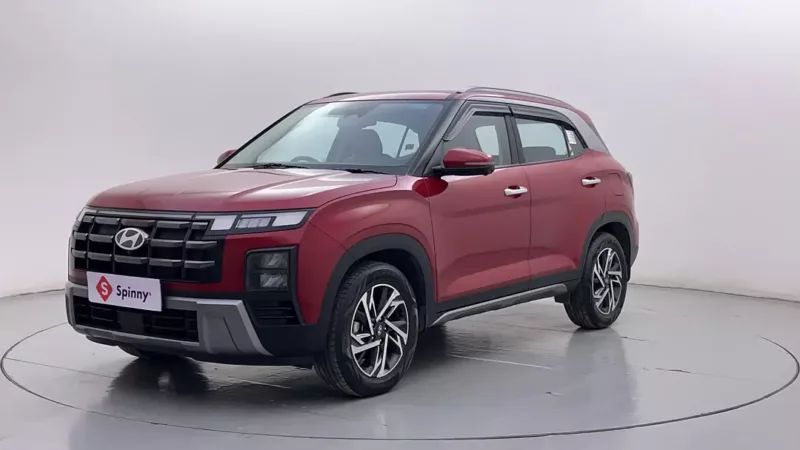
Hyundai and Maruti Suzuki are the first brands that usually come to mind when purchasing a car in India. The two brands have established an excellent brand image amongst the Indian consumers.
Hyundai is preferred due to its stylish design, luxury features, and global vision, while Maruti Suzuki is preferred for its affordable cost, extensive service network, fuel efficiency, and utility.
What is interesting is that both firms have considerable presence in the Indian market yet they vary in terms of pricing, features, and positioning. Hyundai has a tilt towards feature-rich and aspirational drive, while Maruti Suzuki emphasises reliability, ownership cost, and mass appeal.
In this article, we will compare Hyundai and Maruti in terms of model line-up, price, performance, and mileage. Continue reading for a detailed review.
Hyundai vs Maruti: Model Line-up & Price
Hyundai offers 14 car models in India, ranging from hatchbacks to sedans and SUVs, catering to a diverse range of customer preferences, from compact city cars to premium family vehicles. On the other hand, Maruti Suzuki has been India’s largest car manufacturer for decades, with 18 models on sale across hatchbacks, sedans, SUVs, MUVs, and vans.
One in every four cars sold in India carries a Maruti badge. With its vast 4,564 touch points in 2,304 cities, Maruti’s after-sales reach and affordability give it an unmatched edge. Here’s an overview of both brands’ current models with ex-showroom prices:
| Hyundai Cars | Ex-Showroom Price | Maruti Cars | Ex-Showroom Price |
| Hyundai Creta | ₹10.73 – ₹20.20 Lakh | Maruti Swift | ₹5.79 – ₹8.80 Lakh |
| Hyundai Venue | ₹7.26 – ₹12.46 Lakh | Maruti FRONX | ₹6.85 – ₹11.98 Lakh |
| Hyundai i20 | ₹6.87 – ₹10.43 Lakh | Maruti Victoris | ₹10.50 – ₹19.99 Lakh |
| Hyundai Exter | ₹5.49 – ₹9.61 Lakh | Maruti Dzire | ₹6.26 – ₹9.31 Lakh |
| Hyundai Verna | ₹10.69 – ₹16.98 Lakh | Maruti Ertiga | ₹8.80 – ₹12.94 Lakh |
| Hyundai Aura | ₹5.98 – ₹8.42 Lakh | Maruti Brezza | ₹8.26 – ₹13.01 Lakh |
| Hyundai Alcazar | ₹14.47 – ₹21.10 Lakh | Maruti Alto K10 | ₹3.70 – ₹5.45 Lakh |
| Hyundai Tucson | ₹27.32 – ₹33.64 Lakh | Maruti Wagon R | ₹4.99 – ₹6.95 Lakh |
| Hyundai Creta Electric | ₹18.02 – ₹24.55 Lakh | Maruti S-Presso | ₹3.50 – ₹5.25 Lakh |
| Hyundai Creta N Line | ₹17.83 – ₹20.09 Lakh | Maruti Celerio | ₹4.70 – ₹6.73 Lakh |
| Hyundai Venue N Line | ₹11.11 – ₹12.81 Lakh | Maruti Jimny | ₹12.31 – ₹14.45 Lakh |
| Hyundai Grand i10 Nios | ₹5.47 – ₹7.92 Lakh | Maruti Eeco | ₹5.21 – ₹6.36 Lakh |
| Hyundai i20 N-Line | ₹9.14 – ₹11.60 Lakh | Maruti Invicto | ₹24.97 – ₹28.61 Lakh |
| Hyundai IONIQ 5 | ₹46.05 Lakh | Maruti Dzire Tour S | ₹6.24 – ₹7.10 Lakh |
| – | – | Maruti Ertiga Tour | ₹9.68 – ₹10.59 Lakh |
| – | – | Maruti Alto Tour H1 | ₹4.00 – ₹4.82 Lakh |
| – | – | Maruti Eeco Cargo | ₹5.39 – ₹6.61 Lakh |
| – | – | Maruti Wagon R tour | ₹4.99 – ₹5.89 Lakh |
Hyundai vs Maruti: Performance & Mileage
Hyundai is known for its refined engines, premium feel, and feature-packed cars, with petrol, diesel, and electric powertrain options. The Creta, Venue, and Verna offer smooth performance, while the IONIQ 5 and Creta Electric strengthen Hyundai’s EV game.
Maruti Suzuki, however, tops the chart for fuel efficiency, with petrol and CNG cars offering some of the segment’s best mileage. Although it may have pulled back from diesel cars, its mild-hybrid and robust-hybrid technology in models such as the Grand Vitara attracts budget-conscious shoppers.
Here is a comparison of some of their top-performing engines and ARAI-tested mileage:
| Hyundai Powertrain | ARAI Mileage | Maruti Powertrain | ARAI Mileage |
| 1.2L Petrol (i20/Grand i10 Nios) | ~20 kmpl | 1.2L Petrol (Swift/Dzire) | ~22-23 kmpl |
| 1.5L Petrol (Creta/Verna) | ~17-18 kmpl | 1.5L Petrol (Ertiga/Brezza) | ~20-21 kmpl |
| 1.5L Diesel (Creta/Alcazar) | ~21 kmpl | 1.0L Petrol + CNG (Wagon R/Celerio) | ~26-28 km/kg |
| EV (IONIQ 5) | 631 km (WLTP range) | Strong Hybrid (Grand Vitara/Victoris) | ~27-28 kmpl |
Hyundai vs Maruti: Safety & Features
Safety is one of the prime reasons for choosing a car, and both Hyundai and Maruti Suzuki have shown improvement in this respect. The base models of Hyundai usually come with basic safety features, and higher trims and premium segments feature advanced driver-assist technologies.
Meanwhile, Maruti Suzuki has gradually increased the number of safety features year by year, introducing ABS with EBD, traction control, and ISOFIX on more models. Here’s how these two brands differ in terms of safety and features:
Hyundai Safety Features
Most models come with standard airbags, ABS with EBD, and rear parking sensors. Advanced options include Electronic Stability Control, Hill Start Assist, Lane Change Assist, Tyre Pressure Monitoring, Blind Spot Detection, Smart Cruise Control with stop/start, and ADAS in models like the Venue.
Premium offerings also add a 360-degree camera, Hill Descent Control, and Safe Exit Assist. Hyundai’s focus on technology makes its cars appealing to safety-conscious buyers who value modern innovations.
Maruti Suzuki Safety Features
While entry-level models come with basic safety features, such as airbags and ABS, higher trims offer additional equipment. ISOFIX, Electronic Stability Program, Hill Hold Assist, traction control, and improved crumple zones are provided on many of its popular cars.
The brand has also introduced features such as a 360-degree view camera and a head-up display in its premium models sold through the Nexa outlet. Maruti’s strength lies in balancing affordability with gradually improving safety, making it a reliable option for the mass market.
Both Hyundai and Maruti Suzuki have stepped up their safety game. Hyundai’s strength lies in advanced technologies and ADAS integration, while Maruti Suzuki appeals with consistent upgrades in mass-market models and reliable safety enhancements.
With rising consumer awareness, both brands are expected to continue prioritising safety in future models.
Hyundai vs Maruti: Service Network
When it comes to car ownership, after-sales service plays a crucial role. Both Hyundai and Maruti Suzuki have extensive networks of service stations, along with customer-oriented programs, but they approach it somewhat differently.
Hyundai Service Network
It is renowned for its warranty deals and its initiative in customer support. Hyundai offers 24/7 roadside assistance in case of traffic mishaps and mechanical breakdowns.
The wear-and-tear item replacement is included in the repair service packages, and its express service, which consists of a 90-minute turnaround, features experienced technicians. Hyundai also invests heavily in customer experience, offering digital service booking and transparent cost estimates for convenience.
Maruti Suzuki Service Network
Being India’s largest service centre network, Maruti Suzuki provides convenience and value for money in after-sales service. Up to 5 years or 100,000 km of extended warranty coverage is offered, and vehicle tracking is provided through the Maruti Suzuki Connect app for added peace of mind.
Genuine spare parts are readily available at its authorised service centres, further reducing maintenance hassle. Its extensive reach, even in rural locations, makes Maruti a sure bet for customers in various places.
Both companies combined provide good after-sales reliability. Hyundai focuses on premium convenience and service experience. At the same time, Maruti Suzuki excels in broad reach and low cost of ownership, making customers confident of long-term support, regardless of their decision.
A balance of this kind provides both city and rural consumers with solutions that are specifically tailored to their needs.
Hyundai vs Maruti Suzuki: Market Perception & Resale Value
In the Indian automobile market, Hyundai and Maruti Suzuki continue to dominate, with a strong presence across various segments. Both brands are seen as reliable players, but their positioning and market influence differ significantly.
Hyundai Market Perception & Resale Value
Hyundai, the second-largest car manufacturer in India, registered a market share of 14.5% in January 2024, selling 57,115 units during the month. With the success of models like the Creta, Venue, and i20, the firm reported 14% year-on-year growth.
Hyundai has, in a span of time, been a feature-laden, trendy option that has captured the minds of looks-conscious city customers, tech-conscious buyers, and safety seekers. Its relentless pursuit of innovation, such as the introduction of ADAS features in subcompact SUVs, has also made it a favourite among first-time buyers.
Maruti Suzuki Market Perception & Resale Value
Maruti Suzuki is the undisputed market leader in India, holding a substantial 41.7% market share as of 2023. During January 2024 alone, the company sold a whopping 199,364 units, representing a year-on-year growth of 13.2%. Its leadership is attributed to a wide range of product offerings that appeal to entry-level customers, families, and even fleet operators.
Popular models such as the Wagon R, Swift, Baleno, and Brezza consistently drive volumes. The strength of Maruti lies in its affordability, fuel efficiency, and superior service network, which enables it to retain customer loyalty in both urban and rural regions.
Overall, while Hyundai appeals to style- and feature-conscious buyers, Maruti Suzuki continues to lead through trust, accessibility, and unmatched market reach, making both brands strong contenders in their own right.
Hyundai vs Maruti: Which Should You Choose?
Hyundai and Maruti Suzuki both enter the Indian market with premium reputations, proven performance, and a range of options, but they cater to different needs of buyers. Hyundai meets the needs of customers who value innovative design, high-feature interiors, and advanced technology.
It is particularly suitable for young and urban consumers who seek an aspirational and technology-focused driving experience. Maruti Suzuki, on the other hand, is the industry leader in terms of low cost, fuel efficiency and mass-market convenience.
Vehicles such as the Swift, Baleno, Wagon R, and Brezza are renowned for their reliability and low maintenance expenses. Their extensive service network has also provided convenient after-sales services, even in small towns. Maruti is an excellent option for families, first-time buyers, and individuals seeking long-term reliability.
Overall, if the newest features, best-in-class safety, and luxury feel are your top preferences, Hyundai is a strong candidate. If your highest priorities are price affordability, broad service network presence, and mileage, then Maruti Suzuki is the better choice.
FAQs about Hyundai vs Maruti
Q. Which brand is more fuel-efficient in India: Hyundai or Maruti?
Maruti Suzuki is the leader in terms of fuel efficiency, with petrol, CNG, and mild-hybrid options, such as the Grand Vitara and Victoris, offering some of the best mileage in their respective classes. Hyundai models are less efficient in some instances, as the company prioritises performance, refinement, and features.
Q. How do Hyundai and Maruti Suzuki compare in safety features?
Hyundai focuses on advanced safety features, including numerous airbags, ADAS systems, Lane Change Assist, Blind Spot Detection, and 360-degree cameras, in its high-end models. On the other hand, Maruti Suzuki focuses on core safety for its mass offerings, featuring ABS with EBD, ISOFIX mounts, traction control, Hill Hold Assist, and crumple zones, with the intention of upgrading to premium features in its Nexa models in the future.
Q. Which company has a superior after-sales service network?
Maruti Suzuki has the highest service network in India, having the widest reach, longer warranties, and convenient availability of original spare parts. Hyundai, although small, emphasises a luxury after-sales experience, including 24/7 roadside assistance, express service, online booking, and transparent cost estimates.
Q. Which is more suitable for city buyers?
Hyundai appeals more to urban customers seeking stylish design, modern features, and advanced safety technologies. Maruti Suzuki’s practical, fuel-efficient, and reliable vehicles are suited for both urban and rural buyers who prioritise affordability, low maintenance, and long-term dependability.
Q. How do the brands differ in terms of pricing and value for money?
Hyundai provides value-for-money, aspirational cars with premium positioning at a slightly higher level, emphasising style, technology, and comfort. Maruti Suzuki, on the other hand, offers high-reliability models with a low cost of ownership, providing great value for money.