




Comparison: Nissan Tekton vs Tata Sierra

Last updated 28 seconds ago
A detailed comparison of the Nissan Tekton and Hyundai Creta, covering dimensions, engine performance, features, safety, and pricing to help you decide which mid-size SUV is right for you.
Hyundai Creta Electric with BaaS
Last updated 28 seconds ago

The mid-size SUV market in India is one of the most saturated and competitive in the nation. The Hyundai Creta has sustained its reputation as one of the key players in the mid-size SUV category for years with its unique offerings of design, features, engine options, comfort, and brand value. Thus, buyers often use the Creta as a benchmark for other SUVs in the market.

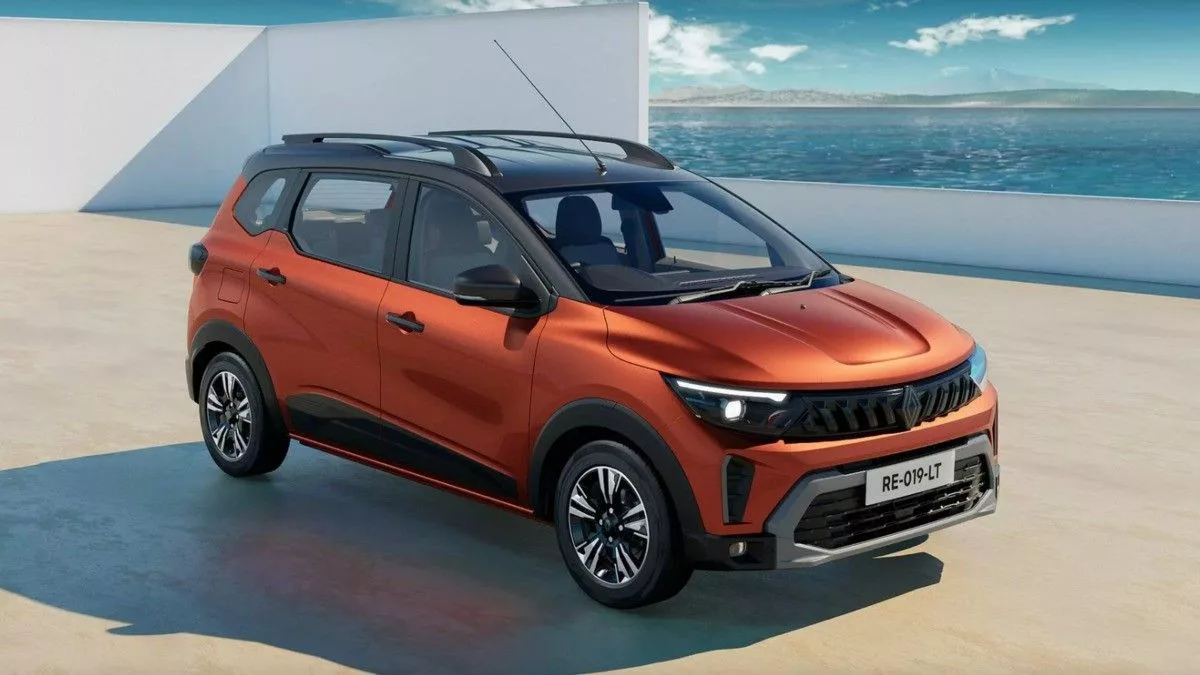
The Nissan Tekton now enters the same space with a very direct challenge. It is new, larger in key dimensions, powered only by turbo-petrol engines, and comes with a strong safety claim thanks to its 5-star Bharat NCAP rating. Unlike the Creta, which has petrol, diesel, turbo-petrol, manual, IVT, automatic, and DCT variants, the Tekton takes a more focused approach with turbo-petrol performance, premium features, and a fresh design identity.

Now, what is interesting is that Tekton is not only competing with the Creta on the price front but also in other categories such as space, boot capacity, ground clearance, torque, and safety ratings. Meanwhile, Creta is still offering more powertrain options that have been trusted by customers for years and has market familiarity and a loyal customer base. So, which SUV is better? The following comparison reveals their differences in dimensions, engines and features, safety, and prices.

Nissan Tekton vs Hyundai Creta: Dimensions

SpecificationNissan TektonHyundai Creta
Length4,349 mm4,330 mm
Width1,815 mm1,790 mm
Height1,674 mm1,635 mm
Wheelbase2,657 mm2,610 mm
Boot Space518 litres433 litres
Ground Clearance212 mm190 mm
Seating5 seats5 seats

It is apparent that the Nissan Tekton is somewhat bigger than the Hyundai Creta. It has a length larger by 19 mm, a width larger by 25 mm, height larger by 24 mm, and it has a longer wheelbase by 47 mm. Although these figures do not seem incredibly big, they matter a lot in a segment where every millimetre counts for cabin space, road presence, and practicality.

The biggest difference is in boot space. The Tekton offers 518 litres of luggage capacity, which makes it more practical for airport runs, road trips, family luggage, and buyers who regularly carry more than just daily grocery bags. The Creta’s 433-litre boot is still useful, but the Tekton has considerably more room to offer.

Another advantage of the Tekton is ground clearance. It is 212 mm high, which makes it better suited for rough roads, speed bumps, broken streets and even unevenly shaped areas. The ground clearance of the Creta is 190 mm, and although it is sufficient for normal use, the Tekton will perform much better on rugged, uneven roads.

The Creta’s advantage is that it is slightly more compact, which makes it easier to manage in tight city spaces, narrow lanes, and crowded parking areas. It feels familiar and easy to place, especially for buyers upgrading from a hatchback or compact sedan.

Overall, the Nissan Tekton on paper is a larger and more practical SUV. The Hyundai Creta is easier to drive in dense urban conditions. Nevertheless, the round goes to Nissan in terms of space, boot volume and road presence.

Nissan Tekton vs Hyundai Creta: Engine & Transmission

SpecificationNissan TektonHyundai Creta
Engine Options1.0L turbo-petrol / 1.3L turbo-petrol1.5L petrol / 1.5L diesel / 1.5L turbo-petrol
Power Output100 PS / 163 PS115 PS / 116 PS / 160 PS
Torque166 Nm / 280 Nm143.8 Nm / 250 Nm / 253 Nm
Transmission6-speed MT / 6-speed wet-clutch DCT6-speed MT / IVT / 6-speed AT / 7-speed DCT
Drive TypeFWDFWD
Fuel TypePetrol onlyPetrol and diesel
Mileage17.8–19.4 kmpl17.4–21.8 kmpl

Nissan is offering two turbo-petrol engines in the Tekton series. The first entry-level option is a 1.0-litre turbo-petrol unit providing 100 PS of max power and 166 Nm of maximum torque, coupled with a 6-speed manual transmission. The next step-up in the lineup is the 1.3-litre turbo-petrol engine with 163 PS of torque output and 280 Nm of power, offered with either a 6-speed manual transmission or a 6-speed DCT-type automatic.

This gives the Tekton a strong performance advantage at the higher end. Its 1.3-litre turbo-petrol engine produces more torque than the Creta’s 1.5-litre turbo-petrol, which makes it appealing for buyers who enjoy quicker acceleration and stronger mid-range response. The wet-clutch DCT should also suit buyers who want an automatic SUV with a more engaging drive.

Compared to the Tekton, the Hyundai Creta provides more options. It comes equipped with a 1.5-litre petrol engine, a 1.5-litre diesel engine, and a 1.5-litre turbo-petrol engine. So, as buyers may have different requirements, they can freely choose any of these engine options available for the Creta, from the entry-level engine suitable for city driving to the diesel engine suited for high highway mileage.

Transmission choice is also wider in the Creta. Depending on the engine and variant, buyers can choose between a manual, IVT, 6-speed automatic, and 7-speed DCT. The Tekton keeps things simpler with manual and DCT options only.

Moreover, if the diesel engine option is taken into consideration, Creta excels in terms of mileage too, since its mileage is claimed to be 21.8 kmpl. Even though the Tekton’s mileage claim is between 17.8 kmpl and 19.4 kmpl, which is quite good for a turbo-petrol SUV, it does not come close to being as efficient as the diesel Creta in terms of mileage and long-distance trips.

With stronger turbo-petrol torque, the Tekton is the more exciting option on the surface. The Creta wins because it is the more flexible choice, because it offers petrol, diesel, turbo-petrol, and more gearbox options.

Nissan Tekton vs Hyundai Creta: Features & Comfort

FeatureNissan TektonHyundai Creta
Infotainment System10.1-inch touchscreen with Google built-in10.25-inch touchscreen
Digital Cluster10.25-inch digital driver display10.25-inch digital cluster
Music SystemArkamys 3D sound systemBose 8-speaker sound system
Climate ControlDual-zone automatic climate controlDual-zone automatic climate control
Ventilated SeatsYes, front ventilated seatsYes, front ventilated seats
SunroofPanoramic sunroofPanoramic sunroof
Wireless ChargerYes, active-cooled wireless chargerYes, wireless charger; rear wireless charger on select trims
Connected Car TechMyNissan app with Google built-inHyundai Bluelink
Rear AC VentsYesYes
Drive ModesYesYes
360° CameraYes, 3D around view monitorYes, surround view monitor on higher variants

Both SUVs offer plenty of features but have different approaches regarding the cabin space. The Nissan Tekton feels more like the new player in the market because of numerous cutting-edge innovations, such as the Google built-in system, dual displays, 48-colour lighting, 3D around view monitor, active-cooled wireless charger, and an entry-level cabin design. Other notable features from the Tekton include adjustable and ventilated first-row seats, dual-zone climate control, panoramic sunroof, and MyNissan special features.

The Tekton’s cabin has a lot of digital features. The 10.1-inch infotainment screen and 10.25-inch digital cluster give it a modern dashboard layout, while Google built-in gives it a more familiar tech interface for users who rely on Google Maps, voice commands, and app-based convenience.

The Hyundai Creta remains one of the most feature-rich SUVs in the class, and the higher trim levels offer a 10.25-inch infotainment system, 10.25-inch digital instrument cluster, up to eight speakers (Bose system), dual climate system, sunroof, heated front seats, wireless charging, fitted rear vents, and Bluelink. Depending on the variant, the latest versions of the Creta provide additional features for convenience like wireless rear charging, dashcam, rear window blinds, and table trays.

The Creta’s strength is how well its features are spread across a wide variant range. Buyers can pick a trim depending on budget and required features. The Tekton, meanwhile, feels more premium and fresh at the higher end, especially with its Google integration and larger safety-tech focus.

The Tekton features a newer and more unique cabin experience, while the Creta is still a great option with plenty of features and a large range of variants to consider.

Nissan Tekton vs Hyundai Creta: Safety Features

Safety FeatureNissan TektonHyundai Creta
NCAP Safety Rating5-star Bharat NCAPCurrent India-spec model not yet tested
Airbags6 airbags standard6 airbags standard
ABS with EBDYesYes
ESCYesYes
Traction ControlYesYes
Hill Hold AssistYesYes
TPMSYesYes
360° CameraYesYes, higher variants
Parking SensorsFront and rearFront and rear, variant dependent
ADASYes, with features like AEB, lane keep assist, blind spot warningLevel 2 ADAS with 19 features on higher variants
ISOFIXYesYes

Safety is one of the most vital features of the Nissan Tekton, which boasts a 5-star Bharat NCAP rating. This is exceptionally useful for buyers looking for a tested safety record of cars, as the Tekton offers the highest level of independent safety validation.

The Tekton also comes with six airbags as standard, electronic stability control, traction control, autonomous emergency braking, lane departure warning, lane keep assist, traffic sign recognition, blind spot warning, 360-degree parking assist, and a 3D around view monitor. Nissan also highlights that its robust body structure consists mainly of high-strength steel and ultra-high-strength steel.

The Hyundai Creta is another model known for its impressive safety measures and offers six airbags, electronic stability control, vehicle stability management, hill-start assist, tyre pressure monitoring, an emergency stop signal, front parking sensors, a surround view monitor, a blind-spot view monitor and 19 other features of Hyundai SmartSense Level 2 ADAS on some variants.

The main difference is crash-test validation. The current India-spec Creta has not yet received a Bharat NCAP rating. Its safety kit is strong, and Hyundai has clearly upgraded the equipment list, but the Tekton has the stronger position because its 5-star Bharat NCAP score is already available.

Both SUVs have a brilliant security package in their higher models, but here, comparatively, the Nissan Tekton has a better 5-star Bharat NCAP rating.

Used Hyundai Creta Cars

Nissan Tekton vs Hyundai Creta: Price Comparison

Variant LevelNissan Tekton Ex-ShowroomHyundai Creta Ex-Showroom
Base / Entry Variant₹10.49 lakh₹10.90 lakh onwards
Mid VariantAround ₹13–15 lakhAround ₹13–16 lakh
Top Variant₹18.59 lakhAround ₹20 lakh+

The Nissan Tekton’s base variant has been priced at ₹10.49 lakh (ex-showroom), which is slightly less than that of the Hyundai Creta. Also, the top variant of Tekton is priced at ₹18.59 lakh, which makes it remain below the top variants of Creta.

The Hyundai Creta starts at ₹10.90 lakh & onwards, depending on the variant and city-specific listings. Its higher variants cross the ₹20 lakh mark, especially when buyers choose the turbo-petrol DCT, diesel automatic, or special edition trims. The Creta is more expensive at the top end, but it also offers a much broader range of variants, engines, transmissions, and feature packages.

When it comes to pricing, it can be realised that the Tekton is a good deal compared to others in the same category, given a larger body size, larger boot size, larger ground height, turbo-petrol engines, advanced features, a 5-star Bharat NCAP rating, etc. Thus, the Tekton is a better choice if top trims are compared.

The Creta’s value comes from its proven reputation, larger service ecosystem, diesel option, and strong resale appeal. It is not the cheapest option in the segment, but buyers are willing to pay for a familiar product with a long-standing market record.

Tekton has a better pricing point on paper. Hence, while Creta has a higher cost in various other variants, it gives more possibilities as well as earlier established experience.

Related Blogs:

Summary: Nissan Tekton vs Hyundai Creta

The Nissan Tekton vs Hyundai Creta comparison ultimately comes down to what kind of buyer you are. If you want the safer, more familiar, more proven choice, the Hyundai Creta continues to make a very strong case. It has multiple engine options, including diesel, a wide spread of transmissions, a feature-loaded cabin, strong brand recall, Hyundai’s trusted service network and a large ownership ecosystem across India.

A good choice for buyers who are looking for a conventional car that offers a safe and trustworthy drive while offering choices in terms of petrol and diesel-powered vehicles will be Creta. Tekton will be a better choice for buyers who are looking for something new, spacious, safe, and very powerful in terms of turbo-petrol efficiency.

Related Blogs:
Comparison: Nissan Tekton vs Tata Sierra
Comparison: Nissan Tekton vs Kia Seltos
Comparison: Nissan Tekton vs Maruti Suzuki Grand Vitara
Comparison: Nissan Tekton vs Toyota Urban Cruiser Hyryder
Comparison: Nissan Tekton vs Renault Duster

FAQ about Nissan Tekton vs Hyundai Creta

  1. Q. Which is cheaper, the Nissan Tekton or Hyundai Creta?

    The Nissan Tekton is cheaper at the entry level, starting at ₹10.49 lakh ex-showroom. The Hyundai Creta starts from around ₹10.90 lakh onwards, depending on the variant and location.

  2. Q. Which SUV is bigger, the Nissan Tekton or Hyundai Creta?

    The Nissan Tekton is bigger than the Hyundai Creta. It is longer, wider, taller, and has a longer wheelbase. It also offers a larger 518-litre boot compared to the Creta’s 433-litre boot.

  3. Q. Which SUV is safer, the Nissan Tekton or Hyundai Creta?

    The Nissan Tekton has the stronger safety position because it has received a 5-star Bharat NCAP rating. The Hyundai Creta has a strong safety kit with six airbags standard and Level 2 ADAS on higher variants, but the current India-spec model has not yet been crash-tested by Bharat NCAP.

  4. Q. Which SUV has better features?

    Both SUVs are feature-rich. The Nissan Tekton stands out with Google built-in, 3D around-view monitor, active-cooled wireless charging, and 48-colour ambient lighting. The Hyundai Creta offers a 10.25-inch screen, Bose sound system, Bluelink connected tech, ventilated seats, panoramic sunroof, and several comfort features across variants.

  5. Q. Which SUV should I buy: Nissan Tekton or Hyundai Creta?

    Buy the Hyundai Creta if you want a proven SUV with more engine and transmission choices, diesel efficiency, and strong brand trust. Choose the Nissan Tekton if you want a newer SUV with more space, better boot capacity, stronger turbo-petrol torque, aggressive pricing, and a confirmed 5-star Bharat NCAP rating.

Share

Leave a Comment

Your email address will not be published. Required fields are marked *

A-Z Glossary

Every car part & feature, explained

News

The latest from the automotive world
Best Cars

The crème de la crème of cars

Rules & Regulations

Every law & regulation, explained

Car Ownership

Everyday car-care tips & advice

Buying a car

Make the right buying decision

Selling a car

Make the right selling decision

Miscellaneous

Cars & eveything in-between

5,000,000+ Readers

We’re ❤️ne big family!

Follow us for accurate, impartial & up-to-date information around everything related to cars – Latest news & developments, best options for every budget & lifestyle, ownership tips, buying & selling advice and a lot more on Spinny Magazine.

Unbiased
Rated 4.5 out of 5
Reliable
Rated 4.5 out of 5
Helpful
Rated 4.5 out of 5
Scroll to Top

Want to Sell your Car?

Choose your brand below to get started: