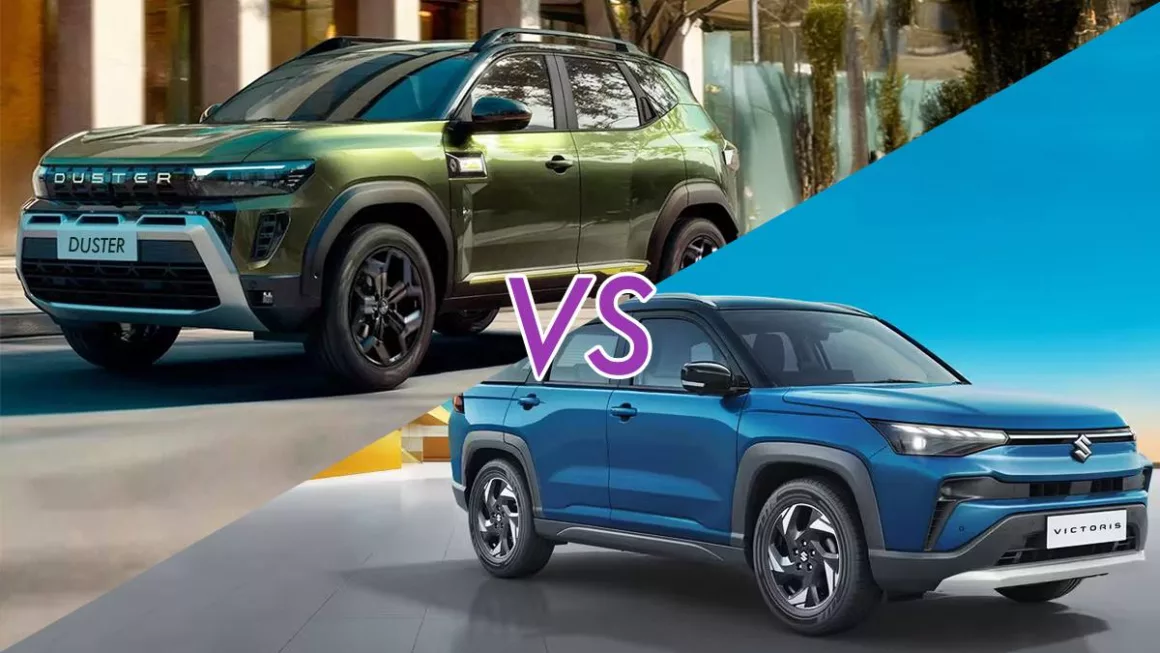
Renault has spared no effort in engineering the new India-spec Renault Duster, making it a formidable challenger to every car in its segment. One of its rivals is the Maruti Suzuki Victoris – the latest superhit model from India’s largest carmaker. If you plan to buy either of these two SUVs and are weighing them against each other, here is a comparison between the Renault Duster and Maruti Suzuki Victoris, which compares them on important grounds and determines which one you should buy.
Renault Duster vs Maruti Suzuki Victoris: Dimensions & Design
| Renault Duster | Maruti Suzuki Victoris | |
| Length | 4,343 mm | 4,360 mm |
| Width | 1,813 mm | 1,795 mm |
| Height | 1,659 mm | 1,655 mm |
| Wheelbase | 2,657 mm | 2,600 mm |
| Ground Clearance | 212 mm | 210 mm |
| Boot Space | 518 litres | 439 litres (mild-hybrid), 320 litres (CNG) |
While the Maruti Victoris is 17 mm longer than the Renault Duster, the Duster is 18 mm wider, 4 mm taller, and has a 57 mm longer wheelbase. Furthermore, the Duster has a substantially larger boot than that of the Victoris. As far as rear seat space is concerned, in both SUVs, the rear seat is best suited for two adults on either side and one child or teenager in the middle.
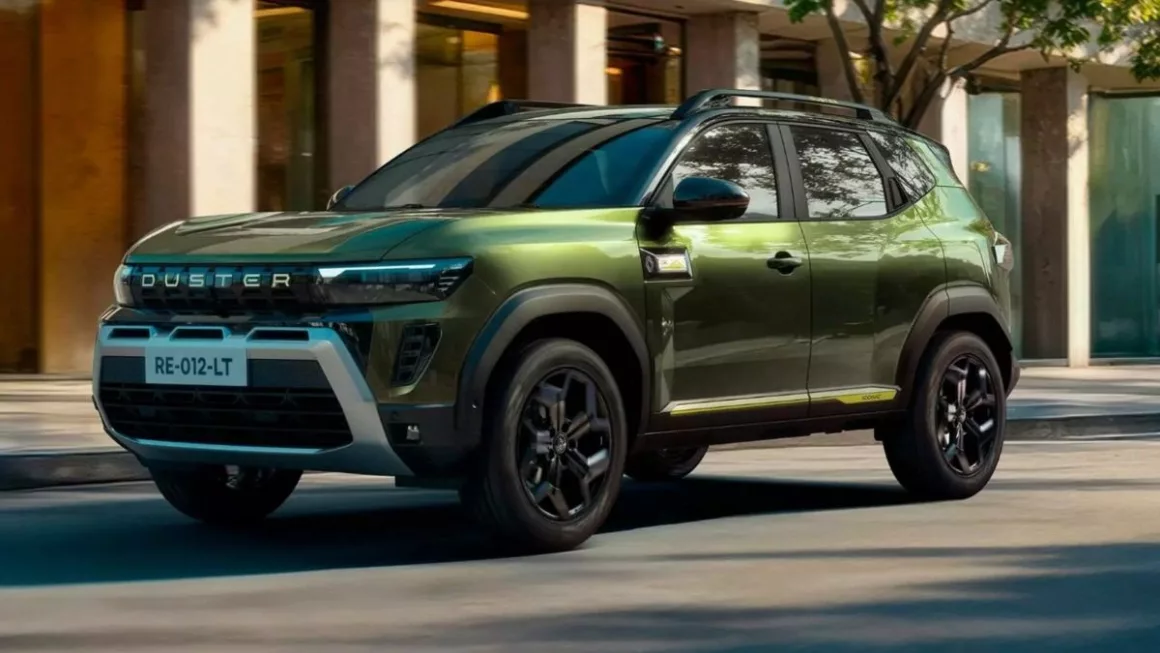
In terms of design, while both Duster and Victoris don a sporty design, Victoris has a sophisticated, family-friendly touch to it. Whereas the Duster, with some rugged-looking elements, has a bolder appeal. Up front, the Duster features a large blacked-out bumper with a protruding silver surround that extends towards the bottom to form a silver skid plate. Its boxy headlights, a couple of deep scoops on the bonnet, the gloss black grille with bold DUSTER lettering, and some other elements give it a macho face. The side profile highlights the angular wheel arches, rugged black cladding covering the bottom of the SUV, C-pillar-mounted rear door handles, and stylish 18-inch black alloy wheels. At the rear, there are quirky arrow-shaped taillamps connected by a light bar, a sporty spoiler, and dual tone bumper with a silver surround.
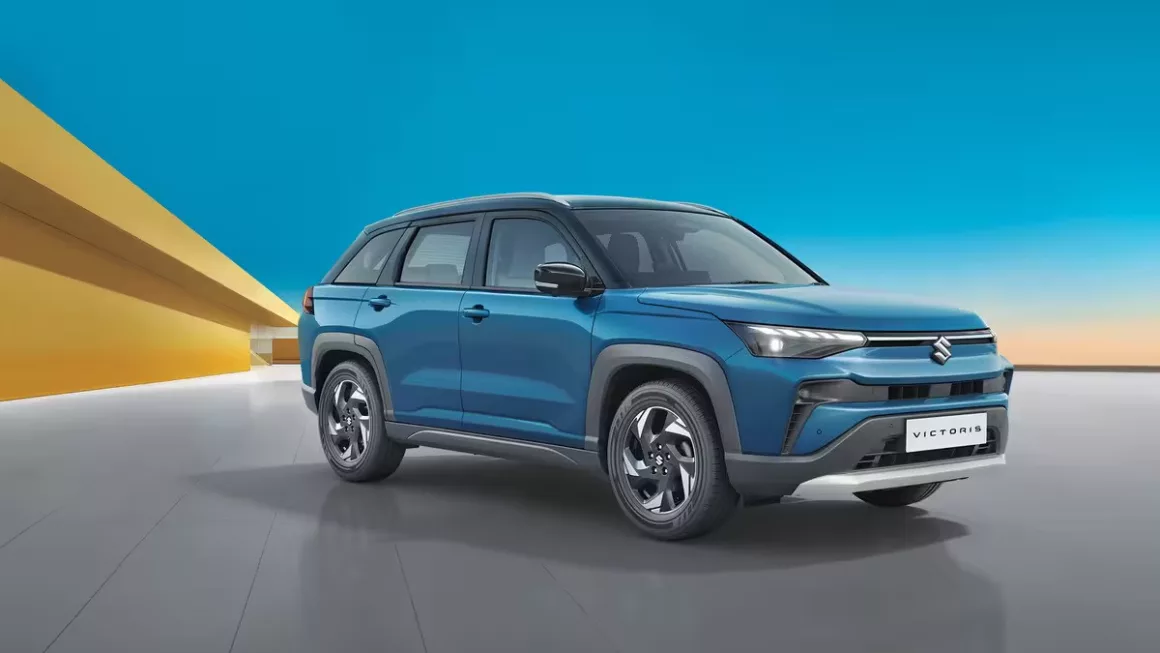
On the other hand, the Victoris looks calmer. Up front, it features a chiselled bumper, a blanked-off grille section, connected LED DRLs, and rather slim LED headlamps. Lower down, the blacked-out bumper and the chunky skid plate add some ruggedness. Over to the side, it features prominent character lines, squared-off wheel arches housing 17-inch alloy wheels (smaller than those of the Duster), and black cladding running across the lower edge to add some muscle. At the rear, the Victoris features a segmented light bar that doubles up as tail lights at the sides.
There is no major difference in the sizes of the Renault Duster and Maruti Victoris, other than the Duster offering a much larger boot. Design-wise, the Duster should appeal more to the driving enthusiasts, while the Victoris largely exudes a family-friendly appeal.
Renault Duster vs Maruti Suzuki Victoris: Engine & Transmission
| Renault Duster | Maruti Suzuki Victoris | |
| Engine | 1-litre litre turbo petrol engine 1.3 litre turbo petrol engine 1.8-litre strong hybrid engine | 1.5-litre Mild Hybrid petrol 1.5-litre Strong Hybrid Petrol |
| Power | 100 PS (1-litre turbo) 163 PS (1.3-litre turbo) 160 PS (strong hybrid) | 103 PS (mild hybrid) 87.8 PS (CNG mode) 100 PS (petrol mode) 116 PS (strong hybrid) |
| Torque | 160 Nm (1-litre turbo) 280 Nm (1.-litre turbo) 172 Nm (strong hybrid) | 139 Nm (mild hybrid) 121.5 Nm (CNG mode) 137 Nm (petrol mode) 141 Nm (strong hybrid) |
| Transmission | 6-speed manual with 1-litre turbo and 1.3-litre turbo engines 6-speed DCT automatic with 1.3-litre turbo engine DHT with a strong hybrid engine | 5-speed manual mild hybrid, CNG variants, and all-wheel-drive variants 6-speed torque converter automatic with mild hybrid· e-CVT with strong hybrid |
| Mileage | Up to 21.18 km/l (mild hybrid) Up to 27.02 km/kg (CNG) Up to 28.65 km/l (strong hybrid) |
Mechanical elements of these two SUVs are what characterise them the most. The Renault Duster’s entry-level 1-litre turbo petrol engine is rather underpowered for an SUV of its size. This is the same engine which powers the smaller Renault Kiger. All the same, compared to the 1.5-litre mild-hybrid engine of the Maruti Victoris, this engine is marginally weaker. Meanwhile, a huge volume of Maruti Victoris sales comes from its 1.5-litre mild-hybrid engine. This explains that most looking to buy a Maruti Victoris do not want a car with high power figures and offer a sprightly performance; they want a car with a reliable, refined, and fuel-efficient engine that drives smoothly, and delivers a comfortable, family-friendly ride. However, the Duster’s 1-litre turbo petrol engine can fulfil the same purpose, although, since it is a 3-cylinder engine, it is not as refined as the Victoris’ 1.5-litre mild-hybrid engine. Moreover, the Victoris’ 1.5-litre mild-hybrid engine is also available with an automatic transmission, while the Duster’s 1-litre turbo misses one.
Coming to the strong hybrid powertrains, the Duster’s strong hybrid powertrain has a 1.8-litre 4-cylinder petrol engine connected with a 49 PS-producing electric motor and a 20 PS-producing hybrid starter generator (HSG), powered by a 1.4kWh (280 V) battery. The entire hybrid setup produces 160 PS power and 172 Nm peak torque.
In comparison, the Victoris’ strong hybrid powertrain has a 1.5-litre 3-cylinder petrol engine connected with front-axle mounted electric motor, powered by a 0.76 kWh battery pack. This powertrain produces 116 PS power and 141 Nm peak torque.
Because the Duster uses a larger battery pack for its strong-hybrid powertrain, it is expected to deliver better mileage than the Victoris’ strong-hybrid unit. Renault claims that with this strong hybrid powertrain, 80 percent of the city driving can be done in EV mode. A key point to note is that the Duster’s hybrid variants will launch around Diwali 2026.
At the same time, the Victoris does not stand any chance in competition with the Duster’s 1.3-litre turbo petrol engine – the most powerful engine of the segment. However, the Victoris does offer the advantage of an all-wheel-drive set-up. While this all-wheel-drive setup does not make it a bona fide off-roader like a Mahindra Scorpio, it can be quite beneficial for those living in hilly areas with poor road conditions. Another advantage of the Victoris over the Duster is the availability of the CNG variants.
As far as ride quality is concerned, the Duster is a gold standard for the segment; however, the Victoris delivers a comfortable enough ride.
Considering the mechanics, the Maruti Victoris is a comfortable, easy-going, family-friendly SUV. Whereas the Duster is a car you would like to be in the driver’s seat of.
Renault Duster vs Maruti Suzuki Victoris: Features & Comfort
| Renault Duster | Maruti Suzuki Victoris | |
| Infotainment system | 10.1-inch touchscreen infotainment system | 10.1-inch touchscreen infotainment system |
| Music system | 6-speaker Arkamys sound system | 8-speaker Infinity sound system with Dolby Atmos |
| Climate control | Dual-zone Automatic | Automatic |
| Ventilated seats | Front ventilated seats | Front ventilated seats |
| Adjustable steering | Tilt and Telescopic adjust | Tilt and Telescopic adjust |
| Drive modes | Available | Terrain Modes – Snow, Sport, Lock, Auto (all-wheel drive only) Drive modes: ECO + Normal + Power (Strong hybrid only) |
| Instrument cluster | 10.25-inch digital instrument cluster | 10.25 digital instrument cluster |
| Sunroof | Panoramic sunroof | Panoramic sunroof |
| Adjustable seats (manual or electric) | 6-way powered driver and front passenger seats | 8-way powered driver seat |
| Rear AC vents | Available | Available |
| 60:40 rear seat split | Available | Available |
| Cruise control | Available | Available |
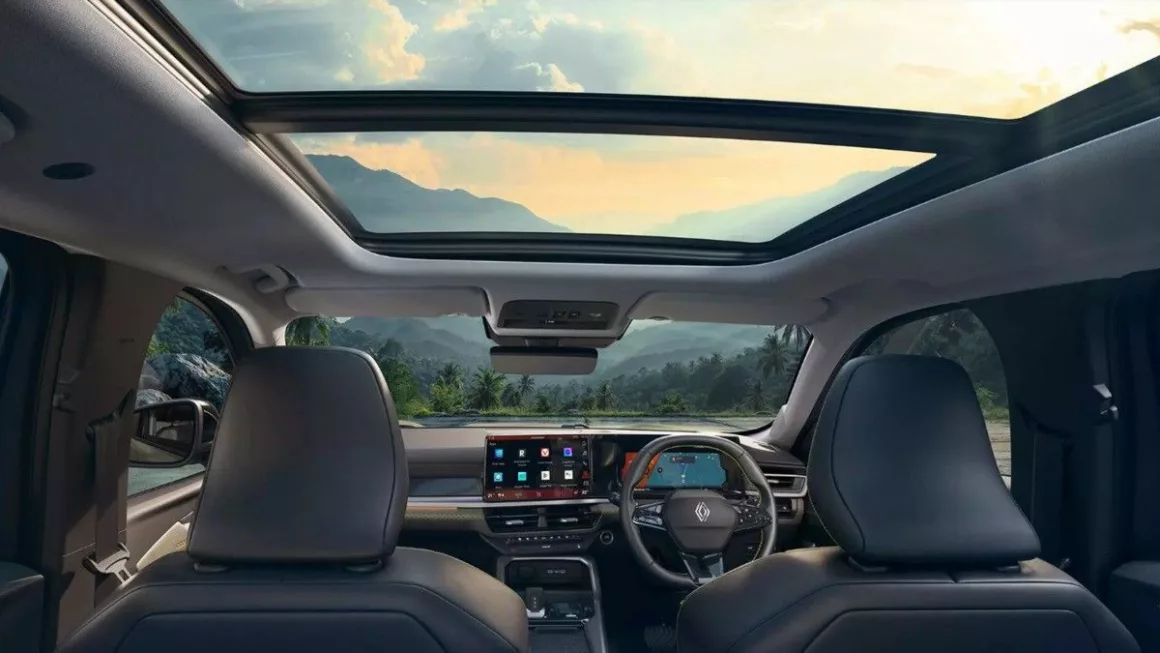
Like the exterior and powertrains, the interiors of the Renault Duster and Maruti Victoris agree well with their characters. Being a driver-centric car, the Duster gets an all-black interior theme, a chunky three-spoke steering, a touchscreen and a centre console angled towards the driver, a sporty carbon fibre finish on the layered dashboard, and stitching at the borders of the seats. On the other hand, the Victoris has a lighter colour theme on the inside, which makes it look more spacious than it is. Like most other Maruti cars, the Victoris features a free-standing trapezoidal touchscreen infotainment with trapezoidal AC vents below it. Unlike the Duster, the Victoris gets a circular steering wheel, which looks comparatively old-school.
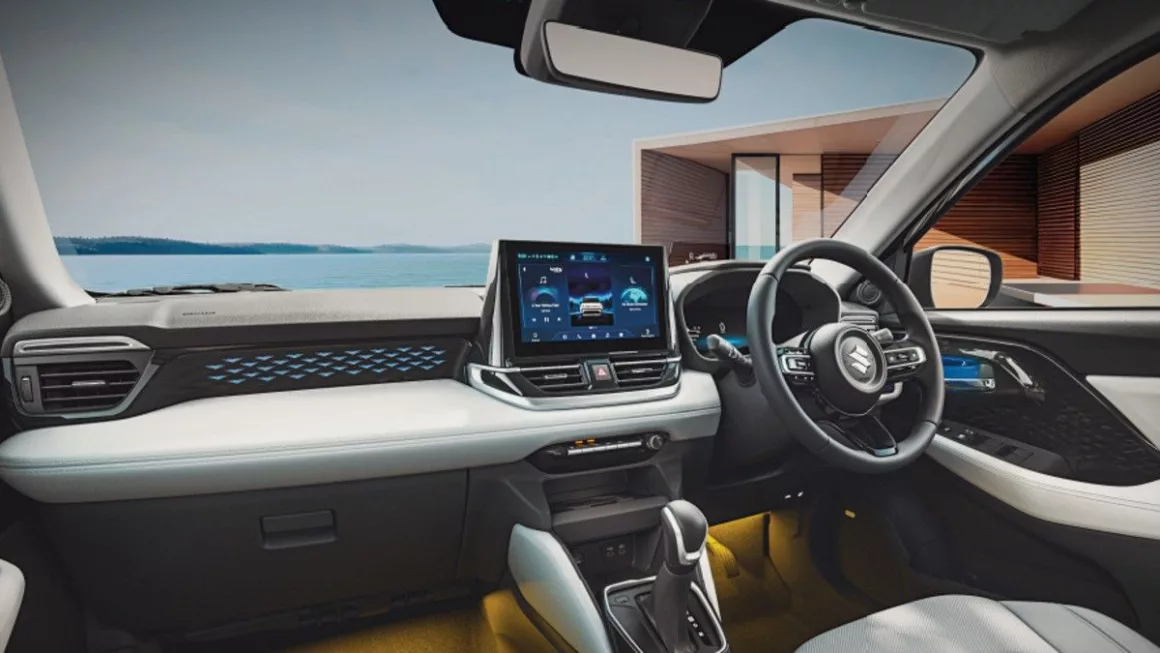
In terms of features, both Duster and Victoris pack more than enough modern-day perks, such as ventilated front seats, panoramic sunroof, wireless charger, powered driver seat, powered tail gate, and more. All the same, the Duster offers the advantage of a powered driver seat, while the Victoris has the advantage of a head-up display.
Renault Duster vs Maruti Suzuki Victoris: Safety Features
| Renault Duster | Maruti Suzuki Victoris | |
| NCAP Safety Rating | Not tested | 5-star in Bharat NCAP and Global NCAP |
| Airbags | Six | Six |
| ABS with EBD | Yes | Yes |
| ESC | Yes | Yes |
| Traction Control | Yes | Yes |
| Automatic headlamps | Yes | Yes |
| Rain-sensing Wipers | Yes | Yes |
| Hill hold assist | Yes | Yes |
| Hill descent control | No | Yes |
| Rear sensors | Yes | Yes |
| Rear parking camera | 360-degree camera | 360-degree camera |
| ISOFIX Child seat anchor points | Yes | Yes |
| ADAS | Level-2 ADAS features | Level-2 ADAS features |
In the passenger safety department, the Maruti Victoris has scored a full 5-star rating in the Bharat NCAP safety test, proving it as one of the safest cars in India. Meanwhile, the Renault Duster has not been tested by any NCAP; however, Renault claims that they are gunning for a full 5-star rating with the new Duster. In terms of safety features, both Duster and Victoris offer a host of features, including a Level-2 ADAS safety suite.
Renault Duster vs Maruti Suzuki Victoris: Price comparison
| Renault Duster | Maruti Suzuki Victoris | |
| Base variants (Ex-Showroom) | Rs. 10.49 lakh | Rs 10.50 – 11.50 lakh |
| Mid variants (Ex-Showroom) | Rs. 11.69 – 14.49 lakh | Rs 11.80 – 16.38 lakh |
| Upper mid variants (Ex-Showroom) | Rs. 13.49 – Rs. 16.69 lakh | Rs 13.57 – 18.39 lakh |
| Top variant | Rs. 16.99 – 18.49 lakh | Rs 15.24 – 19.99 lakh |
For such prices, the Duster is as great a value-for-money offering as the Victoris is.
Renault Duster vs Maruti Suzuki Victoris: Which one should you buy
While the Renault Duster is famous for its legendary driving dynamics and superb ride comfort, it is also a well-rounded family SUV with a host of premium features to enrich your drives. All the same, if you are looking for an entry-level variant, the Maruti Victoris should be a better choice, given Maruti’s popular 1.5-litre mild-hybrid engine, which has found great fame among Indian families. And, if you want an SUV that can entertain the driver in you while offering a great ride to your family, then the Duster is your car.
Renault Duster vs Maruti Suzuki Victoris: FAQs
Which is larger, the Renault Duster or the Maruti Suzuki Victoris?
Renault Duster is 4,343 mm long, 1,813 mm wide, 1,659 mm tall, and has a wheelbase of 2,657 mm. The Maruti Suzuki Victoris is 4,360 mm long, 1,795 mm wide, 1,655 mm tall, and has a wheelbase of 2,600 mm. While the Maruti Victoris is 17 mm longer than the Renault Duster, the Duster is 18 mm wider, 4 mm taller, and has a 57 mm longer wheelbase. Furthermore, the Duster has a substantially larger 518-litre boot space than 439-litres boot space of the Victoris. As far as rear seat space is concerned, in both SUVs, the rear seat is best suited for two adults on either side and one child or teenager in the middle.
Among the Renault Duster and Maruti Suzuki Victoris, which SUV delivers better mileage?
The mileage figures of the Renault Duster have not been revealed yet; however, its strong hybrid powertrain is expected to deliver better mileage than the strong-hybrid powertrain of the Maruti Victoris.
Between the Renault Duster and Maruti Suzuki Victoris, which one offers a better ride quality?
The Renault Duster offers a better ride quality than the Maruti Suzuki Victoris
What types of automatic transmission systems are available in the Renault Duster and the Maruti Suzuki Victoris?
The Maruti Suzuki Victoris offers a 6-speed torque converter automatic and e-CVT automatic, while the Renault Duster offers a 6-speed DCT automatic and a DHT automatic (strong hybrid).