
The engine is one of the most crucial parts of any vehicle. Its cylinder configuration determines the overall performance and driving experience. The cylinders (combustion chambers) are where air and fuel are mixed for ignition. Therefore, whether your car has a 4-cylinder or a 3-cylinder engine conveys how smoothly it will run.
The common discussion claims that a 4-cylinder engine is better than a 4-cylinder engine. However, which configuration is better doesn’t depend on the number of combustion chambers, but on the efficiency and performance. While a 4-cylinder means more power, it also indicates complexity and increased fuel consumption. Therefore, a heavier size may not always mean a better choice.
This blog discusses 3 cylinder vs 4 cylinder engines, and their suitability as per your requirements.
What is a 3-Cylinder Engine?
A 3-cylinder engine comprises three combustion chambers in a straight line. They are located within the crankshaft and are known for their lightweight design, compact size, and fuel efficiency. The cylinders function on a four-stroke cycle; however, fewer cylinder firings result in a lesser overlap of power strokes. This process leads to unfavourable engine functioning and more friction.
Benefits of a 3-Cylinder Engine
- Compact Size
Three cylinders offer more space in the engine bay to the designers. This extra room can also help increase the cabin space in the car.
- Fuel Efficiency
The cars have fewer cylinders, so there is minimal area for metals to touch each other, resulting in less fuel consumption. The efficient performance is also due to the smaller number of joints in the chamber.
- Lightweight
The weight of a vehicle is determined by the number of cylinders, among other factors. This reduced engine weight improves the manoeuvrability and handling of the car, along with its kerb weight.
- Minimum Friction
Less metal-to-metal movement positively impacts friction and fuel efficiency. You can expect a better vehicle functioning and smooth movement due to the three cylinders in the combustion chamber.
- Better Interiors
Since only three cylinders are in the engine’s combustion chamber, automobile engineers have more space to work on the interiors. They can design a better car, attracting buyers who look for style over everything else.
- Cost Effective
Manufacturing an engine is costly, and the expense automatically comes down when there’s one less cylinder to be designed and installed. Therefore, a car with a 3-cylinder engine is always more economical compared to a 4-cylinder engine.
Drawbacks of a 3-Cylinder Engine
- Less Responsive
Since there are only three cylinders, the engine takes more time to respond. Although this seems like a minor limitation, the difference can be sensed by someone accustomed to driving a 4-cylinder engine car.
- Unrefined Design
The engine requires more force to work. It performs after a 120-degree rotation and creates more noise than a car with a 4-cylinder engine.
What is a 4-Cylinder Engine?
A 4-cylinder engine has cylinders arranged in a straight line or V-shape. There’s a common crankshaft, which looks familiar to the one in a 4-cylinder engine design. However, the configuration has a power stroke and is known for its smooth operations and powerful performance.
Benefits of a 4-Cylinder Engine
- Responsive
You would not experience any lag in the firing order, making the engine perform exceptionally well in every situation. Whether your RPM is high or low, the 4-cylinder engine doesn’t back down on its performance.
- Refined Engine
A 4-cylinder engine can operate smoothly for long hours as the number of strokes is the same as the number of cylinders. This smooth configuration offers balance throughout the functioning. Also, the engine ignites at every 90-degree rotation, minimising the noise produced.
- Equal Power Distribution
When the crankshaft rotates sufficient area is created for firing in a 4-cylinder engine. This rotation indicates that your vehicle’s engine would generate enough power, regardless of the current RPM.
Drawbacks of a 4-Cylinder Engine
- Fuel Consumption
A 4-cylinder engine is heavier and creates more friction, increasing the use of petrol/diesel. That’s why such configurations might not suit buyers looking for fuel-efficient vehicles.
- Costly
A configuration with four cylinders is more expensive than a configuration with three cylinders. Therefore, manufacturing costs increase, resulting in costlier cars.
3-Cylinder vs 4-Cylinder Engine: Key Comparisons
The table below showcases the fundamental differences between a 3-cylinder and a 4-cylinder engine.
| Factors | 3-Cylinder Engine | 4-Cylinder Engine |
| Number of Cylinders | 3 | 4 |
| Power Rotation | 120 degrees | 90 degrees |
| Vibration | More prone to vibrations | Smooth with negligible vibrations |
| Engine Size and Weight | Small and lightweight | Heavy with more parts |
| Driving Power | Doesn’t provide immediate power at low RPMs | Well-distributed power |
Who Should Invest in a 3-Cylinder Engine Car?
A car with a 3-cylinder engine is preferred for:
- City drivers, looking for fuel efficiency
- Buyers searching for budget-friendly vehicles instead of full-throttle performance
- People looking for small cars with a compact engine
Who Should Invest in a 4-Cylinder Engine Car?
A car with a 4-cylinder engine is an ideal choice for you if you want:
- A balance between efficiency and power
- A mid or large-sized car
- A quiet vehicle and a smooth ride, no lag in between
Popular Car Models: 3-Cylinder vs 4-Cylinder Engine
3-cylinder engine models:
- Maruti Suzuki Swift
- Toyota Urban Cruiser Hyryder
- Tata Nexon
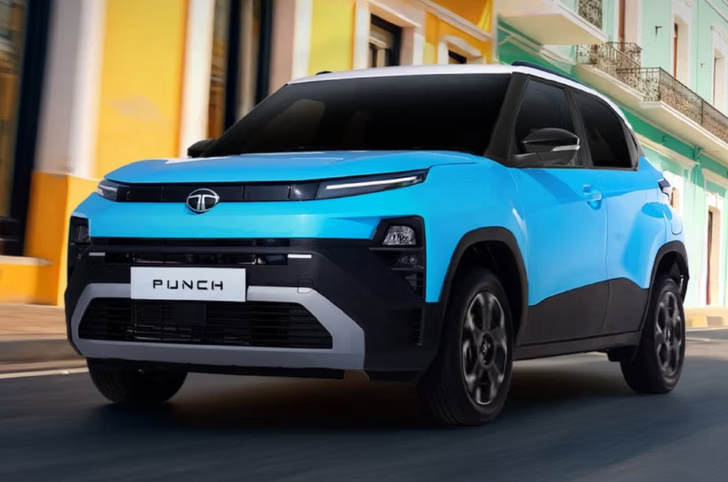
- Tata Punch
- Nissan Magnite
4-cylinder engine models:
- Land Rover Defender
- Toyota Glanza
- Hyundai Verna
- Mahindra Thar Roxx
- Tata Curvv
3-Cylinder vs 4-Cylinder Engine: Which is Better?
It is not easy to decide who wins in the ongoing debate of a 3 cylinder vs 4 cylinder engine. Bohe combustion chambers are configured differently to suit a driver’s requirements. Your decision depends on whether you seek a fuel-efficient and budget-friendly car or a powerful engine and smoother response.
Summary
The choice between a 3-cylinder and 4-cylinder engine affects your driving experience since they determine several critical factors of the car’s performance. Buyers who prefer power and thrill over fuel efficiency should go for a car with a 4-cylinder engine. However, a 3-cylinder engine car is ideal for those seeking mileage and environmentally friendly performance. Therefore, deciding between the two depends on your priority, driving needs, and budget. The information and differences discussed above are enough to help you decide on the car of your dreams. Weigh the factors and make a decision; a vehicle is a long-term investment.
FAQs about 3-Cylinder vs 4-Cylinder Engine
Q. Is a 3-cylinder engine as reliable as a 4-cylinder engine?
The reliability of an engine doesn’t depend on whether it has 3 or 4 cylinders. They have the same materials and build, making them equally reliable.
Q. Why do most of the Tata cars have a 3-cylinder engine configuration?
A 3-cylinder engine requires less material for design, making it budget-friendly. That’s why Tata cars mostly have a 3-cylinder engine so that they can fall under the economic purchase category.
Q. Why are 3-cylinder engines noisy?
The 3-cylinder engines have a torque imbalance, resulting in a shaking powertrain when the engine moves from metal to metal.
Q. Are 4-cylinder engine cars costlier?
Yes, 4-cylinder engines require more raw material for construction, increasing the overall price of the car.
Q. Do 3-cylinder engines shake?
3-cylinder engines had a reputation for shaking while idling. However, over the years car manufacturers have refined their 3-cylinder engines to reduce the vibrations and shaking during idling.