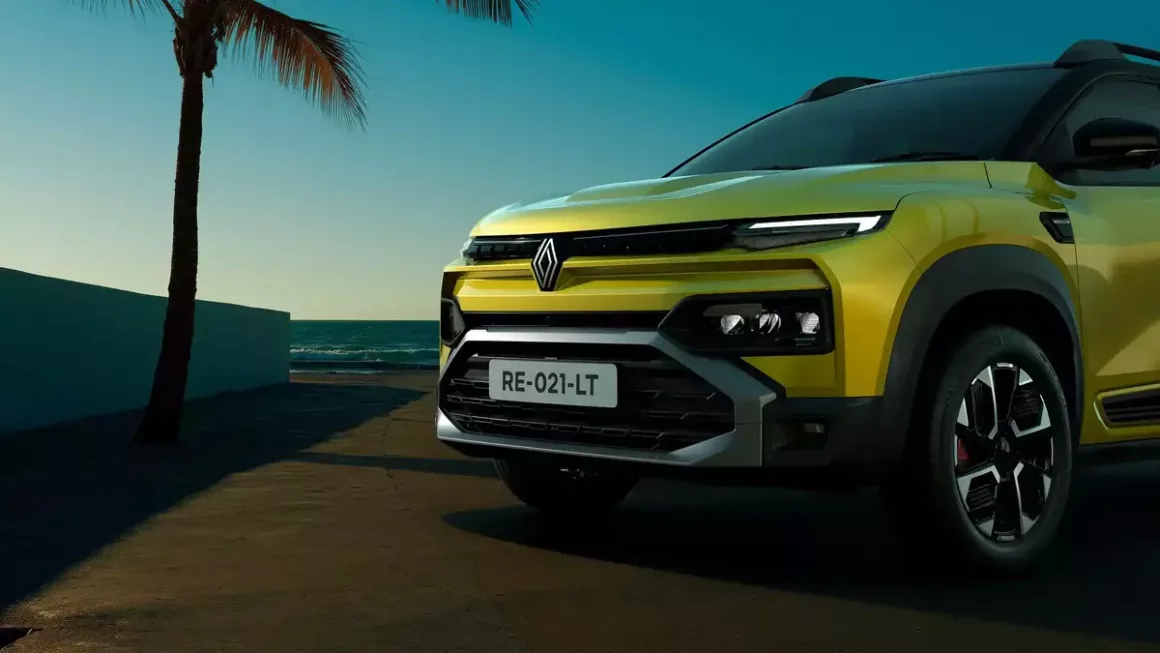
GST 2.0 Implementation on September 22, 2025, is the Indian passenger vehicle market’s broadest tax reform in nearly a decade. The buyer of a car was struggling with a patchwork arrangement of 28% GST and multiple cesses that varied according to the vehicle’s size, fuel type, and engine displacement. The smallest of hatchbacks paid the minimum, while the larger SUVs and MPVs paid up to 50%-plus effective taxes and were thus higher and less foreseeable to purchase and use.
GST 2.0 reforms, which made slabs a mere two-bracket system:
- 18% GST for small cars (under 4 metres, petrol <1200cc, diesel <1500cc)
- 40% GST for everything else (larger sedans, SUVs, MPVs, and luxury cars)
This reorganisation has immediate, apparent effects for auto manufacturers like Renault. As opposed to Volkswagen or Toyota, whose lineups stretch across subcompact hatchbacks and luxury SUVs, Renault has a small niche to fill: small, cheap automobiles. All three vehicles within its Indian lineup, Kwid, Triber, and Kiger, fit neatly within the “small car” category. As a result, every Renault vehicle benefits most from GST 2.0’s 10–11% effective tax reduction.
That translates to massive savings for consumers. The base Kwid RXE drops by roughly ₹40,095, and the top-end Triber Techno 1-litre Turbo CVT by nearly ₹96,400. Renault’s subcompact SUV Kiger, its competitor to the Hyundai Venue and Tata Nexon, gets cheaper by ₹80,000. Not all are token reductions; as they restructure Renault’s pricing and get its cars considerably cheaper in the under-₹10 lakh category.
Also key is timing. The GST cuts are a month or so ahead of the festival season, when Indian car buying tends to gather momentum. As rivals Maruti Suzuki, Hyundai, and Tata follow the lead and make GST-linked cuts, end-users are comparing deals. For Renault, for which its market share has been low for some years now, GST 2.0 presents a rare chance to shift focus on its core competency again: value-led engineering, practicality, and affordability.
GST 2.0, the whole, is better than a Renault price reduction. It’s a bullet train in a busy Indian small car marketplace, giving the nameplate sharper numbers, renewed buying passion, and a chance to be heard during the most active selling time of the year.
GST 2.0 Impact on Renault Cars up to 1200cc and up to 4000mm
But that’s the idea: Renault India doesn’t have a humongous range of SUVs, luxury MPVs, and high-capacity diesel engines. All its vehicles fall under the 1200cc / 4000mm parameter, which means that Renault vehicles fall within the “small car” slab of 18% GST. The advantage is that previously they were taxed at about 28% GST + 1–3% cess, bringing effective rates close to 29–30%.
By cutting that by 18%, GST 2.0 reduces the aggregate tax burden by around 10–11 percentage points. In real terms, that means a price cut of ₹40,000 to nearly ₹1 lakh on Renault’s offerings, varying with the variant.
Price Changes for Renault Cars (All Models Under 1200cc / 4000mm)
| Car / Variant | Price Before GST Update | Price After GST Update | Difference |
| Kwid RXE MT | ₹4,60,000 – ₹4,80,000 | ₹4,20,000–₹4,40,000 | ₹38,000–₹45,000 |
| Kwid RXT 1.0L AMT | ₹5,90,000 – ₹6,20,000 | ₹5,40,000–₹5,60,000 | ₹50,000–₹55,000 |
| Triber Evolution MT | ₹6,95,000 – ₹7,20,000 | ₹6,35,000–₹6,60,000 | ₹58,000–₹65,000 |
| Triber Techno 1.0L Turbo CVT | ₹9,80,000 – ₹10,20,000 | ₹8,95,000–₹9,10,000 | ₹90,000–₹1,05,000 |
| Kiger Authentic | ₹6,20,000 – ₹6,40,000 | ₹5,70,000–₹5,85,000 | ₹50,000–₹57,000 |
| Kiger Emotion AMT | ₹9,05,000 – ₹9,30,000 | ₹8,25,000–₹8,45,000 | ₹75,000–₹85,000 |
These cuts reposition Renault cars firmly in the value-for-money bracket. From students and first-time buyers considering the Kwid, to families evaluating the Triber, to young professionals eyeing the Kiger, every model now offers more for less.
GST Impact on Renault Cars with more than 1200cc and more than 4000mm
Compared to rivals, Renault does not sell larger sedans, luxury SUVs, or MPVs to Indian customers. All three cars – Kwid, Triber, and Kiger – belong to the sub-1200cc and sub-4000mm segment. In other words, Renault does not have any models falling into the 40% GST slab.
For Renault’s buyers, that is positive. It ensures that 100% of Renault cars fall into the lower 18% GST bracket, so all benefit as much as possible from the tax simplification. For Renault itself, it defines its brand identity as a specialist in small cars and compact SUVs, avoiding the variable impact suffered by peers with broad-based portfolios.
Such treatment makes Renault one of the most straightforward beneficiaries of GST 2.0, as each of its cars receives flat price reductions across the board.
Summary: GST 2.0 and Renault Cars
GST 2.0 has been a blessing for Renault. As its entire lineup, Kwid, Triber, and Kiger, falls in the revised 18% slab, every Renault customer has a great deal to benefit from. The reduction has ranged anywhere between ₹46,000 on the Kwid to nearly ₹96,000 on the Triber, and the Kiger has witnessed up to ₹80,000 reduction.
Renault’s situation is unique in that, for a mixed portfolio firm, no chasm between high-benefit and low-benefit models exists. Maximum possible tax relief is afforded to all Renault vehicles. It allows a level playing field against marques like Maruti, Hyundai, and Tata, especially for the fiercely contested compact SUV and entry-hatchback segments.
For consumers, that means lower buying prices for higher trim editions with higher-end amenities and higher protection. For Renault, it’s a timely boost that could improve demand and raise its share at a very important juncture, just before the festival season.
FAQs on GST 2.0 Impact on Renault Cars
Q. Which Renault cars get cheaper after GST 2.0?
All Renault cars in India — Kwid, Triber, and Kiger fall under the new 18% GST slab, so every model in the lineup gets a price cut.
Q. How much can I save on a Renault car after GST 2.0?
Savings range from around ₹40,000 on the Kwid to nearly ₹60,000 on the Triber. The Kiger sees up to ₹70,000 off depending on the variant.
Q. Does GST 2.0 benefit Renault’s SUVs as well?
Yes. The Renault Kiger compact SUV is under 1200cc and under 4 metres, so it qualifies for the 18% GST slab, unlike larger SUVs that only saw 2–3.5% cuts.
Q. When will the new GST 2.0 prices be effective?
The new GST structure comes into effect on September 22, 2025. Renault dealers will pass on the revised prices from that date.
Q. Why does Renault benefit more compared to some rivals?
Because Renault only sells sub-4m, sub-1200cc cars in India, its entire lineup qualifies for the lower 18% slab. Competitors with bigger cars see only partial benefits.
Q. Will used Renault car prices also drop after GST 2.0?
Likely yes. Lower new car prices usually soften used car valuations, but the extent depends on demand and model popularity.
Q. Is this a good time to buy a Renault car?
Absolutely. With GST 2.0 bringing record price cuts across the Renault lineup, buyers can access higher trims or save significantly on existing choices.