
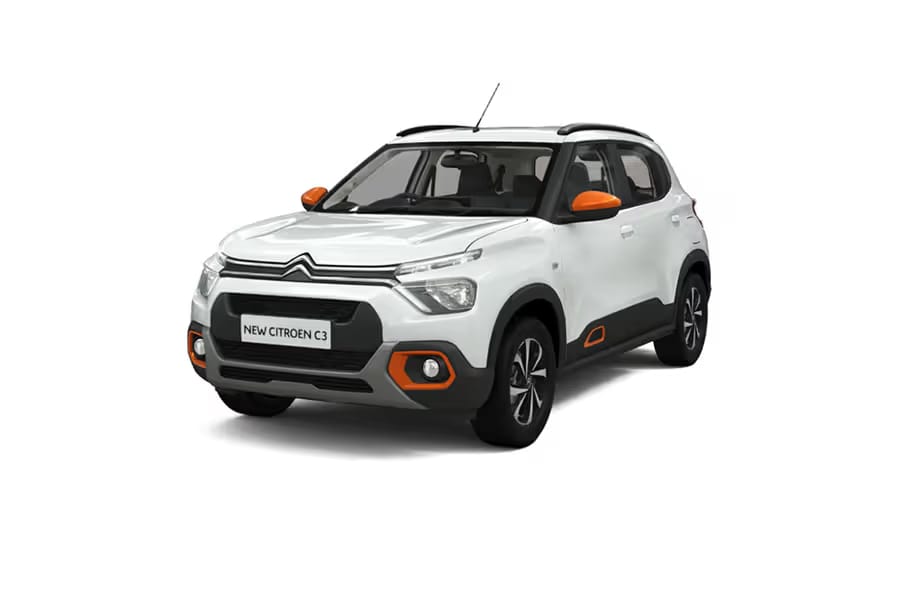







Citroen C3 Mileage Comparison: Petrol vs Turbo Petrol vs Electric

Struggling to choose between the Citroen C3's petrol, turbo petrol, and electric options? This 2025 guide provides a clear, data-driven comparison of real-world Citroen C3 mileage, running costs, and performance to help you make the best choice.
Citroen C3
Last updated 3 months ago

The Citroen C3 has been quite the statement piece in the compact car segment with its unconventional and playful styling, smooth ride quality, and design focus on practicality. Deviating from conventional segments, the C3 presents itself as a “hatch with a twist” to appeal to the fashion-conscious and experience-driven buyers of this generation. A significant aspect of its charm—and the point of consideration among buyers—is the range of powertrains, however. There are two gasoline powertrains to choose from, as well as a fully electric version of the C3, the eC3, each with a different personality and efficiency profile.

This in-depth 2025 guide is intended to make it easier for you to make this multifaceted decision. We will look beyond the official statements to give you a transparent, data-backed examination of the in-the-real-world fuel economy (or range) of each variant. We’ll examine the long-term cost of ownership, the initial cost premium, and the practical advantages and disadvantages of each powertrain. Whether you’re a budget-conscious first buyer, a performance driver, or an environmentally minded driver ready to leap into the future, getting to know the actual nature of each powertrain is critical to a fulfilling ownership experience.

The Powertrains: An Overview

The Citroen C3’s strength lies in its ability to offer three completely different technologies under one nameplate.

1.2-litre Naturally Aspirated Petrol

This is the base variant of the C3’s engine. It’s a 1.2L, three-cylinder engine that produces a modest 80.46bhp of horsepower and 115 Nm of torque. It’s a cheap but reliable motor best suited for in-city use, where linear acceleration is simple to deal with and easy to estimate. It’s only mated with a 5-speed manual, with no corresponding automatic transmission to match the A2 variant’s more powerful CVT gearbox.

1.2-litre Turbo Petrol

This is the performance-driven variant. It’s a 1.2L, three-cylinder turbocharged motor that provides a remarkable gain in power and torque. It churns out a potent 108.62bhp of power and 190 Nm of torque (205 Nm for the automatic). The turbocharger makes a huge impact, giving you the confidence to drive on the highway and perform easy overtakes. It comes with a 6-speed manual as well as a 6-speed torque converter automatic transmission.

eC3 (Electric)

eC3 is a purely electric automobile that is stylistically comparable to the C3. It has a permanent magnet synchronous motor that produces 56.21bhp of power and 143 Nm of torque, instantly. It has a 29.2 kWh battery pack. It’s a zero-emitting automobile that’s quiet, smooth, and peppy to drive, making it perfect for city drivers. Automatic transmission is the only gearbox it can have.

Official vs. Real-World Mileage/Range (as of 2025)

The ARAI figures provide a standardized benchmark, but real-world performance is what truly matters. The figures below are a compilation of owner feedback and professional tests.

VariantARAI Mileage/RangeReal-World CityReal-World HighwayCombined Average
1.2L Petrol Manual19.3 km/l~12-13 km/l~16-17 km/l~14.5 km/l
1.2L Turbo Manual19.3 km/l~11-12 km/l~15-16 km/l~13.5 km/l
1.2L Turbo AT19.3 km/l~9-10 km/l~13-14 km/l~11.5 km/l
eC3 (29.2 kWh)320 km~180-200 km~200-220 km~190-200 km

The in-real-world fuel efficiency of the turbo manual and the naturally aspirated petrol is extremely similar, the turbo motor’s power inviting a more exuberant driving style. The worst in terms of fuel efficiency of the range is the turbo automatic petrol. A significant range-defining factor of the eC3 is its in-real-world range figure. Although it falls significantly short of the claimed range, a greater-than-200-km-in-real-world range is more than sufficient to match most daily trips.

Financial Breakdown: Cost per Km and Break-Even Analysis

The most crucial part of the comparison is the long-term running cost. Let’s use approximate mid-2025 fuel and electricity prices in Pune for our calculations.

  • Fuel Prices:
    • Petrol: ₹ 104.14/litre
    • Electricity: ₹8/kWh (home charging)
  • Cost per Km (Based on Real-World Averages):
    • 1.2L Petrol Manual: ₹104.14 / 14.5 km/l = ₹7.18//km
    • 1.2L Turbo Manual: ₹104.14 / 13.5 km/l = ₹7.71/km
    • 1.2L Turbo AT: ₹104.14 / 11.5 km/l = ₹9.06/km
    • eC3: (29.2 kWh * ₹8/kWh) / 200 km = ₹1.17/km

The eC3 is the clear winner in running costs, with a cost that is a fraction of its petrol counterparts.

Now, let’s consider the initial purchase price, which is a major factor in the break-even analysis.

  • Price Premium (Ex-showroom, approximate):
    • 1.2L Turbo vs 1.2L Petrol: Approximately ₹₹3.9 lakh higher.
    • eC3 vs 1.2L Petrol: Approximately ₹7.7 lakh higher.

The break-even point is the distance you need to drive to recover the higher upfront cost through fuel savings.

  • 1.2L Turbo Manual vs 1.2L Petrol Manual:
    • Price Gap:₹3.9 lakh
    • Savings per km: -₹0.53
    • This shows that the turbo variant is not a financial decision; it’s a trade-off for performance.
  • eC3 vs 1.2L Petrol:
    • Price Gap: ₹7.7 lakh
    • Savings per km: ₹6.01
    • Kilometers to Break Even: ~1,28,000 km. This is a significant distance, making the EV a choice for those who are committed to long-term ownership and high annual mileage.

Performance, Practicality, and the Driving Experience

1.2L Petrol

This engine is an excellent option for new drivers or owners with mostly urban driving experience. It’s linear and reliable in power, with a light clutch and smooth manual box that make it easy to maneuver in stop-go traffic. It comes with a nice, large 315-litre boot space.

1.2L Turbo

This version is for the enthusiast who desires more power. There’s a robust mid-range to the motor, and the turbo imparts a reassuring shove of power. A pleasure to shift, the 6-speed manual and the 6-speed torque-converter automatic both move with quick, decisive shifts, a nice improvement upon the AMT that’s so common in the competition.

eC3

The eC3 provides a quiet and instantaneous burst of power that the petrol versions cannot match. The gearless drive is ideal for inner-city traffic and gives a ride that is smooth and effortless. It also maintains the 315-litre boot space, a major plus point over rival EVs that have lost boot space in the interests of accommodating the battery pack.

The Verdict: Which C3 is for You?

For the Budget-Conscious City Commuter:

  • Best Pick: Citroen C3 1.2L Petrol.
  • Why: If your priority is a low initial cost and carefree, trouble-free ownership, the naturally aspirated petrol engine is the most sensible choice. It gives reasonable C3 mileage and no-frills ownership.

For the Enthusiast:

  • Best Pick: Citroen C3 1.2L Turbo Petrol.
  • Why: When you drive often on highways, you will want a more enjoyable and assertive drive, and the turbo model will be the best option for you. Although the initial cost is slightly higher, it’s worth spending to enjoy the superior performance it offers.

For the Eco-Conscious Urban Dweller:

  • Best Pick: Citroen eC3.
  • Why: The eC3 is the undisputed winner among those wanting the minimum possible cost of running and a quiet, smooth ride. Its in-real-life range is more than enough to serve the purpose of city and suburban driving, and the long-term gain in terms of cost is unrivaled.

FAQs about Citroen C3 Mileage

  1. Q. Is the 1.2L turbo engine in the C3 much more powerful? 

    Yes, the turbo engine produces 108.62bhp and over 190 Nm of torque, which makes a significant difference in performance, especially at highway speeds.

  2. Q. What is the real-world range of the eC3? 

    The eC3’s real-world range is around 350 km in the city and slightly less on the highway, depending on driving style and AC usage.

  3. Q. Does the C3 offer an automatic option for both petrol engines? 

    No, only the 1.2L Turbo petrol engine comes with a 6-speed torque converter automatic. The naturally aspirated petrol is manual-only.

  4. Q. What is the boot space of the C3 and eC3? 

    Both the petrol C3 and the eC3 have the same generous boot space of 315 litres.

  5. Q. Which variant is the cheapest to run per kilometer? 

    The eC3 is the cheapest to run, with a cost of just over ₹1 per km when charged at home.

Share

Leave a Comment

Your email address will not be published. Required fields are marked *

A-Z Glossary

Every car part & feature, explained

News

The latest from the automotive world
Best Cars

The crème de la crème of cars

Rules & Regulations

Every law & regulation, explained

Car Ownership

Everyday car-care tips & advice

Buying a car

Make the right buying decision

Selling a car

Make the right selling decision

Miscellaneous

Cars & eveything in-between

5,000,000+ Readers

We’re ❤️ne big family!

Follow us for accurate, impartial & up-to-date information around everything related to cars – Latest news & developments, best options for every budget & lifestyle, ownership tips, buying & selling advice and a lot more on Spinny Magazine.

Unbiased
4.5/5
Reliable
4.5/5
Helpful
4.5/5
Scroll to Top

Want to Sell your Car?

Choose your brand below to get started: