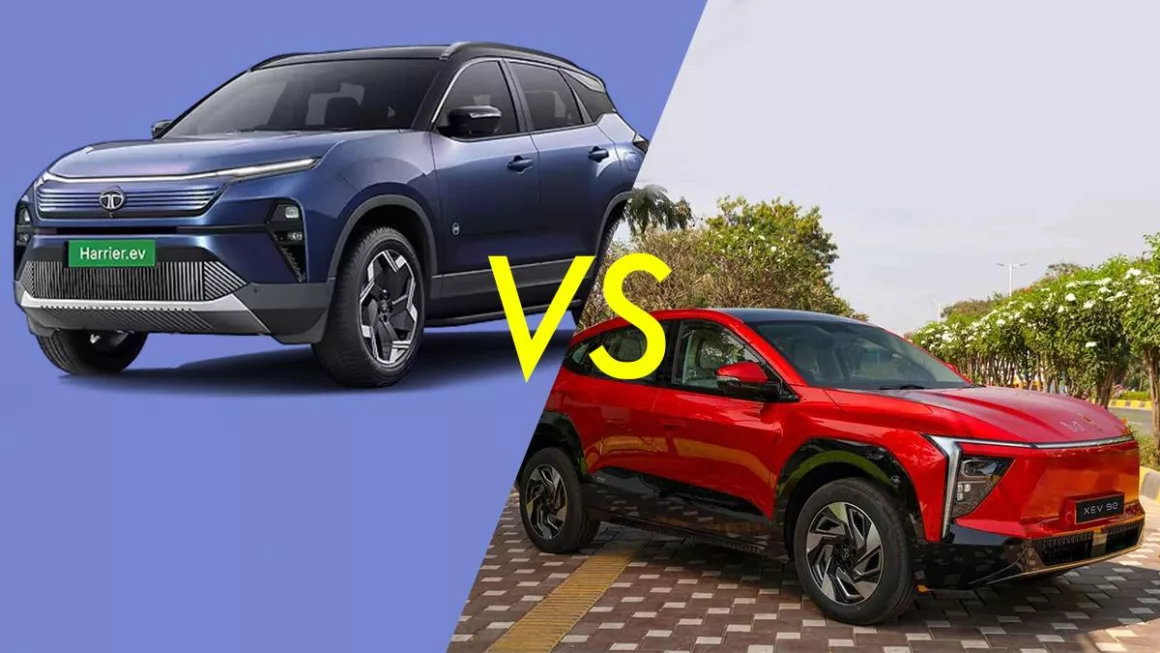
The recently launched Tata Harrier EV has taken the market by storm. The Indian electric SUV has been grabbing many headlines and has become a social media buzz for its radical capabilities, especially its off-roading prowess. Based on Tata’s Acti.ev dedicated EV platform, the Tata Harrier EV is here to take on the Mahindra XEV 9e, which came in a few months before the Harrier EV and is riding a huge success wave. Much like the Tata Harrier EV, the Mahindra XEV 9e rocked the market with its launch for its radical package, and it would be wrong to say that the masses are over the awe it struck them with. If you plan to buy a Mahindra XEV 9e and reveal that to your friends and family, you are certain to be suggested to consider the Tata Harrier EV, or vice versa. Making the right choice between these two electric SUVs can be difficult, as both are extremely capable offerings. To ease the process for you, in this article on the Tata Harrier EV vs Mahindra XEV 9e, we compare the two on the decisive parameters and determine which one you should put your money on.
Tata Harrier EV vs Mahindra XEV 9e: Dimensions & Design
| Tata Harrier EV | Mahindra XEV 9e | |
| Length | 4,607 mm | 4,789 mm |
| Width | 2,132 mm | 1,907 mm |
| Height | 1,740 mm | 1,694 mm |
| Wheelbase | 2,741 mm | 2,775 mm |
| Ground Clearance | 200 mm | 207 mm |
| Boot Space | 502 litres (boot), no official figures for frunk capacity | 663 litres (boot) & 150 litres (frunk) |
The Mahindra XEV 9e is 182 mm longer and has a 34 mm longer wheelbase than the Tata Harrier EV. Whereas, the Tata Harrier EV is 225 mm wider and 46 mm taller than the Mahindra XEV 9e. For accommodating five adults, both the Tata Harrier EV and the Mahindra XEV 9e pack ample space; however, being wider and taller, despite the slightly shorter wheelbase, the Tata Harrier EV offers a roomier space to passengers, especially in the rear seat. At the same time, the Mahindra XEV 9e offers a significantly larger boot space, which can be a great advantage on long family trips.
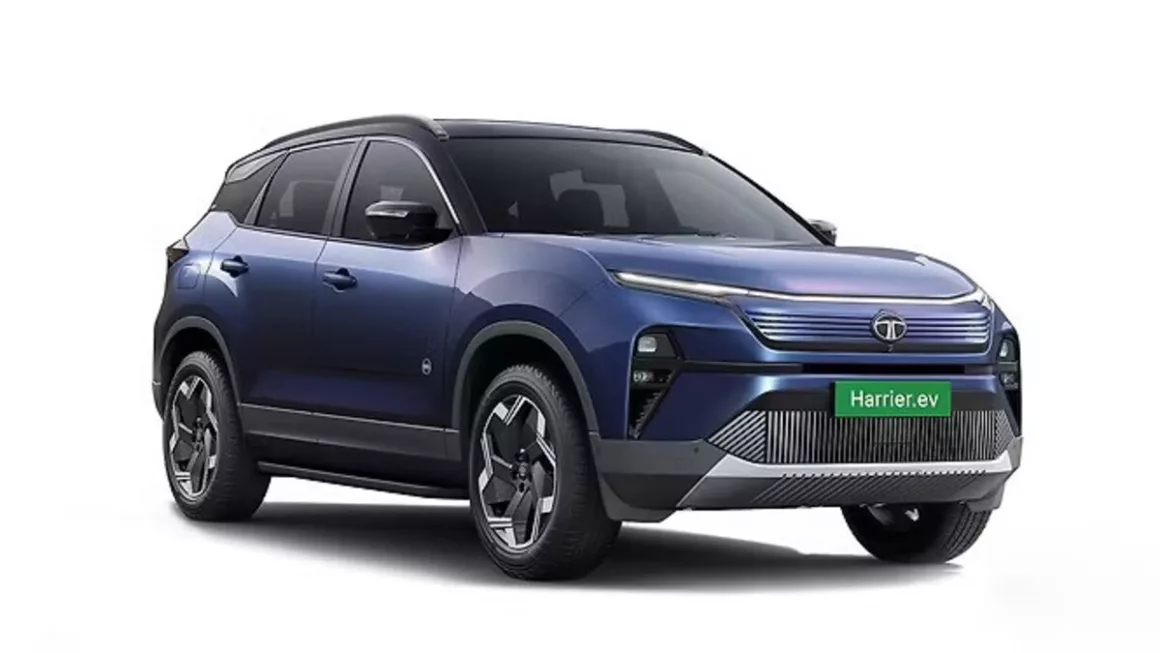
When it comes to designs, both the Tata Harrier EV and the Mahindra XEV 9e are enthralling SUVs. Since the Tata Harrier EV looks nearly identical to the standard Tata Harrier, the masses are more familiar with its design than they are with the Mahindra XEV 9e’s design. But that is not to say the Harrier EV does not look good. Much like the standard Harrier, the Harrier EV has a commanding and eye-catching road presence. Its imposing face features a closed-off grille and vertical stripes on the front bumper, which look the same as the ones on the Tata Curvv EV. On the sides, there are the slightly flared wheel arches with 19-inch aero-optimised alloy wheels, and a rising shoulder line with a blacked-out section connecting the side window glass to the rear windshield. At the rear, the Harrier EV gets connected tail lamps, a chunky dual-tone bumper, and a sporty spoiler.
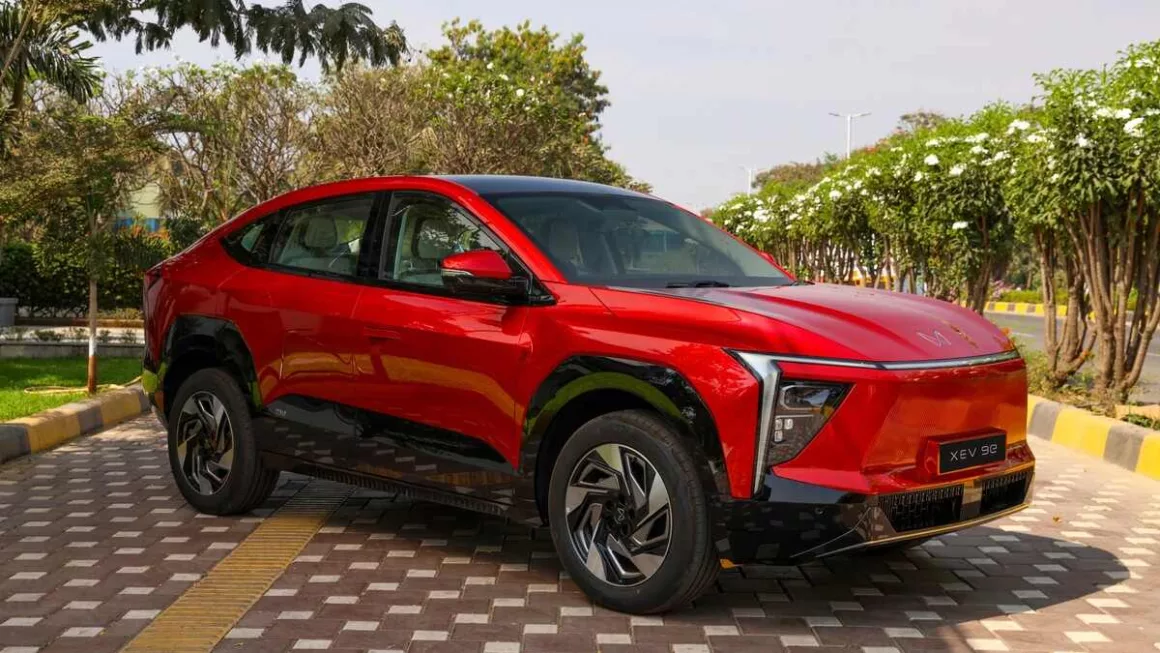
Meanwhile, the Mahindra XEV 9e also looks eye-catching but in a different way. Primarily, what makes the XEV stunning is its coupe design. As a body type, coupe SUVs are still largely uncommon in India, and one such car driving down the roads still catches a lot of attention. Being a coupe SUV, that too a huge one, the XEV 9e is crafted to catch eyeballs. Plus, it has been designed finely and looks more new-age than the Tata Harrier EV. At the front, the most striking part is a long LED DRL strip, which starts low down on the bumper, extends all the way across the bonnet, and then dips back down on the other side. Meanwhile, the low-placed LED headlamps and the ridges on the bonnet with the piano black bumper make the XEV 9e look cutting-edge. Over to the side, due to a coupe design, it gets a raised boot and sloping roofline, to look sportier. At the rear, there is a chunky gloss black bumper, and the inverted L-shaped tail lights are connected by a light bar, which largely simulates the design of the LED DRL strip at the front.
Overall, the Tata Harrier EV is larger and more spacious than the Mahindra XEV 9e. As far as looks are concerned, the Tata Harriers EV looks more dominant, while the Mahindra XEV 9e looks more new-age and sportier.
Tata Harrier EV vs Mahindra XEV 9e: Battery Pack & Range
| Tata Harrier EV | Mahindra XEV 9e | |
| Battery | 65 kWh (Base variants)75 kWh (High variants) | 59 kWh (Base variants)79 kWh (High variants) |
| Power | 238 PS (Base variants)313 PS (High variants) | 231 PS (Base variants)286 PS (High variants) |
| Torque | 504 Nm | 380 Nm |
| Range | 627 km (High variants) | 542 km – 656 km |
As can be seen, the Mahindra XEV 9e offers larger battery packs than the ones offered on the Tata Harrier EV. However, the Tata Harrier EV is more powerful, both in the base and higher variants. While the base variants of the Tata Harrier EV are slightly more powerful than the base variants of the Mahindra XEV 9e, its high variants are far more powerful than the high variants of the Mahindra XEV 9e. The main difference here is that the Tata Harrier EV’s higher variants come with a dual motor set-up wherein each of the axles, front and rear, gets an electric motor, while the XEV 9e has only a single motor on the rear axle. With two electric motors, the Harrier EV generates significantly more power and torque than the XEV 9e. This also makes the Harrier EV the fastest made-in-India car with the capability to do a 0 to 100 km/hr sprint in 6.3 seconds.
In terms of ride comfort, Tata cars have always been the best in the competition, and the case here is no different. Notably, Tata has gone further in making the ride quality even superior to the standard Tata Harrier, as the Tata Harrier EV debuts Tata’s new all-independent suspension system with frequency-dependent dampers. With this suspension system, the Harrier EV offers a suave ride comfort and an impressive balance at high speeds. While the ride quality of the XEV 9e is also commendable, it does not match up to the Harrier EV standards.
All the same, the factor that makes the Harrier EV stand out, especially in terms of powertrains, is its off-roading calibre. As mentioned, the Harrier EV comes with a dual-motor setup, which gives it an all-wheel-drive drivetrain. Now, do not mistake it as a 4X4 drivetrain seen on ICE-powered off-roading cars. However, it is still quite a capable powertrain and can drive through challenges much better than front-wheel-drive or rear-wheel-drive cars. Its special feature, off-road assist, functions like off-road cruise control, wherein the vehicle can maintain a speed as low as 5 km/hr. It gets a 25.3° approach angle, 26.4° departure angle, and 16.6° ramp break-over angle, and thanks to the water wading capacity of 600 mm, the Harrier EV can make life very easy in the monsoon season. Moreover, the terrain modes – Normal, Snow/Grass, Mud ruts, Sand, Rock Crawl, and Custom have been programmed to adjust their drivability, depending on various driving conditions.
Thanks to the dual-motor setup, the Tata Harrier EV is more powerful than the Mahindra XEV 9e. Moreover, the Tata Harrier EV offers better off-roading calibre and ride comfort.
Tata Harrier EV vs Mahindra XEV 9e: Features & Comfort
| Tata Harrier EV | Mahindra XEV 9e | |
| Infotainment system | 14-inch touchscreen infotainment system | 12.3-inch touchscreen infotainment |
| Music system | 10-speaker JBL music system | 16-speaker Harman Kardon music system |
| Climate control | Dual-zone automatic | Dual-zone automatic |
| Ventilated seats | Front ventilated seats | Front ventilated seats |
| Adjustable steering | Tilt and telescopic | Tilt and telescopic |
| Drive modes | Eco, City, Sport, & Boost | Default, Range,Everyday, Race,Snow &Custom mode |
| Instrument cluster | 10.25-inch digital instrument cluster | 12.3-inch digital instrument cluster |
| Sunroof | Panoramic sunroof | Panoramic glass roof |
| Adjustable seats (manual or electric) | 6-way powered driver seat | 6-way powered driver seat |
| Rear AC vents | Available | Available |
| 60:40 rear seat split | Available | Available |
| Cruise control | Available | Available |
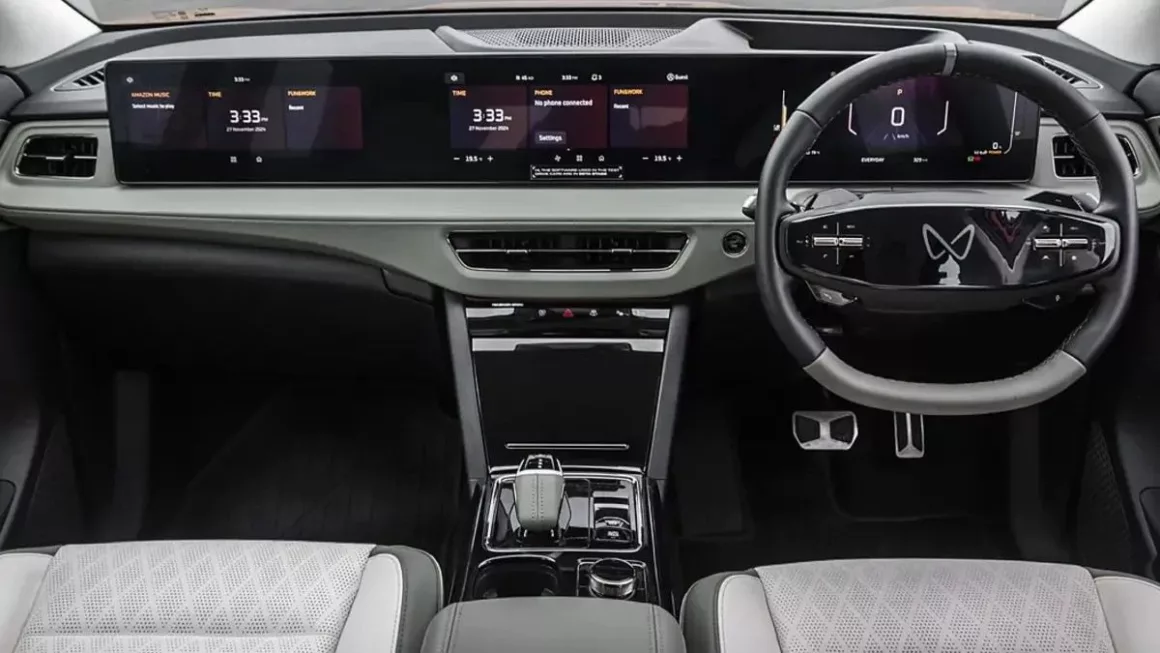
On the inside, both Tata Harrier EV and Mahindra XEV 9e feel as premium as the cars of their price should. However, as is the case with the exterior, the XEV 9e feels more futuristic on the inside, especially because of the premium triple 12.3-inch screens set up on the dashboard. This set-up consists of one screen of the digital instrument cluster, one for the front passenger, and one for the infotainment system. Such a modern arrangement is something we have only seen in Mercedes-Benz cars so far. In addition to that, the dual-spoke squarish steering that comes with gloss black and an illuminated logo, much like the Tata Harrier EV, adds to the futuristic quotient. A key point to mention here is that due to the sloping roof, the headroom for the rear gets slightly compromised.
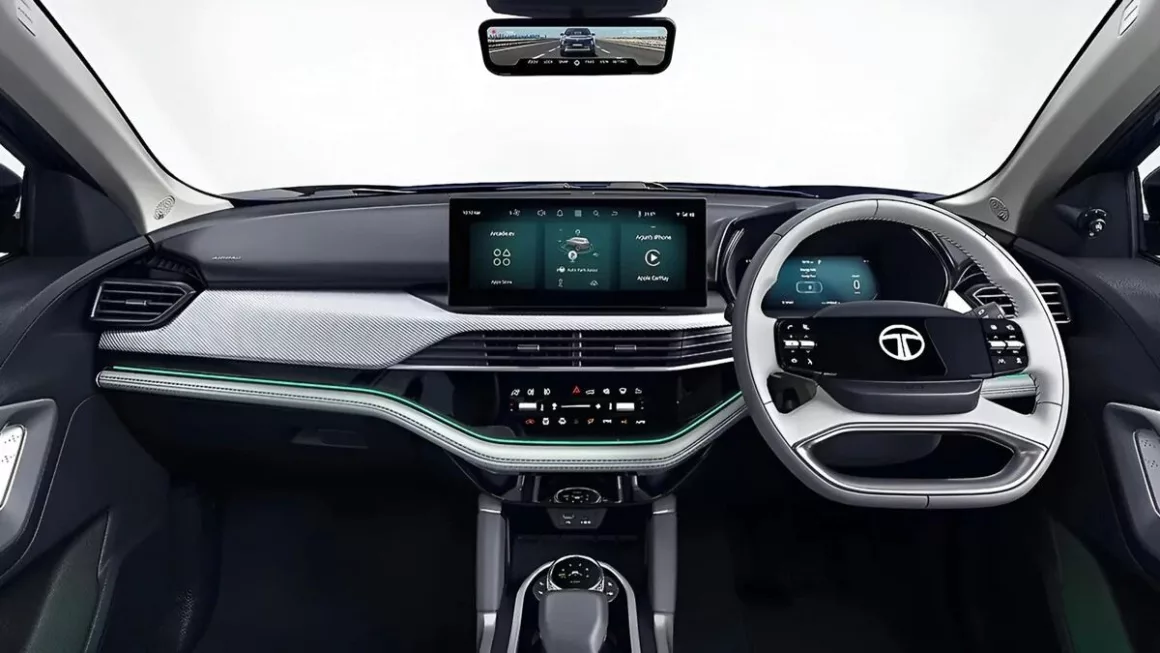
On the other hand, the Tata Harrier EV looks and feels almost like the standard Tata Harrier. There is the same layered dual-tone dashboard with trapezoidal AC vents. The gloss black touch-based panel for the climate control system and the flat-bottom steering add a modern touch. A key difference from the standard Harrier is the larger 14-inch touchscreen infotainment system that features a world-first Samsung Neo QLED display that offers an immaculate image quality.
In the feature department, the XEV 9e and the Harrier EV have their respective advantages. The XEV 9e advantages include a 5-camera video recording feature, in which the 360-degree camera of the SUV doubles up as a video recorder that functions much the same as a dashcam. Next, it offers an augmented reality (AR) based head-up display, called Vision X HUD, which projects data on the windshield. The most special advantage of the XEV 9e is the Groove-Me mode. With this feature, the car can be turned into a disco, as the ambient lights and exterior lights illuminate in sync with the music played on the car’s 16-speaker Harman Kardon sound system with Dolby Atmos.
Meanwhile, the Tata Harrier EV offers a panoramic sunroof, which can be opened, unlike the fixed glass roof on the Mahindra XEV 9e. Next, the Harrier EV comes with a 540-degree surround camera view, which is essentially a live feed from under the bonnet in addition to the 360-degree camera. This feature can alert the driver if any of the wheels come too close to a kerb, improving manoeuvrability in tight spaces. One of the most attractive features of the Harrier EV is the Digital Mirror. In this feature, the inside rear-view mirror (IRVM) acts as a screen and relays feed from a roof-mounted camera.
Both the Harrier EV and XEV 9e come with auto parking; however, the Harrier EV also gets reverse Assist, which memorises the last 50 meters of your driving path and can automatically reverse the SUV without the need for any intervention at the steering or pedals.
While both the Tata Harrier EV and Mahindra XEV 9e feel quite premium on the inside, the XEV 9e looks more futuristic. In terms of features, both Harrier EV and XEV 9e have some edges over each other.
Tata Harrier EV vs Mahindra XEV 9e: Safety Features
| Tata Harrier EV | Mahindra XEV 9e | |
| NCAP Safety Rating | 5-stars in Bharat NCAP (Expected) | 5-stars in Bharat NCAP |
| Airbags | Six airbags as standard | Six airbags as standard & 7 airbags in top two variants |
| ABS with EBD | Yes | Yes |
| ESC | Yes | Yes |
| Traction Control | Yes | Yes |
| Automatic headlamps | Yes | Yes |
| Rain-sensing Wipers | Yes | Yes |
| Hill hold assist | Yes | Yes |
| Hill descent control | Yes | Yes |
| Rear sensors | Yes | Yes |
| Rear parking camera | Yes | Yes |
| ISOFIX Child seat anchor points | Yes | Yes |
| ADAS | Level-2 ADAS features | Level-2 ADAS features |
Both the Tata Harrier EV and the Mahindra XEV 9e are strongly built cars with a lot of premium safety features, including the Level-2 ADAS safety suite. While the Mahindra XEV 9e has scored a full 5-star rating in the Bharat NCAP safety test, the Tata Harrier is strongly expected to earn the same rating when it undergoes the test.
It is safe to say both the Tata Harrier EV and Mahindra XEV 9e are exceptionally and almost equally safe electric SUVs.
Tata Harrier EV vs Mahindra XEV 9e: Price comparison
| Tata Harrier EV | Mahindra XEV 9e | |
| Base variants (Ex-Showroom) | Rs. 21.49 lakh (ex-showroom) | Rs. 22.65 lakh (ex-showroom) |
| Mid variants (Ex-Showroom) | TBA | Rs. 25.65 lakh (ex-showroom) |
| Upper mid variants (Ex-Showroom) | TBA | Rs. 28.65 lakh (ex-showroom) |
| Top variant | TBA | Rs. 31.25 lakh (ex-showroom) |
Tata has only revealed the price of the base variant of the Tata Harrier EV, while the prices for the rest of the variants are going to be revealed soon. However, the complete Tata Harrier EV lineup is expected to be priced nearly the same as the Mahindra XEV 9e.
Tata Harrier EV vs Mahindra XEV 9e: Summary
Let’s put things into perspective.
If you are going to purchase the base variants of any of these two SUVs, you can go for either, as both are large enough to accommodate your family and strong enough to offer formidable safety. As far as drive range is concerned, while Tata has not revealed the range of the lower variants of the Tata Harrier EV, it is not going to be too different from that of the lower variants of the Mahindra XEV 9e.
Among the higher variants, the Tata Harrier would be the better option for those who want to enjoy driving their electric SUV on challenging terrains. However, if you want the most feature-loaded electric SUV that incessantly entertains your friends and family, the XEV 9e would be the better of the two.
Tata Harrier EV vs Mahindra XEV 9e: FAQs
Among the Tata Harrier EV and the Mahindra XEV 9e, which is larger?
Tata Harrier EV is 4,607 mm long, 2,132 mm wide, 1,740 mm tall, and has a wheelbase of 2,741 mm. Mahindra XEV 9e is 4,789 mm long, 1,907 mm wide, 1,694 mm tall, and has a wheelbase of 2,775 mm. Therefore, the Mahindra XEV 9e is 182 mm longer and has a 34 mm longer wheelbase than the Tata Harrier EV. Whereas, the Tata Harrier EV is 225 mm wider and 46 mm taller than the Mahindra XEV 9e.
Among the Tata Harrier EV and the Mahindra XEV 9e, which car is more powerful?
The Tata Harrier EV offers two battery packs: 65 kWh and 75 kWh. The smaller 65 kWh battery comes connected to a single rear-axle-mounted motor, which produces 238 PS of power. Whereas, the larger 75 kWh battery pack comes connected to two electric motors, one on the front axle and the second on the rear axle; both motors produce 313 PS combined. Meanwhile, the Mahindra XEV 9e offers two battery packs: 59 kWh and 79 kWh. Both battery packs come with a rear-axle mounted motor, and produce 231 PS and 286 PS respectively. Therefore, the Tata Harrier EV is more powerful than the Mahindra XEV 9e.
Among the Tata Harrier EV and the Mahindra XEV 9e, which has better sound quality?
The Tata Harrier EV offers a 10-speaker JBL sound system, while the Mahindra XEV 9e offers a 16-speaker Harman Kardon sound system. Both electric SUVs come with Dolby Atmos are offer almost equally premium sound quality.
Does the Tata Harrier EV offer auto parking like the Mahindra XEV 9e?
Yes, the Tata Harrier EV offers an auto parking feature.