The Outside Rear View Mirror (ORVM) is a crucial safety feature in every car, designed to enhance visibility and reduce blind spots while driving. From basic manual mirrors to advanced electric, auto-folding, and sensor-equipped ORVMs, this article explores how ORVMs work, their types, key features, and why they matter for everyday driving. Whether you’re a new car owner or just curious about automotive tech, this detailed guide will help you understand the role of ORVM in car safety, comfort, and performance.
One of the first driving lessons is the importance of a car’s side mirrors. Their need is most felt when trying to squeeze into a parking space or driving along a busy street. One of the often overlooked but important parts of everyday driving is the Outside Rear View Mirror, or ORVM in car. It serves as your extra pair of eyes, keeping you informed about what’s happening around your car. And it’s more than just a reflective surface.
You might know why these mirrors are essential if you’ve ever been in your blind spot and had a near-miss with a motorbike or bicycle. ORVMs have evolved from basic glass panels manually adjusted to advanced devices. These days, some high-end vehicles come equipped with cameras, turn indications, heating components for cold mornings, motorised adjustment, and auto-folding.
Let’s explore what is ORVM in car, how they operate, and why they should be given more credit than they currently get.
What is ORVM in Car?
ORVM in car stands for Outside Rear View Mirror. These are the external mirrors often installed on your vehicle’s driver’s and passenger doors. Their primary function is to allow you to see the traffic clearly to the sides and behind you, something the inside mirror (IRVM) can’t do alone.
Why Are ORVMs Necessary?
We can all agree that it is an invitation for trouble to drive without a clear view of what is behind or next to you. ORVMs assist you in avoiding those heart-stopping situations where someone unexpectedly appears out of nowhere, spotting cars sneaking up in adjacent lanes and making safer lane changes.
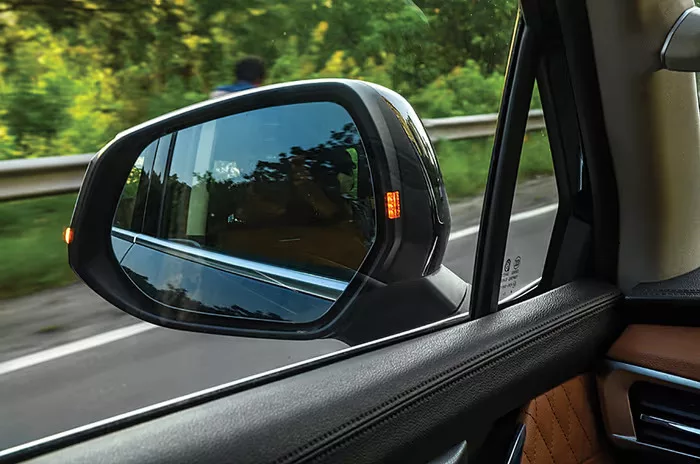
Additionally, they are invaluable when parallel parking, assisting you in determining distances to avoid scraping your wheels or hitting another person’s vehicle. Style matters too. With their sleek shapes, LED indicators, and chrome accents, modern ORVMs may look very sharp and add a little flair to the overall look of your car.
How Does an ORVM Work?
Fundamentally, an ORVM in car is usually a convex mirror, meaning it has a slight outward curve. Compared to a flat mirror, this curve provides a broader vision, which helps you see objects or cars that might be in your blind zones. To help your car blend in aerodynamically and reduce wind noise, the mirror is mounted in a housing designed to match the car’s colour and shape.
Most of us are aware of the phrase found on ORVM in car “objects in the mirror are closer than they appear”. This is because convex mirrors, with their width, also make objects appear smaller and farther away than they actually are.
Main Parts of an ORVM
Here is what your ORVM in car usually consists of:
- Mirror Glass: Usually convex for that extra-wide view.
- Housing: Aerodynamically shaped, and usually the colour is matched to your car.
- Adjustment Mechanism: can be either electronic (adjust with an internal switch) or manual (move it by hand or with a lever)
- Extra Features: Most modern cars have sensors, cameras, heating components, and turn indicators.
Types of ORVMs
Not every ORVM in car is made equally. Some of the most common types that you’ll see on the road are as follows:
Manual ORVMs
Those who have been driving for well over a decade will remember having to push the mirror into position while bending slightly out of the car. This is a manual ORVM. They are typically found on older or entry-level cars and are simple to use and reliable.
Electric ORVMs
Modern cars typically have electric ORVMs. With these, you can use an internal switch or joystick to change the mirror angle. After you become used to it, you’ll question how you got along without it, even though it’s a small luxury.
Power Folding ORVMs
Have you ever parked in a confined space and been concerned that someone might knock off your mirror? Power folding ORVMs can be folded in or out by pressing a button, or they may fold on their own while your car is locked. In congested parking lots, keeping your mirrors safe is extremely important.
Heated ORVMs
Heated mirrors are especially useful in cold or damp regions. On a chilly morning, a small embedded heating element inside the mirror that activates automatically or with the defogger button helps remove fog or frost without scraping it off with your sleeve.
ORVMs with Cameras or Sensors
These ORVMs include integrated cameras or sensors and can be found in luxury cars. These are helpful and support lane monitoring, blind-spot detection, parking assistance, changing lanes, or even providing a live video feed to your dashboard so you can see other vehicles or obstacles more easily.
Auto-dimming ORVMs
Auto-dimming ORVMs come fitted with light sensors that detect bright headlight glare coming from behind and dim the mirror automatically to reduce headlight glare significantly. This function prevents the temporary blinding during the night hours.
Why Are ORVMs Important?
Apart from the basic reasons we mentioned above, there are many other reasons that ORVMs are important. Here are some of them:
Confidence and Safety
A well-adjusted ORVM is very helpful. When you change lanes or overtake, it helps you spot motorcycles, bicycles, and fast-moving cars nearby. A good ORVM in car can also help you avoid bumps and scratches in busy city traffic with limited space.
Convenience
When parking in tight spots, power-folding and electronic adjustment make it easy to set your mirrors just right and keep them safe, turn signals on them help warn others when you’re about to move.
Style and Value
Honestly, looks do matter. A car with shiny ORVMs and chrome or LED lights definitely look nicer. These little touches make a vehicle feel special to many buyers.
Adjusting Your ORVMs: A Quick How-To
To use your ORVMs well, you need to adjust them properly. Follow these steps:
- Start by adjusting your seat because your sitting position changes what you see in the mirrors.
- Adjust the left mirror so you can just see a small part of your car along the edge.
- Do the same for the right mirror.
- The view in your inside mirror and outside mirrors should overlap slightly. This helps you see better.
- Make small changes until you feel comfortable and secure that you are able to see just about enough to drive safely.
ORVM vs IRVM: What’s the Difference?
To get a better understanding of the inside and outside mirrors of your car, take a look at this comparison table:
| Feature | ORVM (Outside Rear View Mirror) | IRVM (Inside Rear View Mirror) |
| Location | Mounted outside, on both front doors | Inside, at the top center of the windshield |
| Main Function | Shows side lanes and blind spots | Shows what’s directly behind the car |
| Adjustability | Manual or electric, often adjustable from inside | Usually manual; some have auto-dimming |
| Extra Features | Can include folding, heating, turn signals, and sensors | Some offer auto-dimming, compass, and temp display |
| Field of View | Wide, covers adjacent lanes and blind spots | Narrow, straight behind |
| Safety Role | Essential for lane changes, overtaking, and parking | Good for monitoring traffic behind |
| Exposure to Glare | Higher, especially from headlights in side lanes | Lower, mainly from vehicles behind |
| Vulnerability | More exposed to bumps, theft, or weather | Protected inside the cabin |
| Legal Requirement | As per CMVR rules in India, a driver-side ORVM is legally required for all cars | Required in all cars |
Common Issues and Maintenance Tips for ORVM in Car
Here are some common issues in regards to ORVMs and how you can quickly fix or maintain them:
1. Shaking at High Speeds
Ever noticed your side mirror shaking when you’re driving fast? It happens when the model of the car is older or has basic mirrors. If the view behind you gets blurry, it might be time to check if the mirror is loose or something’s broken.
2. Getting Damaged in Traffic
Side mirrors are often the first to get bumped or scratched when driving through narrow streets or congested spaces. Cars with folding mirrors are easier, but it’s always smart to be extra careful in tight spots.
3. Expensive to Replace
Some mirrors are inexpensive, but if yours has fancy features like cameras or indicator lights, replacing them can be costly. Before buying a new car or a replacement mirror, it’s worth checking how much it might cost, especially for high-end models.
4. Electric Parts Can Break
Mirrors that fold in or move with the push of a button are super handy, but they can stop working if they get dirty or wet. You must keep them clean and use the controls gently to help them last longer.
5. Foggy or Icy Mirrors
On foggy or icy days, mirrors can fog up or freeze, making it challenging to see what’s behind. If your car doesn’t have heated mirrors, a quick wipe or anti-fog spray can make a big difference before you drive.
Conclusion
ORVM in car is more critical than many people think. They help you drive safely, make parking easier, and can even make your car look better. Good mirrors can help you avoid accidents and make your drive smoother. From manual setups to power-folding, auto-dimming, and even camera-integrated variants, ORVMs have come a long way. So, the next time you adjust your side mirrors, remember, they’re not just accessories, but vital tools that make every drive safer, smoother, and more aware.
Frequently Asked Questions (FAQs)
1. What does ORVM in car mean?
ORVM in car means Outside Rear View Mirror. These side mirrors on your car help you see what’s beside and behind you.
2. How is an ORVM different from an IRVM?
The ORVM is outside the car and lets you see the sides and what’s coming up behind. The IRVM is inside the vehicle and shows you what’s directly behind through the back window.
3. Are ORVMs expensive to fix?
Simple mirrors are not very expensive to fix, but if your mirror has cameras or lights, it can cost more. It’s best to be careful with them and think about getting insurance.
4. Do ORVMs get rid of all blind spots?
ORVMs help a lot, but they don’t remove all blind spots. It’s always a good idea to quickly look over your shoulder, if you sense an incoming car in your blind spot, before changing lanes to be safe.
5. What features should I look for in ORVMs?
Look for electronic adjustment, folding, built-in turn signals, and heating if you live in a cold area.