
South Korea is now a global leader in car engineering, producing dependable, performance-driven, and fashionable cars. Korean automobile brands are gaining popularity in India due to innovation and affordability.
With this new trend in mind, this blog discusses why Korean car brands are popular, listing major Korean auto brands, their legendary models, EV models, price ranges, and service availability in India. Keep reading for more insight!
Why are Korean Car Brands Popular in India?
Korean vehicles have become highly popular among Indians for several strong reasons, such as:
- Sleek and Feature-Rich Designs
Korean brands focus on design and comfort. Their vehicles have chic designs, luxurious interiors, and technology-filled dashboards that appeal to Indian consumers who appreciate modernity.
- Safety Features
Most Korean vehicle brands have models with 4–5-star global NCAP ratings, including airbags, ABS, and advanced driver-assistance systems, even in mid-segment cars.
- Good Resale Value
Korean car brands have good resale values due to their brand confidence and uniform quality, making them a wise long-term investment.
- Uniform Engine Performance
Korean auto brands strike a good balance between power and fuel efficiency, making them apt for Indian road conditions, city traffic, and highways.
- Powerful Service Network
Due to its extensive dealership and service network, after-sales maintenance is never a concern for Korean automobile owners in Indian urban and semi-urban locales.
Top Korean Car Brands in India
Listed below are some of the best Korean car brands in India:
Hyundai
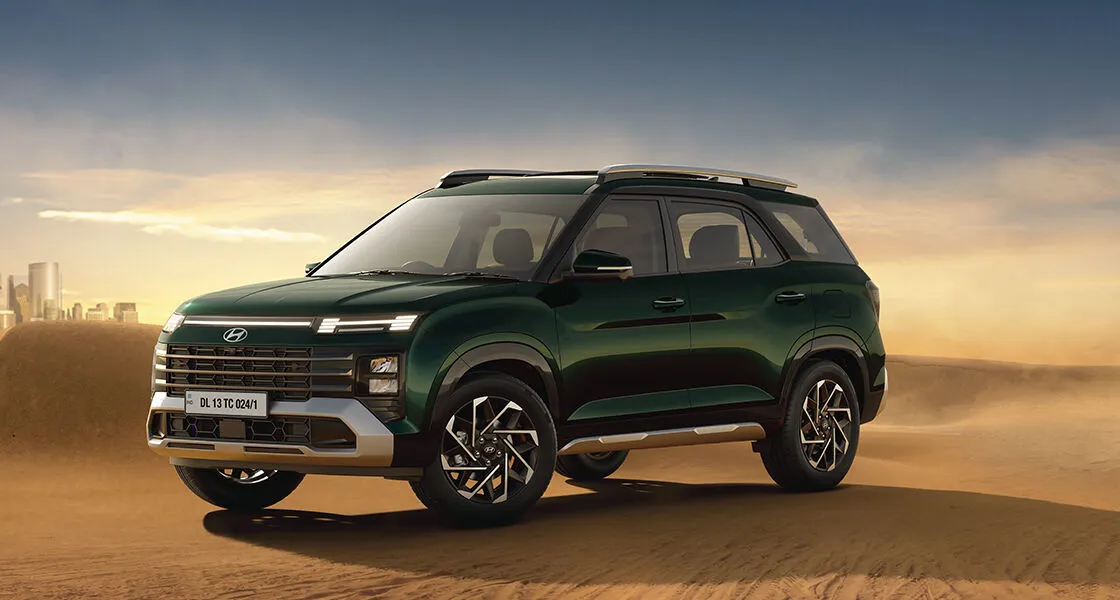
Hyundai entered the Indian market in 1996 and soon established itself as a trusted name among leading Korean automobile brands. With its plant in Sriperumbudur, Tamil Nadu, Hyundai has been successful in achieving mass localisation but has yet to emerge as one of India’s top car manufacturers.
Best-selling Models
- Hyundai Creta: A mid-SUV that is renowned for its aggressive styling, strong engine options, and luxurious amenities.
- Hyundai i20: Premium hatch with sporty design, premium interiors, and next-gen connected car tech in the infotainment area.
- Hyundai Verna: Premium sedan with turbo petrol engines and segment-first elements like ADAS.
- Hyundai Venue: Sub-four-metre SUV with connected car elements and ride comfort beyond comparison so far.
Hyundai Electric Cars:
- Hyundai Ioniq 5: Premium electric SUV with design-breaker of the industry, lightning-fast charging, and claimed 631 km range.
- Hyundai Kona Electric: An urban EV with 452 km range, filled with safety and tech offerings.
- Hyundai Creta Electric: Hyundai targeted the most popular segment in India by introducing the Creta Electric with up to 473 km range, starting at Rs. 17.99 lakh.
Price Range
Hyundai petrol and diesel options begin at ₹6 lakh (Ex-showroom), and electric ones such as the Ioniq 5 cost over ₹45 lakh. Amazing features include Wireless Android Auto/Apple CarPlay, voice guidance, ventilated seats, and enhanced safety.
Dealership and Service Network
Hyundai has 1,300+ sales and 1,500+ service touchpoints in India, with a strong presence in metro and tier-2 cities.
Service Reach and After-Sales Support
Hyundai shares the same brand image for low-revenue maintenance packs, open-service pricing with no ambiguity, and well-organised service apps. It even offers doorstep service and roadside assistance, which adds to the Korean brand’s credibility.
Kia
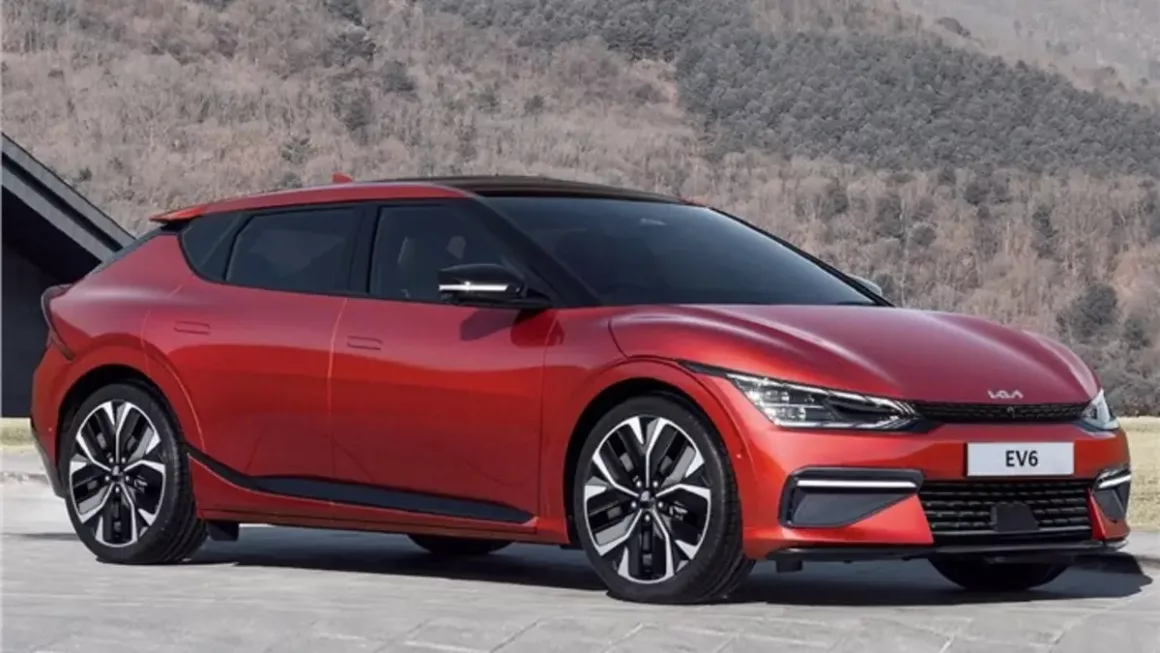
Kia began in India in 2019 and gained popularity as one of the sought-after Korean car brands. Its world-class plant in Anantapur, Andhra Pradesh, manufactures products for the Indian and export markets.
Best-selling Models
- Kia Seltos: A mid-size SUV with a panoramic sunroof, aggressive styling, and advanced safety features.
- Kia Sonet: A segment-best compact SUV with a 10.25-inch infotainment screen and front ventilated seats.
- Kia Carens: A three-row vehicle that blends SUV styling with MPV functionality and upscale interiors.
- Kia Carnival: A luxury comfort-oriented MPV with luxuries like lounge seats and rear entertainment systems.
Kia Electric Cars:
- Kia EV6: A dynamic electric crossover offering fast charging, a striking aerodynamic design, and an impressive range of up to 708 km.
Price Range
Kia vehicles are priced in the range of ₹7.99 lakh to ₹40 lakh (Ex-showroom). They stand out due to the addition of connected car technology, Bose audio systems, multi-drive mode, and segment-first safety features such as ADAS on some models.
Dealership and Service Network
Kia has increased its presence rapidly, with more than 400 dealerships and 500+ service touchpoints in leading Indian cities and expanding to tier-two and tier-three cities.
Service Reach and After-Sales Support
With open service costs and excellent customer experiences, Kia offers support for the MyKia app, service reminders, and an extended warranty.
Genesis
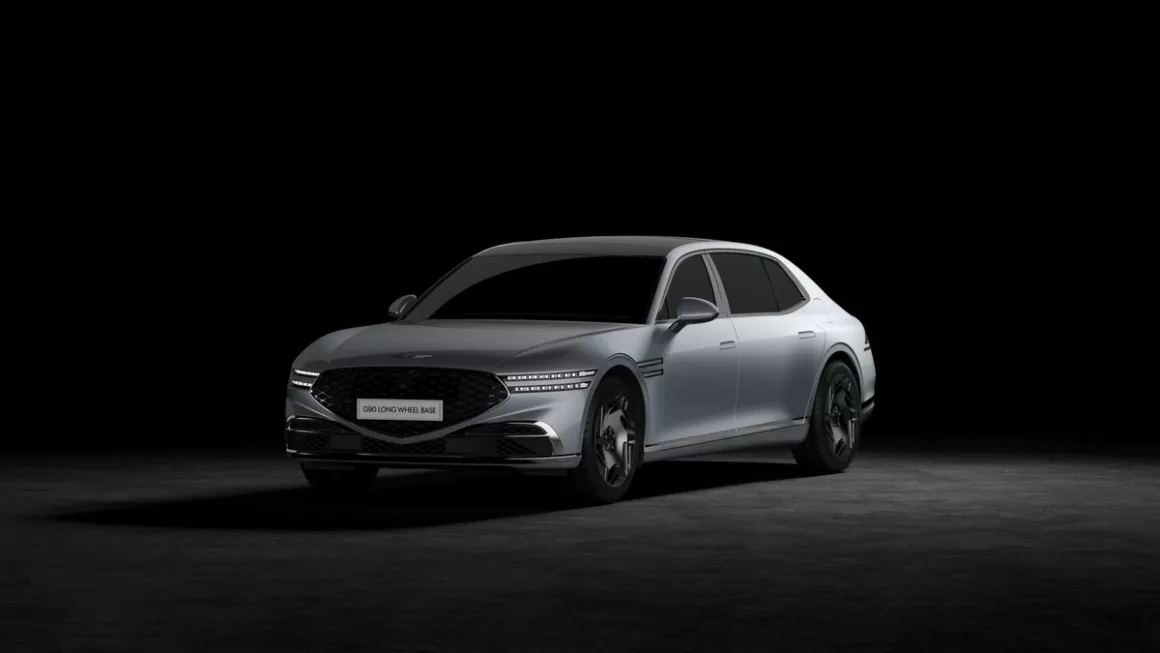
Genesis, Hyundai’s luxury division, has not formally entered India yet; however, it is expected to officially launch in India around the second half of 2025. As a premium Korean automobile brand, Genesis is likely to introduce world luxury on Indian roads with CBU (Completely Built-Up) imports for starters and local assembly in the days to come.
Price Comparison Table of the Top Korean Car Brands in India
The table below represents the price comparison among the best Korean car brands:
| Brand | Entry-Level Model | Starting Price | Flagship Model | Starting Price |
| Hyundai | Grand i10 Nios | ₹5.92 lakh | Tucson AWD | ₹35.34 lakh |
| Kia | Sonet | ₹7.99 lakh | EV6 GT Line AWD | ₹60.95 lakh |
Korean EV Cars in India
The Indian electric vehicle (EV) market is developing rapidly, with many Korean car companies involved. India recorded a milestone in 2024: 1.99 million EVS were sold, a 27% rise compared to 2023.
Korean car manufacturers such as Hyundai and Kia are leading the revolution. Hyundai’s Kona Electric still holds the top position with its 452 km range, and Kia’s EV6 has a range of 708 km and an ultra-fast charging technology. These cars are leading India towards a sustainable future.
Collaborations with charging infrastructure companies are enhancing the availability of efficient charging stations throughout the nation. The Indian government’s PM E-DRIVE initiative, which has a $1.9 billion incentive fund, will also increase the use of EVs.
The prospects for EVs in India are bright, with Korean auto companies continuously developing and fulfilling the requirements of eco-friendly customers.
Pros and Cons of Owning a Korean Car in India
Before making a buying decision, the pros and cons of purchasing Korean car companies in Indian markets should be considered, such as:
Korean Car Brand Pros
- Quality and Sustainability
Korean automobile firms such as Hyundai and Kia offer superior quality, cutting-edge technology, and dependability.
- Affordable Repair
Compared to European luxury brands, Korean car companies offer affordable repair costs and robust warranty schemes.
- Novel Features
The majority of Korean automobile companies offer advanced features like touchscreen infotainment, ADAS (Advanced Driver Assistance Systems), and wireless connectivity.
- Extensive Service Network
With extensive service and dealership networks spread across India, Korean car repair is easy and convenient.
Korean Car Brand Cons
- Limited Premium Models
Although the number of models is increasing, Korean automobile companies produce fewer ultra-luxury cars than their European competitors.
- Faster Depreciation
Certain Korean automobile companies depreciate faster than their luxury competitors.
Korean Cars vs Indian/Japanese Brands
The table below represents the aspect differences between Korean car brands and Indian or Japanese car brands:
| Aspect | Korean Car Brands | Indian/Japanese Brands |
| Build Quality | High-quality build with advanced tech and design. | Good build quality is good, but it is less feature-rich. |
| Technology | Cutting-edge tech like connected car features and ADAS. | Limited tech in entry-level models. |
| Affordability | Slightly premium pricing, but value for money. | Generally more affordable with basic features. |
| Maintenance Cost | Moderate, often backed by extended warranties. | Lower maintenance cost, more budget-friendly. |
| Luxury/Performance | Strong in performance and luxury (e.g., Kia, Genesis). | Strong in budget cars, but less luxurious. |
| Running Costs | Moderate, with occasional higher fuel consumption. | Lower running costs, better fuel efficiency. |
Korean automobile brands have well-established themselves in the Indian automobile sector, with an ideal blend of innovation, design, and performance. With a robust range of hatchbacks, SUVs, and electric vehicles, Korean car manufacturers like Hyundai, Kia, and others capture a variety of customer bases.
Their extensive networks of service centres, feature-packed models, and emphasis on safety have drawn them a loyal base of customers. From affordability to technology-based features, or eco-friendly vehicles, Koreans have an Indian car for every motorist.
FAQs About Korean Car Brands in India
Q. Which is the best Korean car brand in India?
Hyundai is the best Korean car brand in India because of its good market presence, large fleet size, and quality after-sales service. Kia is also quickly gaining popularity with fashionable and technologically advanced models.
Q. Are Korean cars reliable in Indian conditions?
Yes, Korean auto brands manufacture their vehicles to suit different Indian terrains and climates. Hyundai and Kia are some of the car brands that produce durable, safe, and high-performance vehicles.
Q. Which is the most affordable Korean car in India?
The Hyundai Grand i10 Nios is the cheapest model available among Korean car brands at around ₹5.92 lakh.
Q. Do Korean car brands offer EVs in India?
Yes, Kia and Hyundai are Korean automobile brands that sell electric vehicles like Kona Electric and EV6, which are among the most technologically advanced EVs available in India.
Q. What is the service cost for Korean cars in India?
Most Korean car brands offer affordable service costs and maintenance packages with extended warranties, making them economical to own in the long run.