





One of the biggest decisions that car buyers have to make is whether to go for AWD or 4WD systems. To be precise, both deliver power to all four wheels and thus offer better traction and control, safer driving, and more confident handling, but they do so in their own ways.
When driving on a mountain road, crossing a city street, or enjoying a ride on the highway, understanding how All-Wheel Drive (AWD) and Four-Wheel Drive (4WD) work will undoubtedly help you choose the ideal car based on your driving habits.
What is All-Wheel Drive (AWD)?
All-Wheel Drive (AWD) is an advanced drivetrain system that automatically powers the four wheels of a vehicle, thus increasing traction, stability, and control. Unlike traditional 4WD systems that require manual engagement, the AWD system is always or partially activated, depending on demand, but requires no input from the driver.
It smartly handles power between the front and back wheels depending on the situation, thus always providing both maximum performance and fuel efficiency. It can be used on different terrains and slippery conditions. Thus, AWD is the most popular choice of system in SUVs, crossovers, and some sedan categories for more comfortable and secure driving.
How Does All-Wheel Drive (AWD) Work?
AWD drives all four wheels without the need for the driver’s intervention. It uses either a centre differential or transfer case to divide the power between the front and rear axles. Sensor networks constantly oversee each wheel’s speed and traction and give a proportion of the extra torque that goes to the wheel with the best grip.
What are the Different Types of All-Wheel Drive (AWD)?
All-wheel drive (AWD) systems enhance vehicle stability and traction across various driving conditions. There are different types of AWD systems available, based on their operational mechanisms. The main categories of AWD systems are as follows:
- Full-Time AWD
Full-time all-wheel drive powers all four wheels simultaneously. This system is ideal for drivers who frequently encounter diverse road conditions, such as snow, rain, or sharp turns. It operates reliably and consistently without requiring manual engagement.
- Part-time AWD
Part-time AWD primarily operates in two-wheel drive, but the driver can activate all-wheel drive when additional traction is required, such as on wet or slippery surfaces. This configuration enhances fuel efficiency while still delivering improved control in difficult conditions.
- Automatic AWD
This type of AWD system typically functions in two-wheel drive but switches to all-wheel drive mode when it detects a loss of traction. While full-time AWD consumes more fuel than this option, it still provides the security of four-wheel drive when necessary.
- Selectable AWD
Selectable AWD enables the driver to manually switch between two-wheel drive and all-wheel drive. Like part-time AWD, it offers increased flexibility and can be utilised for extended durations, making it perfect for drivers who often navigate varying road conditions.
Pros of All-Wheel Drive (AWD)
Here are the common benefits of opting for the All-Wheel Drive (AWD) system:
- Traction and Handling: Automatically distributes power to all four wheels to improve traction and handling on slippery, wet, snowy, or uneven surfaces.
- Safety and Reliability: Enhances vehicle grip, overall stability, and cornering abilities, even in changing driving conditions.
- Convenience: The fully automated system operates without the need for driver input, giving peace of mind while operating on all surfaces without compromising performance.
Cons of All-Wheel Drive (AWD)
The following are the common drawbacks of All-Wheel Drive (AWD):
- Cost and Maintenance: All-wheel drive systems are more expensive to purchase and maintain compared to standard two-wheel drive systems.
- Less Fuel Efficiency: More sluggish when compared to a two-wheel drive system, resulting in less fuel efficiency, as energy cannot be generated as effectively.
- Unfavourable in Off-Road Situations: It can be unfeasible in extreme off-road situations.
What is Four-Wheel Drive (4WD)?
Four-Wheel Drive (4WD or 4×4) is a drivetrain system that powers all four wheels at once to provide better traction, torque, and control on uneven or rugged surfaces. Typically used in trucks and off-road sport utility vehicles (SUVs), it employs a transfer case to distribute power between the rear and front axles evenly.
The driver can choose to engage 4WD manually and use the high and low gear ranges for better climbing and towing capability. Designed for off-road use, 4WD handles mud, rocks, inclines, and slippery surfaces with ease.
How Does Four-Wheel Drive (4WD) Work?
4WD systems give the driver the option to manually engage power to all four wheels, typically via a lever or switch. A transfer case distributes power equally between front and rear axles for maximum traction.
Part-time 4WD uses the vehicle in two-wheel drive unless the driver engages 4WD in off-road or slippery conditions. Full-time 4WD drives all wheels all the time and often features differential locks for improved off-road handling.
Types of Four-Wheel Drive (4WD)
Four-Wheel Drive (4WD) systems can be configured in various ways to serve the needs of drivers. Each type offers distinct advantages based on the terrain and the driver’s handling skills. The two primary types of 4WD are as follows:
- Part-Time 4WD
Most vehicles are equipped with this type of 4WD. It requires the driver to engage it manually and is most effective in off-road conditions and on uneven surfaces. By default, the vehicle operates in two-wheel drive mode.
- Full-Time 4WD
Full-time 4WD continuously distributes power to all four wheels, allowing for adjustments in power distribution. This system is ideal for individuals who frequently navigate challenging terrains and prefer the security of consistent four-wheel traction.
Pros of Four-Wheel Drive (4WD)
The following are the advantages of four-wheel drive (4WD):
- Off-Road Capability: Provides incredible traction and torque regardless of rough, muddy, or steep conditions—especially suitable for off-road driving.
- Driver Control: Offers manual select options for 2WD or 4WD, which is worthwhile to experience as driving conditions change.
- Power and Performance: Offers high towing capacity and is highly advantageous when navigating steep roads by switching between low-range and high-range gears.
Cons of Four-Wheel Drive (4WD)
Mentioned below are the common drawbacks of four-wheel drive (4WD):
- Fuel Consumption: A heavier system results in lower fuel efficiency and a stiffer ride.
- Ownership Cost: Costlier to buy, maintain, and repair due to its mechanical complexity.
- On-Road Drawbacks: Continuous use on paved roads can damage the drivetrain and affect handling.
Key Differences Between AWD and 4WD
Both AWD and 4WD are designed for different driving conditions and purposes. Discussed below are the common differences between AWD and 4WD systems:
| Aspect | AWD (All-Wheel Drive) | 4WD (Four-Wheel Drive) |
| Operation | Works automatically and sends power to the wheels as needed. | Often manually controlled. It connects front and rear wheels via a transfer case, sometimes with low-range gearing. |
| Best Suited For | On-road driving, rain, light snow, and light off-road conditions. | Off-road, mud, heavy snow, rocky terrain, and towing heavy loads. |
| Terrain Handling | Improves stability and traction on paved roads; limited off-road capability. | Excels in challenging off-road conditions; provides maximum traction on rugged terrain. |
| Control & Driver Input | Minimal input required; the system handles power distribution automatically. | Requires driver control to engage/disengage 4WD; may include low range for extra torque. |
| Fuel Efficiency | More fuel-efficient than full-time 4WD; part-time AWD engages only when needed. | Less fuel-efficient when engaged; it can run in 2WD to save fuel in some models. |
| Complexity and Maintenance | Uses sensors and electronic controls; more complex and costly to repair. | Mechanically simpler and robust; often easier to maintain under rugged use. |
| Off-Road Performance | Only a few AWD vehicles include terrain modes or off-road features. | These are designed for rough terrain, steep inclines, mud, and rugged areas. |
| Snow Performance | Effective on ploughed or lightly covered roads; suitable for most winter driving. | Better for deep snow or unploughed roads; best at low speeds and in traction-intensive conditions. |
| Vehicle Types | Sedans, crossovers, SUVs | Trucks, larger SUVs, and dedicated off-road vehicles |
Summary
When it comes to AWD vs 4WD, the decision comes down to your driving practices, terrain, and use. AWD delivers convenience, confidence, and all-weather capability—perfect for daily driving.
4WD delivers unparalleled strength and control for off-road excursions. Both systems maximise traction and safety in their own terms. Knowing how they vary ensures that you select the right vehicle as per your needs, providing the ideal combination of power, efficiency, and reliability.
FAQs on All-Wheel Drive Vs 4-Wheel Drive
Q. Is AWD or 4WD better for muddy or unpaved roads?
AWD is good for occasional off-road driving on light mud or unpaved roads; however, 4WD is stronger and better for tough terrain or thick mud.
Q. Does AWD boost fuel efficiency?
Generally, AWD is less fuel efficient than 2WD due to powering all four wheels together, but usually more efficient than 4WD when comparing similar vehicles.
Q. Which is better for long road trips, an AWD or 4WD vehicle?
AWD is much better than 4WD for longer highway trips due to stability for traction and overall better fuel economy. 4WD is great for off-road adventures or rough terrain.
Q. How do AWD and 4WD affect tyre wear?
Both AWD and 4WD share power among all four tyres, leading to more uniform tyre wear compared to two-wheel drive systems. However, regular tyre rotations are essential for maintaining even wear.
Q. What are the examples of 4WD cars in India?
Some popular vehicles in India powered by the AWD system are the Toyota Fortuner, the Mahindra Thar, the Mahindra Thar Roxx, the Toyota Land Cruiser 300, the Force Gurkha, and so on.
Q. What are the examples of AWD cars in India?
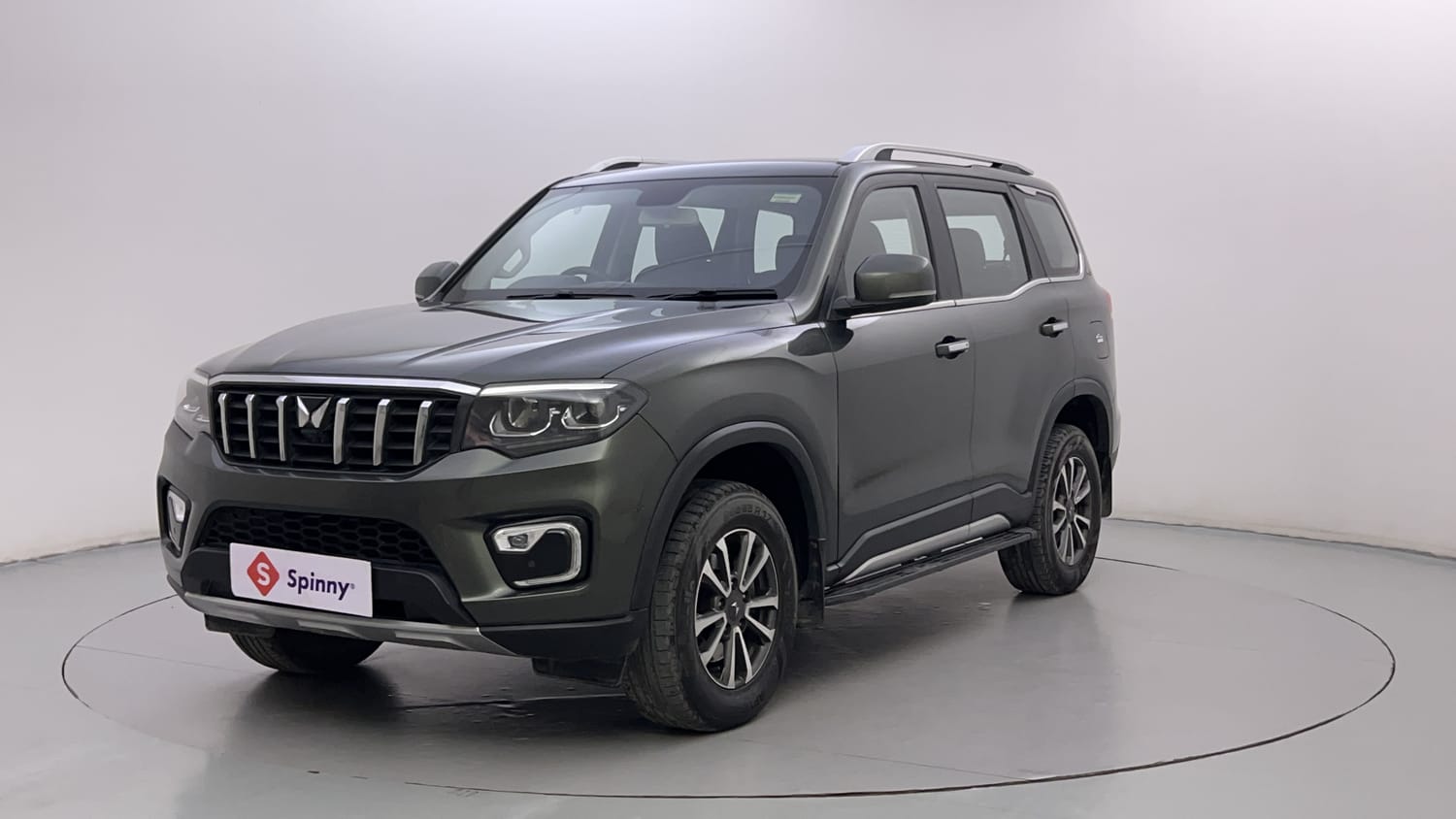
Some notable examples of AWD-powered cars in India are the Mahindra XUV700, Toyota Urban Cruiser Hyryder, Mahindra Scorpio-N, Maruti Suzuki Grand Vitara, and so on.
Q. Does AWD work well in the rain?
AWD systems are effective in rainy conditions, providing better grip and control. They are among the top choices for dealing with heavy rain or minor flooding, as they send power to all four wheels, minimising the risk of slipping or hydroplaning.
Q. Is AWD costlier than 4WD?
AWD is generally pricier than 4WD. This is because AWD systems are more complex and require advanced components, making them more expensive to produce and maintain.