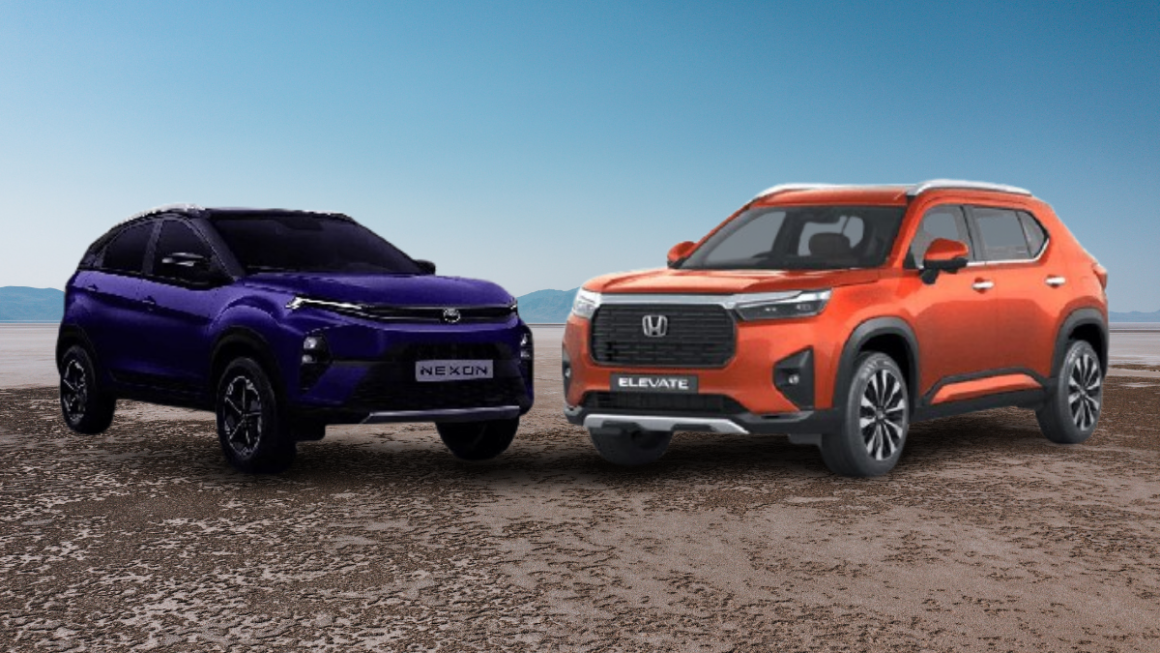
A warranty can quietly make (or break) your ownership experience. It’s the safety net that kicks in when something fails unexpectedly, especially expensive components like engine parts, electronics, or air conditioning systems. In this car warranty comparison in India, we’ll break down Tata warranty vs Honda warranty in an easy way to compare: duration, what’s typically covered, flexibility, transferability, and how the claim process usually works in real life.
One important note before we start: warranty terms can differ by model, variant, fuel type (petrol/diesel/hybrid/EV), and the specific warranty pack chosen. So think of this as a practical, ownership-focused comparison that helps you know what to look for and what questions to ask, before you sign.
Table of Contents
Tata Car Warranty vs Honda Car Warranty – Overview
| Parameter | Tata Warranty | Honda Warranty |
| Coverage Type | Manufacturer warranty covering manufacturing defects; extended warranty available on eligible models | Manufacturer warranty covering manufacturing defects; extended warranty options available |
| Coverage Duration | Standard warranty is typically time + km limited (commonly expressed as years/kilometres) | Standard warranty is typically time-based, with unlimited kilometres on many models; extended tenure options are available |
| Starting Point | Generally starts from the retail sale/delivery/registration date (as defined in the warranty booklet) | Generally starts from the retail sale/delivery/registration date (as defined in the warranty booklet) |
| Transferability | Usually transferable to the next owner, subject to process and conditions | Usually transferable to the next owner, subject to process and conditions |
| Claim Process | Through authorised Tata service centres; claim is validated after diagnosis | Through authorised Honda service centres; claim is validated after diagnosis |
| Support | Pan-India authorised service network; warranty support depends on service history and policy compliance | Strong authorised service network; warranty support depends on service history and policy compliance |
At a high level, both brands follow the same global warranty logic: they cover manufacturing defects and workmanship issues, and they expect you to maintain the car as per schedule. The difference shows up in the fine print: how the duration is structured (especially kilometres), how far extended coverage can go, and how confidently the brand supports newer tech (like EVs and advanced electronics).
Both Tata and Honda offer manufacturer-backed protection with optional extensions, but the biggest difference is how the warranty duration is structured and how each brand positions long-term coverage for different ownership profiles.
Tata Car Warranty vs Honda Car Warranty: Coverage Scope (What each Warranty includes)
Coverage Scope Comparison:
| Component/Area | Tata Warranty | Honda Warranty |
| Engine & Transmission | Typically covered for manufacturing defects (major internal components), subject to warranty terms | Typically covered for manufacturing defects (major internal components), subject to warranty terms |
| Electrical Components | Covered for defects in covered electrical parts; exclusions apply for external damage/modifications | Covered for defects in covered electrical parts; exclusions apply for external damage/modifications |
| Suspension | Covered if failure is due to a defect; wear-related deterioration is usually excluded | Covered if failure is due to a defect; wear-related deterioration is usually excluded |
| Steering System | Covered for manufacturing defects; alignment/consumables typically excluded | Covered for manufacturing defects; alignment/consumables typically excluded |
| AC (Air Conditioning) | Covered for defects in covered AC parts; gas refill and wear items generally excluded | Covered for defects in covered AC parts; gas refill and wear items generally excluded |
| Fuel System | Covered for manufacturing defects in covered components; contamination issues are usually excluded | Covered for manufacturing defects in covered components; contamination issues are usually excluded |
| Wear & Tear | Generally not covered (brake pads, clutch wear, tyres, wipers, bulbs, fluids, etc.) | Generally not covered (brake pads, clutch wear, tyres, wipers, bulbs, fluids, etc.) |
What’s actually covered in the real world?
Most buyers assume “warranty = everything that breaks.” In reality, manufacturer warranties are designed to cover defects, not ageing.
- Defect examples (more likely covered): a component fails abnormally early without misuse, a part has an internal manufacturing flaw, a sealed unit fails within the warranty period under normal use.
- Wear/usage examples (more likely excluded): clutch wear from heavy traffic, brake pad wear, suspension bushes wearing over time, scratches, rattles due to rough usage, damage from poor roads (if treated as impact damage), accidental damage, water ingress from flooding, or issues caused by modifications.
Where Tata can feel stronger (ownership perception)
In recent years, Tata cars have become more feature-rich, with touchscreens, connected features, driver assistance in some models, more sensors and electronics. When cars become “tech-heavy,” warranty coverage on electronics matters more, not just the engine. Tata’s warranty proposition often appeals to buyers who want a strong baseline coverage and the option to extend for peace of mind, especially if the car is kept beyond the usual 3-year cycle.
Also, for Tata EV owners, battery-related warranty terms can be a major reassurance (because battery replacement is one of the biggest EV cost fears). This is a practical “coverage scope” advantage for shoppers comparing EV ownership confidence.
Where Honda can feel stronger (predictability)
Honda’s reputation in India is strongly tied to long-term reliability and consistent service experience. Many Honda owners value the “set and forget” feeling, service it on time, keep it stock, and warranty support tends to be straightforward. Combined with unlimited-kilometre structuring on many warranty packs, it can feel simpler for owners who drive a lot and don’t want to keep checking odometer limits.
The single most important detail: exclusions and conditions
Regardless of brand, warranty rejection usually comes down to:
- Missed scheduled services or improper maintenance
- Non-authorised repairs or non-genuine parts in sensitive systems
- Modifications (electrical accessories wired badly, ECU remaps, aftermarket lighting that overloads circuits)
- External events (accidents, waterlogging, rodent damage, fuel contamination)
In terms of what’s included, both Tata and Honda cover major mechanical and electrical failures due to manufacturing defects, while wear and tear remains excluded. The real difference is how confidently each warranty “fits” your usage pattern, especially high mileage vs normal mileage, and ICE vs EV ownership concerns.
Tata Car Warranty vs Honda Car Warranty: Validity & Flexibility
Validity & Flexibility Comparison:
| Parameter | Tata Warranty | Honda Warranty |
| Duration | Typically structured as years + kilometre cap (whichever comes first) | Typically structured as years, many models/packs emphasize unlimited kilometres |
| Extendability | Extended warranty options available on eligible models (added years beyond standard) | Extended warranty options available up to longer tenures on eligible models |
| Eligibility | Usually depends on model, age, mileage, service history, and purchasing within allowed window | Usually depends on model, age, mileage, service history, and purchasing within allowed window |
| Ownership Transfer | Usually allowed with conditions and documentation | Usually allowed with conditions and documentation |
How to think about “validity” beyond the headline
Two cars can both say “3-year warranty” and still behave differently for owners:
- With a time + km structure (common in Tata warranty language), your warranty is strongest when your mileage is within typical ranges. If you’re clocking very high kilometres quickly, you may hit the km cap earlier.
- With an unlimited km structure (commonly emphasized by Honda warranty packs), time becomes the main boundary. High mileage doesn’t reduce your warranty validity during the covered years.
Extendability: why it matters more than people think
Extended warranties are not just for “unreliable cars.” They are increasingly a smart financial decision because:
- Cars now have more electronics and expensive modules.
- Labour costs and part costs have risen over time.
- Owners keep cars longer (5–7 years is increasingly common in India).
When comparing tata warranty vs honda warranty, the practical question becomes:
- Do you plan to keep the car past 3 years?
- Do you drive above-average kilometres per year?
- Do you want predictable ownership costs?
If yes, the extended warranty can be worth it, especially if it’s priced sensibly and backed by a wide service network.
Transferability: resale value booster if handled properly
Transferability can be a hidden weapon in resale. A used car buyer is more confident when:
- The car is still under warranty, and
- The remaining warranty is officially transferable
But transferability usually requires:
- Proper service records
- No warranty-voiding modifications
- Following the brand’s transfer process (often paperwork + inspection/fee)
Honda’s warranty framing often feels more flexible for high-mileage users because kilometres don’t become a stress point during coverage years. Tata’s warranty structure is very strong for typical Indian usage, and can become especially attractive when extended, particularly for buyers keeping cars long-term, including EV owners.
Tata Car Warranty vs Honda Car Warranty: Claim Process & Ease of Service
Claim Process Comparison:
| Parameter | Tata Warranty | Honda Warranty |
| Claim Method | Visit authorised service centre; issue diagnosed and validated as a warranty claim | Visit authorised service centre; issue diagnosed and validated as a warranty claim |
| Process Time | Depends on diagnosis, approvals (if needed), and part availability | Depends on diagnosis, approvals (if needed), and part availability |
| Payment Type | Generally, cashless for covered repairs; owner pays for non-covered items/consumables | Generally, cashless for covered repairs; owner pays for non-covered items/consumables |
| Assistance | Service advisor handles claim; support depends on service centre capability and policy | Service advisor handles claim; support depends on service centre capability and policy |
| Documentation | Service history, warranty booklet/records, RC, and job card detailsare typically required | Service history, warranty booklet/records, RC, and job card details are typically required |
What makes a claim “easy” in practice?
Warranty claims aren’t like insurance claims, but they do require a clear chain of responsibility. Most smooth warranty experiences share three habits:
- Service on time (don’t skip scheduled services).
- Keep records (invoices, job cards, and service history).
- Avoid risky modifications (especially electrical add-ons that can create faults).
Where claims can get tricky (for both brands)
Even with the best warranties, disputes usually arise in these zones:
- Borderline wear vs defect cases: For example, suspension noises, was it a defective part or wear from rough roads?
- User-induced issues: Overheating due to low coolant, damaged wiring from aftermarket installations, or issues from incorrect fuel/contamination.
- Environmental damage: Flooding or severe water ingress can cause multiple failures, often treated as external damage rather than a manufacturing defect.
Service network matters as much as policy
Even the best warranty on paper can feel frustrating if:
- The service centre is overloaded,
- Parts take time to arrive, or
- The diagnosis is inconsistent
Both Tata and Honda have wide networks, but the ownership experience can vary city to city. That’s why, in a practical car warranty comparison in India, it’s smart to consider the quality of authorised service in your area, not just warranty duration.
Summary
Both warranties provide meaningful protection, but if we have to pick an overall better option for the widest set of Indian buyers, the Tata car warranty comes across as the stronger “all-round” warranty to consider, especially when you factor in how Indian buyers use and keep cars today.
Here’s why Tata edges ahead overall:
- Balanced coverage for typical Indian driving: A structured time + km warranty suits the average owner’s yearly running while keeping expectations clear.
- Strong long-term confidence with extensions: Tata’s extended warranty approach helps owners who plan to keep the car beyond the initial ownership window.
- Future-facing ownership advantage (especially EVs): For Tata EV buyers, battery-related warranty assurance can be a bigger long-term cost shield than what most buyers realise at purchase time.
- Value perception and resale: A manufacturer-backed, transferable warranty (especially with extended coverage) improves buyer confidence when you sell the car.
Honda’s big advantage is its unlimited kilometre framework on many warranty packs, which is excellent for heavy users. But for the broader Indian audience, moderate mileage, mixed road conditions, longer ownership cycles, and growing interest in EVs, Tata’s warranty offers a more complete ownership proposition when looked at as a whole.
FAQ about Tata Car Warranty vs. Honda Car Warranty
Q. Which is better in this car warranty comparison India: Tata warranty or Honda warranty?
If you want an all-round package aligned to typical Indian usage (and especially if you’re considering EV ownership), the Tata warranty tends to come out stronger overall. If you drive very high kilometres every year, Honda’s unlimited-kilometre plan can feel more convenient.
Q. Does a car warranty cover regular service and maintenance?
No. Warranty typically does not cover regular maintenance, fluids, periodic servicing, or consumables. It focuses on manufacturing defects and covered part failures.
Q. Are wear-and-tear parts covered under the Tata warranty or the Honda warranty?
Generally, no. Brake pads, clutch wear, tyres, wiper blades, bulbs, filters, and normal wear items are usually excluded by both brands.
Q. Can I transfer the Tata warranty or the Honda warranty to the next owner?
In most cases, yes, manufacturer warranties (and many extended warranties) are transferable, but you’ll need to follow the brand’s transfer process and maintain a clean service history.
Q. What can void my warranty?
Common reasons include missing scheduled services, using non-authorised repairs for critical systems, installing risky electrical accessories, ECU remaps, and damage from flooding/accidents.